
VISIBLE SURFACES · AGREED TREATMENT
Mould Remediation Deer Park
If a Deer Park room contains an old stain and a newer patch, describe them separately. Colour alone cannot tell you that both need the same response or that neither remains a concern. A treatment enquiry should identify what changed, where wetting occurs and which exposed structural surfaces can be assessed.
Separate unchanged marks from new observations
Describe chronology before assuming a cause
Agree contamination and finish decisions

TREATMENT · FILTRATION · FOLLOW-THROUGH
A TREATMENT PLAN WITH CLEAR LIMITS
A useful description distinguishes the marks
Give dates where known and explain whether a patch expanded, became wet or appeared after earlier treatment or repair. If you cannot recall the history, say so. Do not label every discoloured area active mould or dismiss a new observation simply because an older mark has stayed unchanged.
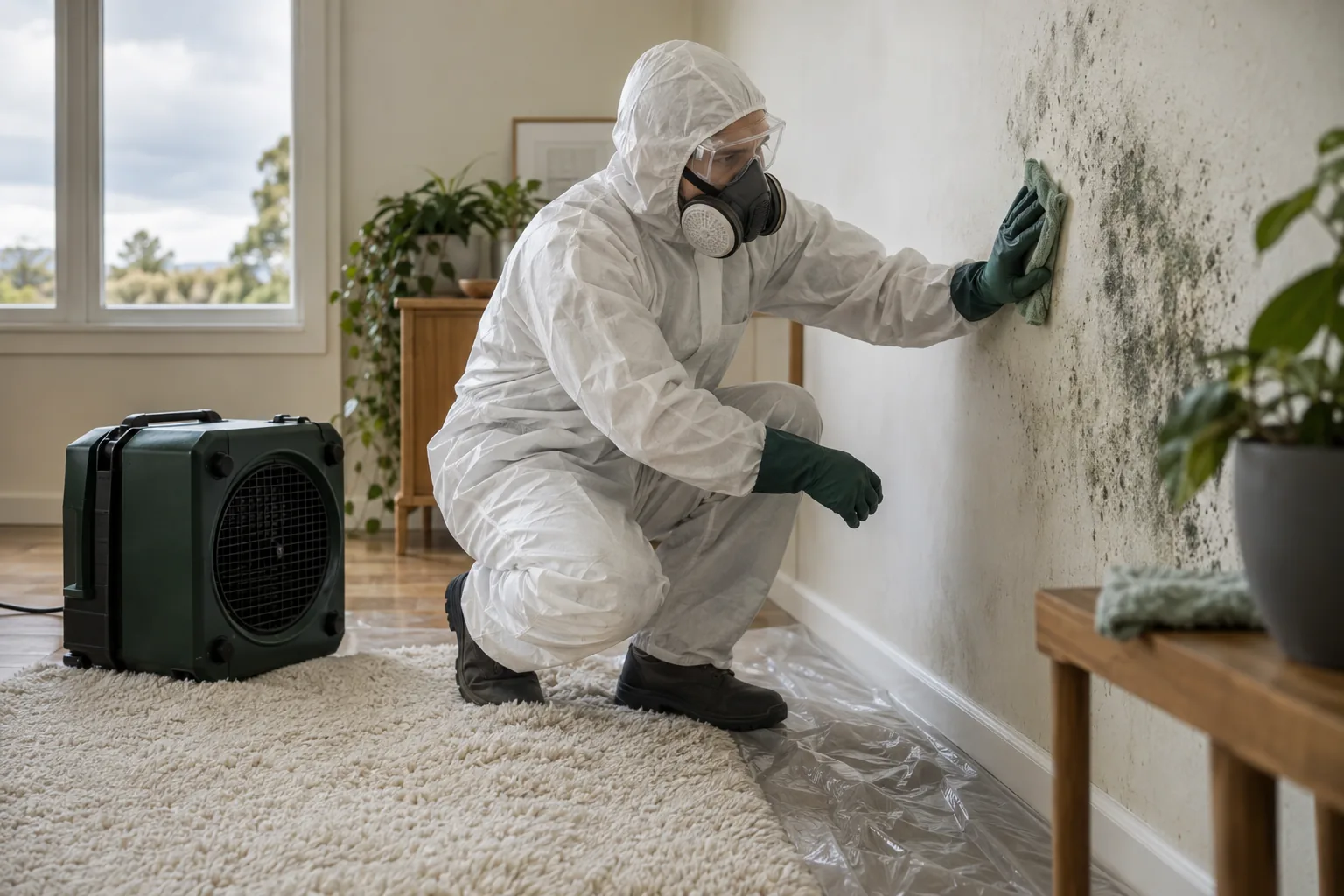
The remediation service addresses existing visible accessible contamination using assessment, filtration, treatment and removal. Cosmetic stains can remain after treatment, with decorating separately scoped. Agree what needs assessment now rather than interpreting appearance as proof of a complete past or future result.
MOISTURE COMES FIRST
Link new wetting to its own timeline
Explain whether the newer patch followed fresh water entry, repeated condensation or no known event. Share repair dates without assuming one repair explains every mark. A professional hygrometer assesses room-air relative humidity, not moisture within a lining or the age of a stain.
Discuss accessible inspection if the visible condition is uncertain. Plumbing and structural repairs are separate. Treatment can address current growth, while persistent wetting may allow recurrence; the underlying issue cannot be settled by comparing colours alone.

FROM PREPARATION TO FOLLOW-THROUGH
Assess the current observations before choosing treatment
1
Review marks and chronology
Show each exposed area and describe what changed. Agree accessible structural scope and any uncertain finish or concealed concern needing separate attention.
2
Prepare HEPA air protection
A HEPA air scrubber is set up before treatment. Discuss equipment access and clearance; filtration supports the process without establishing that all airborne contamination has disappeared.
3
Apply suitable HOCl treatment
HOCl is used within the assessed plan. ULV dry fog is applied in most cases where appropriate, without a promise to erase every mark or treat unseen cavities.
4
Remove visible contamination physically
Professional H-class filtered equipment is used for removal. Explain previous rubbing or paint damage beforehand; contamination removal and finish restoration are different tasks.
5
Complete filtration and review the finish
HEPA continues during and after work. Obtain return instructions and discuss remaining marks and moisture follow-through, without an unconfirmed guarantee based on colour or a laboratory clearance.
Record change on the surface where it occurs
Walls
Describe new wall patches separately from old paint marks. Fixed furniture or linings can still limit visible access.
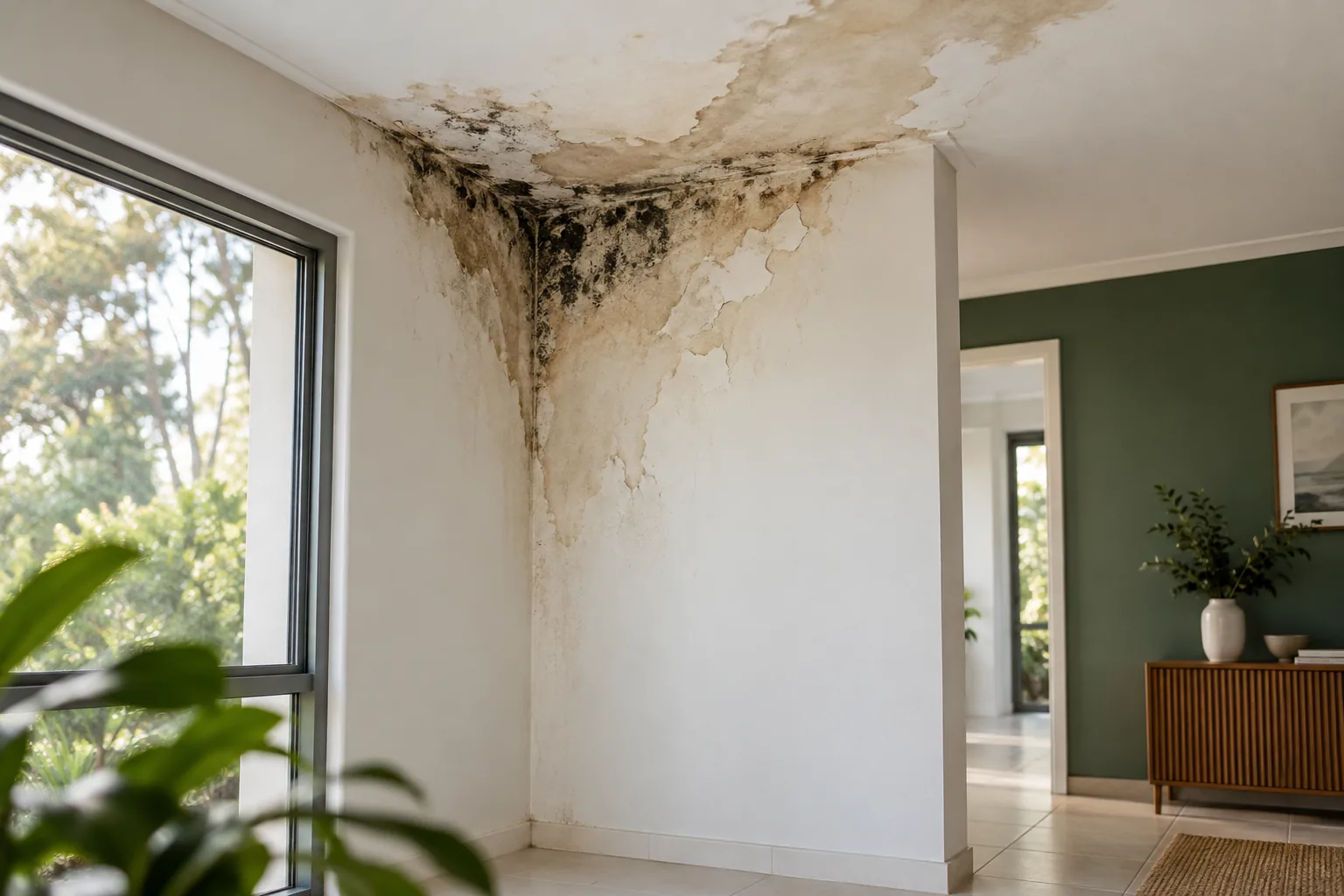
Ceilings
Mention old overhead staining and fresh wetting as different observations. Repairs above the room remain outside treatment.
Bathrooms
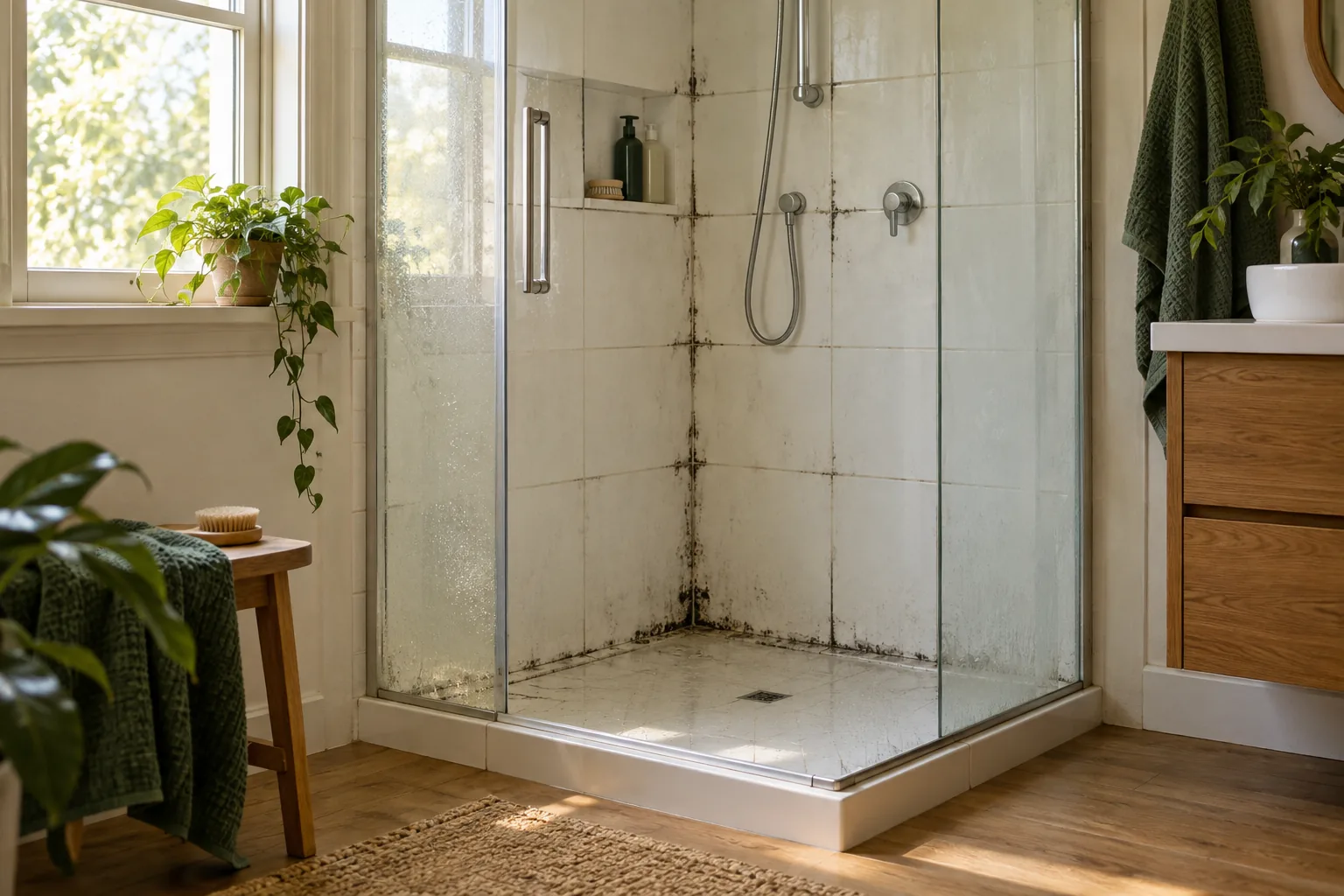
Identify structural growth and its changes over time. Towels and other textile items are excluded.
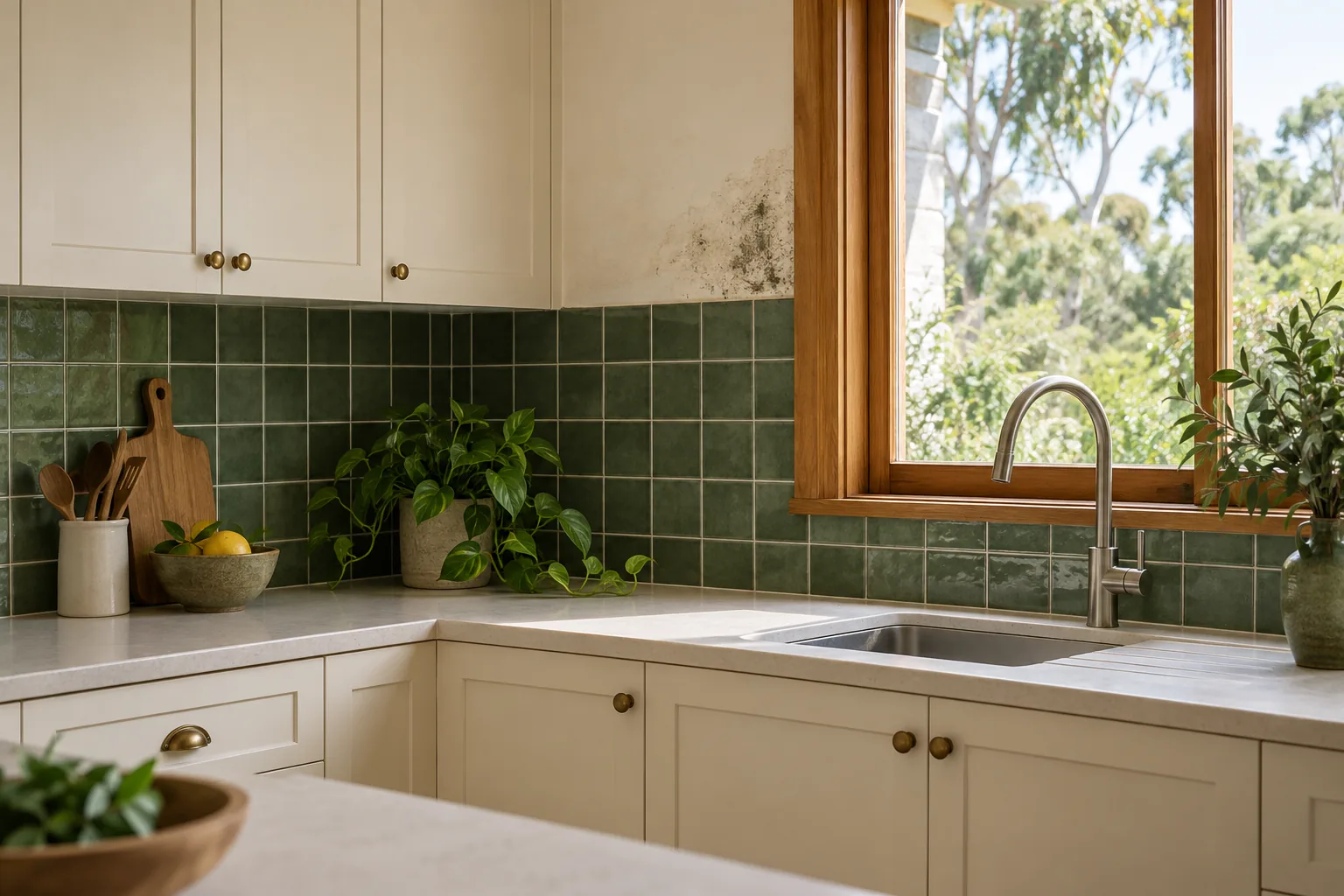
Kitchens
Explain exposed wall marks alongside cooking or plumbing observations. Cabinet interiors are not automatically included.
Accessible affected surfaces
An exposed floor can be assessed within its finish limits. Carpet, furnishings and concealed layers require separate scope.
PREPARE FOR THE ACTUAL JOB
Prepare the area without covering the evidence first
Discuss clearance and fragile belongings before painting or hiding a patch. People and pets leave during treatment; follow specific departure and return instructions. Average guidance is about three hours per room, varying with size, contamination and accessibility. The service is not hourly based or timed according to the apparent colour of a mark.
Cosmetic staining may remain after treatment and decorating is separately quoted. Ask what was addressed and what still needs attention. A cleaner surface cannot establish concealed dryness, while new wetting or growth should be recorded separately from an unchanged residual mark.
AFTER THE TREATMENT
Keep the next observation clear enough to act on
A simple dated description helps distinguish new changes from the familiar appearance of the room. Prevention still depends on managing the underlying moisture conditions.
Record new growth boundaries or wetting locations.
Maintain suitable extraction while producing steam.
Arrange separate repairs where water entry continues.
Discuss assessment and treatment rather than stain colour
Explain the visible changes, affected surfaces and access. Confirm remediation applicability against published pricing, whose room examples are labelled Mould Removal. Colour alone does not establish a treatment category or include separate decorating in a quotation.
DEER PARK · EXACT ADDRESS & ACCESS
Deer Park premises and nearby enquiries
Give the address and room history. Nearby pages cannot classify marks or confirm attendance.
Questions about remediation
Should I call every old stain active mould?
No. Describe its appearance and history without deciding the condition from colour alone. Assessment and any separate decorating decision need a clear description.
Can I ignore a new patch because an older mark is unchanged?
No. Report the new observation and timing separately; an old mark does not establish the condition of another surface.
Should I paint the old and new marks before the visit?
Discuss the work first. Covering changes the visible evidence and does not resolve contamination or a continuing moisture source.
Does a darker mark automatically need more intensive treatment?
Do not assume that from colour. Explain extent, surface condition and wetting history so the suitable scope can be assessed.
Can treatment promise that the room will have no visible marks?
No complete cosmetic restoration is guaranteed. Staining can remain, and repainting or decorating is separately quoted.
What information is useful if I cannot remember the old mark’s date?
Say the history is uncertain and describe what changed recently. Honest current observations are more useful than an invented timeline.
Discuss the changing Deer Park surfaces
Call 03 8652 1296 with the old marks, new observations and wetting history. Agree assessment, treatment and separate finish decisions.