
SURFACE TREATMENT · MOISTURE FOLLOW-THROUGH
Mould Remediation Kilsyth
Photographs may show an outside stain and an interior wall concern at the same property. For your Kilsyth enquiry, identify the indoor finish you want considered and label outdoor observations separately. Remediation planning should not turn that combination into a promise of exterior cleaning, building-envelope repair or treatment of concealed material between the two visible surfaces.
The interior request is identified.
Outdoor observations remain separate.
Repair and treatment boundaries are clear.
TREATMENT & FOLLOW-THROUGH
UNDERSTANDING THE AFFECTED ROOM
Specify the interior rather than the whole building
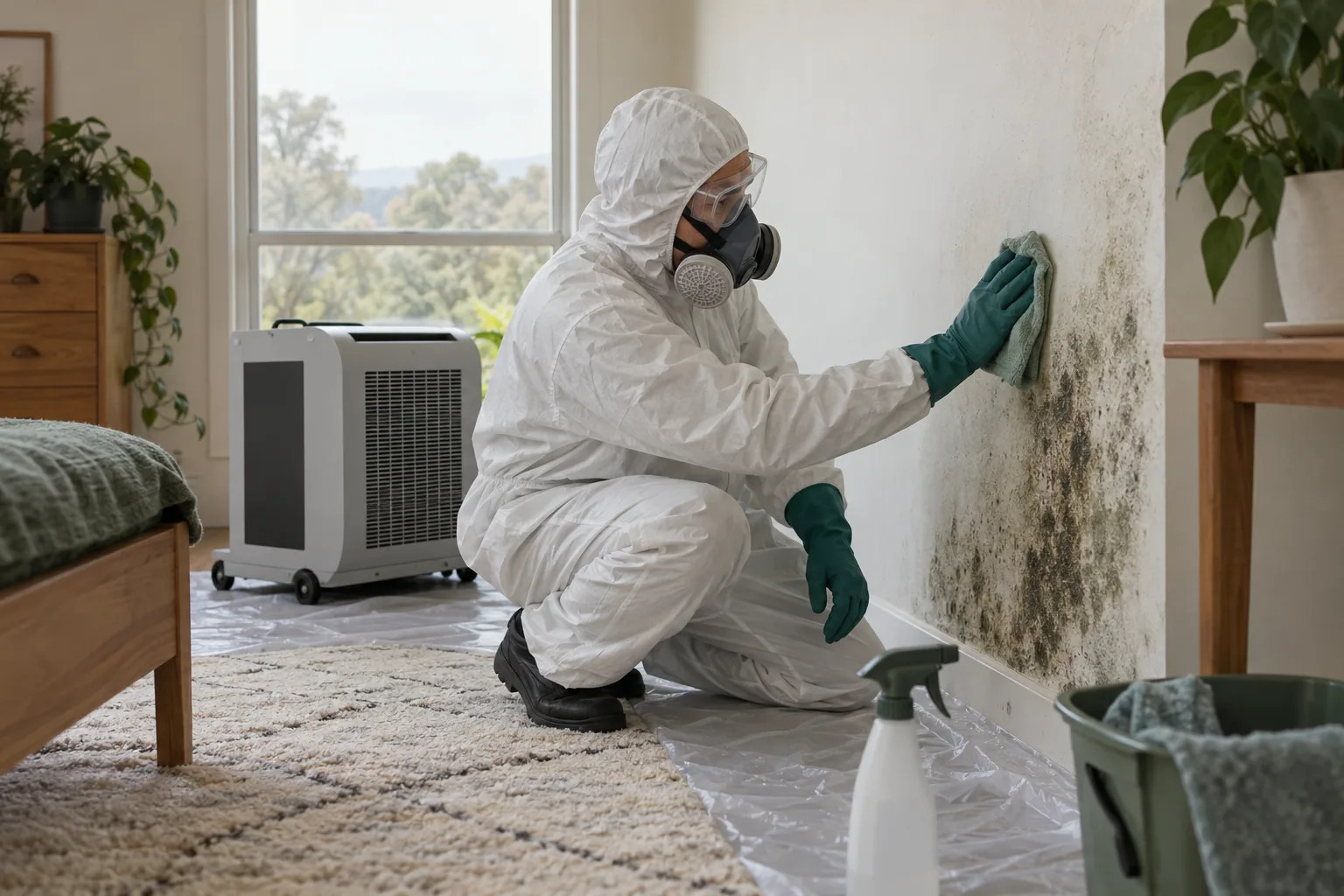
Remediation includes assessment, filtration, suitable treatment and physical removal of visible mould on agreed accessible surfaces. Name the room, exposed material and current boundary. An exterior photograph may provide context without establishing the same contamination, treatment method or accessible scope indoors.
Our remediation information outlines supported surface work. Do not assume outdoor cleaning, wall opening or envelope repair is included. Furniture and textiles are excluded, and repairs or decorating need separate arrangements rather than a whole-property interpretation of the indoor room quote.
MOISTURE & CONTAMINATION
Two stains do not establish a hidden connection
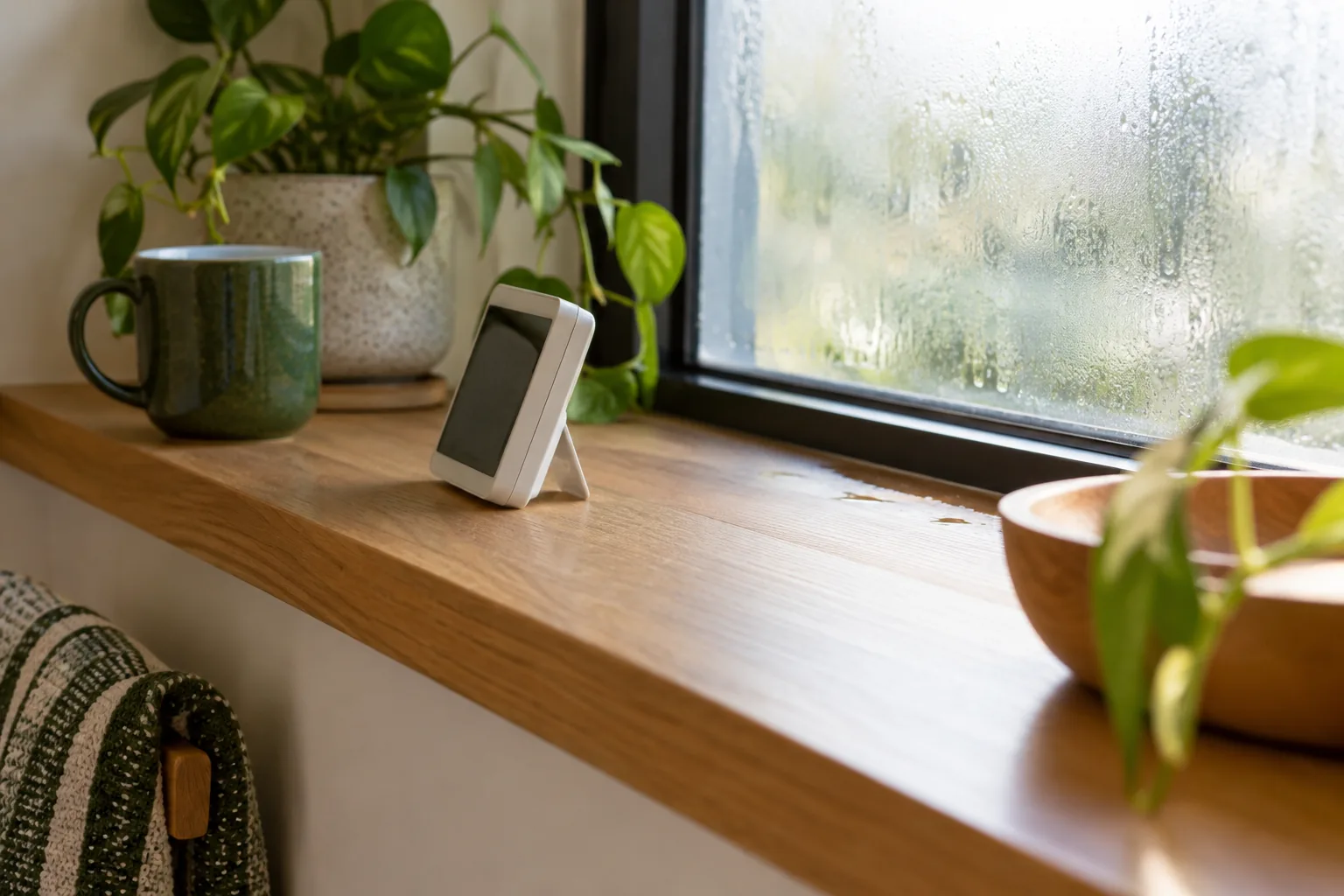
Report water actually noticed inside the requested room and distinguish any confirmed exterior repair finding. The professional hygrometer provides room-air relative-humidity context. It does not prove a moisture path through the wall, measure concealed material or certify that outside weatherproofing is sound.
A known source requires appropriate separate correction, and continuing dampness may contribute to recurrence after visible work. Discuss inspection of accessible indoor condition where needed, without promising external surveying, material probes or laboratory testing from a pair of photographs.
A DEFINED TREATMENT SEQUENCE
Supported work on the agreed indoor finish
1
Agree the accessible scope
Assess the requested exposed interior contamination and available access, agreeing suitable checks and treatment boundaries.
2
Begin air protection
Begin confirmed HEPA air-scrubber protection before application within the prepared indoor work area, not an assumed exterior service.

3
Choose the treatment application
Apply appropriate HOCl treatment, with ULV dry fog only where suitable rather than as a guarantee across wall layers.
4
Remove visible growth
Remove visible mould using professional H-class filtered equipment on agreed accessible finishes, leaving envelope repairs separate.
5
Continue final air cleaning
Continue HEPA air cleaning during and after work, discussing residual appearance, source follow-through and the particular return arrangements.
Materials define the accessible task
Walls
Interior wall requests need their room and exposed material identified, independent of outside cladding photographs.
Ceilings
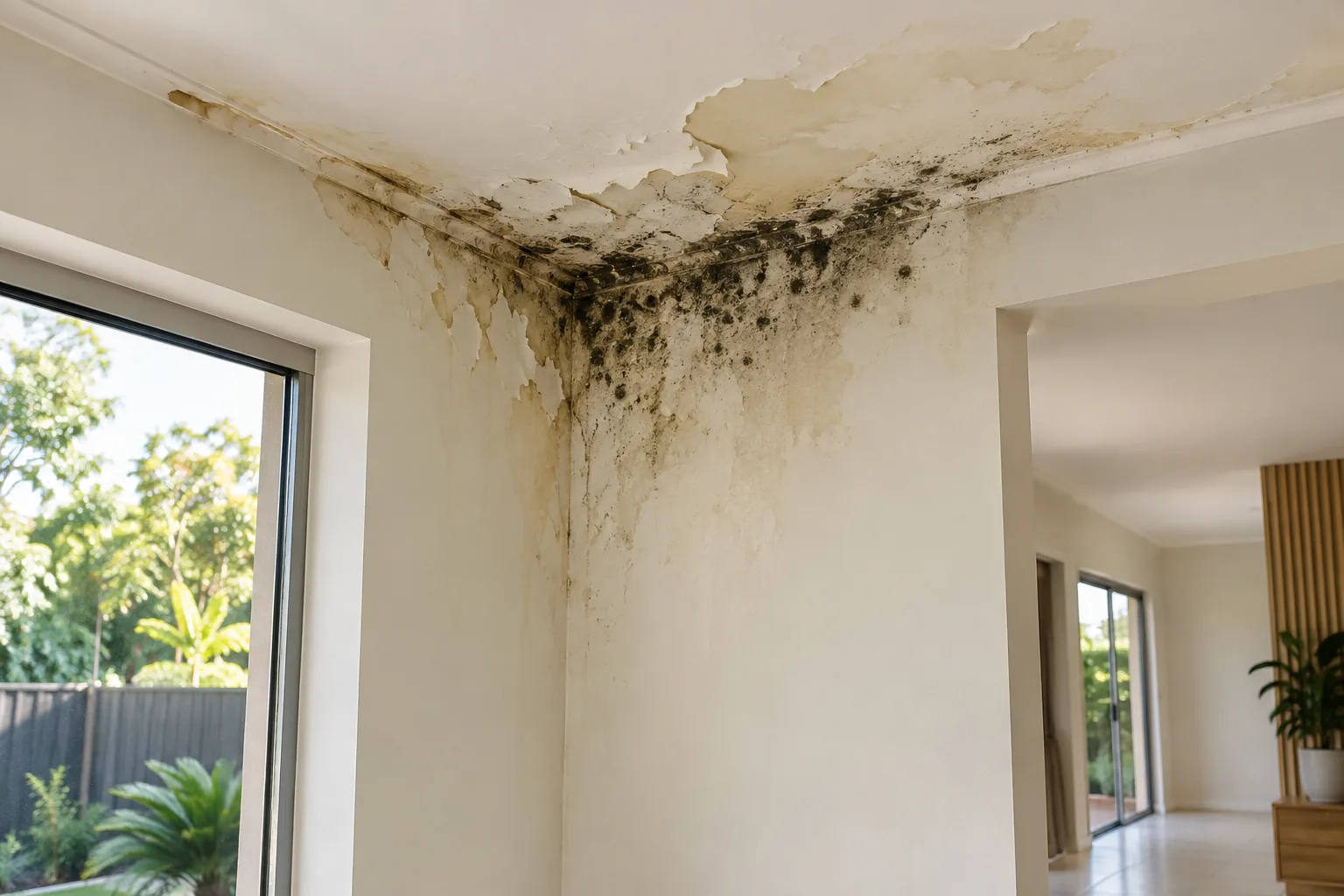
Ceiling concerns require safe indoor access and disclosure of loosened or damaged finishes.
Bathrooms
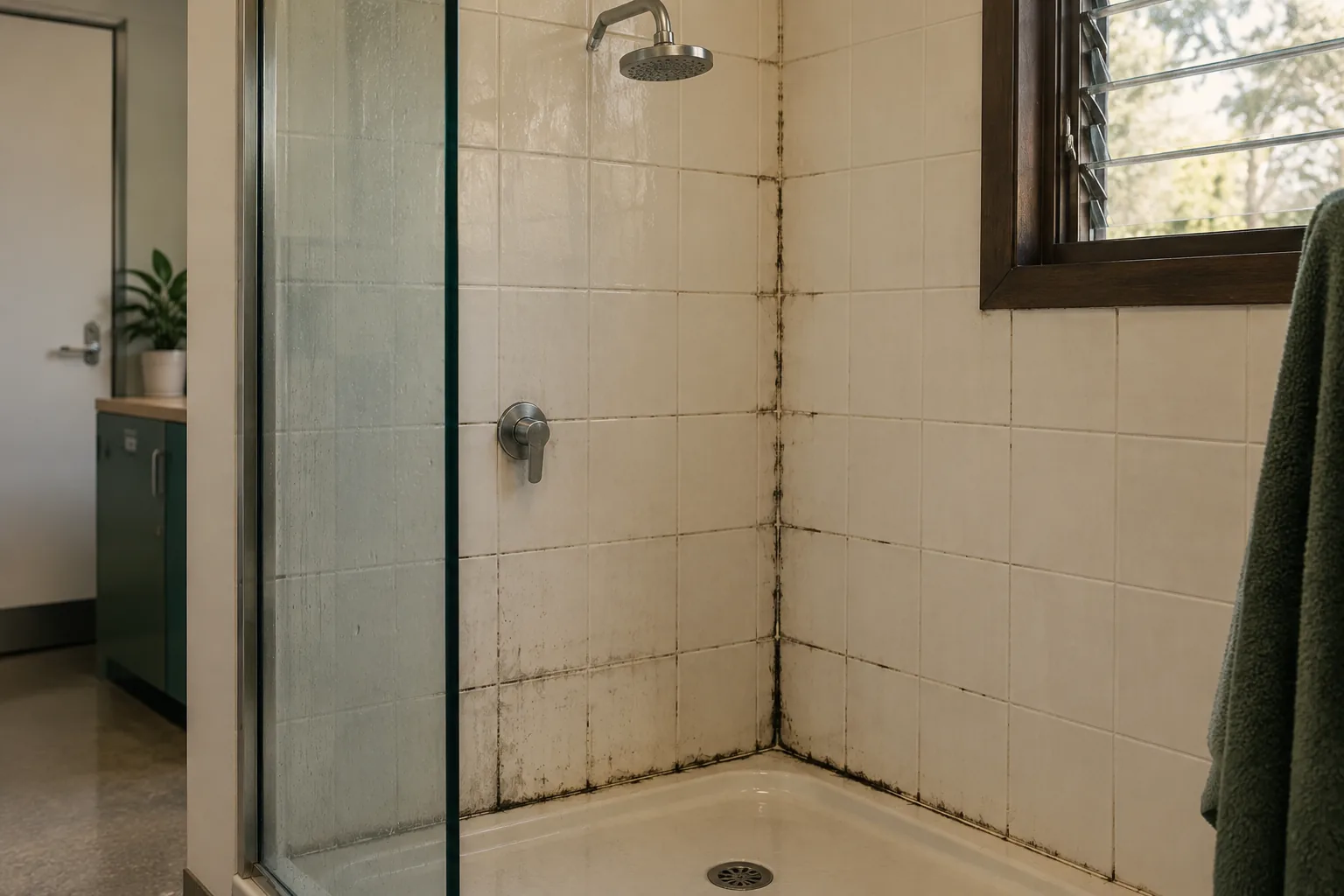
Bathroom paint and joints are different materials, with waterproofing repairs considered separately from visible treatment.
Kitchens
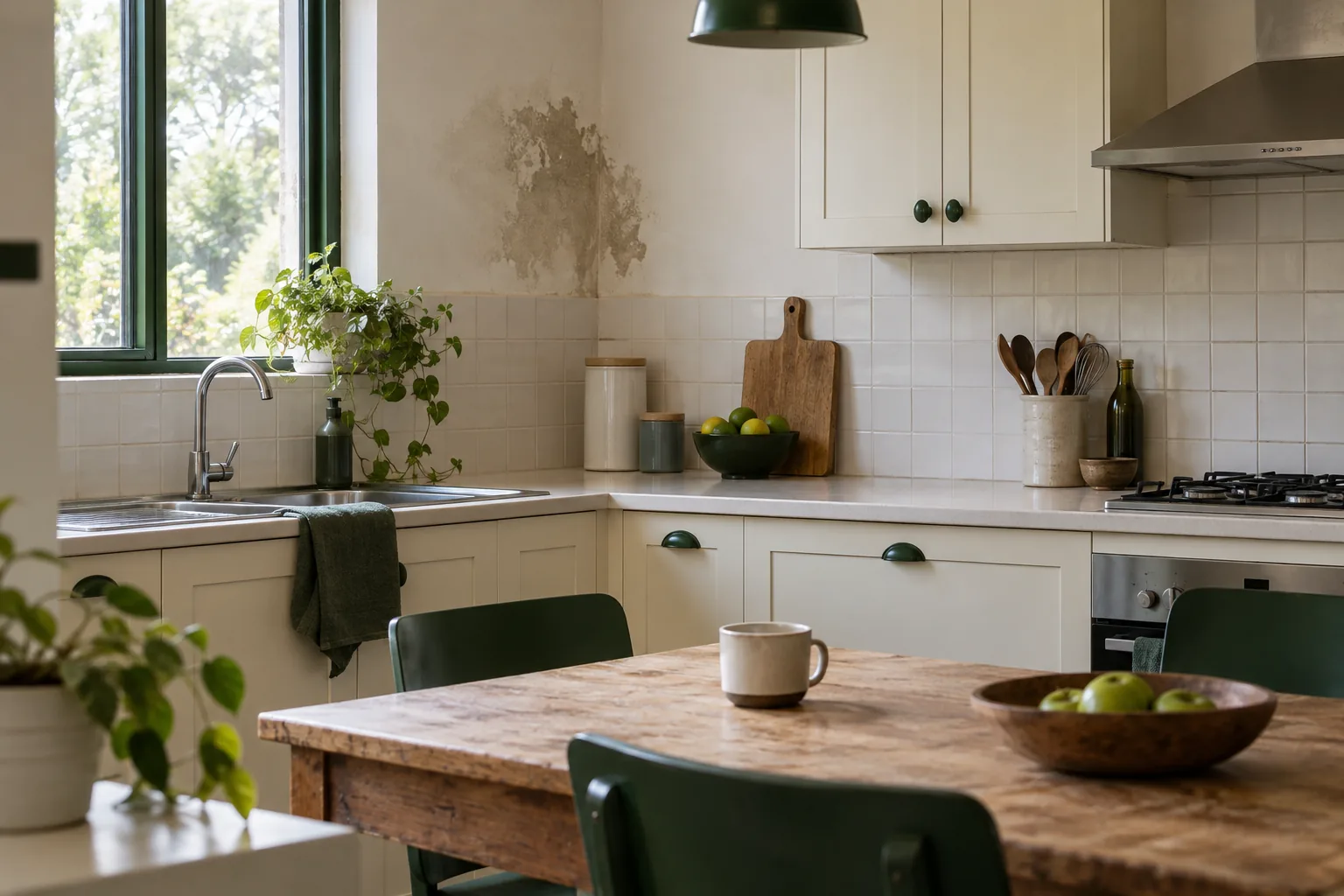
Kitchen exposed surfaces are distinct from outside staining and do not add contents or fittings to the scope.
Accessible affected surfaces
Other affected accessible walls, ceilings or hard floors may be agreed, excluding concealed layers and household textiles.
AFTER TREATMENT
Prepare the interior actually requested
Confirm the room being prepared, authorised entry and movable-content clearance before attendance. People and pets must leave during treatment. The source gives about three hours per room as average guidance, with actual timing affected by condition, size and access; it does not establish time for outdoor or repair work.
Cosmetic staining may remain and later decorating or building repair requires another agreement. Obtain specific return advice from the technician. No certificate about exterior weatherproofing, hidden wall layers or permanently dry indoor conditions is promised by treatment of the visible interior finish.
KEEP MOISTURE IN VIEW
Keep later observations labelled by location
Follow the interior surface and exterior repair history as separate records.
Note fresh water or growth in the room with its timing.
Pursue known building-envelope or ventilation faults through the appropriate provider.
Do not infer a hidden moisture route solely from two similar stains.
Quote without exterior-work assumptions
For the quote, identify the requested indoor finishes and explain which outdoor images are contextual only. Because the published table concerns Mould Removal, pricing for the agreed remediation needs its own applicability discussion. Exterior washing, roof work and wall-envelope repairs are not assumed within an accessible-room amount.
KILSYTH · EXACT ADDRESS & ACCESS
Enquiries for nearby addresses
Provide the complete Kilsyth address and name the interior shown in the treatment request. Label external photographs so the entry contact understands what is actually booked. Nearby navigation is for separate premises, while this room needs its own access, preparation and agreed surface scope.
Questions about remediation
Does an outdoor stain become part of the indoor quote?
Not automatically. Identify it separately and do not assume exterior cleaning or repairs are included in an accessible interior treatment request.
Do matching stains prove a leak through the wall?
No such conclusion is established from appearance alone. Report actual water observations and confirmed repair findings, keeping suspected hidden routes uncertain.
Will the wall be opened to connect the two concerns?
No destructive access is promised. Concealed layers require separate investigation or repair arrangements outside the standard visible-surface scope.
Does the hygrometer assess the outside wall assembly?
No. The confirmed instrument provides room-air humidity context, not a material reading or exterior-envelope condition finding.
Can treatment guarantee the indoor stain never returns?
No. Continuing water entry, condensation or ventilation problems may support recurrence, so source correction remains separate and important.
How should I report an exterior change afterwards?
Label it as an outside observation with its location and date. Do not represent it as a result on an interior finish that was treated under a different scope.
Discuss the indoor surface you can see
Phone 03 8652 1296 with the actual indoor finish, accessible area and confirmed repair information. Keep contextual exterior concerns separate when agreeing treatment.