
SURFACE TREATMENT · MOISTURE FOLLOW-THROUGH
Mould Remediation Panton Hill
If water is still appearing near the affected surface, make that the first detail in a Panton Hill treatment enquiry. Describe where it is seen and whether repair has been arranged. Remediation addresses suitable visible contamination; its sequence and timing need discussion alongside the separate work required to stop the continuing water.
Current wetting is included in the enquiry.
Repair and treatment have distinct purposes.
Suitability is discussed before preparation.
TREATMENT & FOLLOW-THROUGH
UNDERSTANDING REMEDIATION
Describe the continuing condition before arranging treatment
Identify the requested structural finish, its visible growth and any deterioration alongside the fresh wetting. The remediation process does not replace the relevant leak or building repair. Discuss suitability and sequence rather than assuming application to any wet material is appropriate or a visit will dry the whole room.
Keep hidden wet material outside the standard scope. Repair may reveal another affected face that needs agreement; treatment cannot be extended to sections unavailable or still receiving water.
THE MOISTURE CONNECTION
Keep the water observation and source diagnosis separate
Say whether the water appears after use, during rain or at another known time, without assigning an unverified cause. Give reliable repair information and explain what remains uncertain. A separate inspection enquiry can discuss visible accessible assessment while the treatment requirements are being clarified.
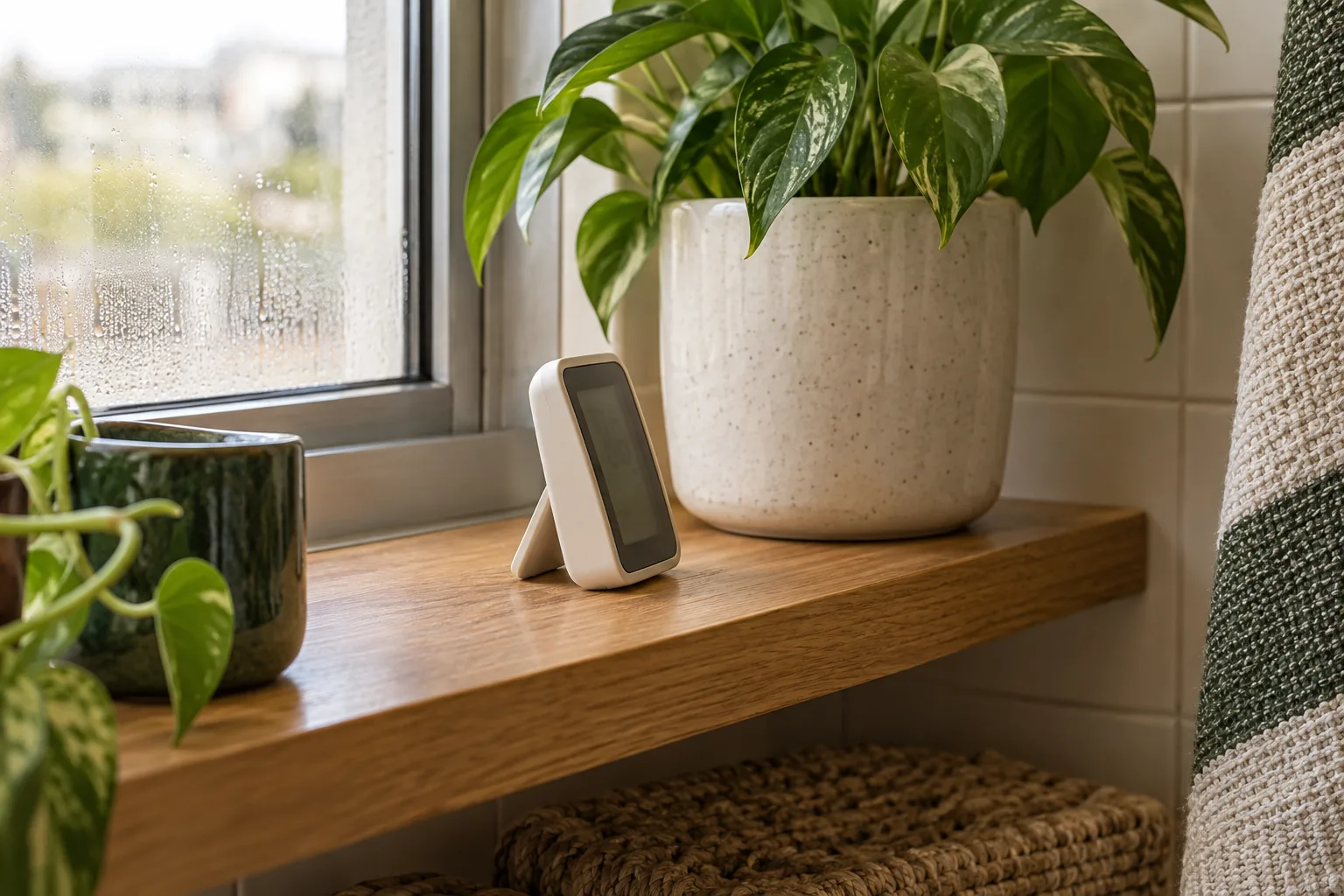
The professional hygrometer measures air-relative humidity; it is not a water-source locator or a material-drying certificate. Plumbing and structural defects need their appropriate providers. A low reading cannot settle continuing local wetting on the finish. Effective follow-through requires those moisture responsibilities to remain clear, because surface treatment cannot promise prevention while fresh water continues.
PLAN · FILTER · TREAT · REMOVE · CONTINUE
A sequence agreed around current suitability
1
Assess present contamination and access
Review the visible reachable growth and finish condition, discuss continuing wetting and agree suitable work alongside the separate repair status.
2
Begin HEPA air protection
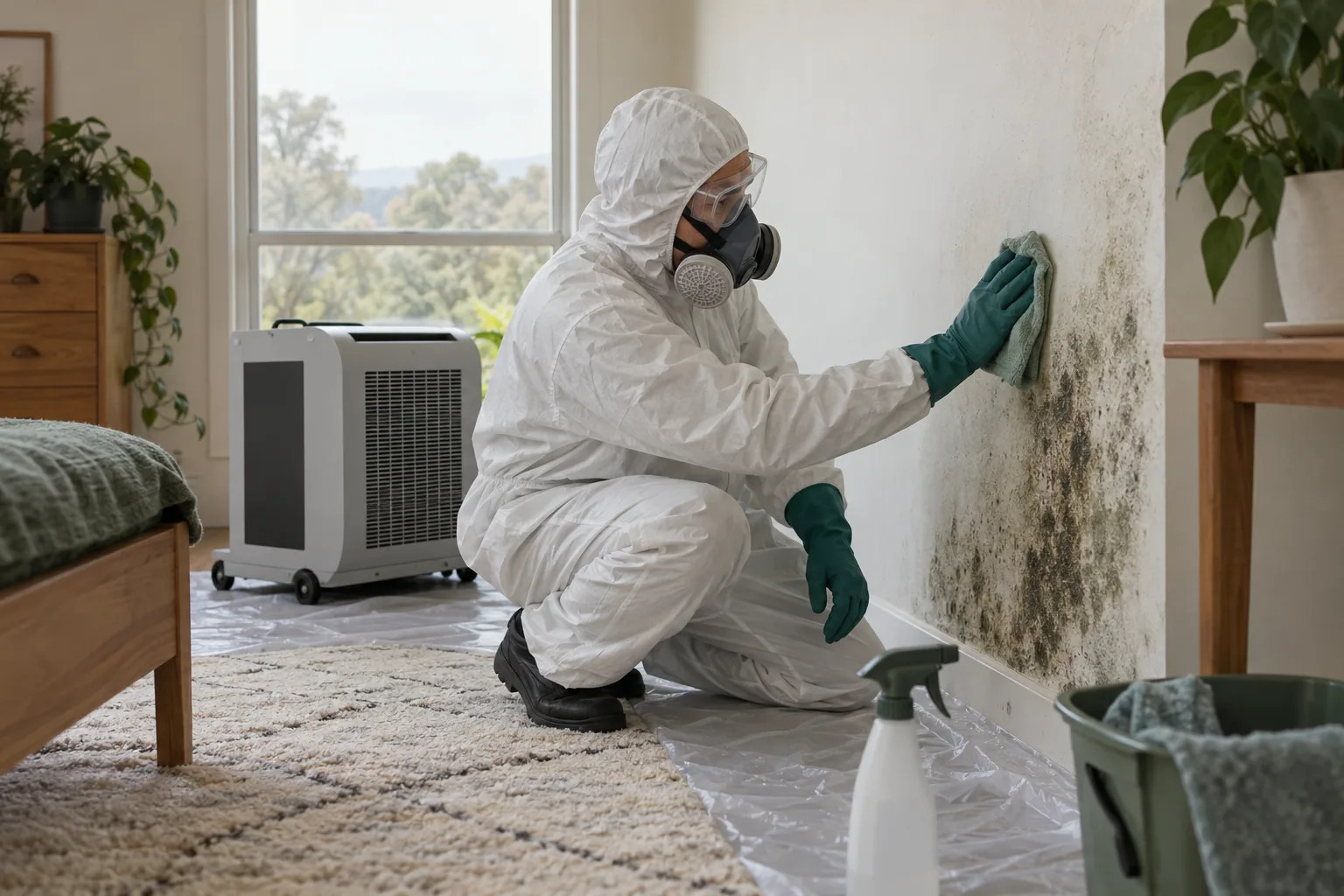
Set up the confirmed HEPA air scrubber before treatment in the prepared area, without describing filtration as leak correction or material drying.

3
Apply appropriate HOCl
Use suitable HOCl application and ULV dry fog where appropriate, retaining the distinction between contamination treatment and stopping ongoing water.
4
Physically remove visible mould
Use professional H-class filtered equipment within the agreed accessible extent, keeping water-source repair, demolition and textile work separately scoped.
5
Continue air cleaning and explain follow-through
Maintain HEPA filtration during and after treatment; discuss actual return instructions, remaining marks and how to report further wetting.
Name the structural face receiving water
Walls
Describe the wall’s current visible growth and wetting separately from any suspected defect inside it.
Ceilings
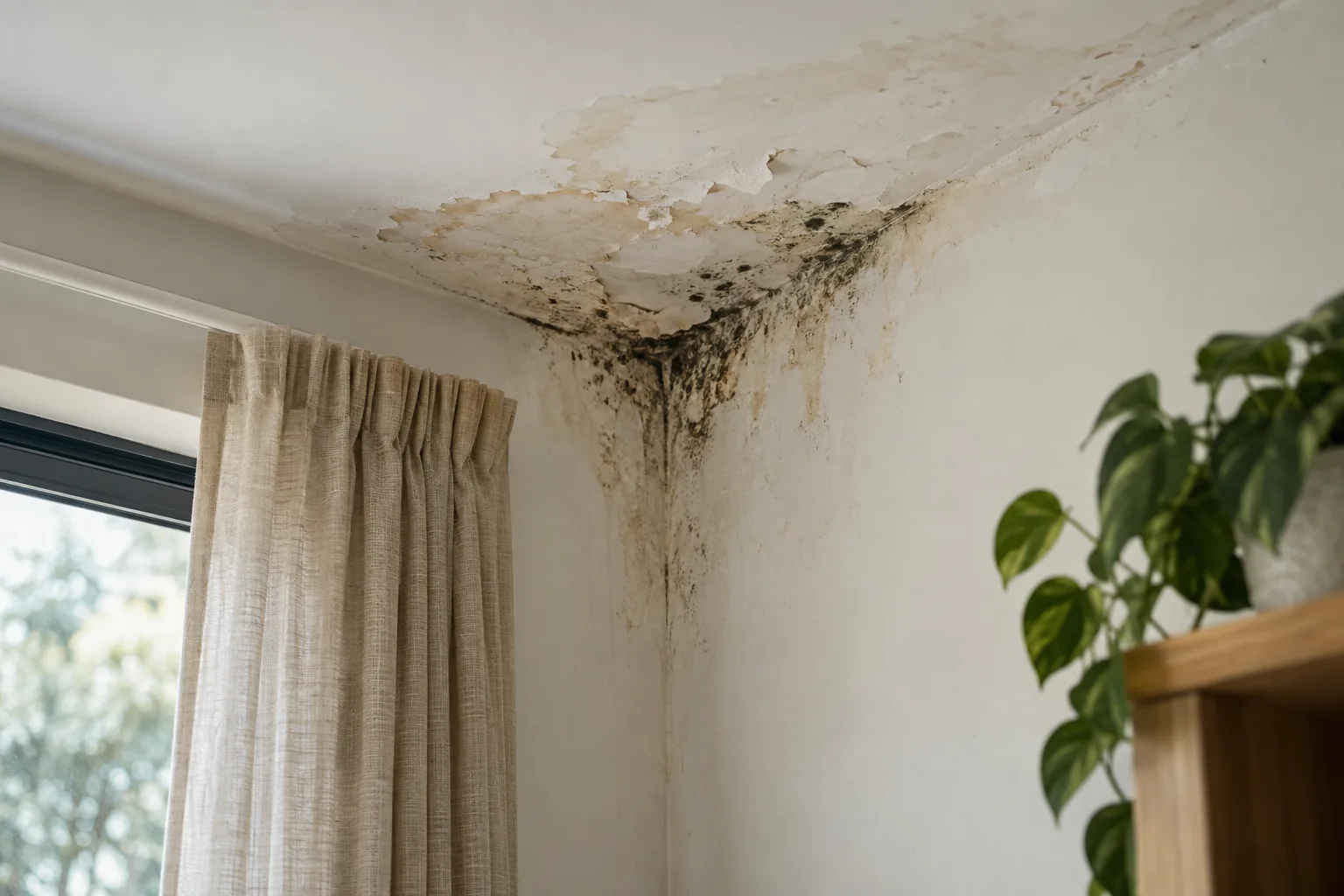
Locate ceiling water and coating deterioration without assuming a roofing repair is part of treatment.
Bathrooms
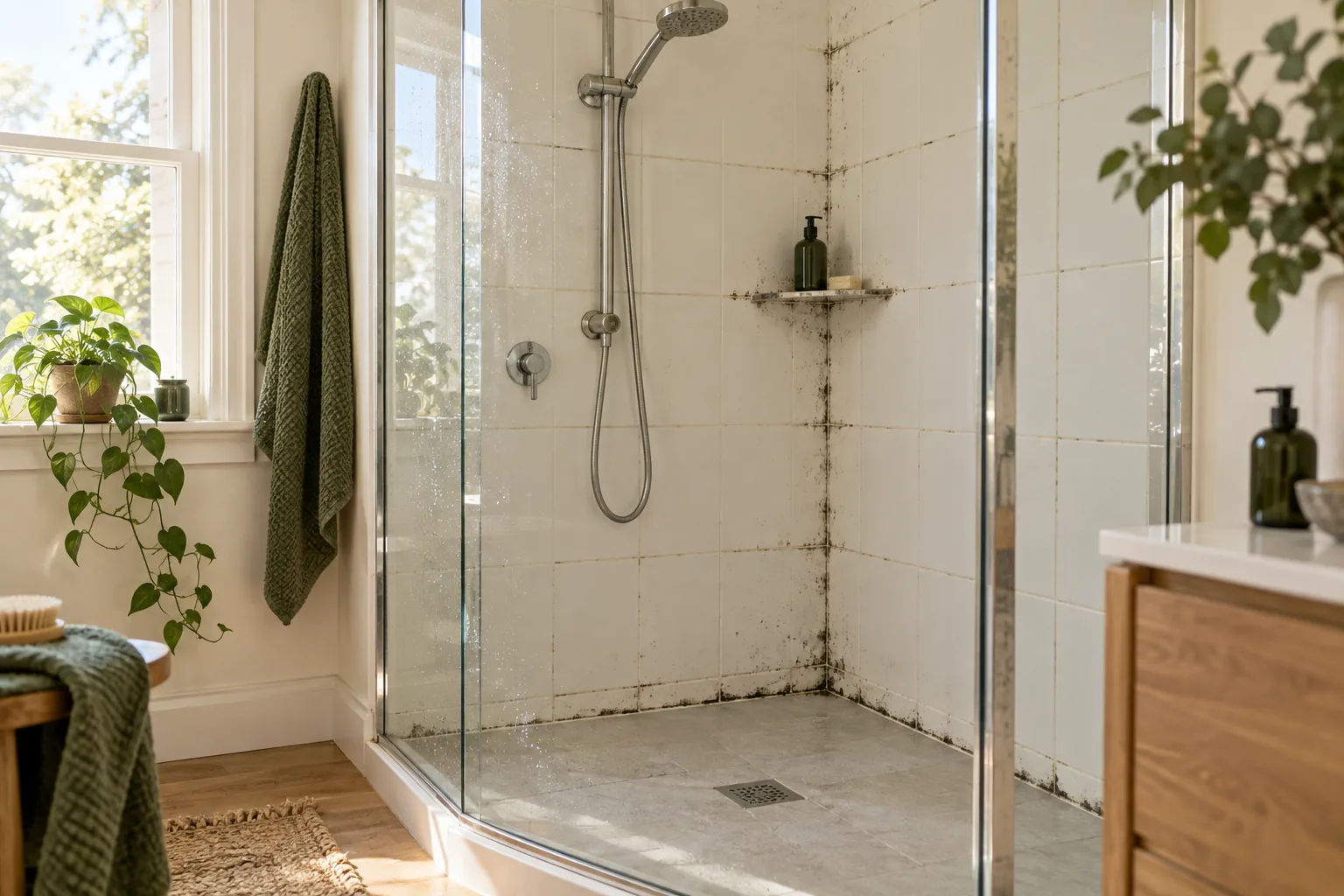
Bathroom wall or ceiling contamination stays distinct from plumbing and joint repairs.
Kitchens
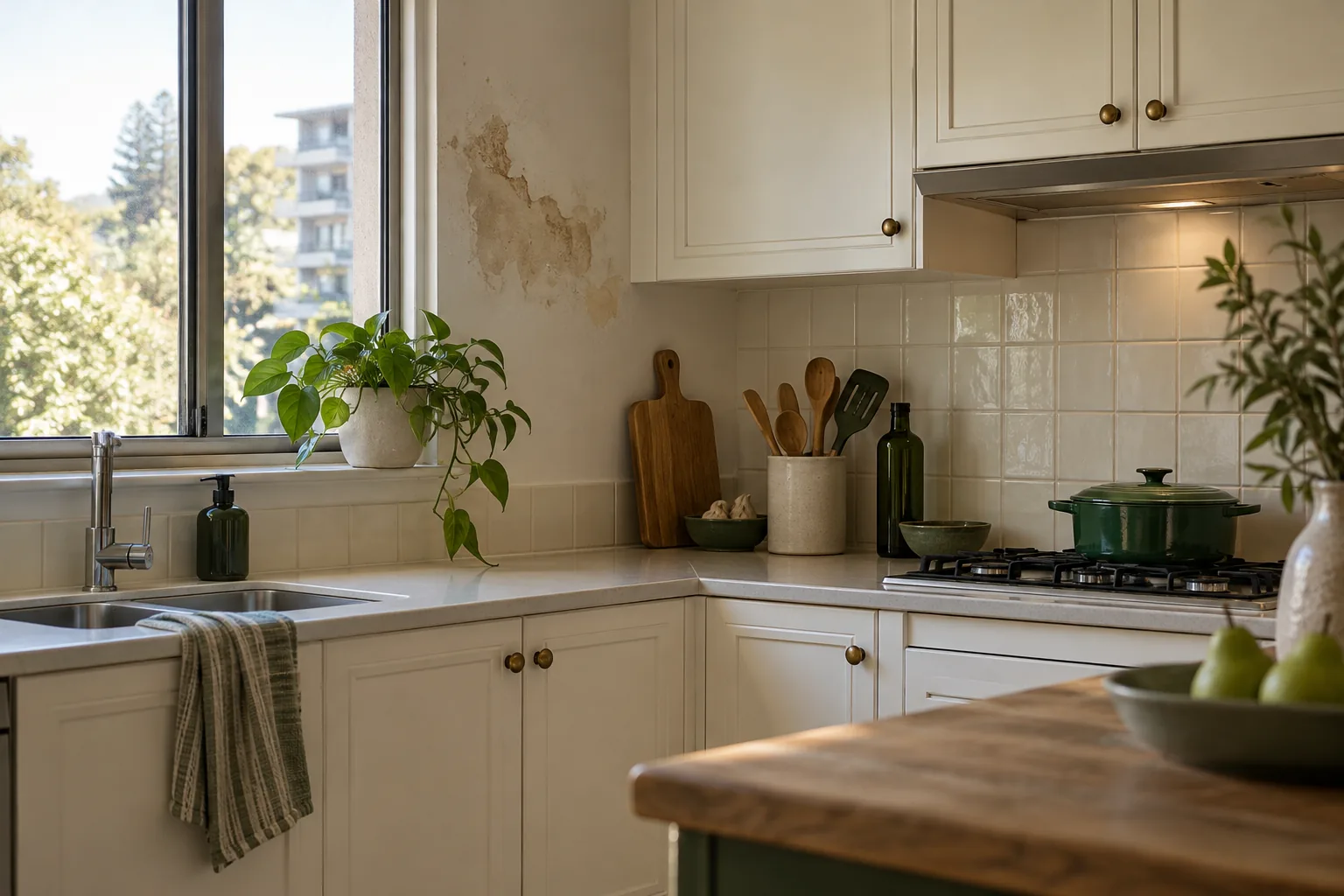
Explain reachable kitchen finishes and continuing fitting leaks as separate concerns, not included appliance servicing.
Accessible affected surfaces
Other exposed structural sections require appropriate suitability discussion; hidden water-affected layers and contents are not standard inclusions.
WHAT TO EXPECT
Confirm the sequence before clearing the area
Explain current wetting and the separate repair plan before making attendance arrangements. Ask what preparation is appropriate rather than disturbing damaged material. People and pets leave during treatment and follow technician-specific departure and return instructions; no universal interval is confirmed.
Approximate source guidance averages three hours per room, depending on size, contamination and accessibility. It is not a drying-service duration, fixed repair deadline or hourly charge. Residual cosmetic staining can remain. A separate provider needs to settle repair and decorating requirements without interpreting the treatment result as proof that all water has been stopped or concealed material is dry.
FOLLOW THE MOISTURE
Report continued water before assuming a new treatment is the answer
After advised return, record fresh wetting with its location and timing and contact the appropriate source-repair provider. A changed patch may require a current assessment, but repeated surface work should not be described as solving a persistent defect. Keep the completed accessible scope clear.
Record the water event separately from an unchanged stain.
Retain reliable repair dates and any outstanding source question.
Describe newly exposed growth if repair changes access.
Quote contamination work without adding leak repair
State current wetting, visible extent and material condition when discussing cost. Confirm which Mould Removal examples apply to remediation; they do not establish a leak-repair allowance, concealed drying package or guarantee against further water at the Panton Hill property.
PANTON HILL · EXACT ADDRESS & ACCESS
Panton Hill address and neighbouring enquiries
Smiths Gully and St Andrews pages can help with another nearby property request. For Panton Hill work, give the exact room and repair status at the actual address. Another site’s completed repair cannot establish suitability or timing for this currently wet surface.
Questions about remediation
Should the continuing water be mentioned before booking?
Yes. Explain its location and repair status so suitability and the work sequence can be discussed before preparation.
Will remediation stop the leak?
No source repair is confirmed. Arrange the relevant plumbing, roofing or building provider separately.
Can a low room reading mean the wet patch is dry?
No. Air relative humidity does not certify moisture inside the local material or settle visible continuing wetting.
Does the visit include drying concealed layers?
No concealed drying service is promised. The standard request concerns suitable visible accessible contamination.
What if the repair exposes more mould?
Describe the newly reachable section and have treatment agreed. The original face did not automatically include hidden material.
What should happen if water returns after treatment?
Record the event and follow up the appropriate repair concern. Describe any fresh growth separately instead of relying on a permanent-prevention promise.
Explain the water before choosing treatment
Call 03 8652 1296 with the Panton Hill surface, current wetting and repair plan. Clarify suitable accessible work and the separate moisture responsibilities.