
SURFACE TREATMENT · MOISTURE FOLLOW-THROUGH
Mould Remediation Smiths Gully
If a wall has both a recently changed patch and an older outline that has stayed the same, describe those observations separately. For a Smiths Gully enquiry, the aim is not to promise a spotless finish from the photograph. Clarify the current visible concern, accessible material and any separate decorating decision before arranging remediation.
New changes are distinguished from old outlines.
Cosmetic expectations are discussed upfront.
The accessible treatment remains clearly defined.
TREATMENT & FOLLOW-THROUGH
UNDERSTANDING REMEDIATION
A darker outline is not a complete treatment instruction
Identify which section changed, what you actually observed and whether the coating is intact. A stain’s colour alone cannot establish current activity or its cause. The professional remediation process can be discussed for suitable visible accessible contamination, with residual cosmetic marks acknowledged rather than guaranteed to disappear.
Discuss damaged finish separately from colour. Concealed material and belongings remain excluded; a cosmetic target cannot enlarge treatment into every dark mark or promise decoration readiness.
THE MOISTURE CONNECTION
Compare appearance with reliable water observations
Explain whether fresh water or condensation occurred where the new change was seen and whether any source repair is known. Keep uncertain history labelled as uncertain. A separate inspection enquiry can discuss visible accessible assessment when the condition needs clarification before treatment.
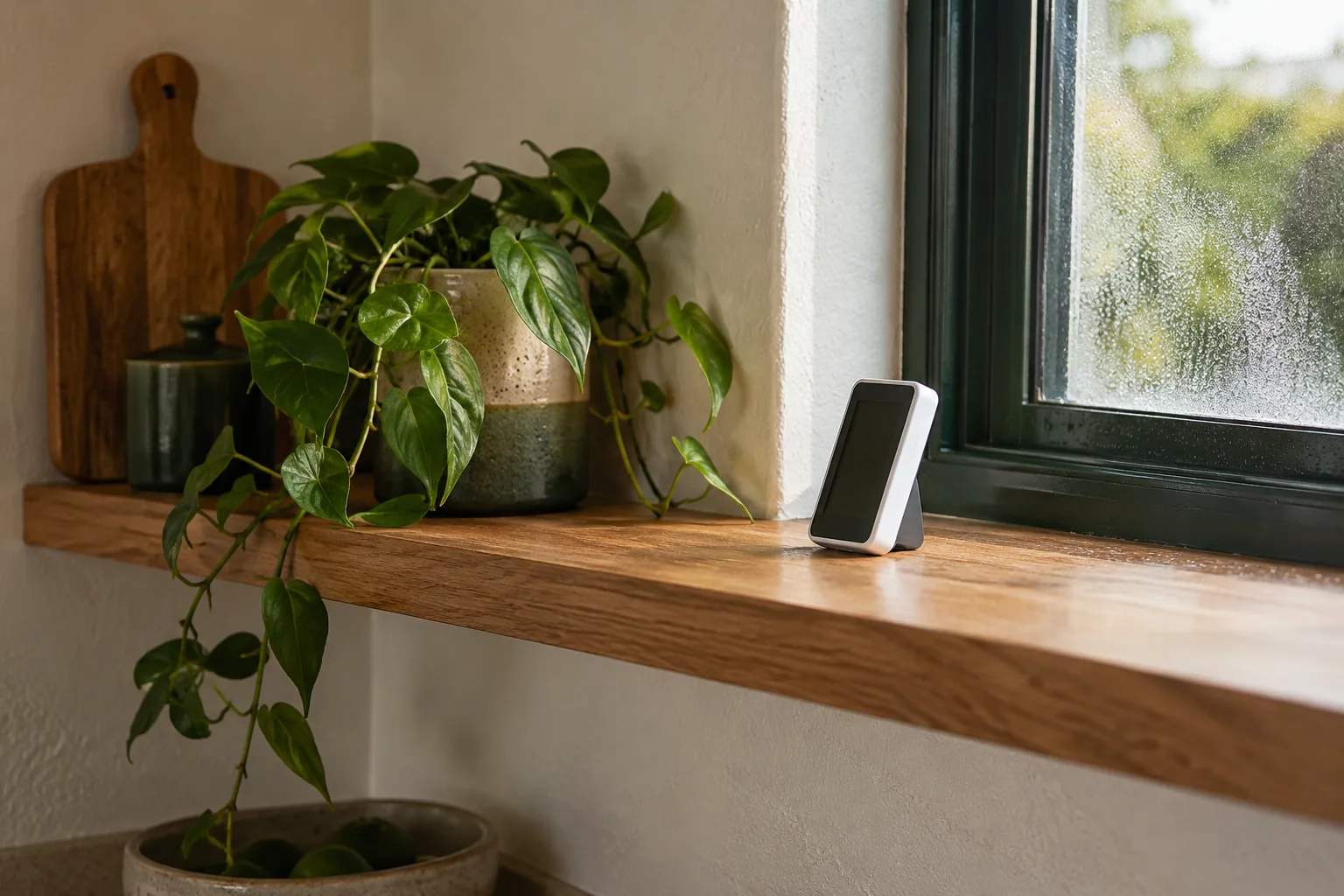
The professional hygrometer measures room-air relative humidity, not activity within a stain or the moisture content of the wall. A current reading cannot certify an older outline harmless or establish its origin. Continuing leaks and relevant ventilation problems need appropriate follow-through. Surface treatment cannot promise that cosmetic restoration or permanent prevention follows from one measurement.

PLAN · FILTER · TREAT · REMOVE · CONTINUE
Treatment with the cosmetic boundary understood
1
Assess the described changes
Review current visible contamination and accessible finish condition, separating the changed section from any unchanged cosmetic outline when agreeing scope.
2
Begin protective filtration
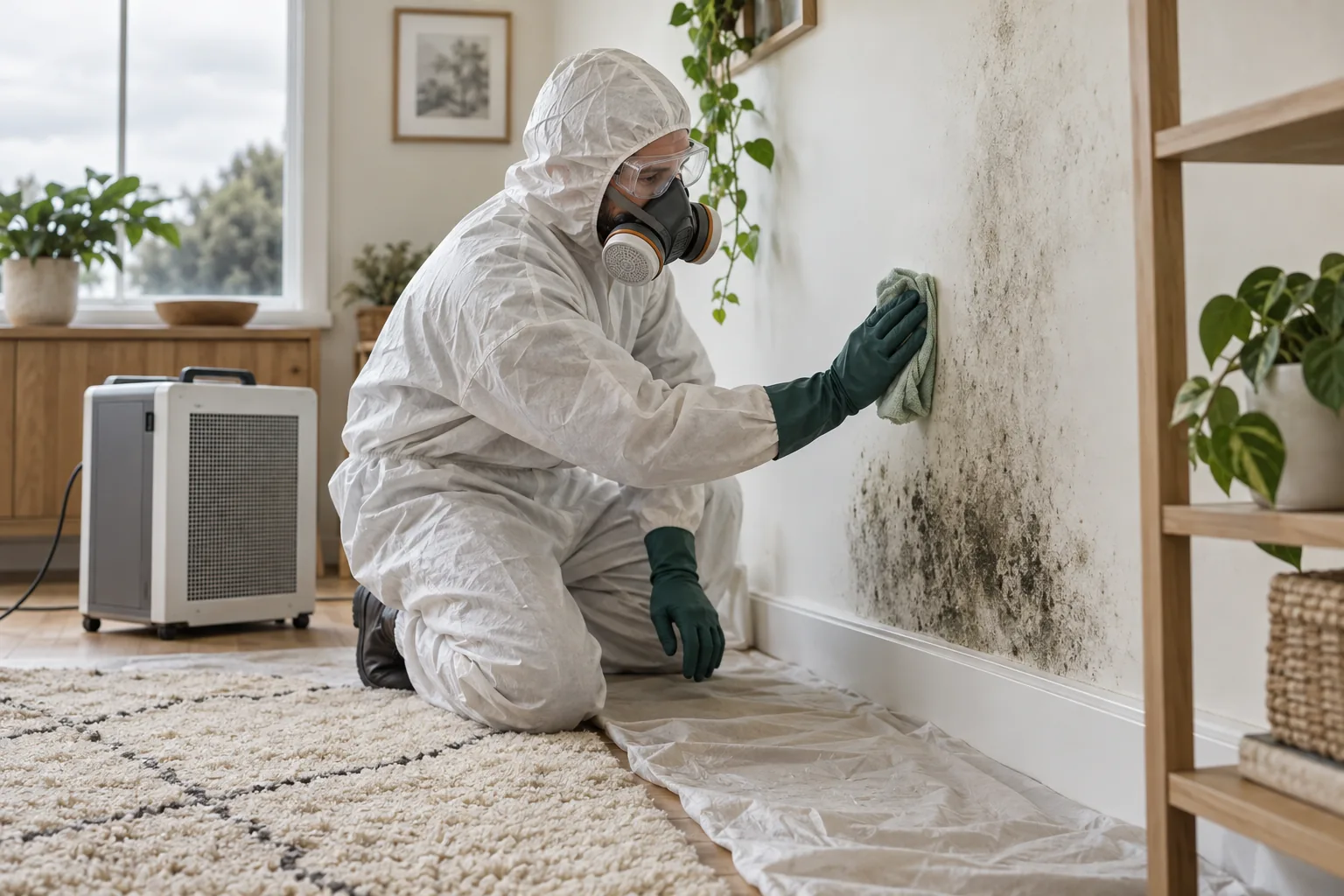
Set up the confirmed HEPA air scrubber before treatment in the prepared area, without presenting air protection as proof of a stain’s history.

3
Choose suitable HOCl treatment
Apply appropriate HOCl and use ULV dry fog where suitable, retaining realistic finish expectations rather than guaranteeing every mark disappears.
4
Remove visible growth physically
Use professional equipment with H-class filtration on agreed reachable contamination, keeping painting and damaged-material replacement separate.
5
Continue air cleaning and explain the outcome
Maintain HEPA filtration during and after the process, then discuss actual return advice and remaining cosmetic discolouration on treated surfaces.
Describe appearance and material separately
Walls
Identify the current wall patch and coating condition without calling every older outline active growth.
Ceilings
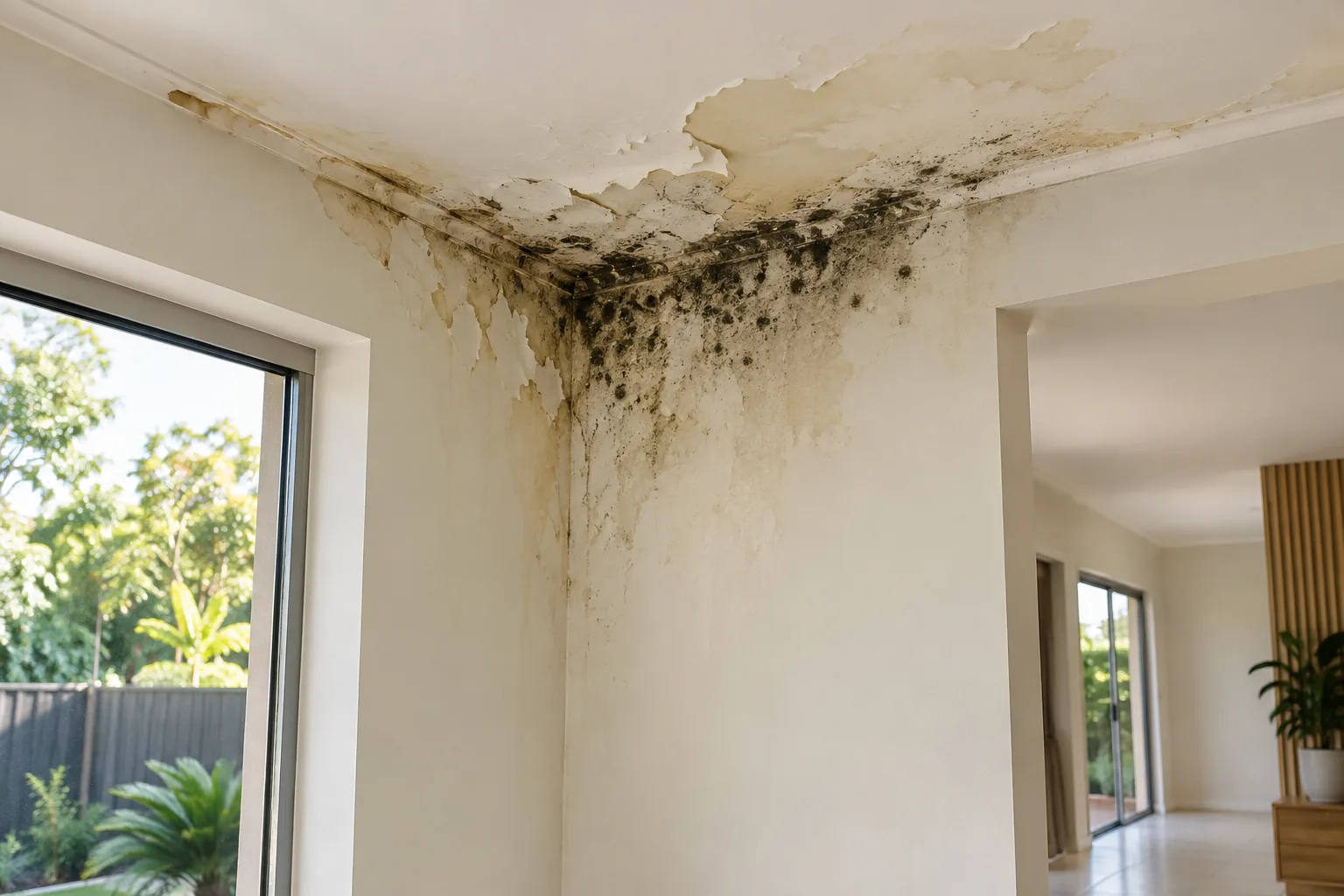
Ceiling discolouration needs its own reliable change and water history rather than diagnosis from colour.
Bathrooms
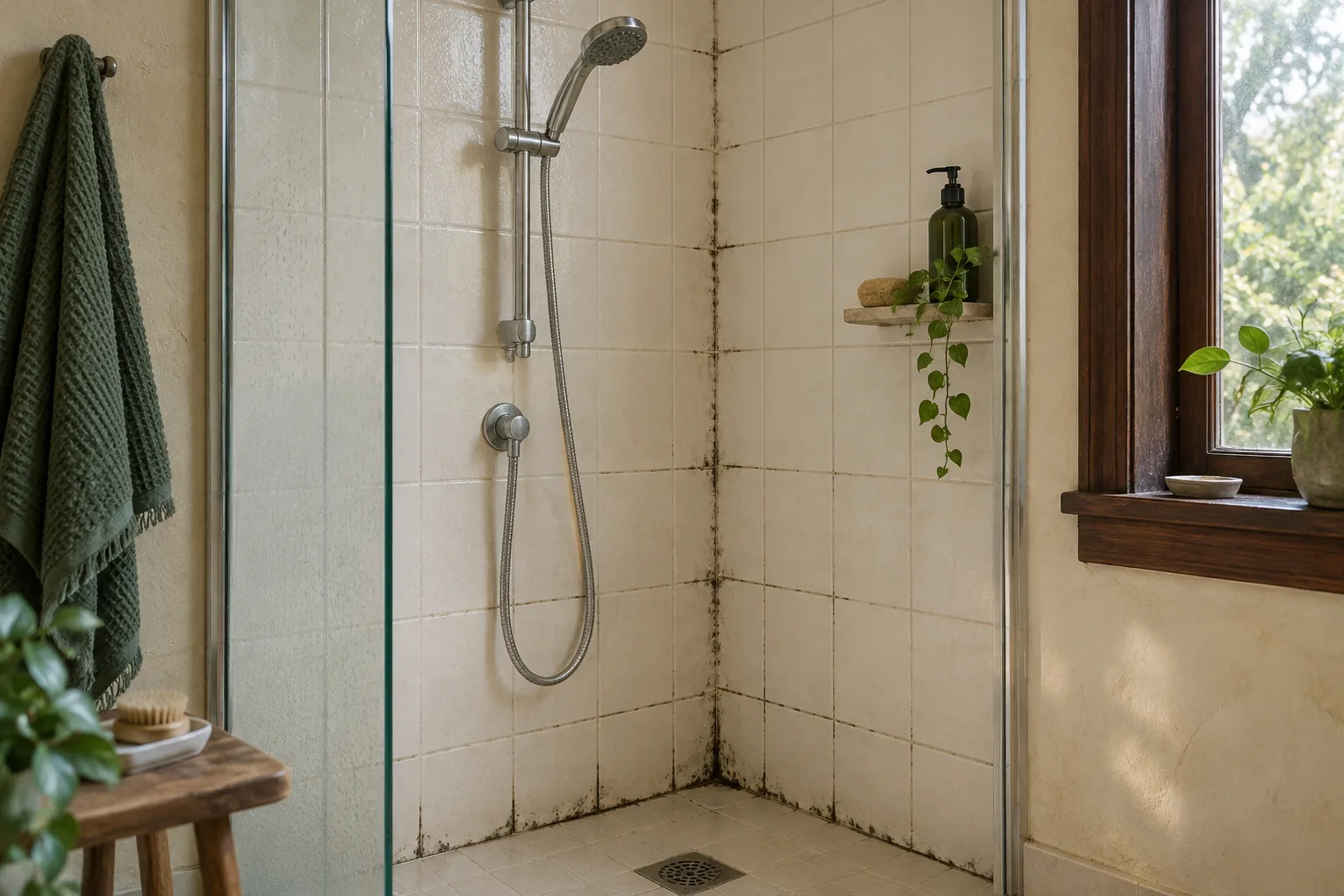
Separate bathroom structural contamination from cosmetic joint marks and independently planned repairs.
Kitchens
Name the exposed kitchen finish and distinguish the request from stain removal on stored contents or appliances.
Accessible affected surfaces
Other reachable structural sections may be agreed; hidden layers and excluded fabrics do not become included because a cosmetic mark remains.
WHAT TO EXPECT
Agree expectations before choosing decoration
Explain new and unchanged sections before preparing the room, and ask what clearance the technician needs. People and pets leave during treatment, with return governed by the actual instructions for the job rather than a general stain-removal timetable.
Average guidance is approximately three hours per room, subject to size, contamination and accessibility. The work is not hourly decoration or a guaranteed cosmetic makeover. Remaining marks can require a separate finish decision. No laboratory activity test, species identification, signed clearance or concealed-material result is promised by this standard visible-surface treatment.
FOLLOW THE MOISTURE
Observe a new change rather than judging by the remaining outline
After return is advised, record fresh growth or wetting with its location and timing. Keep an unchanged stain distinct from those observations. Follow through on relevant water or ventilation correction and have decoration requirements settled separately instead of treating paint as proof of moisture control.
Compare the same identified section when a change appears.
Record fresh water independently from cosmetic colour.
Describe damaged finish before arranging separate decoration.
Quote contamination work rather than perfect appearance
Provide current visible extent, finish and access when discussing cost. Confirm remediation applicability of the Mould Removal price examples; they do not establish guaranteed stain removal, repainting or a laboratory decision about an unchanged outline.
SMITHS GULLY · EXACT ADDRESS & ACCESS
Smiths Gully premises and nearby enquiries
Panton Hill and St Andrews links can assist with another nearby property. For the Smiths Gully request, identify the particular room and which appearance changed. A similar mark at another address cannot establish activity, cause or the cosmetic result here.
Questions about remediation
Does a dark stain alone establish active growth?
No. Describe reliable changes and moisture observations; colour cannot settle the condition or treatment need by itself.
Will remediation guarantee the wall looks new?
No complete cosmetic restoration is promised. Discuss residual staining and separate decorating requirements before work is arranged.
Can the hygrometer classify the old outline?
It measures room air, not stain activity or species. Do not use a reading as a laboratory finding.
Should I paint over the unchanged mark before enquiring?
Describe the exposed condition first. Covering it changes access and should not replace discussion of current contamination and repair needs.
What if fresh growth appears beside the old outline?
Identify the new section and any wetting separately. A current concern needs its own description rather than a conclusion based only on the older stain.
How should completion be recorded when colour remains?
Retain the surfaces actually treated and distinguish remaining cosmetic appearance from new water or growth. Keep decoration as a separate decision.
Describe what changed and what stayed the same
Call 03 8652 1296 with the Smiths Gully wall, visible changes and finish condition. Clarify treatment scope and realistic cosmetic expectations before booking.