
ASCOT VALE · 3032
Mould Removal Ascot Vale
Mould removal in an Ascot Vale home should start with the finish beneath the growth. A painted wall, older plaster detail and tiled bathroom do not respond to an identical method. Tell us which surfaces are affected, whether the finish is flaking and what access is available. We can discuss an appropriate assessment and confirm availability before any work is booked.
Finish-aware methods
Honest results
Focused assessment
THE PROPERTY SETS THE PLAN
A practical starting point in Ascot Vale
Moonee Valley includes Ascot Vale, but that administrative fact says nothing about a particular property’s moisture history. If your home has decorative plaster, patched walls or a recent extension, explain those differences. The original room and the newer wet area may have different finishes and ventilation arrangements, so one convenient cleaning method may not suit both.
A useful removal enquiry can identify a sensitive finish without asking you to identify every coating. Say what you know, provide photographs and mention previous restoration work. If the finish is uncertain, agree how suitability will be checked before choosing the expected appearance or method.
Look beyond the paint
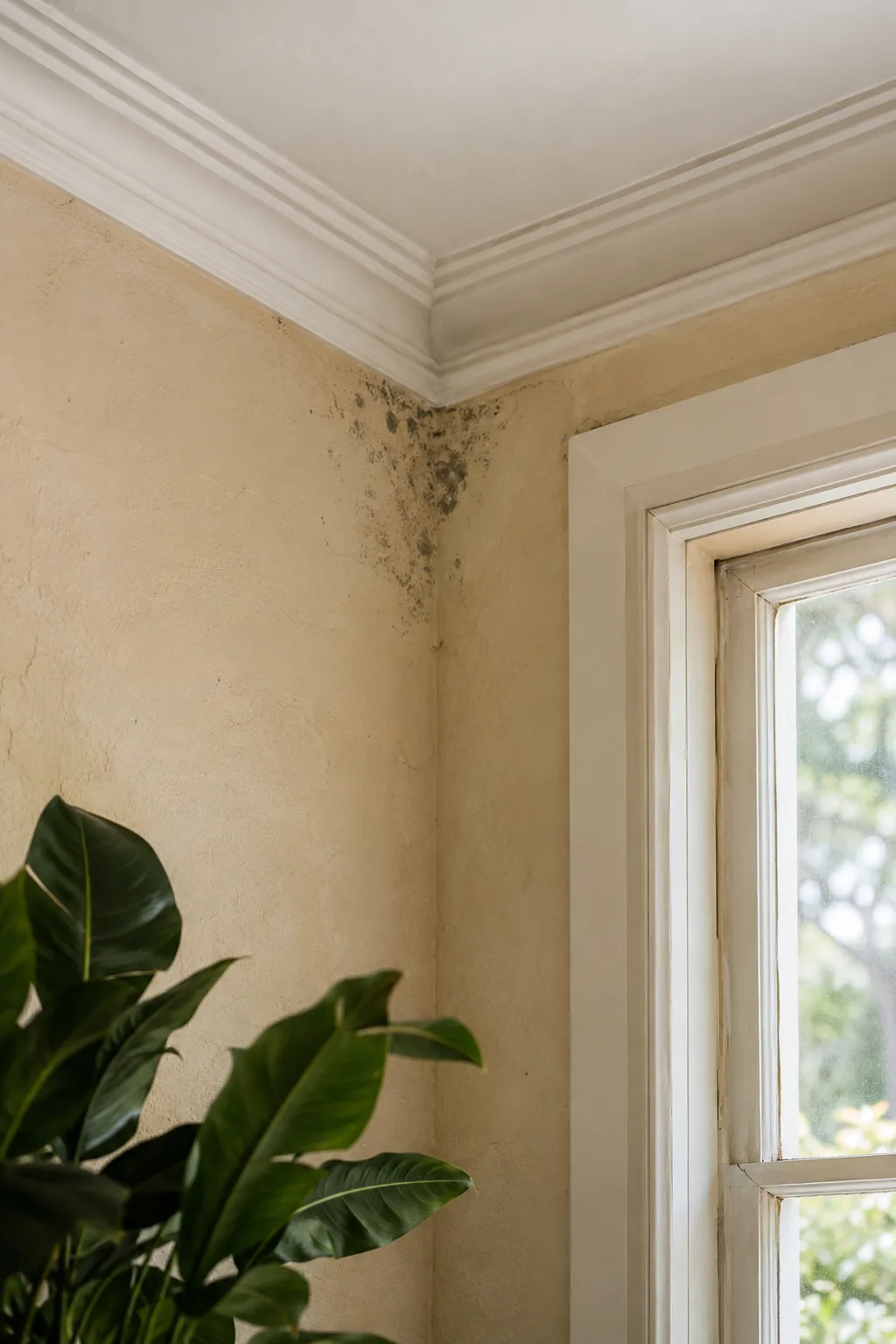
Check whether marks follow a wall joint, sit below a roof junction or appear beside an internal wet area. These observations help direct the assessment without diagnosing the building by eye. A small mark next to an extension can have a different source from widespread corner condensation. Include dates of alterations or repairs if you know them.
An inspection discussion is particularly useful when flaking paint or mixed construction makes the cause uncertain. Ask what can be observed safely and what needs another trade. Describe the position of the finish relative to an extension, opening or bathroom rather than choosing a cause from age alone.
BATHROOMS · WALLS · CEILINGS
Surface-Sensitive Removal
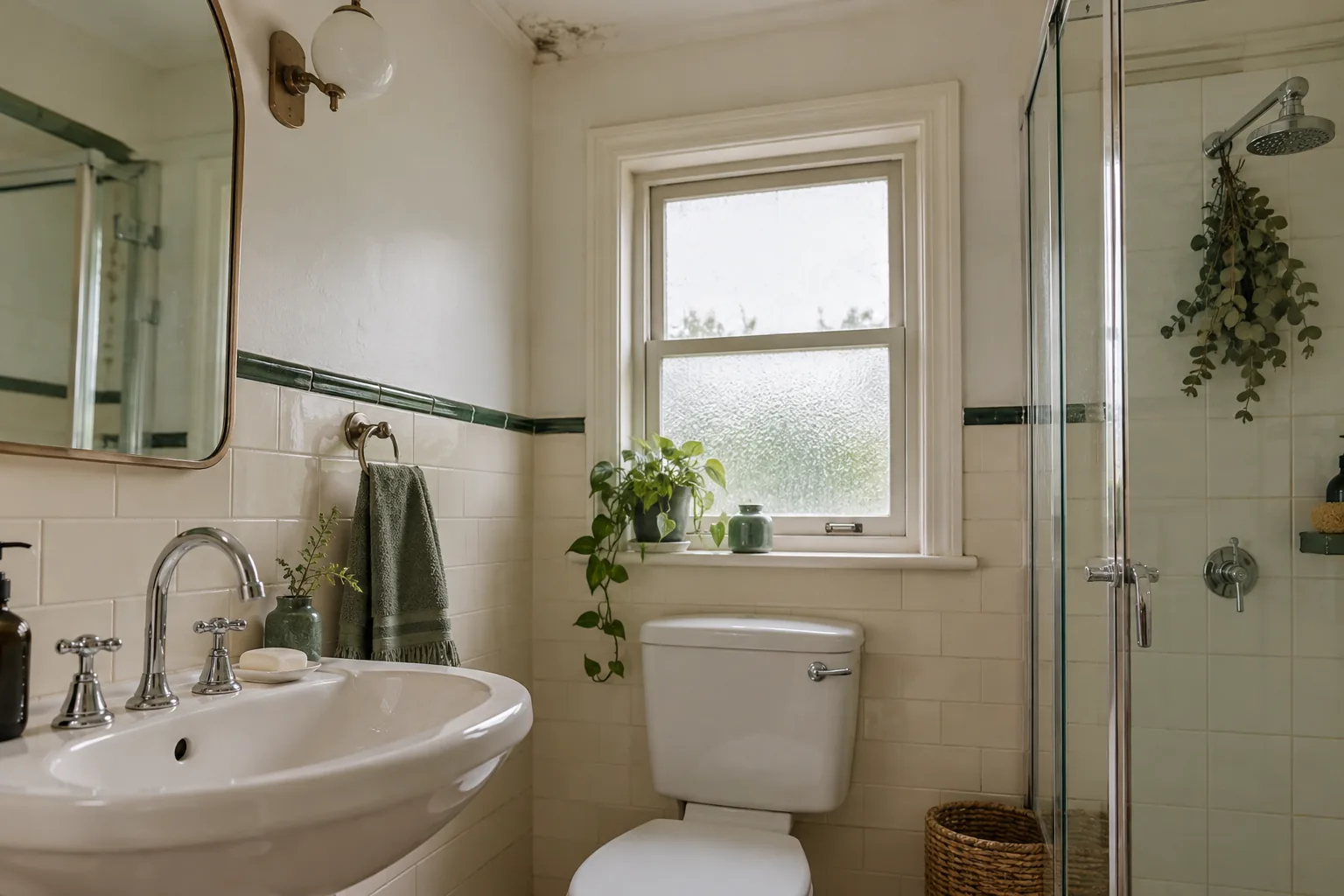
For walls, distinguish surface growth from paint that is lifting or plaster that feels soft. For ceilings, show the junction with the wall as well as the patch. Bathroom tile faces may be accessible while damaged grout, failed sealant or material behind the lining needs separate investigation. Avoid scraping a fragile finish to see what lies underneath.
Preserve the finish
Protecting a finish also means controlling the conditions after cleaning. Monitor the affected wall without pushing furniture back tightly against it. Use bathroom extraction consistently and have persistent roof or plumbing defects repaired. If repainting is proposed, ask the relevant trade how they will establish that the surface and substrate are suitable first.
ASSESS · PREPARE · REMOVE
Plan the work around mixed wall finishes
Identify older and newer finishes before an appointment is arranged.
Distinguish finishes
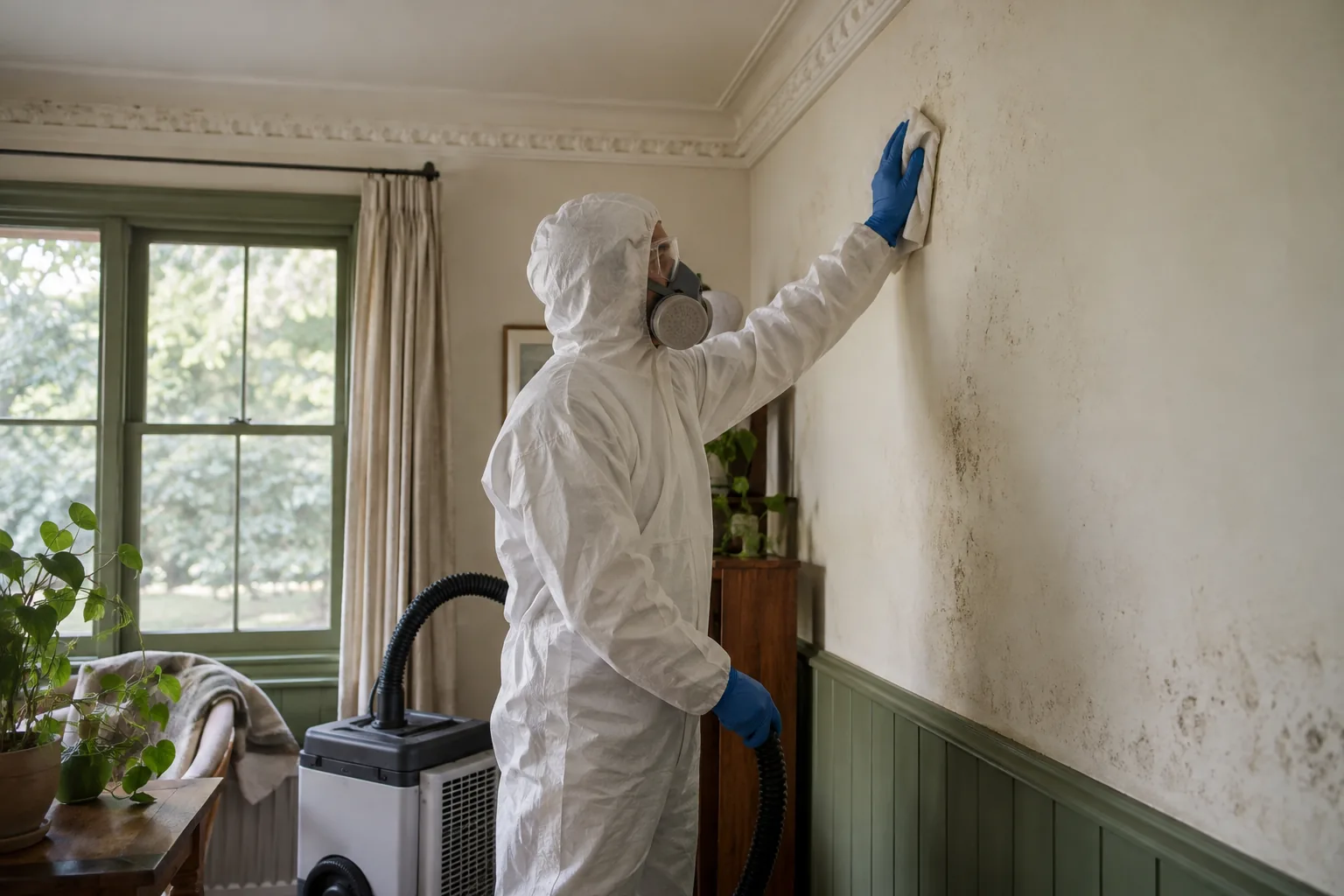
Separate decorative plaster from ordinary painted wall and bathroom tile in the assessment. Note fragile edges and previous patching. The agreed scope concerns visible accessible walls, ceilings and floors; textile furnishings remain separate. A sensitive finish should not be grouped with a robust surface simply because both show dark growth.
Prepare without disturbance
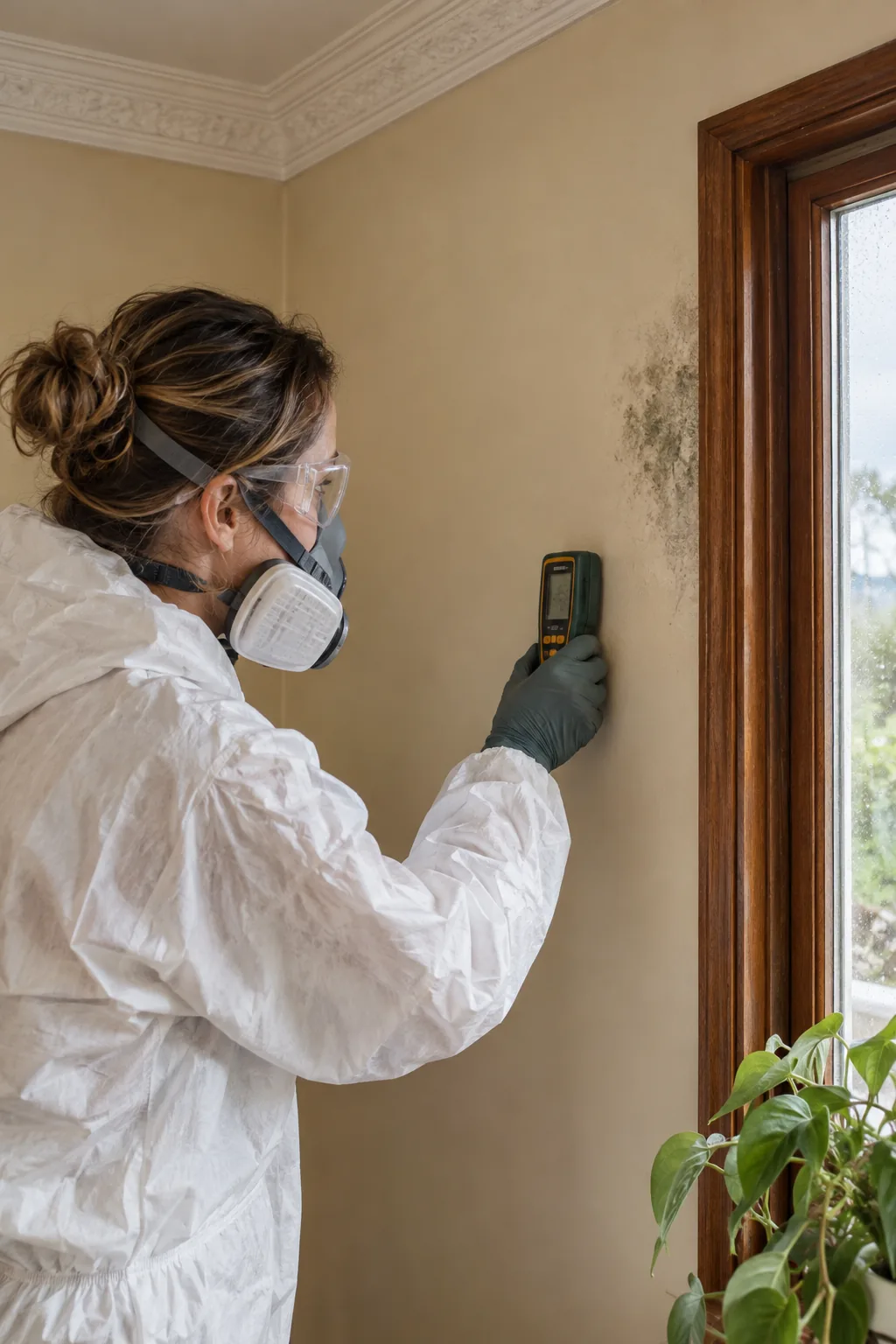
Arrange access to the detail without scraping, sanding or shifting fixed fittings. Discuss protection of nearby belongings, appropriate PPE and HEPA filtration for the work. Furniture clearance should make the surface reachable while avoiding damage to the very finish the assessment is intended to preserve.
Choose the material-appropriate method
Physical removal and treatment must respect the actual substrate and coating. Ask whether a small test is useful before extending the work. In the remediation scope, deteriorated material or restoration requirements should be identified separately rather than treated more aggressively to chase a perfect cosmetic result.
Record the remaining condition
Distinguish accessible growth removal from staining, paint loss and plaster repair. If the moisture source lies at a roof junction or wet-area alteration, the relevant trade still needs to address it. Return of growth on a delicate finish calls for review of those conditions rather than repeated disturbance.
Material-first decisions
The useful question is not whether the technician can make every mark disappear. It is whether the agreed method respects the material and identifies limits. Ask how fragile areas will be approached, what staining may remain and whether a small test area is appropriate. Replacement or restoration should never be disguised as routine surface cleaning.
When reviewing room pricing, explain the decorative detail and access rather than comparing only floor size. Agree the sensible result for that material and any excluded restoration. Use the directory for navigation, then confirm availability for your Ascot Vale address and the particular finish by phone.
NEARBY LOCATIONS
Around Ascot Vale
Travancore · Moonee Ponds · Maribyrnong · Maidstone
For another address, explore Melbourne areas and call to confirm availability.
BEFORE YOU BOOK
Questions about your Ascot Vale home
Can mould be removed from decorative plaster?
The condition and finish need assessment. Accessible growth may be treatable, but delicate or deteriorated plaster can limit the method and may require a restoration trade.
Will treatment restore peeling paint?
No. Removing mould does not repair lost adhesion or a damaged substrate. Paint repairs belong in a separate scope once the moisture question is addressed.
Should I sand the patch before inspection?
Do not disturb it to prepare a photograph. Sanding changes the surface and can spread debris, while making the original moisture pattern harder to interpret.
Is a bathroom extension treated like the older house?
The assessment should consider its lining, ventilation and plumbing separately. Different construction or finishes can require a different preparation and method.
Can a stain remain after cleaning?
Yes. A mark may remain in paint or another material even after accessible growth is removed. Ask what result is reasonable for the actual surface.
What should I mention when calling from Ascot Vale?
Describe the affected finish, its condition, any recent building work and access restrictions. The address is needed to check appointment availability.
Discuss the affected room in Ascot Vale
Call 03 8652 1296 with your address, photographs if available and a short description of mixed wall finishes. We can discuss the visible surfaces, what needs assessment and whether an appointment is available for your address. Confirm the scope before booking.
Local context and practical guidance: Moonee Valley City Council — What we do · Australia Post — Ascot Vale postcode