
BLIND BIGHT · MELBOURNE
Mould Removal Blind Bight
GROUND LEVEL · FINISHES · HISTORY
A ground-level wall with damp marks needs room-specific observations, not a diagnosis from the property’s setting. For Blind Bight, explain when wetness appears, the finish and any known leak. We confirm the exact address and suitable accessible work before agreeing attendance.
Actual wetness recorded
Material limits discussed
Address availability confirmed
SURFACES & THEIR SETTING
Describe the room rather than guessing the source
Casey identifies Blind Bight among its Western Port coastal villages. That fact is geographical context, not evidence that every local room has the same dampness issue. For mould removal, provide the building and surface details you can observe.
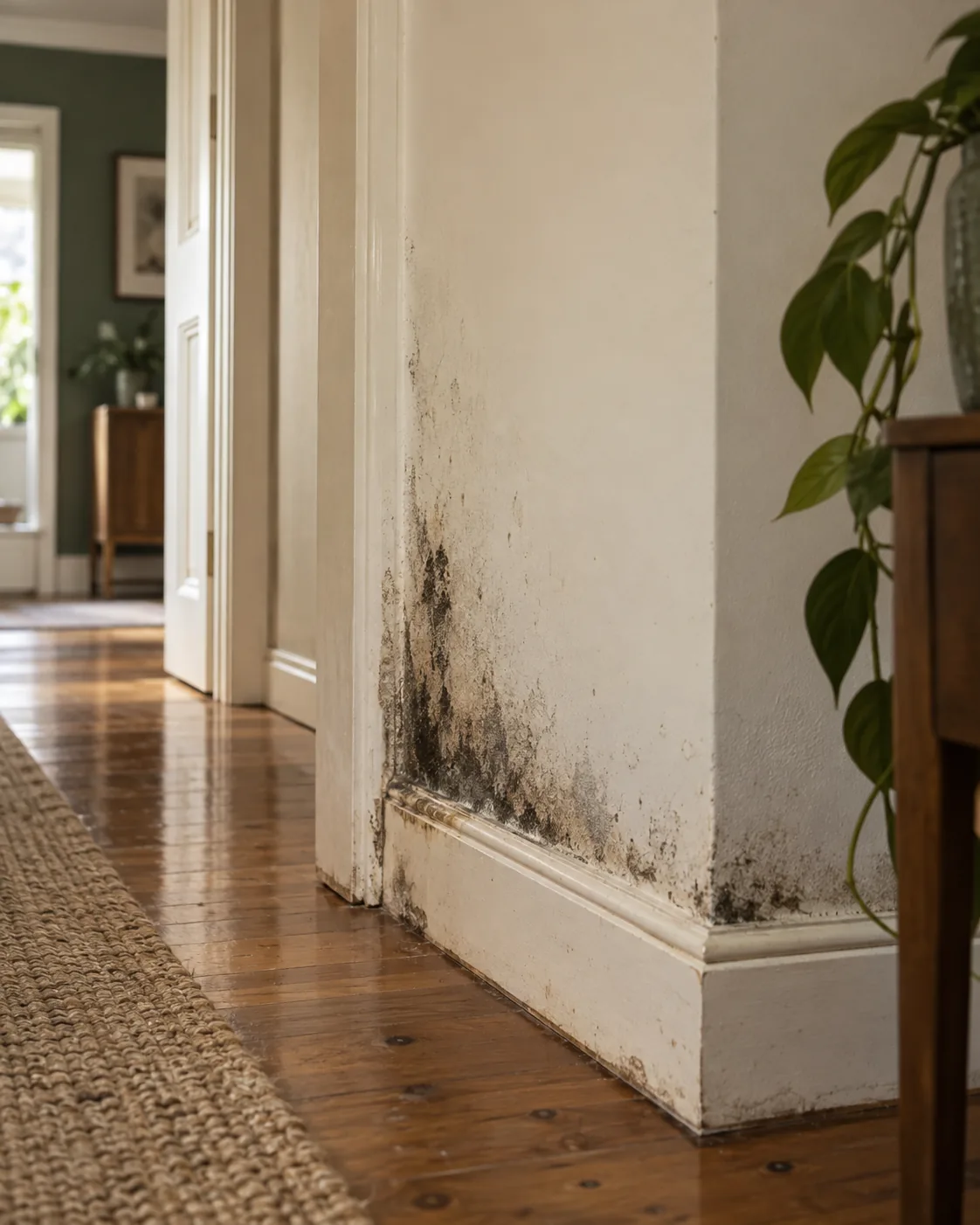
Marks low on the wall
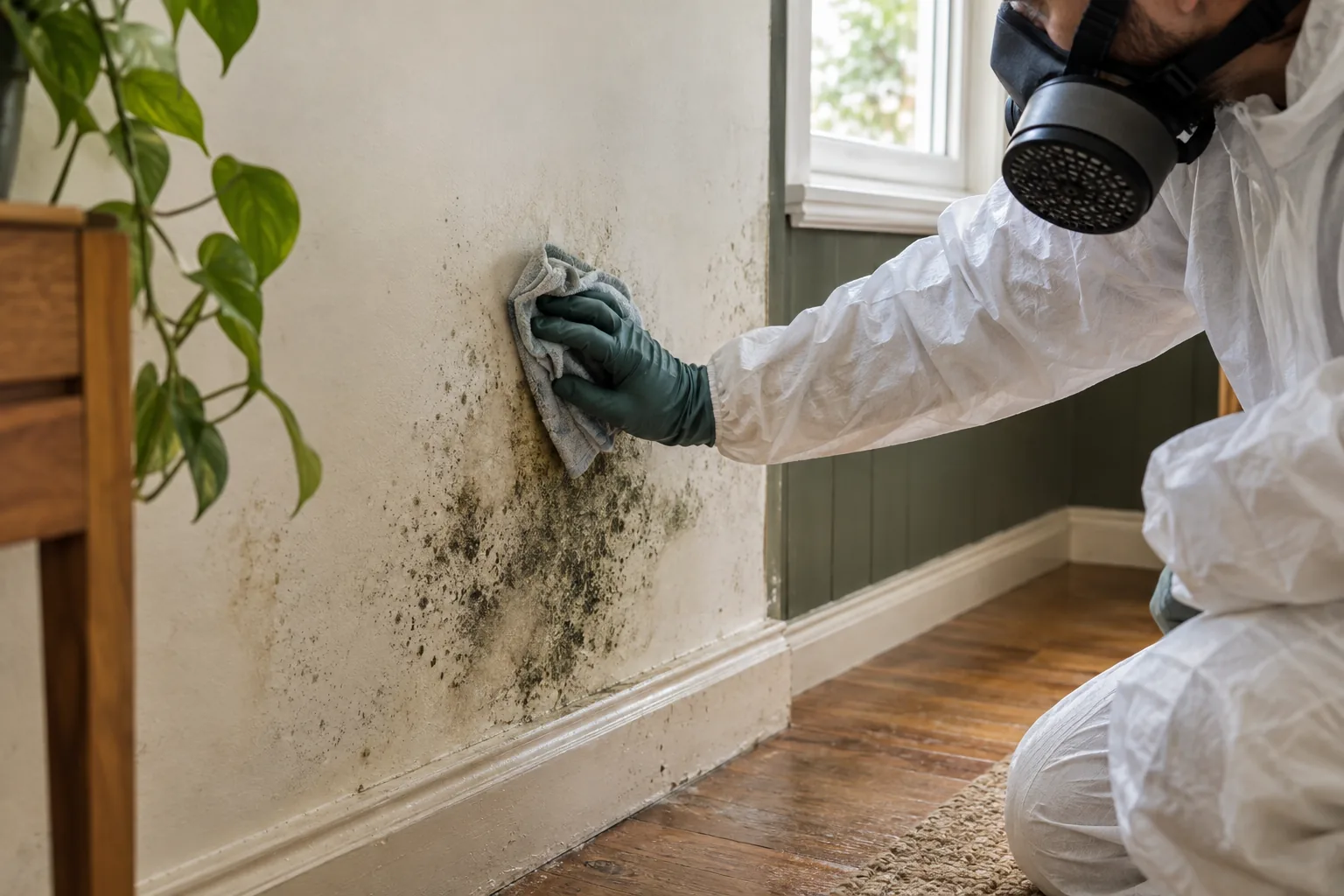
Photograph the whole wall and explain whether the floor edge remains wet. A low pattern alone does not establish rising damp or flooding. Include known plumbing, external water-entry and room-use history without inventing a single cause.
A room reached from outside
Describe the entrance, steps and available power. Explain whether the space is occupied or used for storage. Separate access can help the planning discussion, but does not remove the need for preparation or clear scope boundaries.
Assessment should distinguish damage from appearance
An inspection enquiry benefits from wider photographs and dated wetness observations. Humidity and moisture checks support accessible assessment. Hidden wall construction, subfloor spaces and external building defects may need separate investigation rather than conclusions from surface colour.
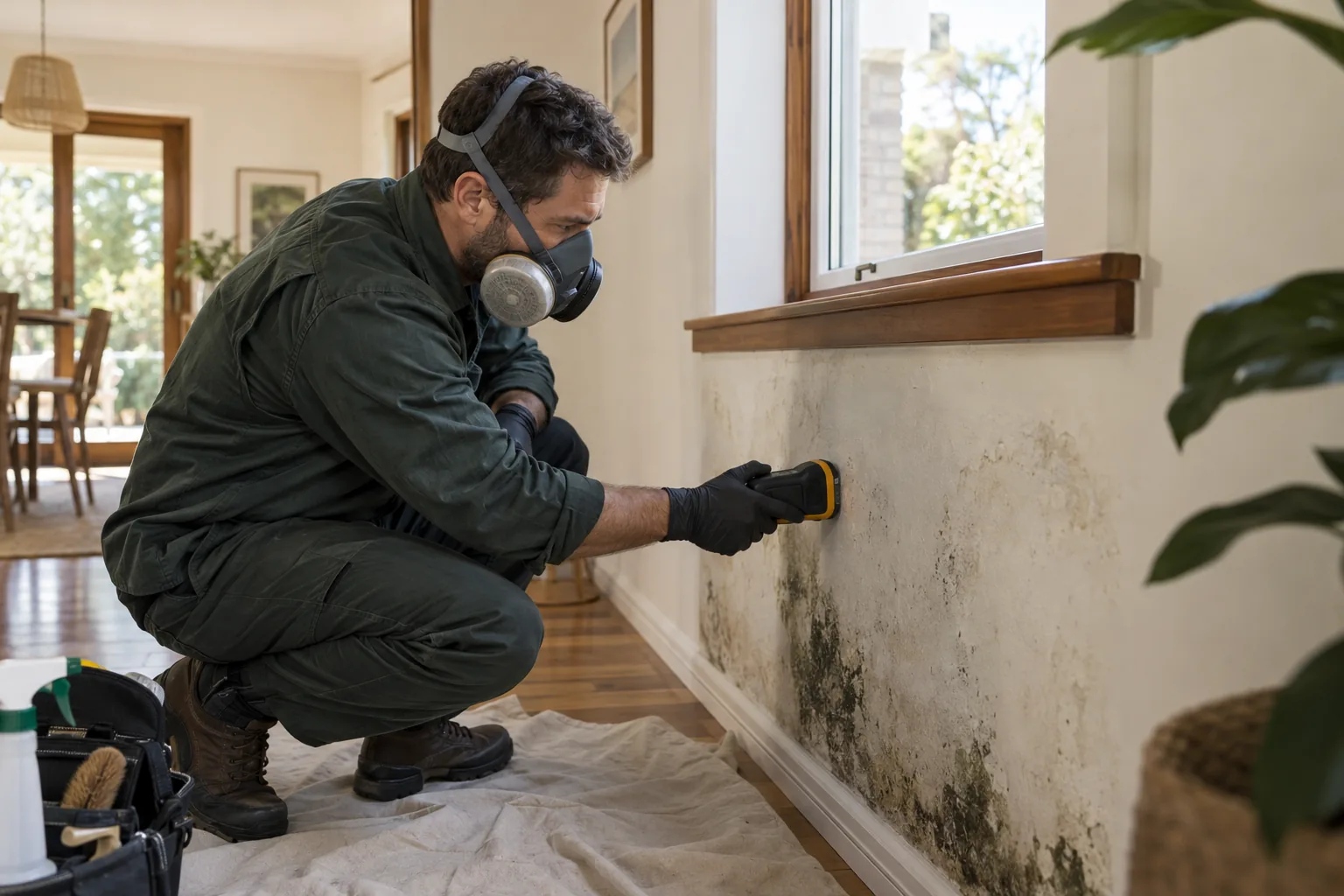
Lifting paint at the floor edge
Mention swelling, softness and loose coatings before booking. Damaged material may need repair or replacement. Do not scrape the area to expose more finish simply to prepare it for a surface appointment.
Contents blocking the wall
Identify furniture, boxes and textile items near the mark. They are excluded from treatment. Agree access before moving bulky belongings alone or carrying affected storage through other rooms to create clearance.
THE SURFACE REMOVAL PROCESS
A defined room procedure
01
Inspect and agree
Review visible growth, material condition and relevant readings. Confirm accessible walls, ceilings and hard floors. Record separate source or substrate questions so a low wall mark is not treated as a complete building-damp diagnosis.
02
Prepare filtered air
Set up the HEPA air scrubber with suitable power and equipment access. Discuss occupant movement and excluded belongings. Even a room with an outside entrance requires agreed preparation and return arrangements.
03
Select suitable treatment
Appropriate HOCl use follows assessed finishes and conditions. Report previous cleaners or coatings.
04
Apply within the plan
ULV application may be suitable within the procedure. Confirm people, pets and approved building arrangements first. Textiles and furniture are excluded. Subfloor spaces and concealed cavities require separately defined investigation and access.
05
Remove accessible contamination
Professional physical removal uses equipment with H-class filtration as required. Work remains within agreed structural surfaces. Fragile coatings, substrate damage and staining may limit the cosmetic result and require separately arranged repair or decorating.
06
Finish and review
Final air filtration follows removal. Discuss treated locations, remaining marks and source questions needing another trade.
VISIBLE & ACCESSIBLE
Four ground-level views to include
Lower wall
Show the full affected face and floor junction. Mention whether dampness is current, repeated or only observed once.
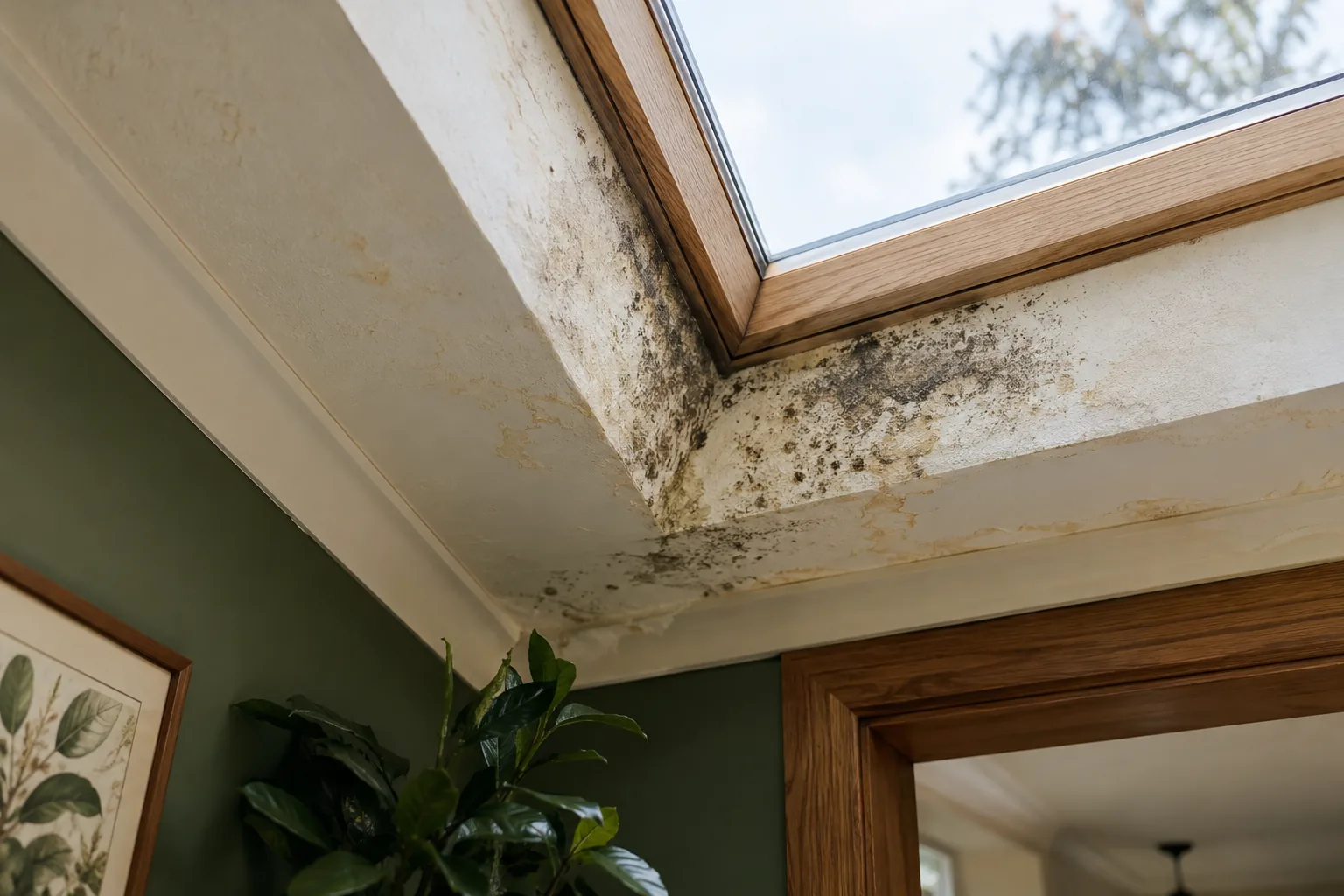
Ceiling above the room
Include visible marks and any known roof issue. Source repairs and concealed investigation remain separate tasks.
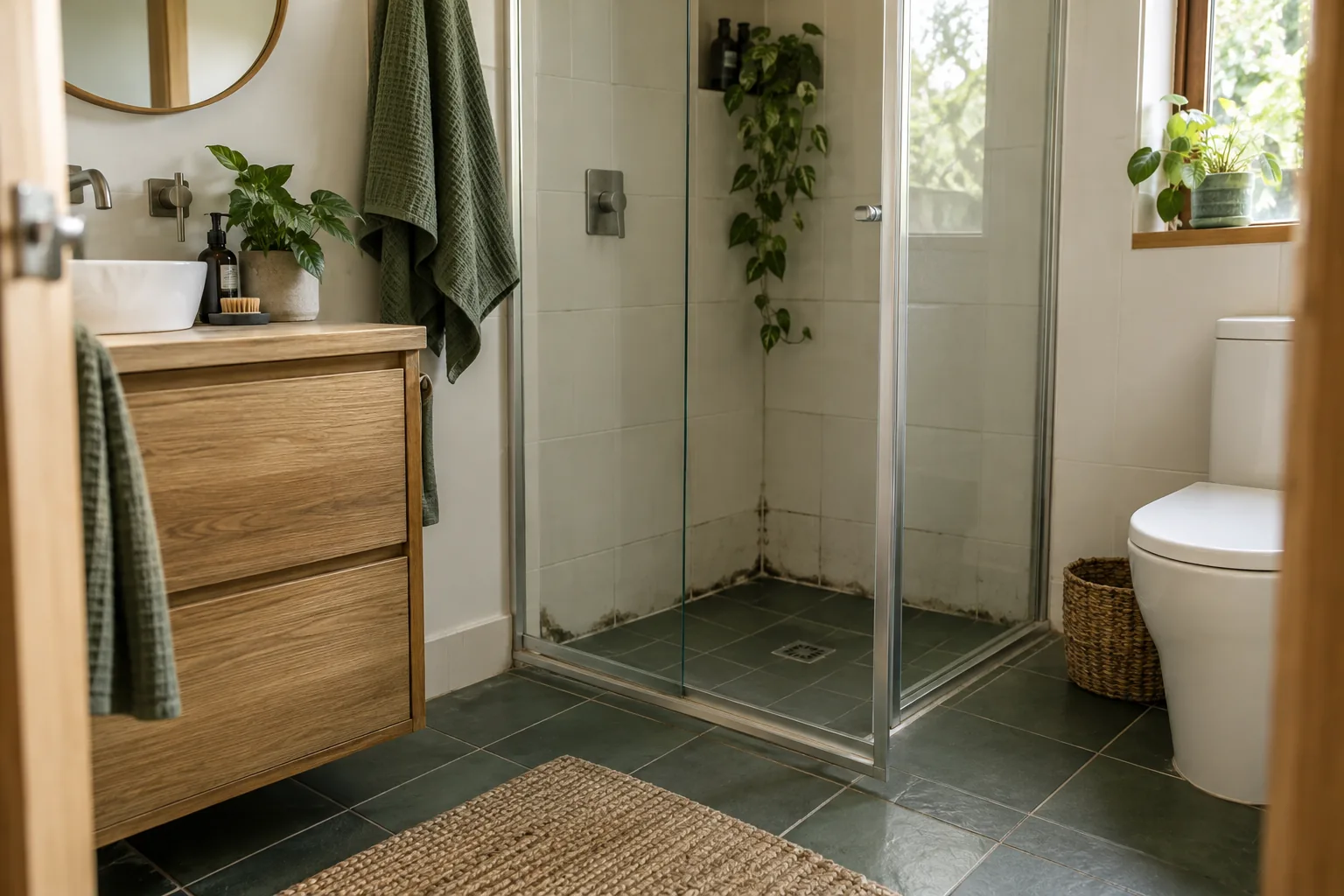
Bathroom wall
Describe extraction and water-entry history. Textile belongings and furniture are excluded even where they sit against structural surfaces.
Hard-floor edge
Specify the finish and any lifting or wetness. Carpets, rugs and underlay are not covered by the structural-floor service.
PREPARATION & LIMITS
Timing and residual appearance
Approximately three hours per room is the service’s average guide, varying with size, contamination and access. It is not hourly pricing. Persistent material damage or limited clearance can affect the practical arrangement even when the visible patch appears small.
Cosmetic stains may remain after contamination removal. Decorating can be separately quoted when moisture and material condition are ready. Growth can recur if the source continues, so no permanent prevention or completely unmarked finish is promised for the room.
AFTER THE SURFACE WORK
Make source follow-up practical
Keep dated photographs and note recurring wetness at the same position. Share observations with the relevant repair trade rather than naming a source from the height of a mark. Building defects need their own assessment beyond accessible contamination treatment.
Manage indoor moisture, extraction and workable air space around belongings. Remediation addresses the agreed existing growth. It does not replace plumbing, roof, structural or external-water repairs, and ongoing room conditions remain relevant after work is completed.
BLIND BIGHT · NEARBY LOCATION PAGES
Blind Bight and surrounding villages
Nearby links provide geographical navigation. Confirm the actual Blind Bight street address, entrance and room condition when enquiring. Village proximity does not establish immediate availability, a local office or identical moisture issues across individual buildings.
BEFORE YOU ARRANGE WORK
Questions for your enquiry.
Do low wall marks prove rising damp?
No. The pattern is useful information, not a diagnosis. Describe wetness, timing and known defects; identifying a building source can require separate investigation.
Does the village’s coastal location establish the cause?
No. The particular room and building conditions matter. Share observed condensation, water entry and material damage rather than assigning a cause from geography alone.
Can you inspect subfloor spaces during treatment?
They are not automatically included in visible accessible surface work. Hidden areas may require specialist inspection or additional work with separate access and agreement.
Will you treat the boxes beside the wall?
No. Stored contents, furniture and textiles are excluded. Agree sensible clearance to reach the structural surface without expecting treatment of belongings.
Can a dehumidifier fix continuing wetness at the floor edge?
It cannot repair a building or plumbing defect. Moisture management may be relevant, but persistent water entry needs appropriate separate assessment and repair.
Will the room look newly decorated afterwards?
That is not guaranteed. Residual marks and damaged coatings may remain, with repair or decorating considered separately after moisture and material condition are addressed.
Discuss your Blind Bight address
Call 03 8652 1296 with Blind Bight’s property details and observed wetness at the room edge. Describe damage and access rather than diagnosing from the low mark, then confirm suitability and availability.
Useful references: Official local geographic reference