
CANNONS CREEK · MELBOURNE
Mould Removal Cannons Creek
CLOSED ROOMS · CURRENT CONDITION
Opening a little-used room can reveal a condition nobody has recently checked. For Cannons Creek, explain the last known clear inspection, current dampness and any maintenance during the closure. We confirm availability for the actual property and agree what visible structural surfaces can be considered.
Closure history discussed
Current photographs useful
Scope and access agreed
SURFACES & THEIR SETTING
Record what you find on reopening
Casey identifies Cannons Creek as one of its Western Port coastal villages. That geography does not prove the source of indoor growth. A mould removal enquiry should focus on the room’s observed condition and the building history you can actually provide.
Uncertain start date
State when someone last saw the room without marks, if known. Avoid assigning a precise growth date from appearance.
Access through another space
Explain whether the room has its own entrance or is reached through occupied areas. Equipment movement, power and clearance need agreement.
Assessment with clear limitations
An inspection enquiry combines visible surface details with moisture information. Include known roof or plumbing problems and previous coatings. Accessible observations cannot establish the condition of every concealed cavity or confirm that an unused room has no other defects.
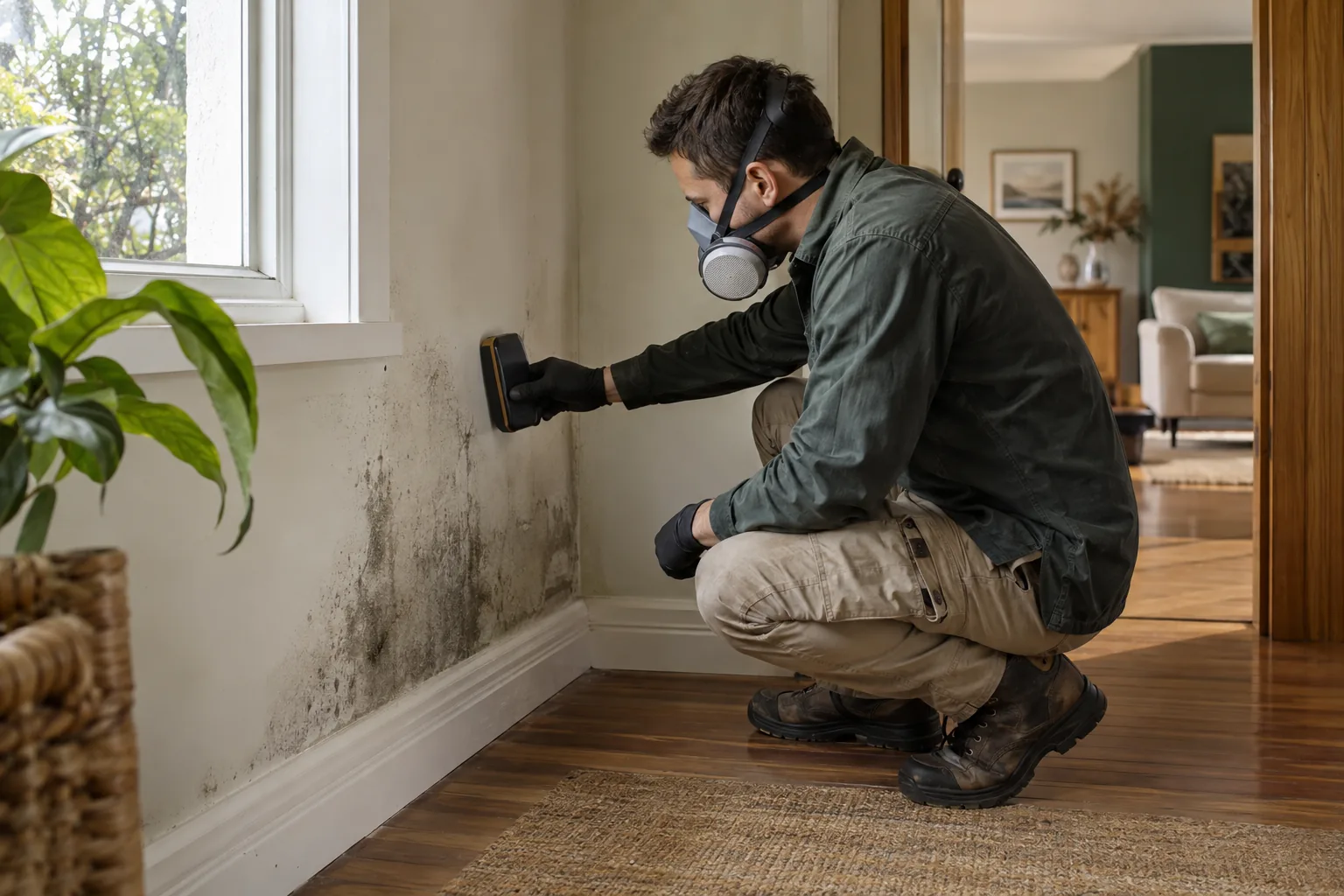
Different marks on one wall
Describe patchy growth, water staining and flaking paint as separate observations. The finish’s condition matters when selecting work. Do not scrub or repaint to make the room look uniform before the original pattern is discussed.
Belongings left against the surface
Tell us about furniture, boxes and curtains obstructing access. They are not included treatment items. Agree sensible clearance rather than carrying potentially affected contents into several other rooms simply to reveal the wall.
THE SURFACE REMOVAL PROCESS
Plan the room treatment in stages
01
Inspect and define the scope
Review accessible growth and humidity or moisture readings. Agree walls, ceilings and hard floors, with limits for damaged material and inaccessible areas.
02
Prepare air filtration
Position the HEPA air scrubber with appropriate power and access. Discuss occupant movement and the work route. Preparation still matters when a room is unused, especially where adjoining spaces are occupied or used for storage.
03
Choose surface treatment
Appropriate HOCl use is selected for the assessed material and conditions. Report earlier cleaners or coatings.
04
Apply the agreed method
Where suitable, ULV application forms part of the process. People, pets and approved building arrangements are confirmed first. The method does not include concealed spaces or excluded belongings merely because the room is closed during work.
05
Remove accessible contamination
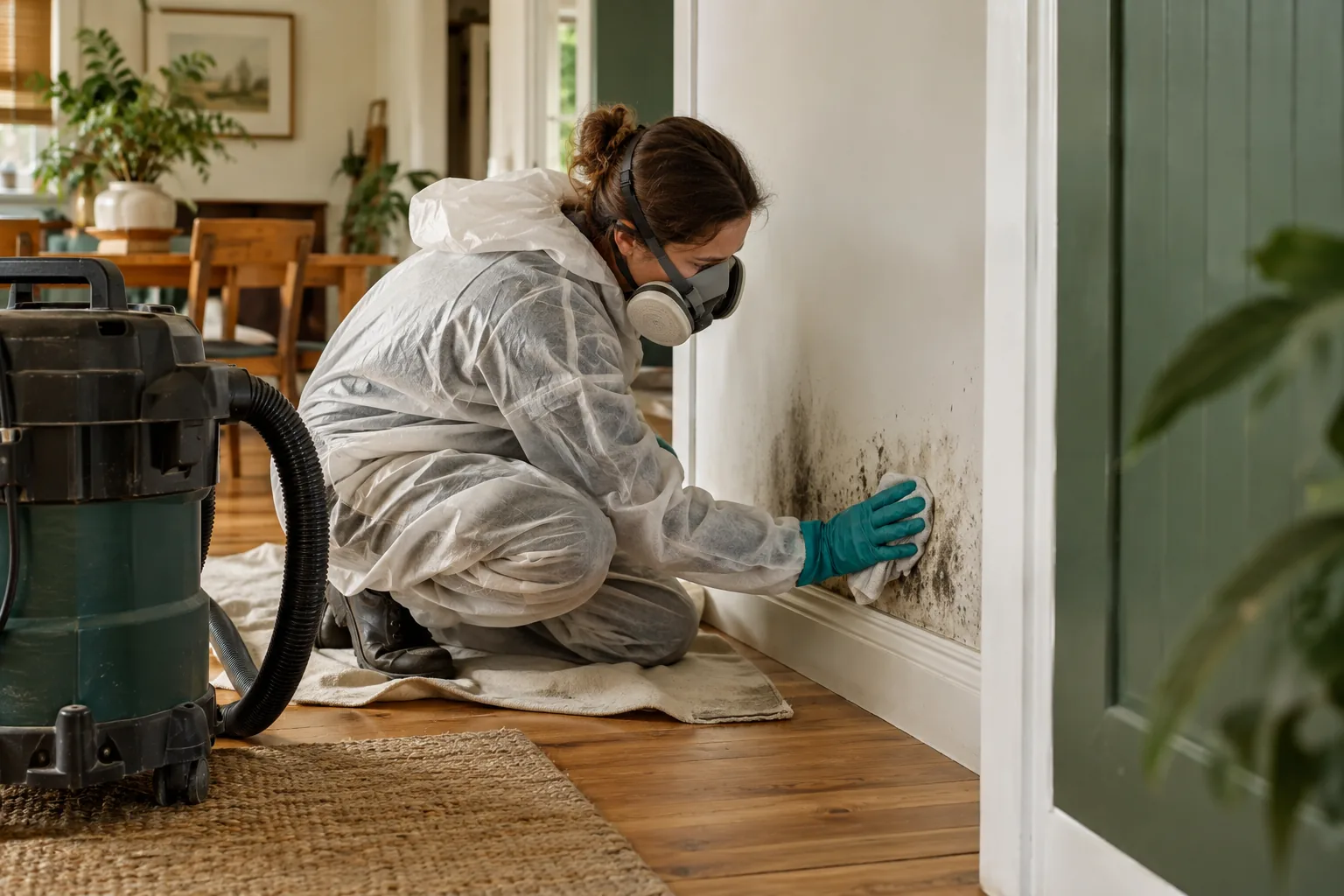
Professional physical removal uses equipment with H-class filtration as required. Maintain the structural-surface boundaries.
06
Finish and explain follow-up
Final air cleaning completes the procedure. Review treated locations, remaining marks and source questions. Confirm return instructions and a manageable inspection routine if the room is likely to be closed again for a period.
VISIBLE & ACCESSIBLE
Photographs that explain the closed space
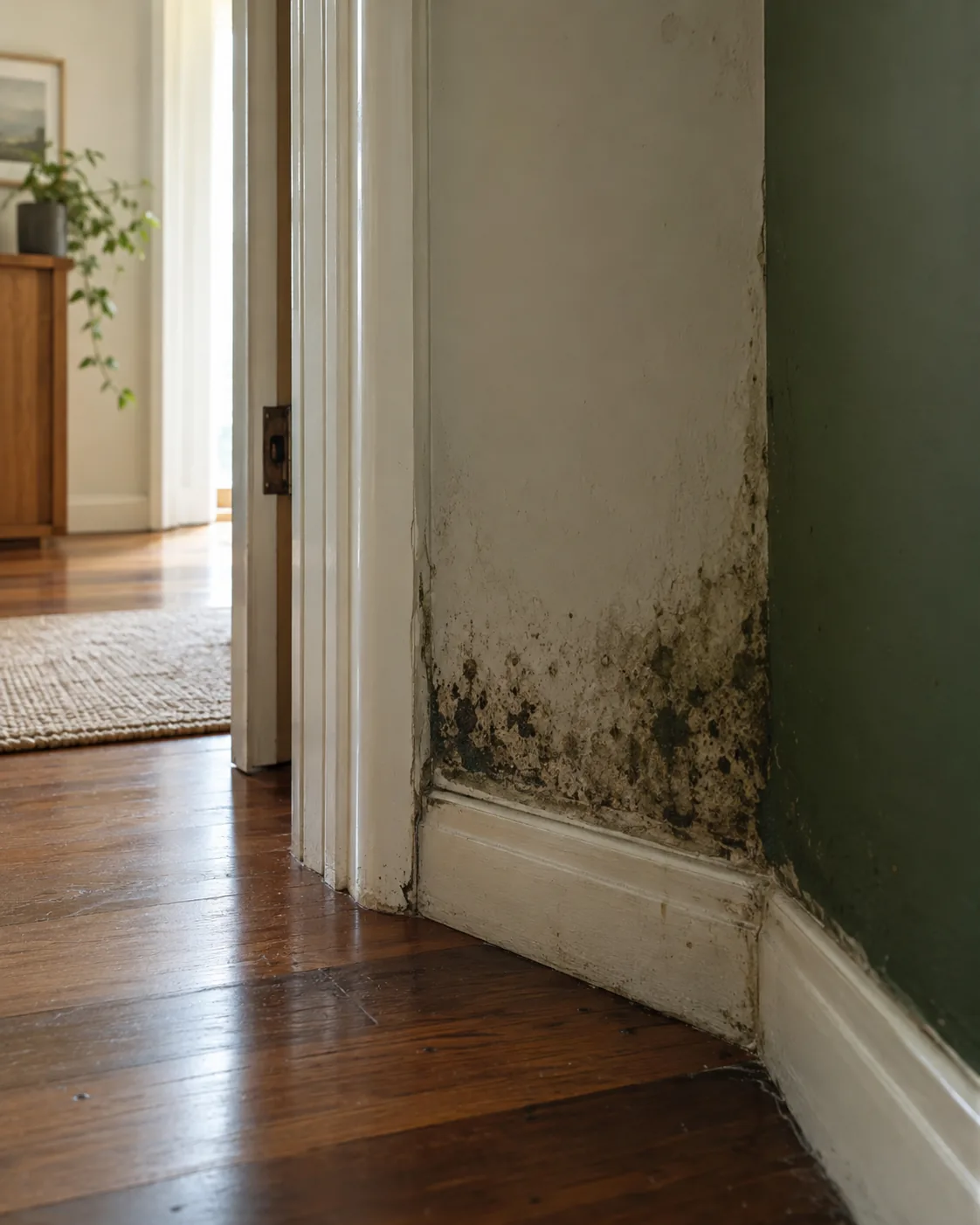
Wall beside storage
Show available clearance and the exposed finish. Furniture, clothing and stored textiles remain outside the structural treatment.
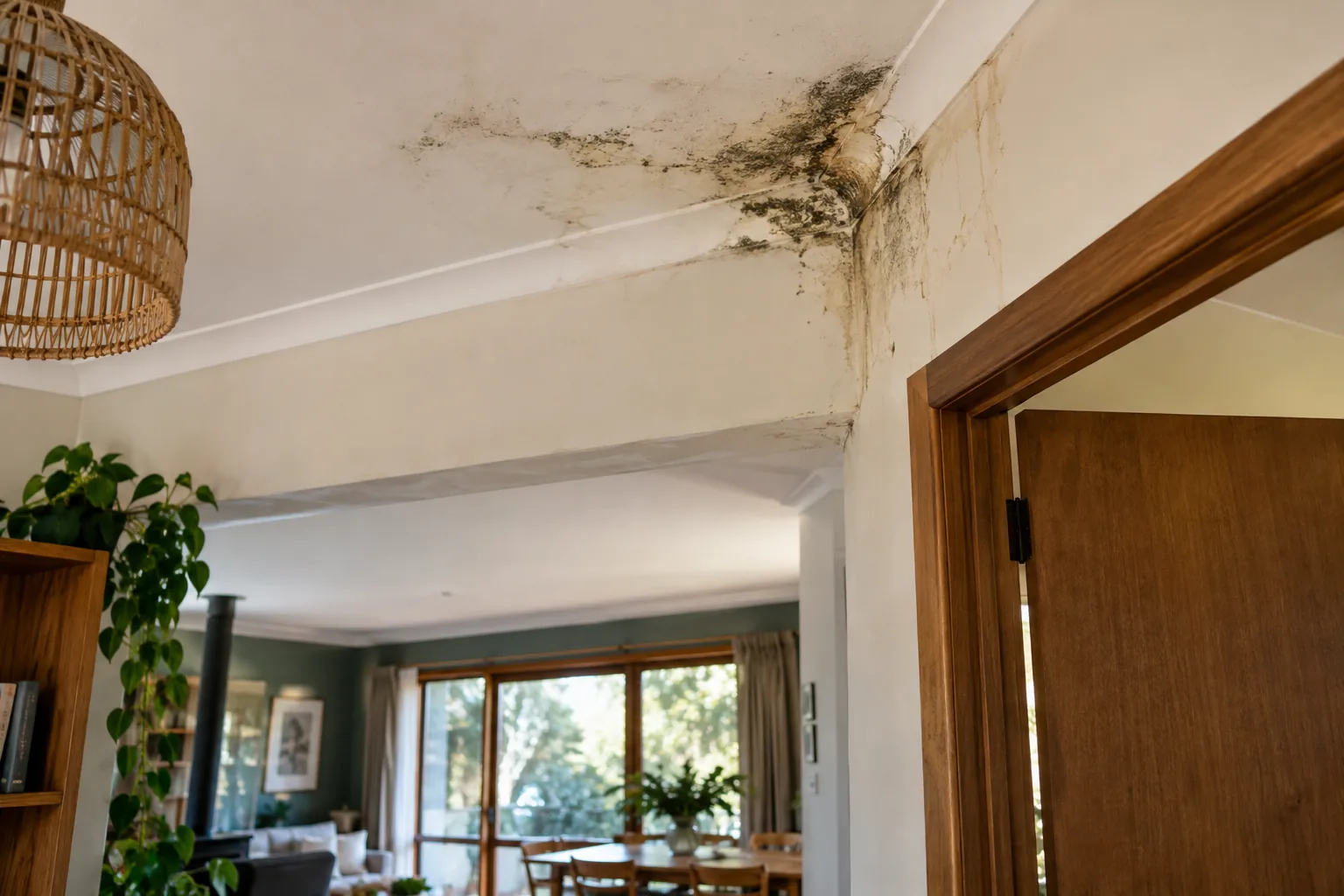
Ceiling patch
Include its location in the room and any known roofing issue. Roof repair and concealed investigation are separate.
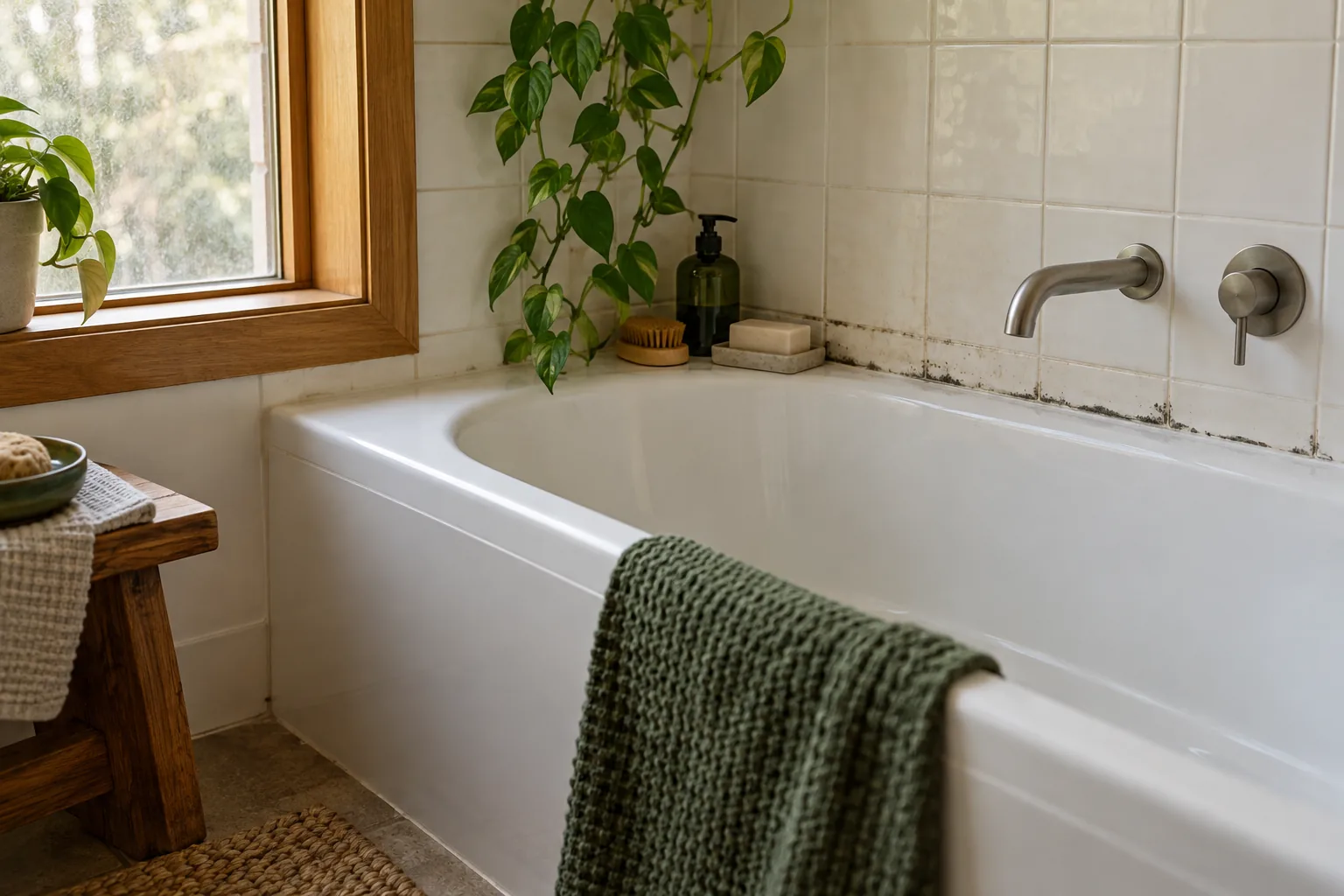
Bathroom painted surface
Note fan operation, wetness and prior use. A closed bathroom can need assessment without assuming one universal moisture cause.
Hard floor near the entrance
Identify damp edges or a lifting finish. Carpets, mats, rugs and underlay are excluded, even in an unused space.
PREPARATION & LIMITS
Expect a process, not a cosmetic shortcut
Average service guidance is approximately three hours per room, varying with size, severity and accessibility. Pricing is not hourly. Extensive storage or missing access can alter practical planning, so discuss preparation before assuming a reopening deadline can be met.
Contamination treatment can leave cosmetic staining. Decorating is separate and can be quoted where appropriate after moisture and material condition are addressed. Continued dampness can support recurrence during another closure, so permanent prevention is not promised.
AFTER THE SURFACE WORK
Check the room between periods of use
Arrange occasional observation when the space remains unused, including leaks and repeated condensation. Record dates and comparable photographs. A simple check can provide clearer history than discovering changed conditions months later without knowing what happened in between.
Manage moisture sources during occupancy and maintain sensible ventilation. Repair water entry separately rather than expecting a device or cleaner to compensate for a defect. Remediation addresses the agreed contamination and should sit alongside the room’s ongoing moisture-management plan.
CANNONS CREEK · NEARBY LOCATION PAGES
Cannons Creek and neighbouring villages
Nearby location links provide navigation around surrounding enquiries. Confirm Cannons Creek’s exact street address and room access when contacting us. Village proximity does not establish immediate availability, an existing customer history or a local office for this service.
BEFORE YOU ARRANGE WORK
Questions for your enquiry.
Can you tell how long the marks have been there?
Appearance alone cannot establish a reliable start date. Share the last known clear observation, discovery date and any relevant maintenance or dampness history.
Does being a coastal village establish the cause?
No. The actual building and room conditions need consideration. Describe observed water entry, condensation and ventilation rather than assigning a cause from the locality.
Is a closed room easier to treat automatically?
Not necessarily. Access, stored belongings, material condition and power arrangements still matter. Explain these details before an appointment is agreed.
Can you clean the contents stored inside?
Furniture, carpets, mattresses, curtains, clothing and textiles are excluded. This service concerns agreed visible walls, ceilings and hard floors, with preparation discussed separately.
Should I air the room before taking photographs?
Send current observations and explain any changes you make. Do not hide the surface with paint or disturb damaged material merely to improve the appearance for assessment.
Will treatment protect it through another long closure?
No permanent protection is guaranteed. Arrange source repairs and ongoing moisture checks; new damp conditions can support recurrence after existing contamination is treated.
Discuss your Cannons Creek address
For Cannons Creek, call 03 8652 1296 with current room photographs and the closure history. Confirm the actual address and access before planning treatment or another period when the space will be unused.
Useful references: Official local geographic reference