
SHOWER CEILING SPOTS · MOISTURE · SURFACES
BORONIA · MELBOURNE
Mould Removal Boronia
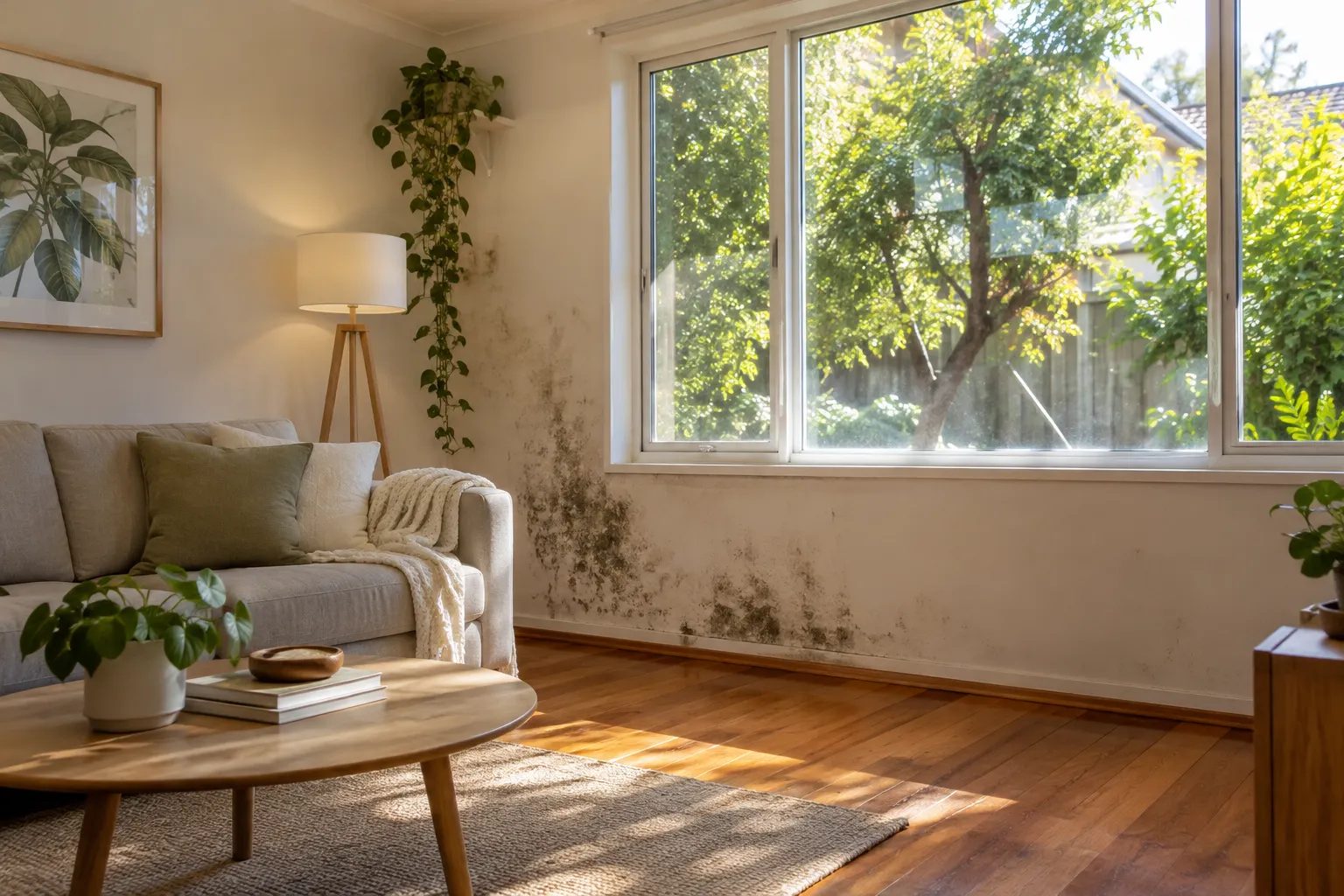
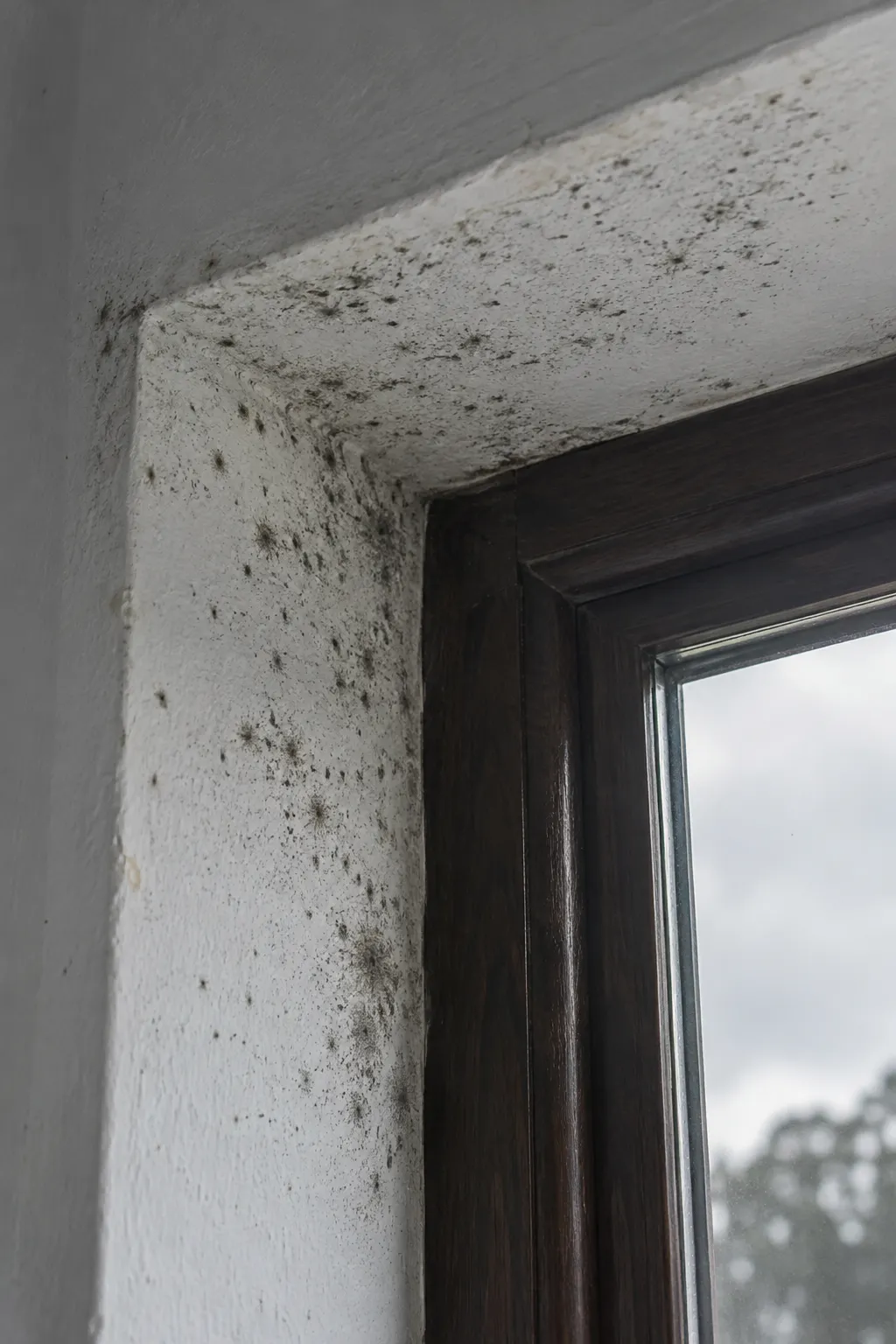
A shower screen and painted ceiling need different treatment decisions. In Boronia, tell us where the marks occur, whether the plaster is firm and how long the room stays steamy.
Visible material considered
Moisture history discussed
Access and scope agreed
THE ROOM TELLS A STORY
Separate the ceiling from the shower screen
Boronia is named in Knox’s local information. If droplets collect above the shower, observe the extraction and surface condition together. Growth on a sound painted ceiling is different from a stained, sagging panel. Avoid reaching above the shower on unstable furniture; discuss access when arranging an assessment.
For a shower-ceiling inspection discussion, explain the painted material and access height. A wider safe photograph is preferable to disturbing the finish; include any separate joint damage or earlier water event that belongs in the room history.
UNDERSTANDING MOISTURE
Make sense of
steam below a cool ceiling.
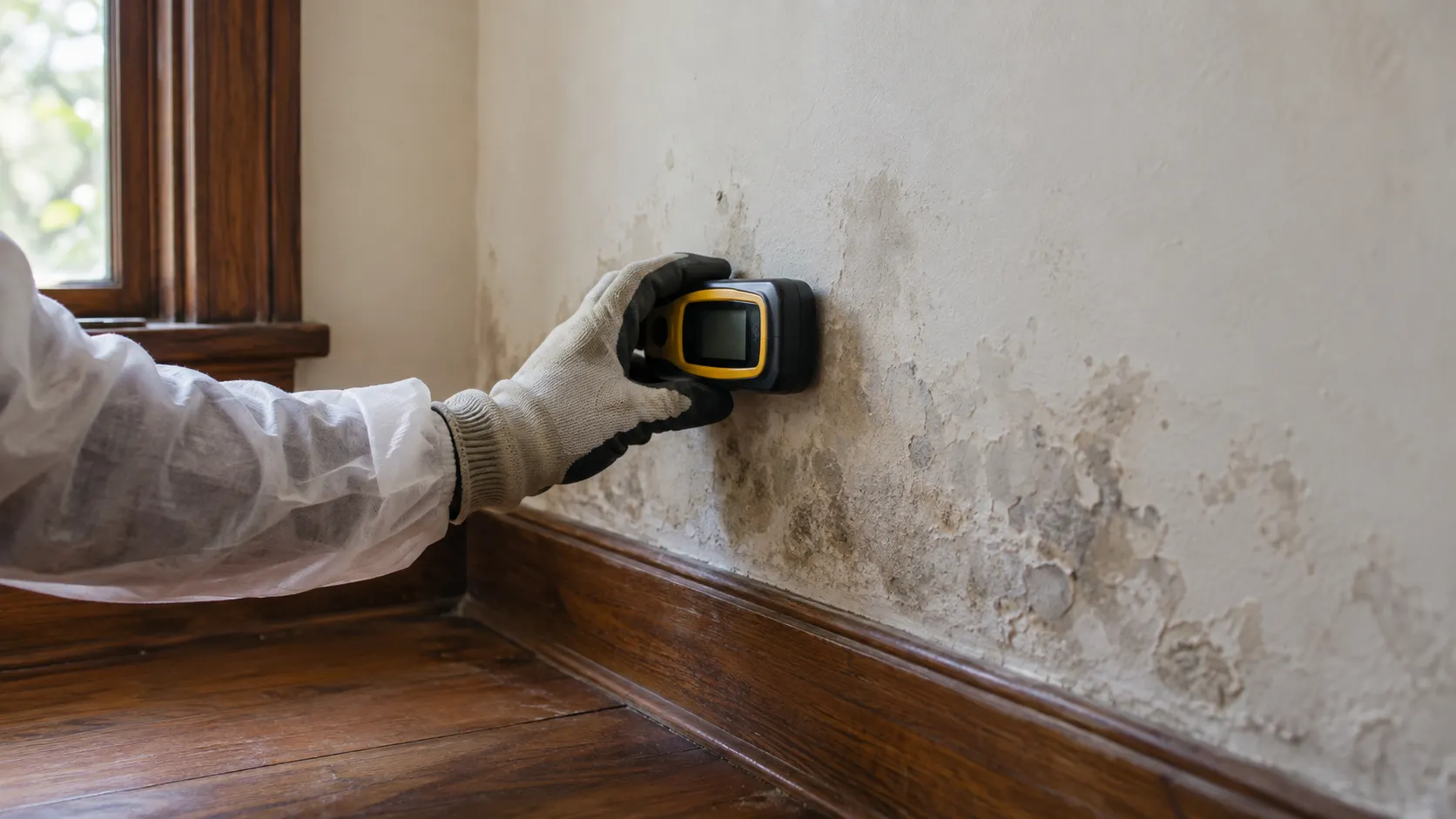
Moisture in the air
Look at how the shower ceiling dries after normal use. Droplets that persist and spots appearing over time give useful observations, although they do not by themselves confirm why the surface stays damp.
The water history
If a ceiling stain changes independently of showering, describe that too. Rainfall or a plumbing event may call for source investigation rather than treating every upper mark as a ventilation problem.
Check the finish
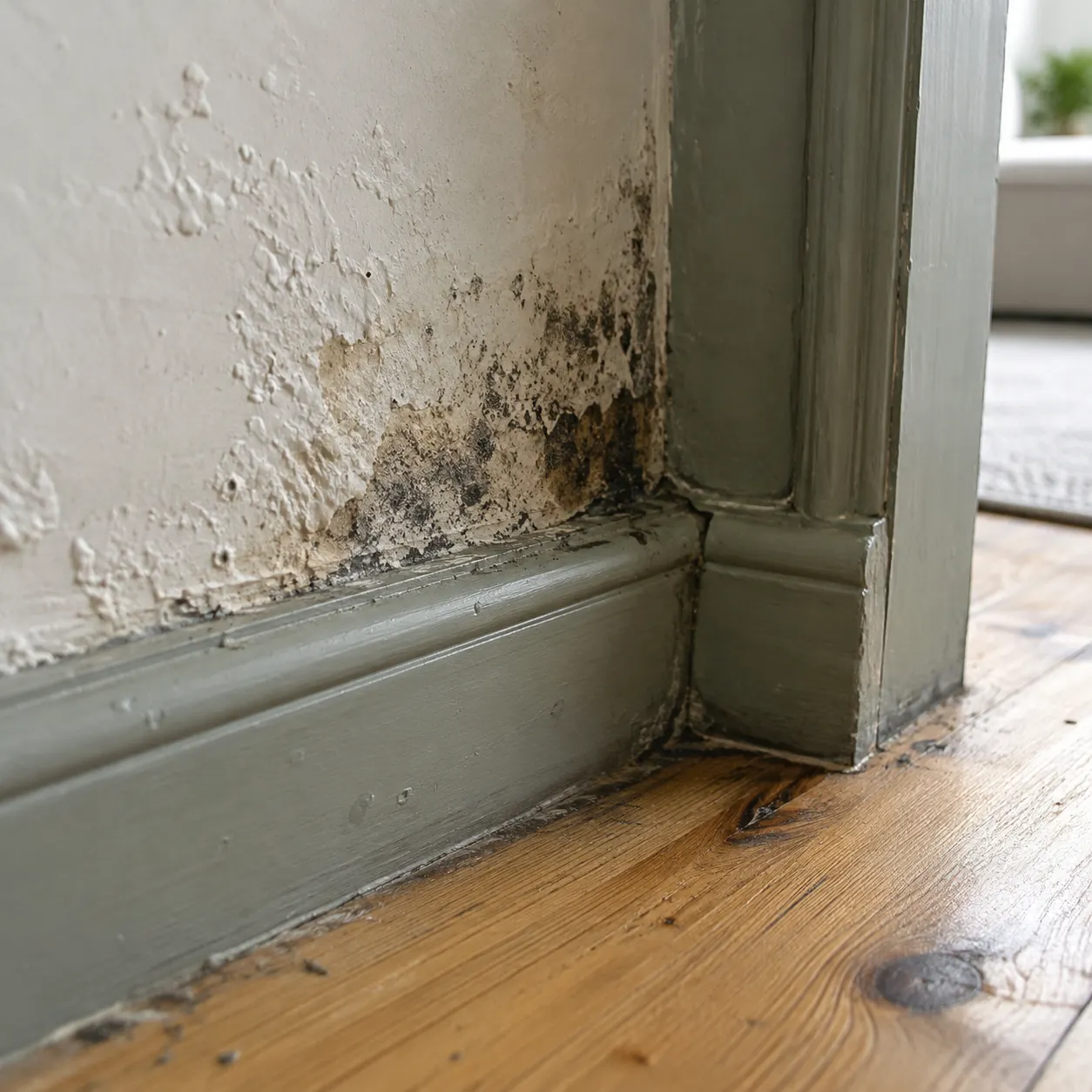
A firm painted ceiling and softened plaster have different implications. Explain finish condition from a safe position; surface removal should not imply repair of damaged board or the structure above it.
OUR REMOVAL PROCESS
From observations
to surface work.
Keep the room history
A safe room photograph can show the ceiling position without close-up access. Add the fan routine and whether the spots developed gradually or followed a water event.
Make access practical
Tell us about screens, fixtures and enclosure dimensions that affect reaching the ceiling. Work planning should account for the space rather than expect improvised household access.
Agree the next decisions
Ask whether the ceiling needs repair before later decoration. Surface removal cannot strengthen softened plaster or establish the condition of a pipe or roof above it.
01
Assess the ceiling above a shower
Identify the shower ceiling’s finish and whether it remains firm. For visible removal work, distinguish small surface spots from damaged plaster or a changing water stain.
02
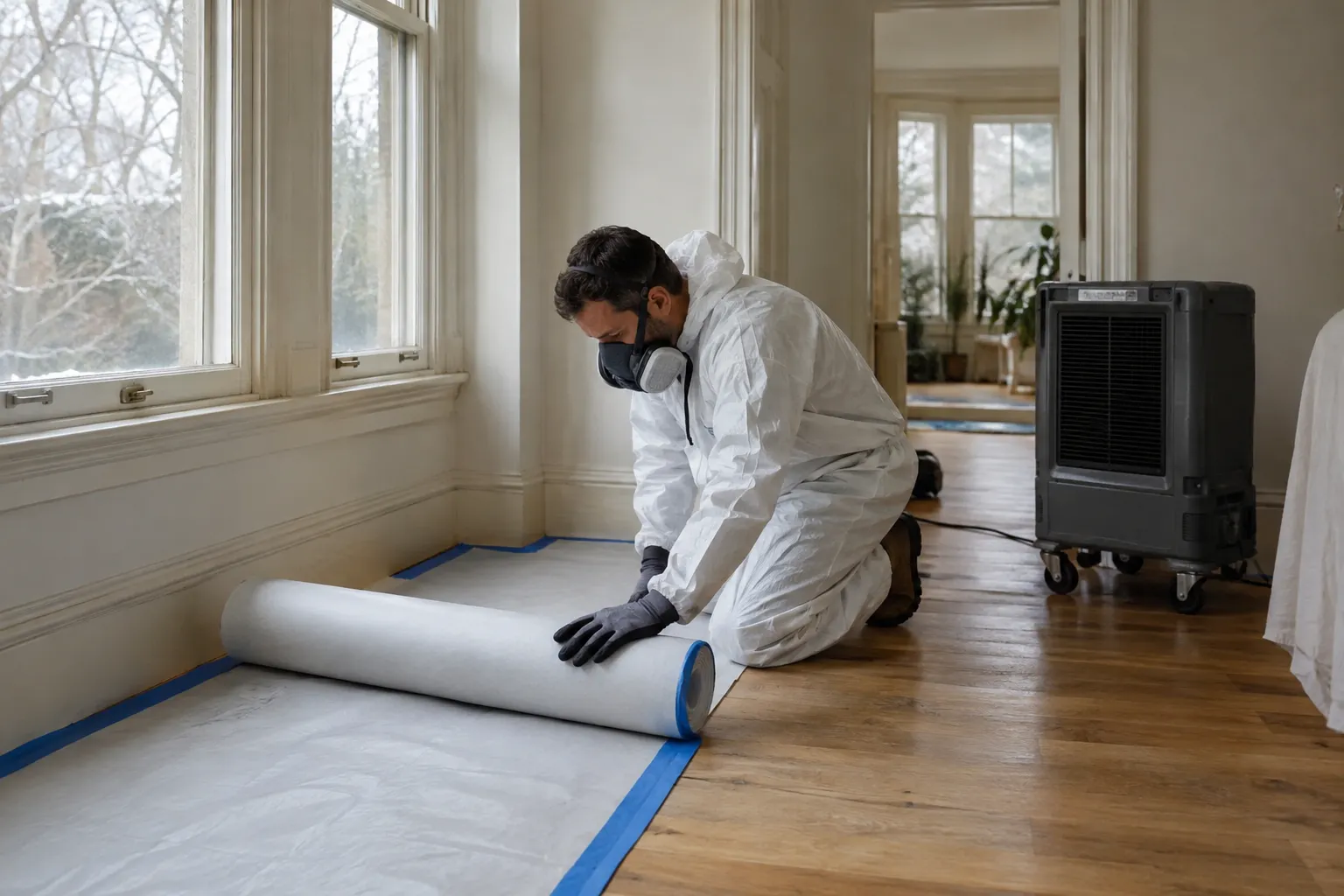
Prepare the working area
Discuss ceiling height and access before the visit. Do not try to reach a damp shower ceiling using an unstable stool or furniture balanced in the enclosure.
03
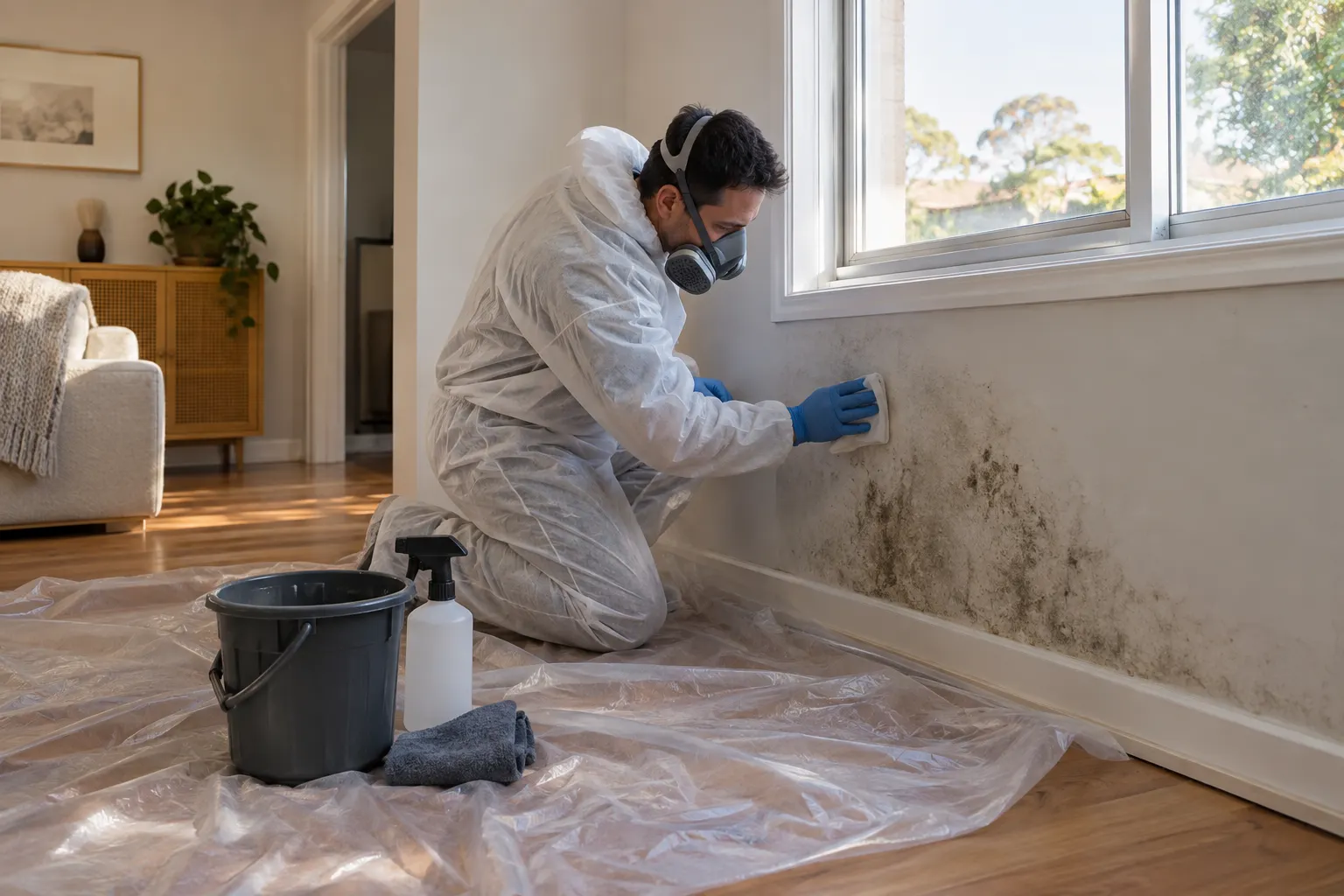
Remove and review
After treatment, observe ceiling drying during ordinary bathroom use. Persistent droplets or a new stain deserve another moisture discussion even if the original spots are no longer visible.
COMMON AREAS AFFECTED
Different surfaces.
Different decisions.
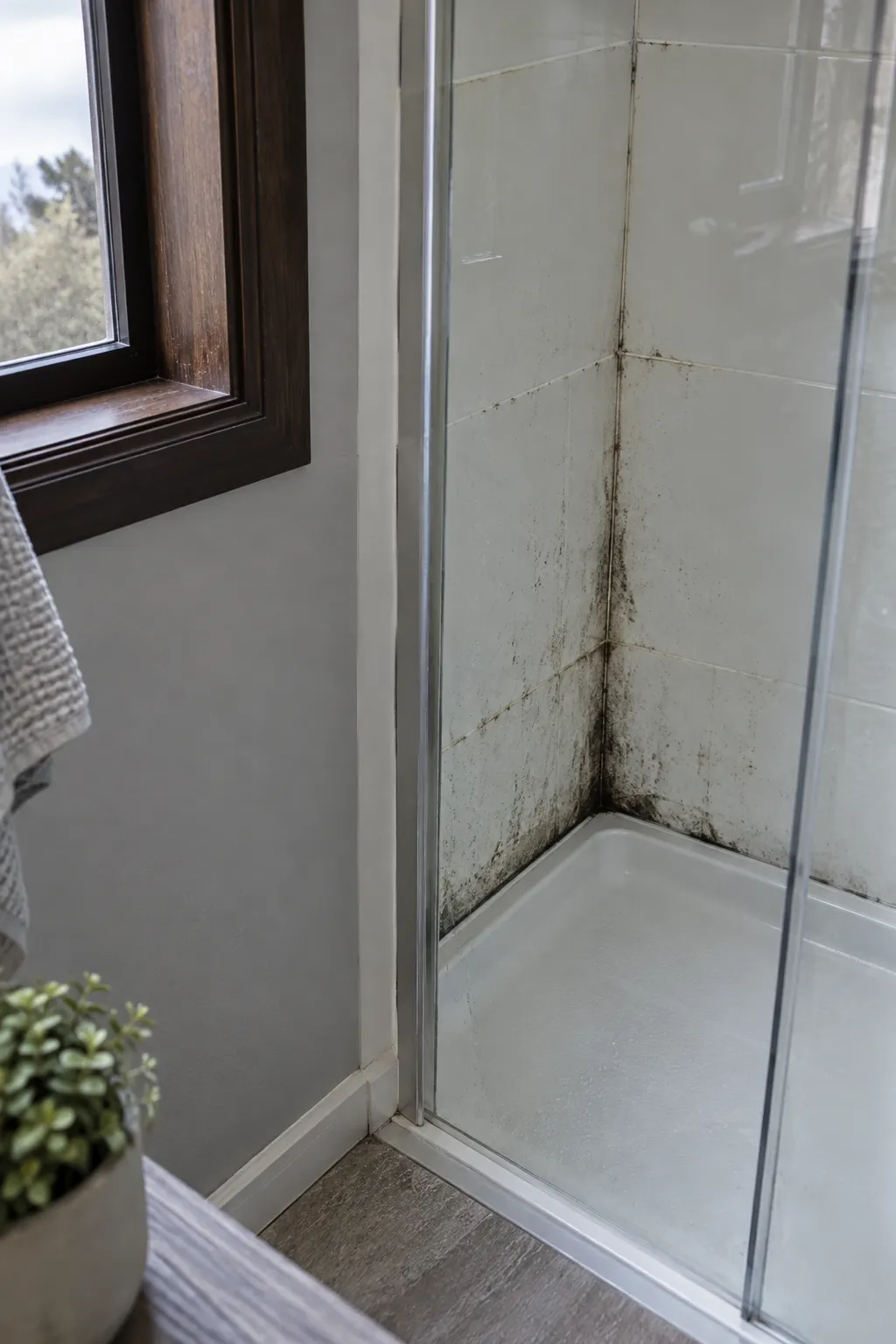
Bathroom junctions
Include shower-joint marks separately from ceiling spots. Silicone, grout and painted plaster are distinct materials, and their suitable treatment or replacement decisions may differ within the same enclosure.
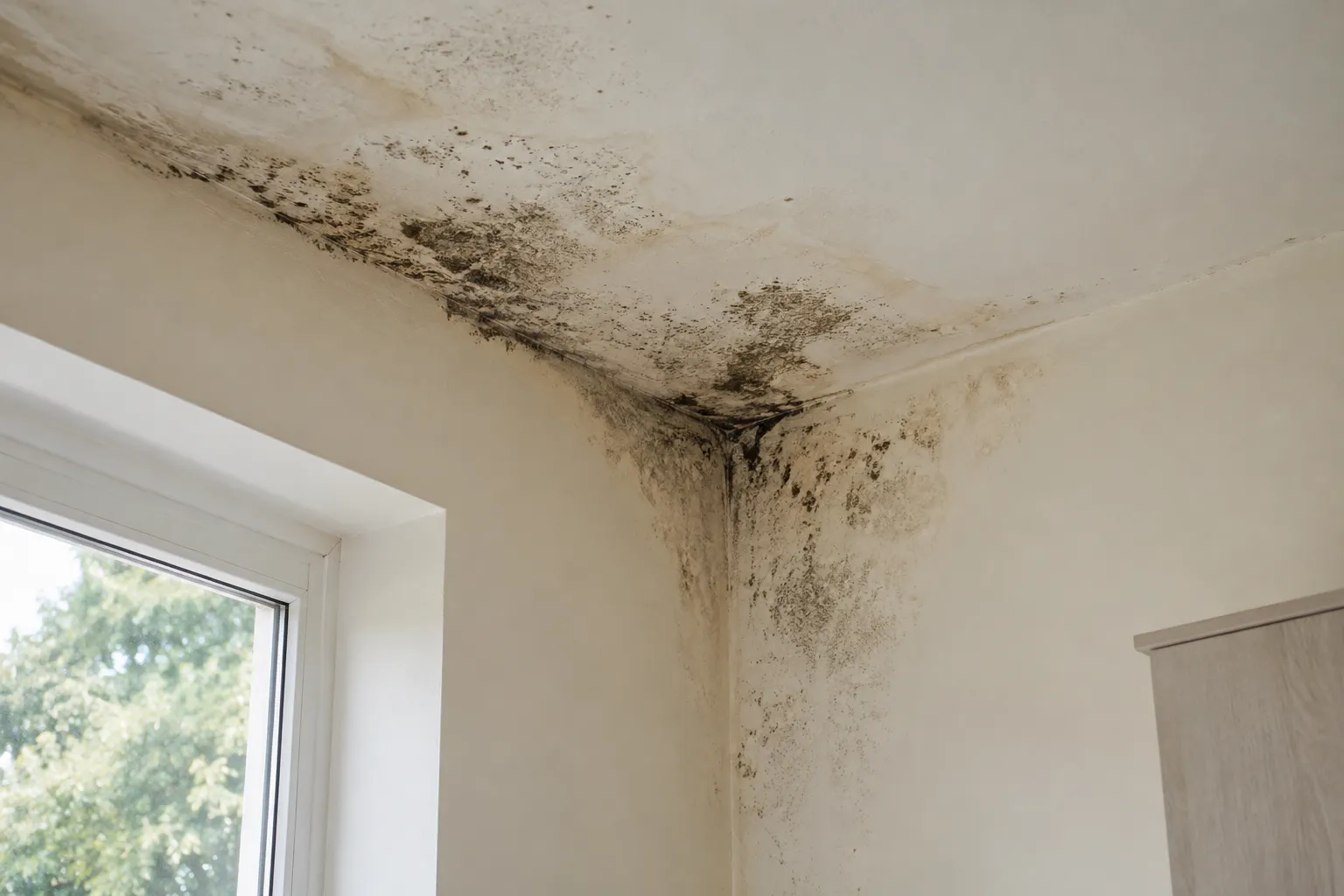
Ceiling surfaces
Photograph the ceiling’s affected extent without climbing on unstable furniture. Describe whether spots cluster at a corner, above the shower or along a changing water stain.
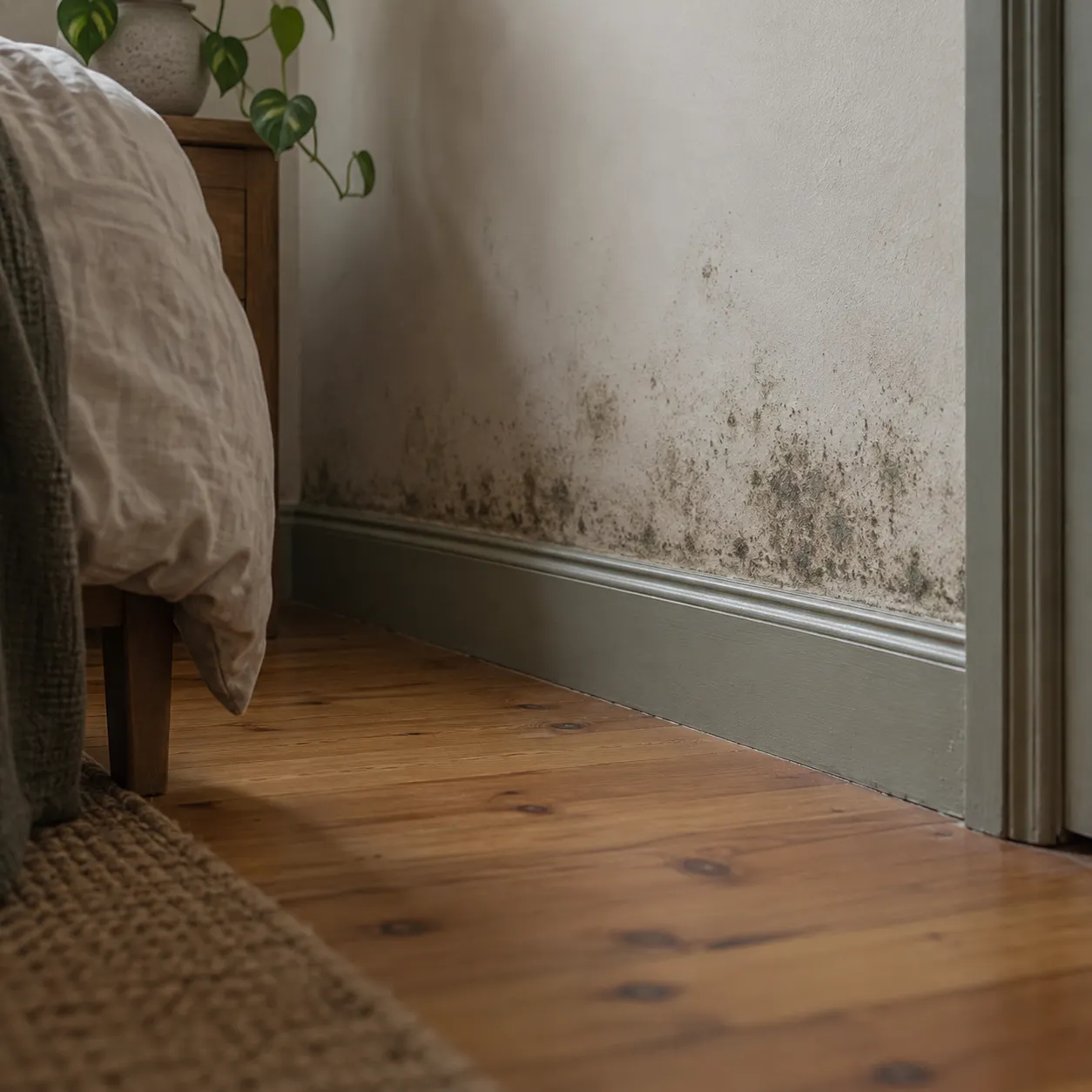
Painted walls
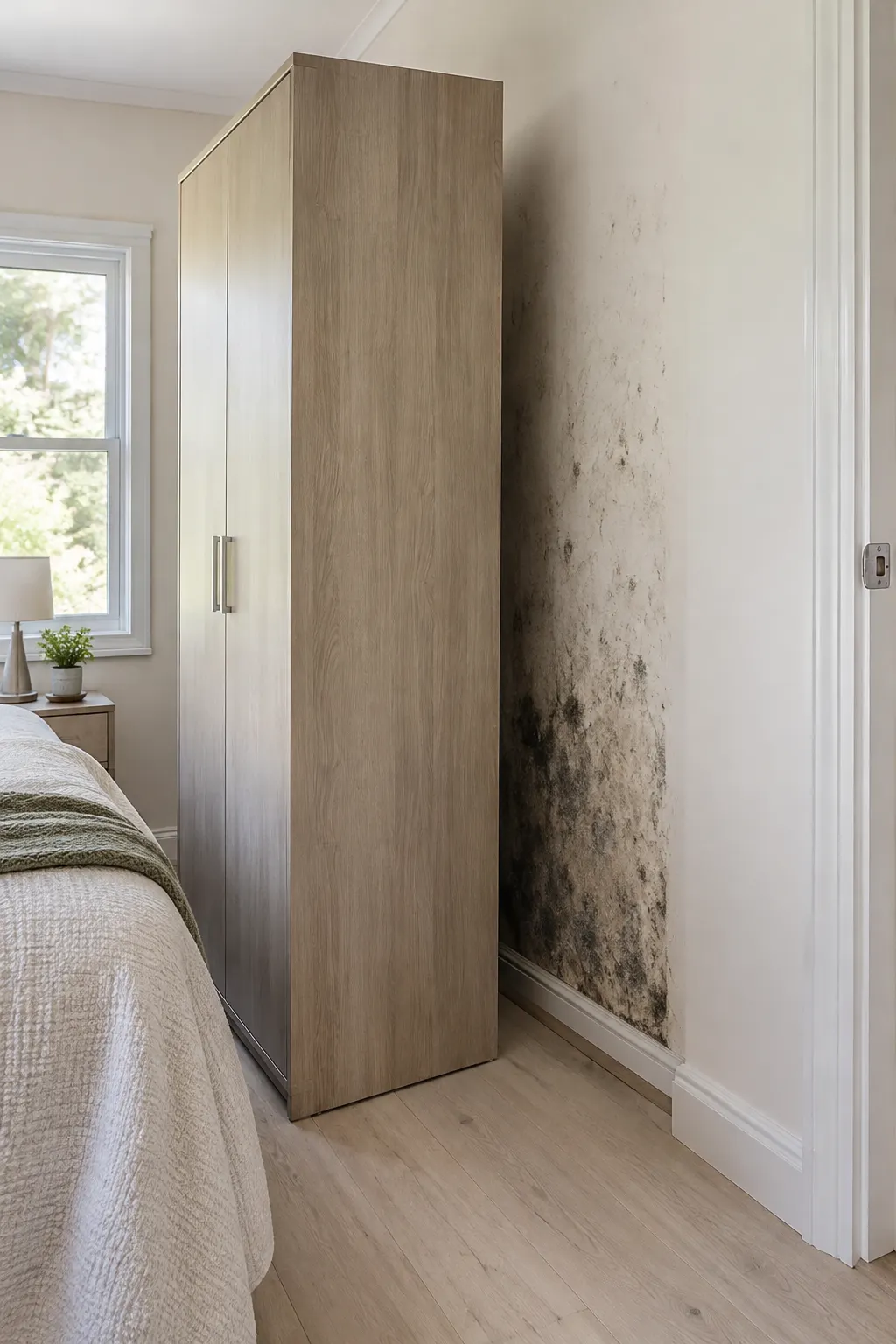
If the adjoining painted wall is also affected, note its drying pattern and any fixtures nearby. The wall and ceiling may share moisture exposure without needing identical material decisions.
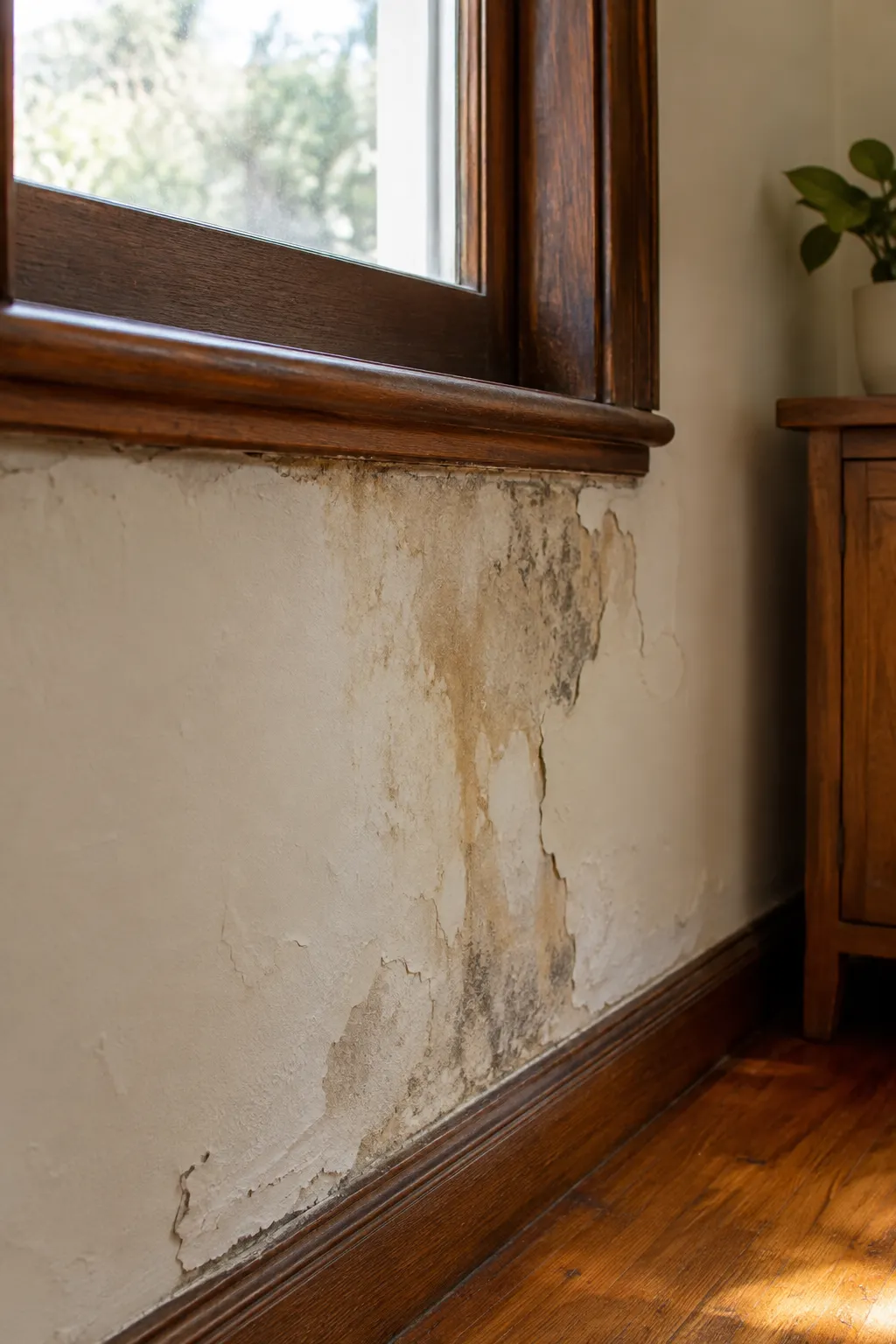
Water-affected rooms
A previous overflow or pipe event can leave damaged finishes in the bathroom. Add repair and drying details so the current surface enquiry is not separated from known wet-material history.
PREVENTION STARTS WITH
Help the room
dry between uses.
Observe the drying pattern
Observe ceiling droplets after bathing and use suitable extraction as part of ordinary room drying. Continuing wetness or a changing stain merits follow-up instead of relying on repeated cosmetic cleaning.
Follow up before decorating
Discuss plaster repair and source questions before repainting above the shower. Where several bathroom surfaces are affected, remediation planning should define safe access and the treatment boundary.
BORONIA & NEARBY
Boronia and nearby rooms.
Nearby property guides include Ferntree Gully and The Basin. When the enquiry concerns Boronia, give the precise address, enclosure layout and ceiling condition, confirming access before any preparation or assumption about suitable treatment is made.
BEFORE YOU CALL
The useful
questions.
Are shower ceiling spots always from steam?
Steam is relevant, but the visible pattern does not establish the sole source. Include rainfall, plumbing history and finish condition in the account.
Should I take a close photo above the shower?
Use a safe room view if close access is impractical. Do not climb on household furniture in the enclosure just to obtain more detail.
Can softened ceiling material be cleaned normally?
Its condition needs discussion before treatment. Damaged plaster may require repair or replacement decisions rather than the same work as sound painted material.
Why include mould on the shower joints?
It is another affected material with its own suitability questions. A ceiling treatment should not imply that deteriorated sealant or grout is also restored.
What should I observe after treatment?
Note fresh droplets, new spots or a stain changing after use or rain. Keep those observations connected to the room history for any follow-up enquiry.
How do I describe a Boronia ceiling problem?
Give the address, bathroom layout and approximate ceiling position. Mention extraction use, material damage and access restrictions so the appropriate next step can be discussed.
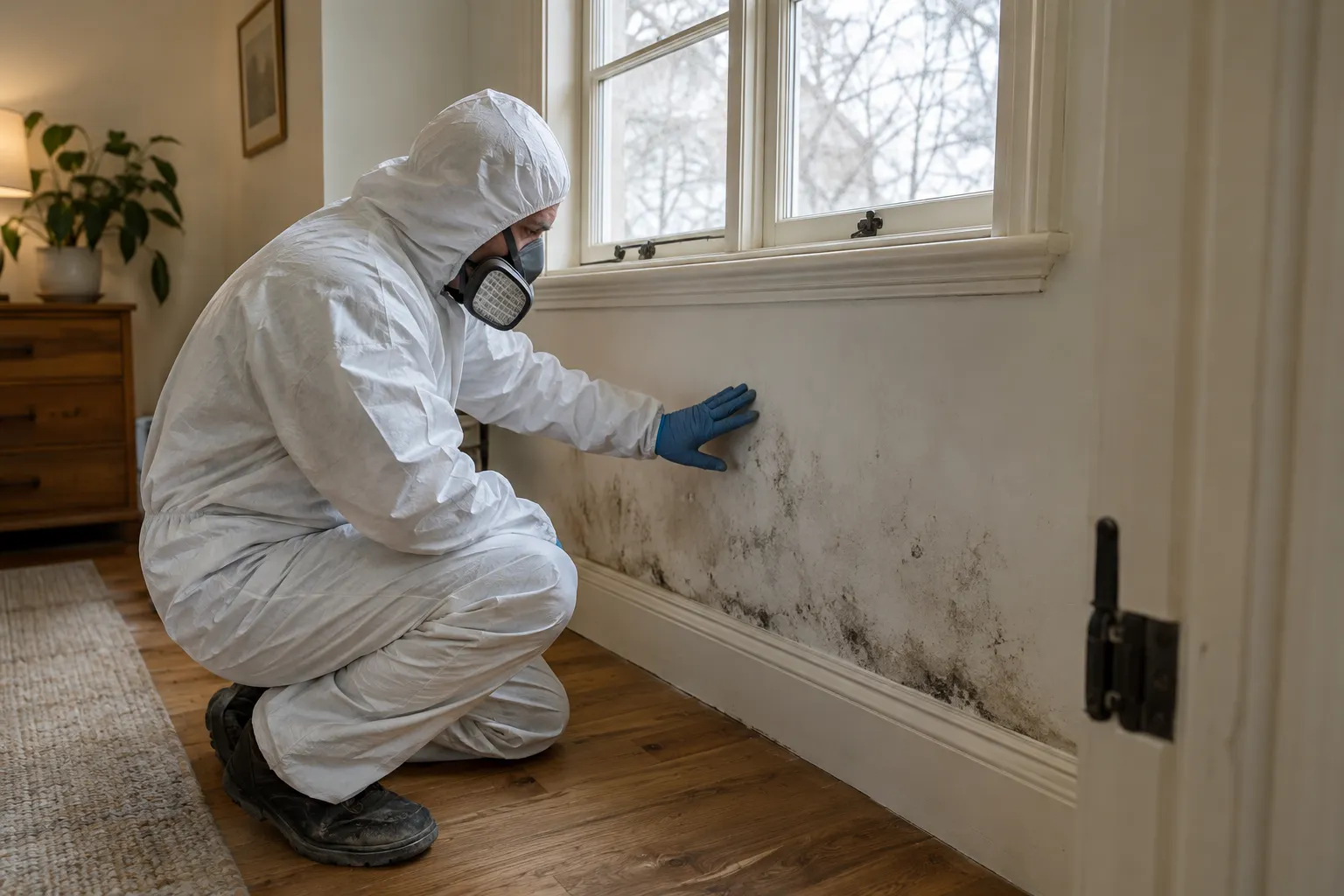
TELL US WHAT YOU CAN SEE
Start with
the affected surface.
Have a safe ceiling photo and the bathroom drying routine available. Phone 03 8652 1296 for the Boronia room, describing any damaged plaster and the access information needed for the next step.
Local context: Knox localities