
ROOMS · MATERIALS · MOISTURE
CLARINDA · MELBOURNE
Mould Removal Clarinda
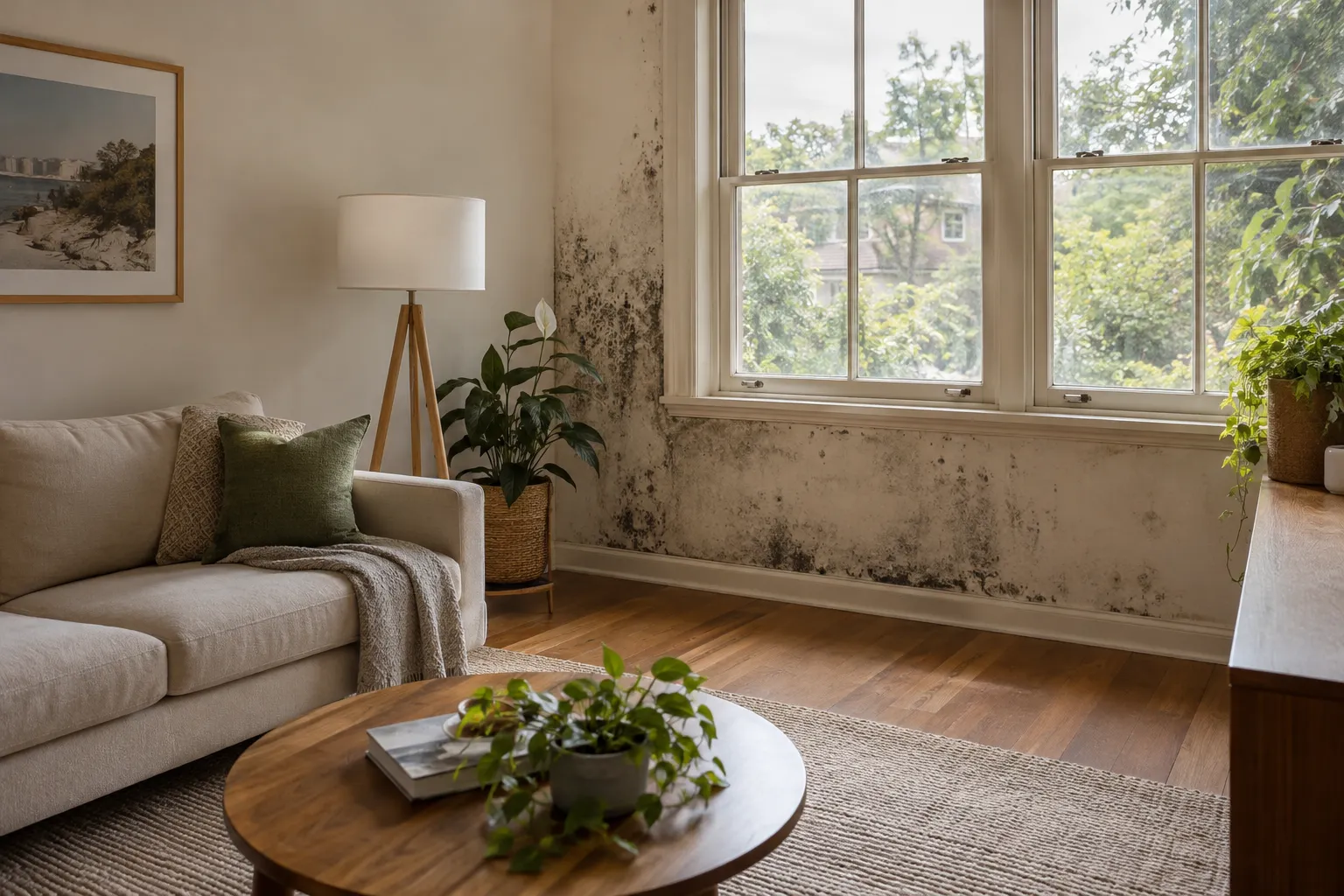
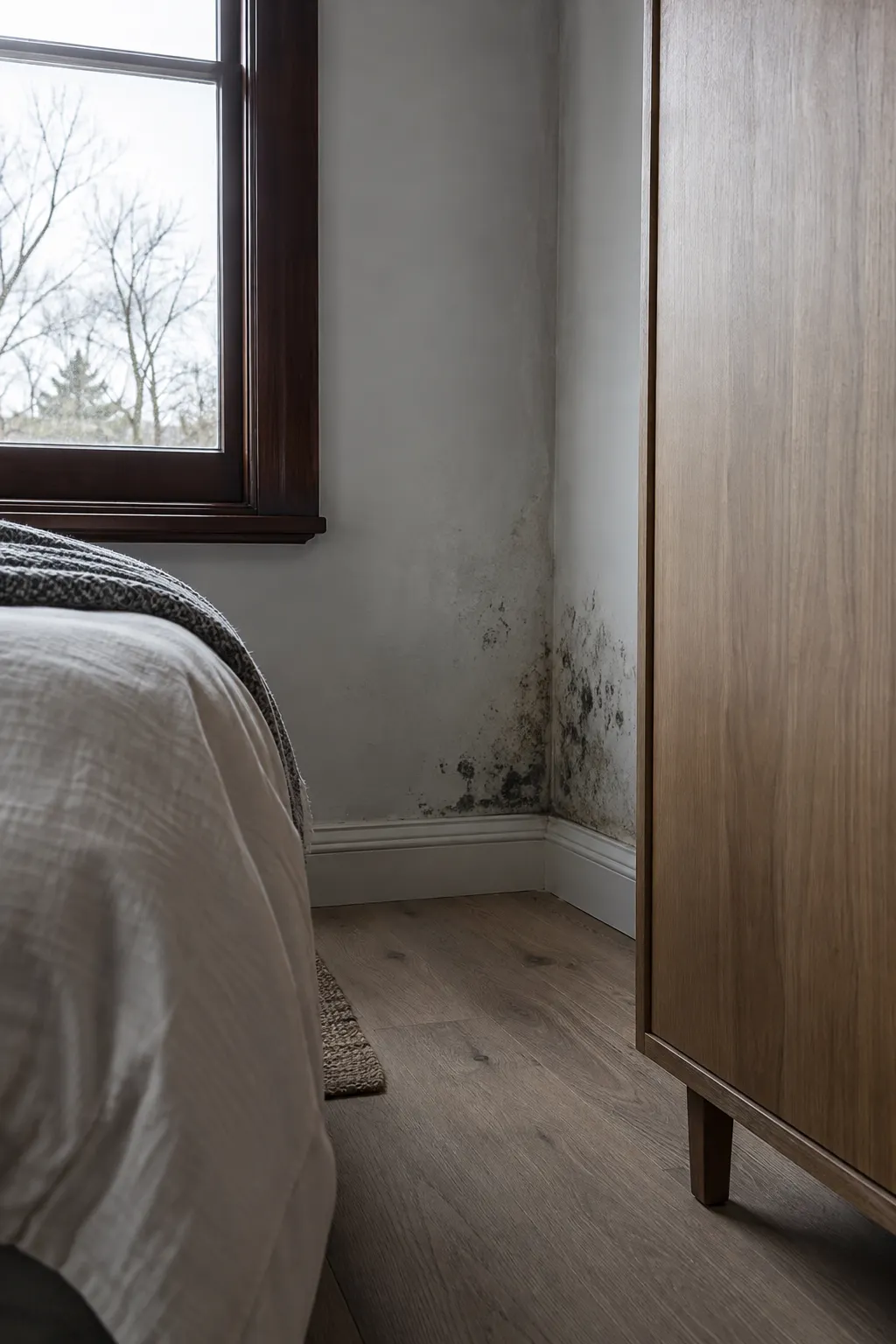
Mould beside a bedroom window can look small while the damp pattern reaches behind curtains or furniture. Start with the whole room, rather than the darkest mark. Discuss visible surface removal, access and the moisture clues at your Clarinda address.
Material condition considered
Accessible work agreed first
Moisture observations kept in view
THE ROOM TELLS A STORY
Look beyond the window mark.
Clarinda is one of the residential localities listed within Kingston by the Victorian Government.
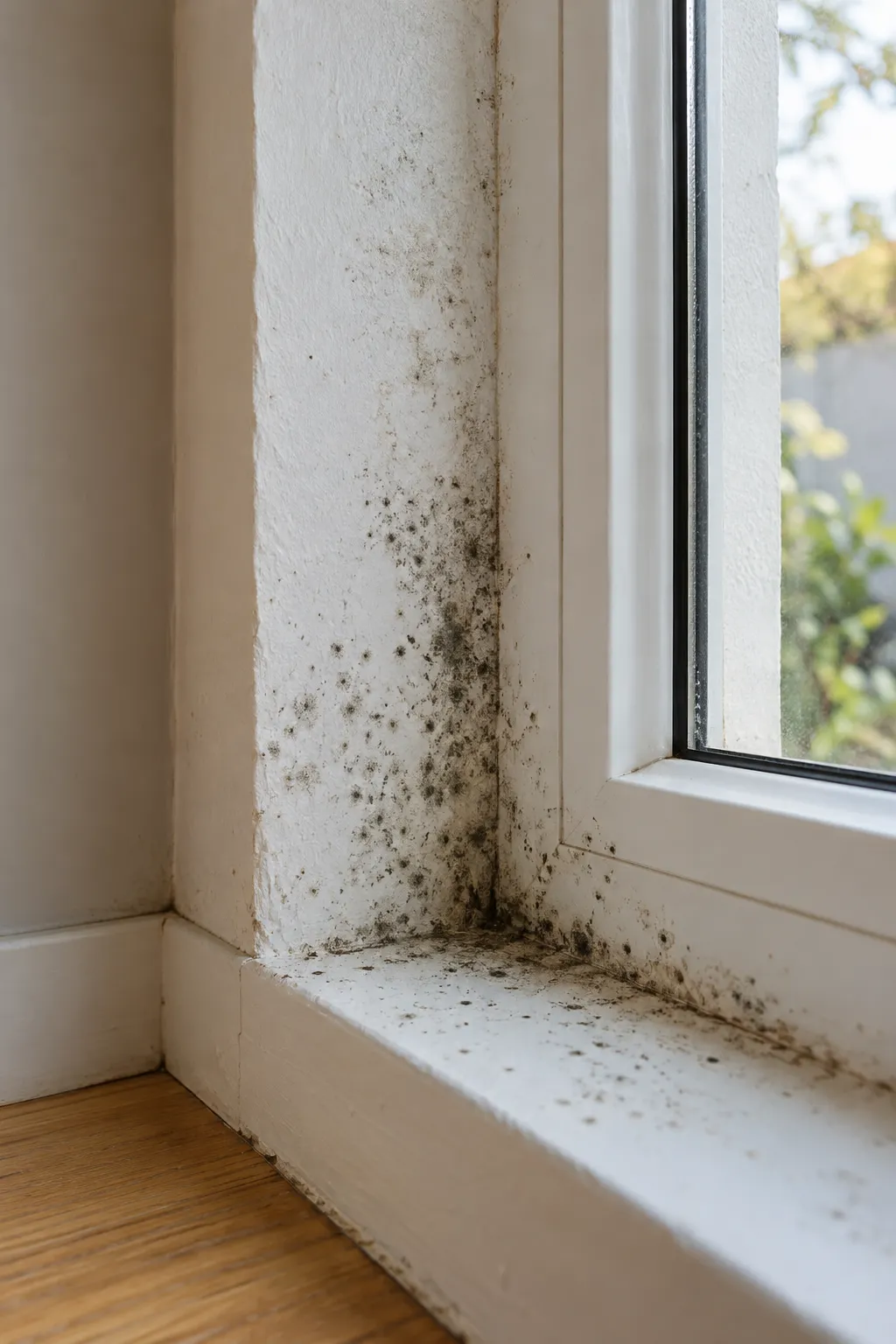
If the marks gather around a window, compare the exposed reveal with the wall hidden behind a heavy curtain. Condensation, an external defect and restricted air movement can leave different clues. Photograph the frame and adjoining wall; a close-up alone can hide the relationship between them.
UNDERSTANDING MOISTURE
Three observations worth keeping.
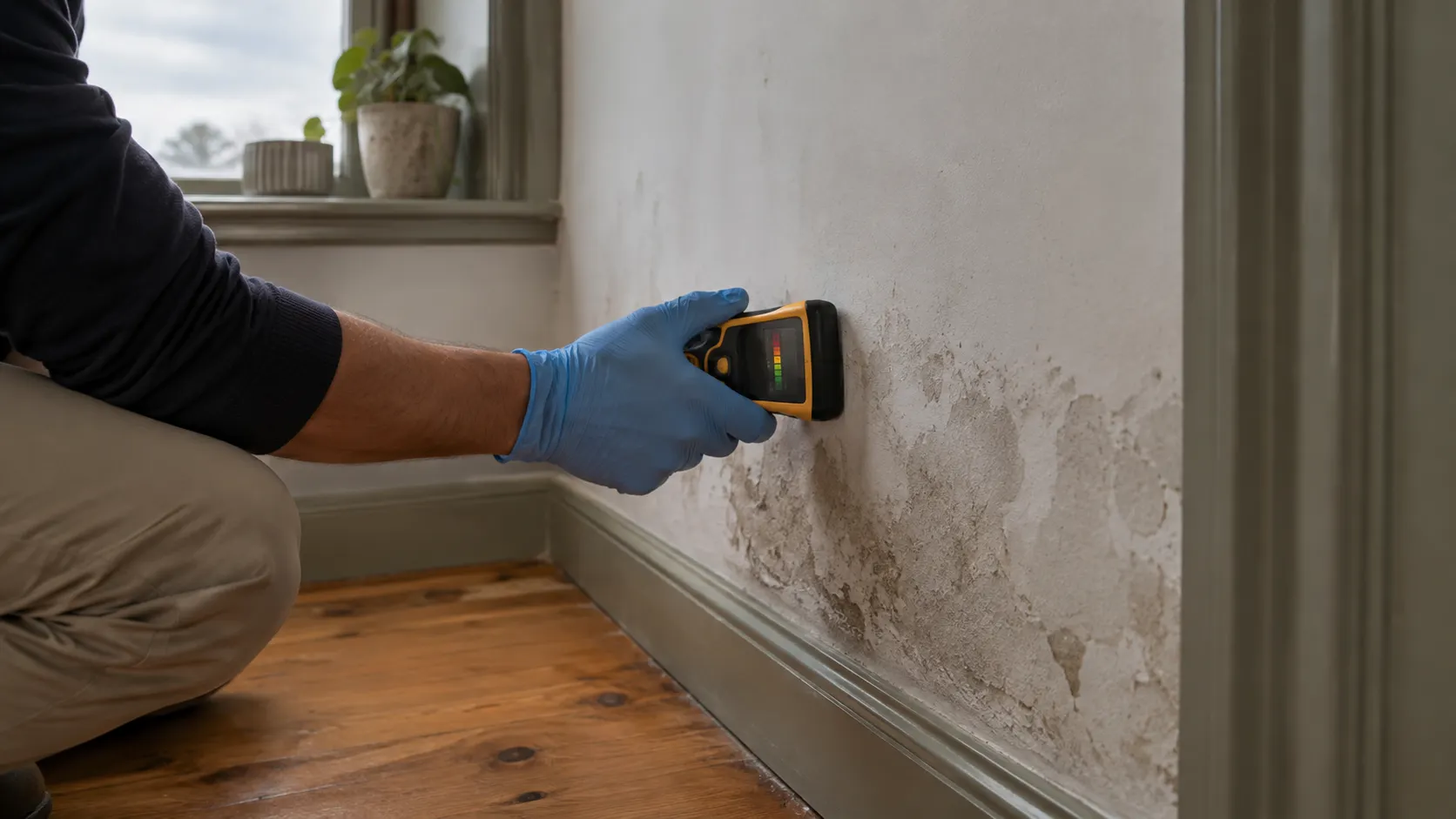
Condensation timing
Note whether the glass is wet first thing in the morning and whether the reveal dries later. A brief record across several ordinary days is more useful than a single photograph taken after wiping the window.
Rain-related changes
If the frame or surrounding plaster becomes wet during rain, describe that separately. Condensation and incoming water can occur in the same room; choosing one explanation too early can leave the other pathway unaddressed.
The concealed edge
Curtains and furniture may hide the adjoining finish. Tell us what is accessible without moving heavy items. A mould inspection can consider visible evidence while making the limits of concealed access clear.
OUR REMOVAL PROCESS
A careful plan for the bedroom.
Useful photographs
A room view, a frame view and a close-up answer different questions. Keep all three where possible, without scraping the surface to make the mark clearer.
Separate fabric decisions
Mention affected curtains or nearby bedding before the appointment. Textile care is a different question from cleaning a painted reveal and must not be assumed within the same scope.
Keep the drying history
Explain what happens after the window is wiped. If the wall stays wet while the glass dries, preserve that observation for discussion instead of covering the difference with new paint.
01
Discuss the whole opening
Explain which side of the frame is affected, the approximate extent and any damaged paint. Include the sill and adjoining wall in the enquiry. This establishes a useful starting point for an agreed surface-removal scope.
02
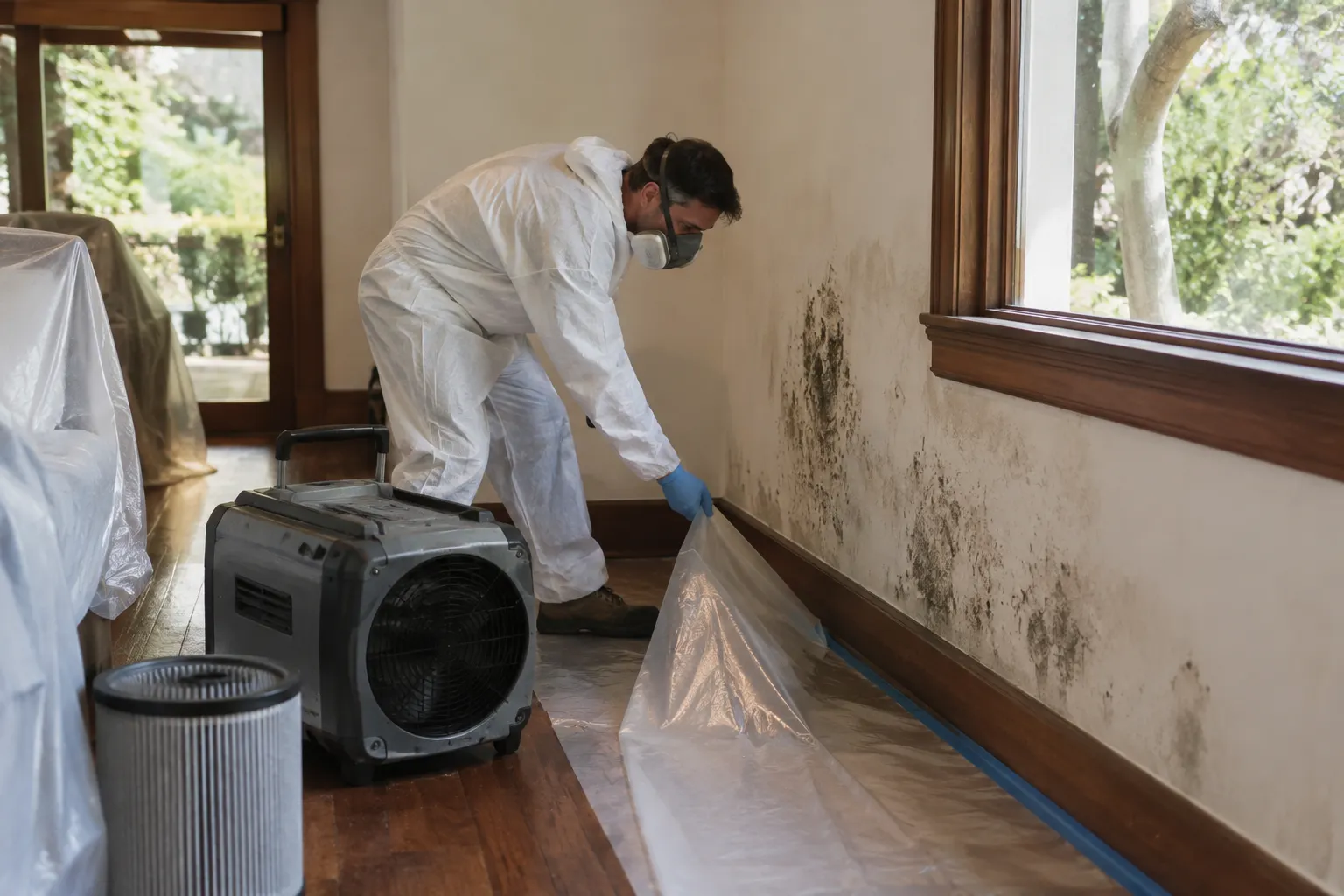
Prepare the accessible surfaces
Agree how curtains, nearby furniture and personal items will be managed before work. The preparation should suit the bedroom and material condition. Let us know about access restrictions so the working area is not planned from a close-up alone.
03
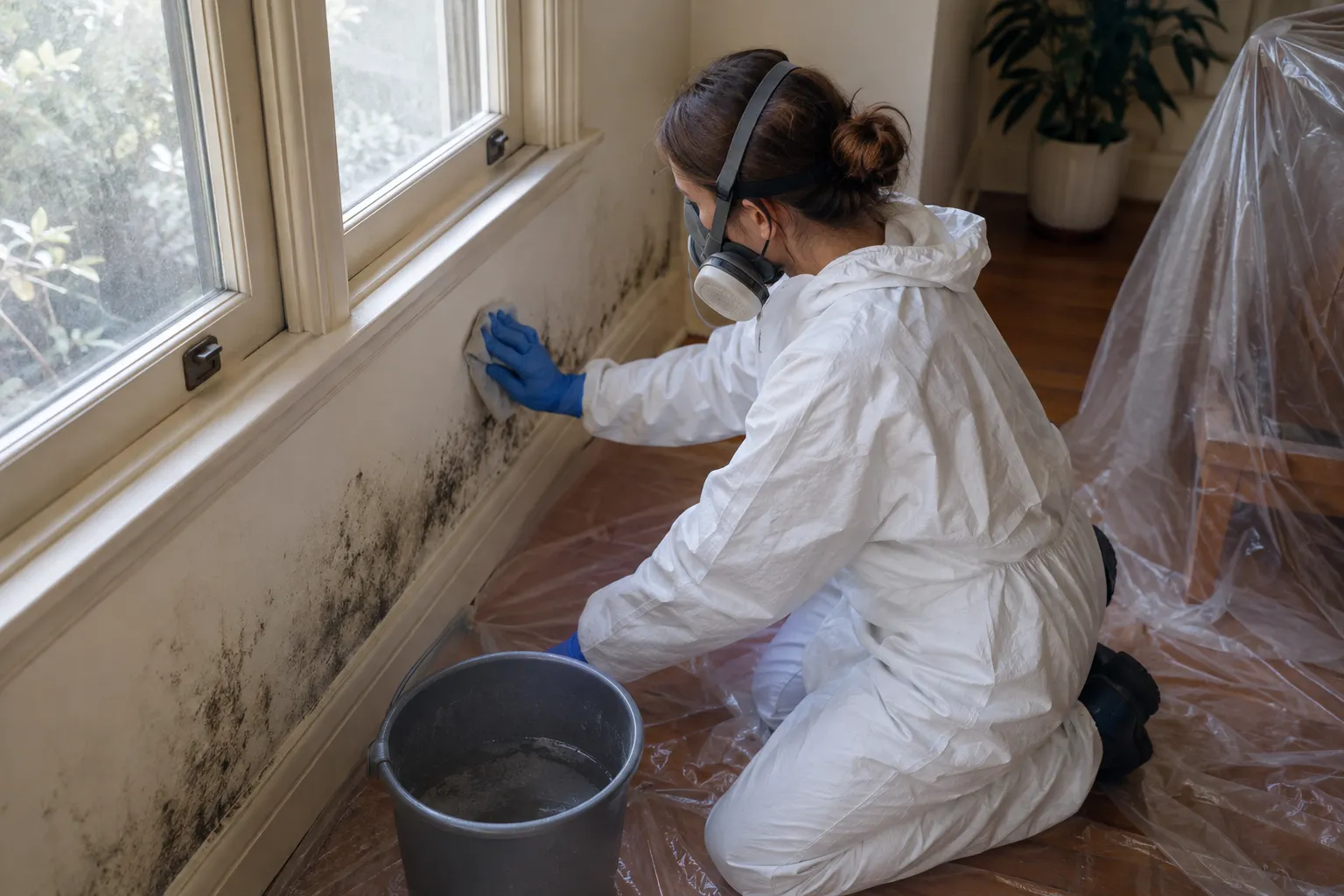
Review what remains
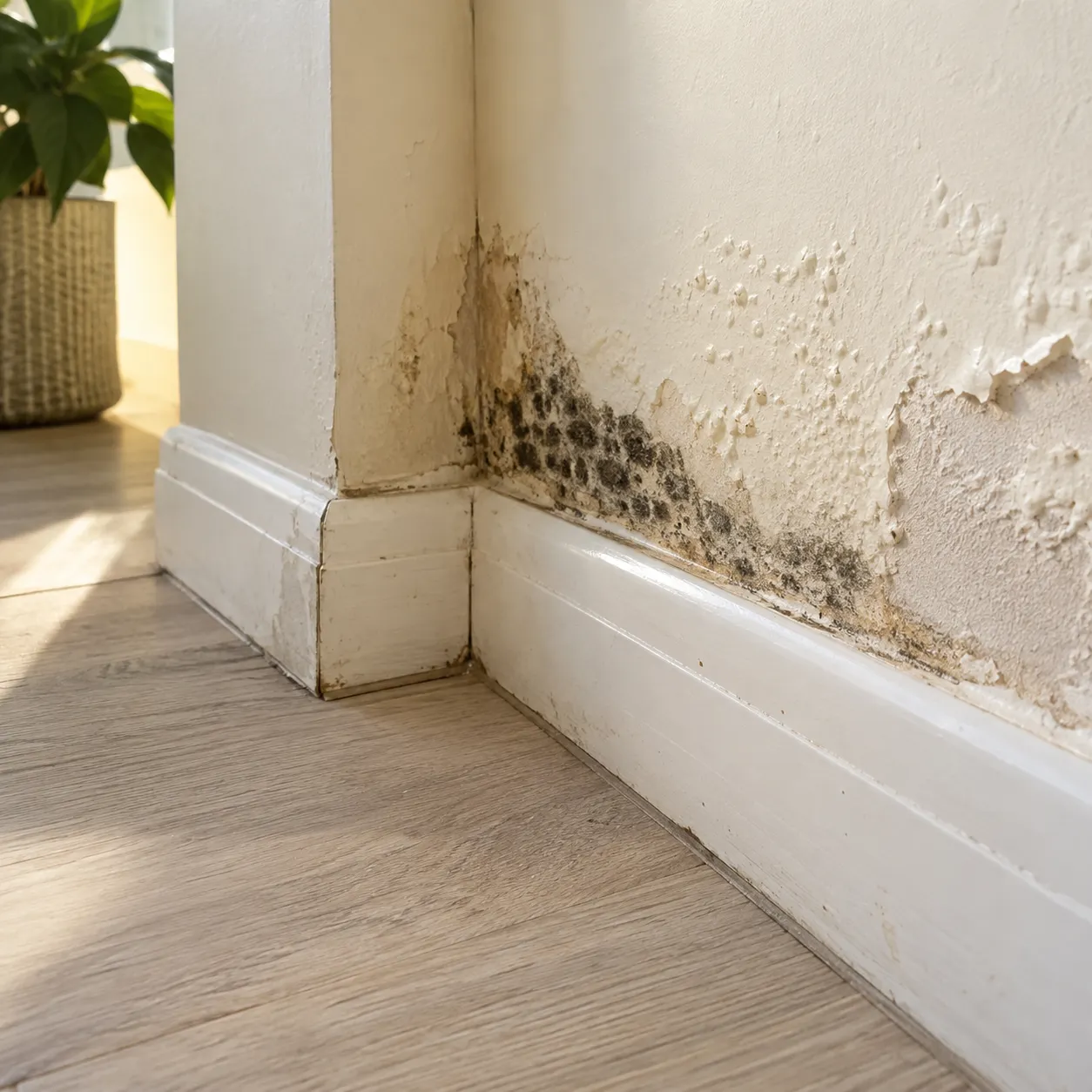
After the agreed removal, discuss staining, deteriorated finishes and any moisture issue still requiring attention. Remediation decisions may involve additional material or building work; a cleaner-looking reveal is not evidence that a frame leak has been repaired.
COMMON AREAS AFFECTED
Four surfaces, four questions.
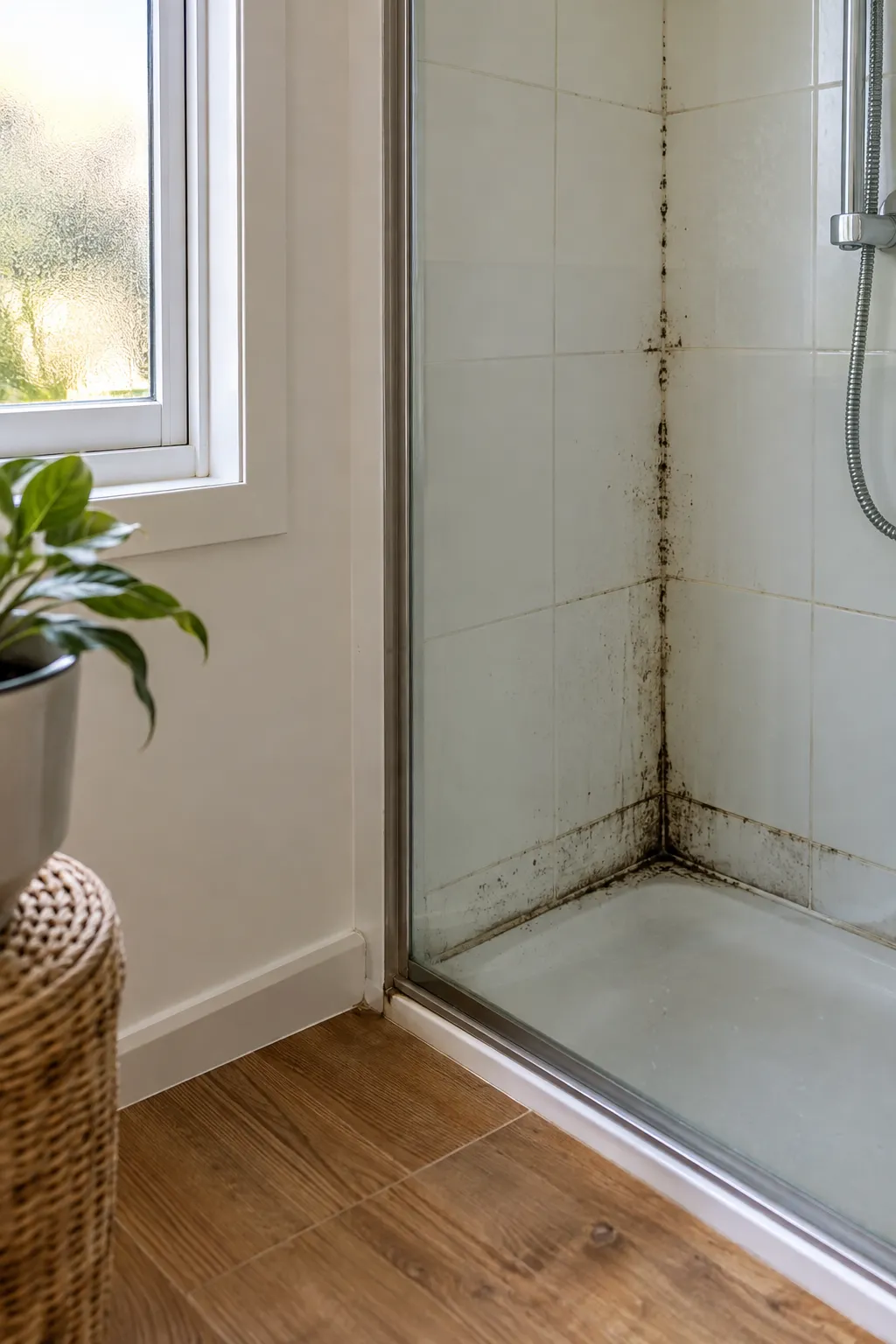
Bathroom surfaces
Bathroom joints can remain affected when the room fails to dry between showers.
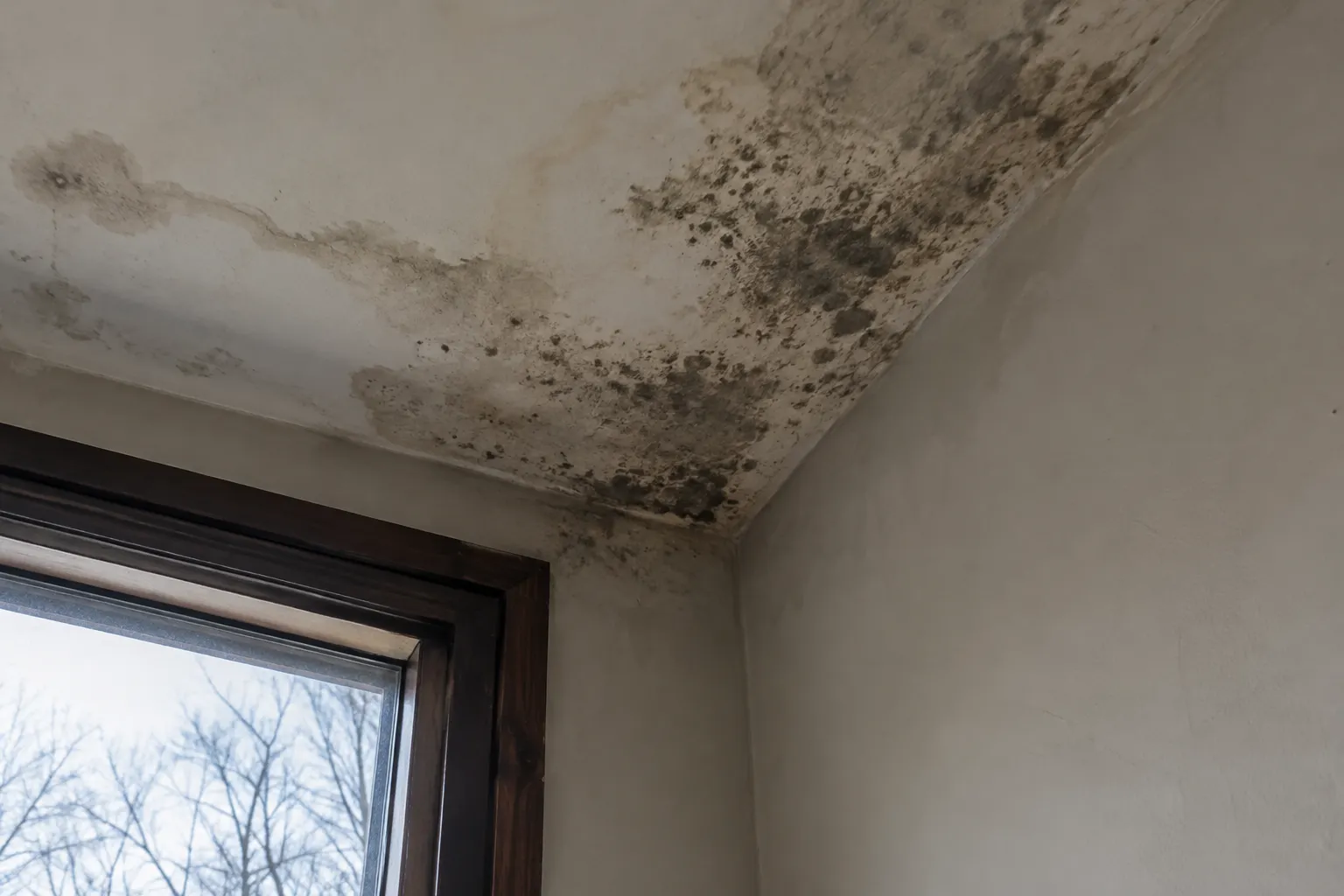
Ceiling condition
A ceiling mark needs its own history. Mention any leak or change after rain, particularly where softness or lifting paint suggests that the lining needs attention beyond visible growth removal.
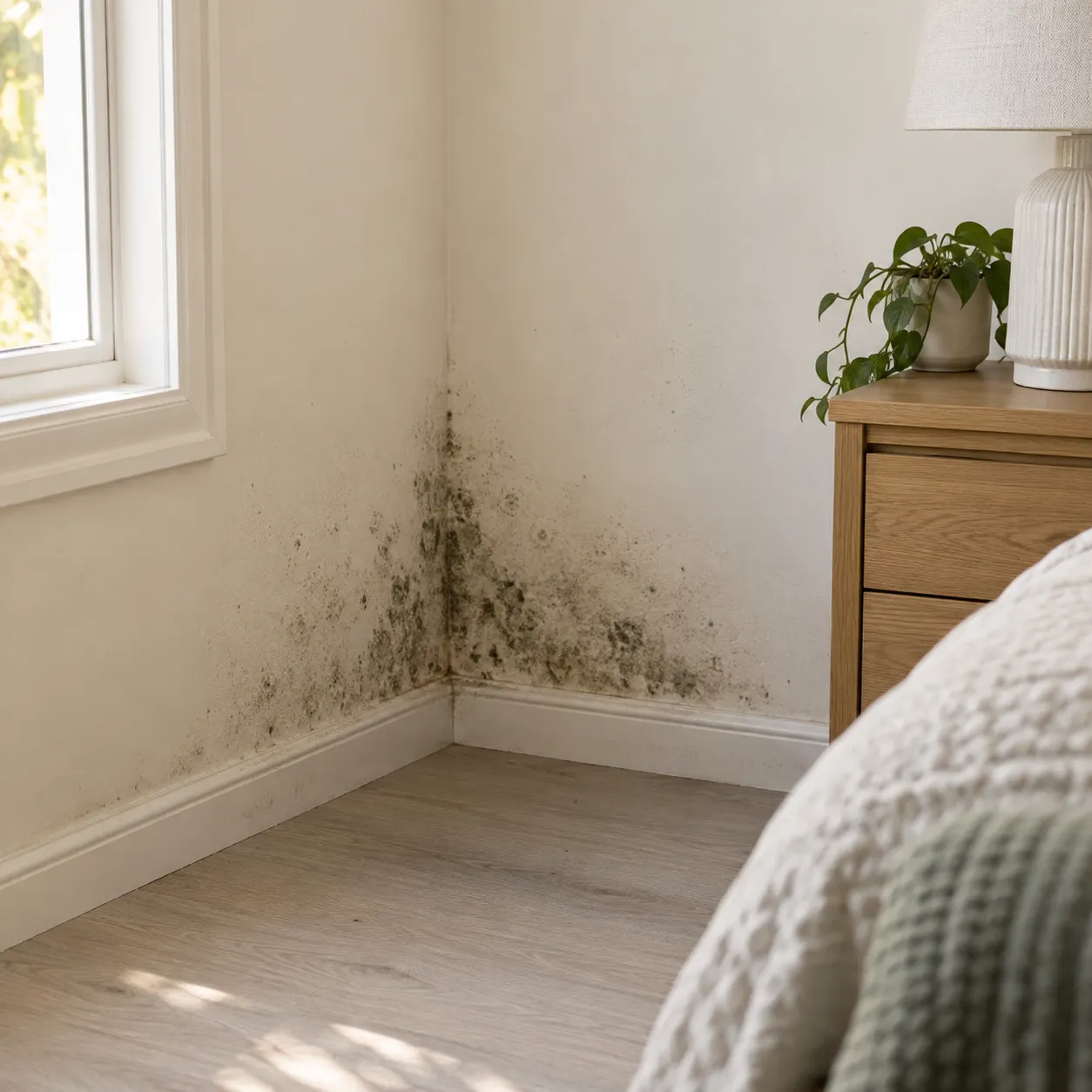
Walls and finishes
Around a bedroom opening, distinguish the frame, reveal and adjoining wall. A method suitable for sound painted plaster may not suit swollen timber or a fragile finish.
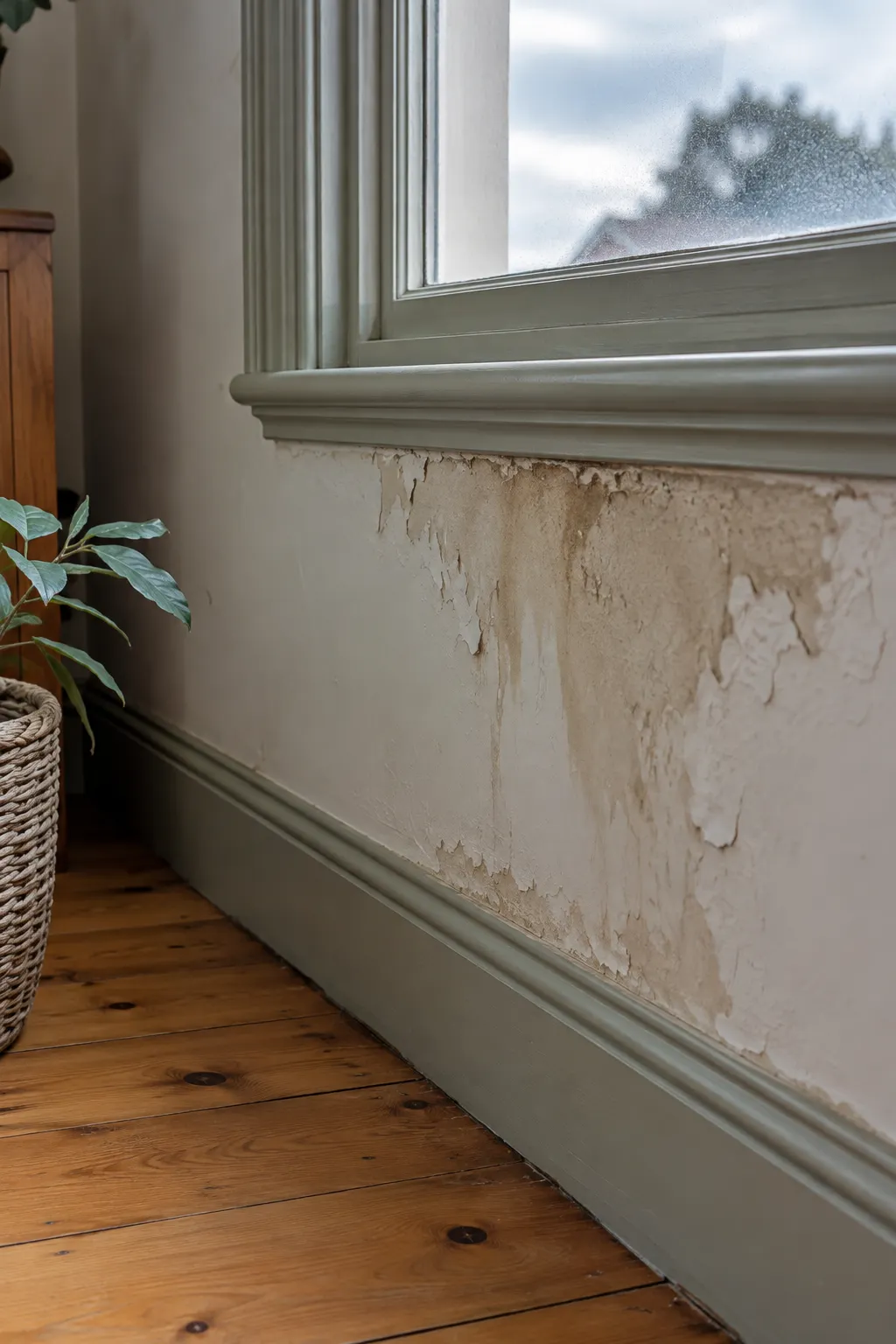
After water damage
Water-damaged interiors may have damp materials beyond the visible stain. Record what became wet and any drying already undertaken; appearance alone does not establish the condition inside a closed wall.
PREVENTION STARTS WITH
Dry the surface.
Keep the evidence.
A practical household check
After ordinary window condensation, dry the glass and sill instead of leaving water against painted timber. Keep curtains from trapping the wet surface through the day where practical. If a frame leaks during rain, arrange investigation of the defect rather than relying on a drying routine.
Follow the separate repair
Where water enters at the frame, keep the repair investigation active alongside the removal enquiry. Do not judge success solely by the colour of the wall. Check the same accessible area after ordinary use and weather so renewed damp can be reported.
CLARINDA & NEARBY
Around Clarinda
Comparing rooms at another nearby address? Start with the guides for Clayton, Dingley Village or Huntingdale. Keep the actual window and material observations specific to the property rather than borrowing a neighbouring room’s explanation.
BEFORE YOU CALL
The useful
questions.
Should I remove the bedroom curtains before you assess the wall?
Mention the curtains during the call and ask what access is needed. Do not shake visibly affected fabric through the house. A wall-removal scope does not include laundering or treating curtains, so discuss those items separately.
Is a close-up enough to plan the appointment?
It helps show the finish, but a wider photograph explains the window, furniture and access.
Should I paint the reveal before calling?
Leave the affected condition visible where possible. New paint can conceal the pattern and does not fix continuing moisture. Discuss material repair and decoration after the source and removal scope are understood.
Can you tell the mould type from its colour?
Colour alone does not identify a species or establish the work required. The enquiry should focus on visible extent, material condition, moisture and access rather than a label based on appearance.
What if the frame is swollen?
Mention swelling and lifting paint alongside the growth. Damaged timber may need a separate repair decision. Do not assume visible removal will restore the shape or strength of a deteriorated frame.
What information helps confirm a Clarinda appointment?
Provide the address, room details, photographs and any known leak or access restriction. Call 03 8652 1296 to discuss availability and what should be checked before the work is agreed.
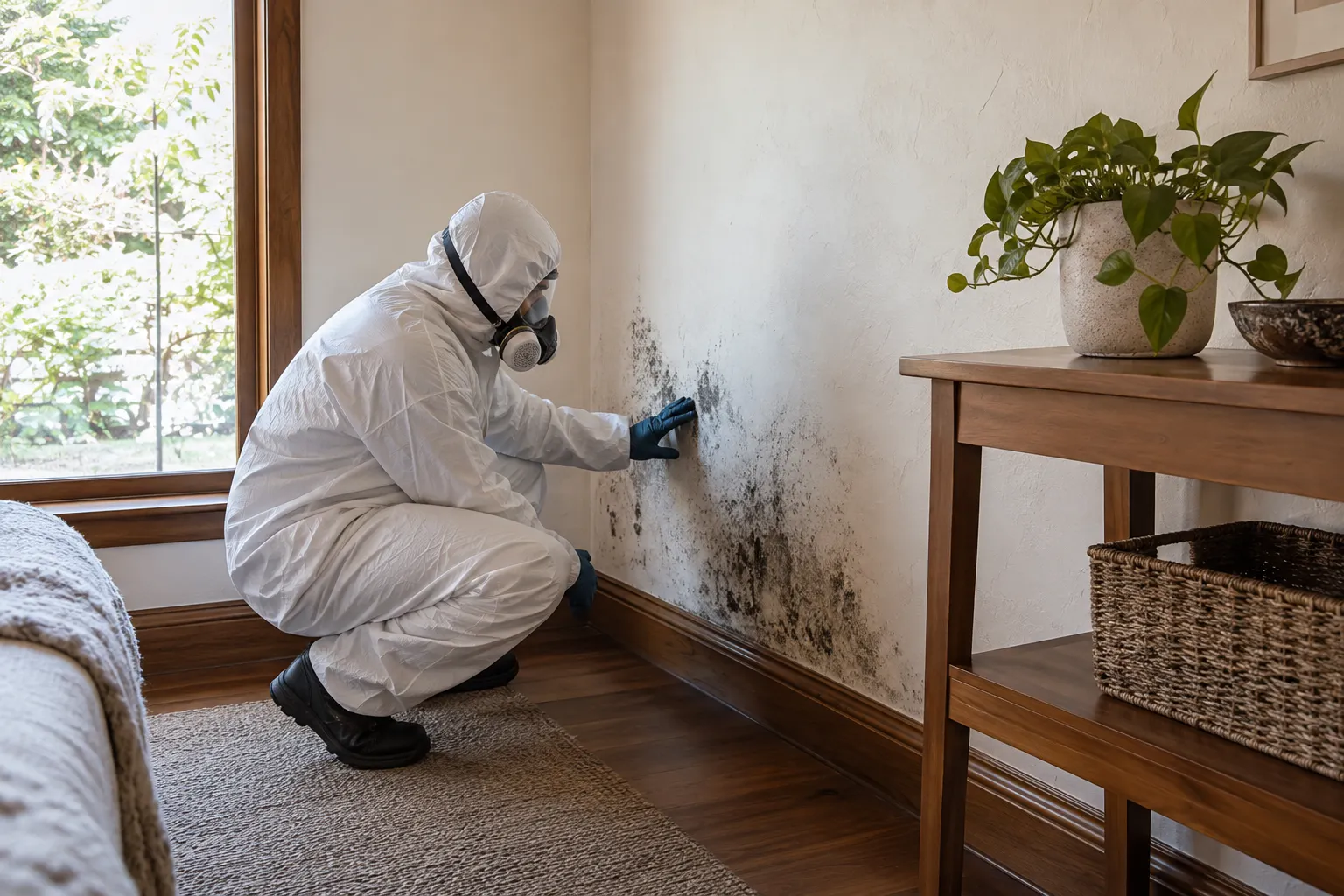
TELL US WHAT YOU CAN SEE
Tell us about the room.
Call with the window and wall observations at hand. We can discuss address availability, accessible surfaces and the next useful step, with any curtain, frame or repair limitations made clear before work is arranged.
Local context: Victorian Government — Kingston suburbs