
KANANOOK · MELBOURNE
Mould Removal Kananook
WALLS · MATERIALS · HISTORY
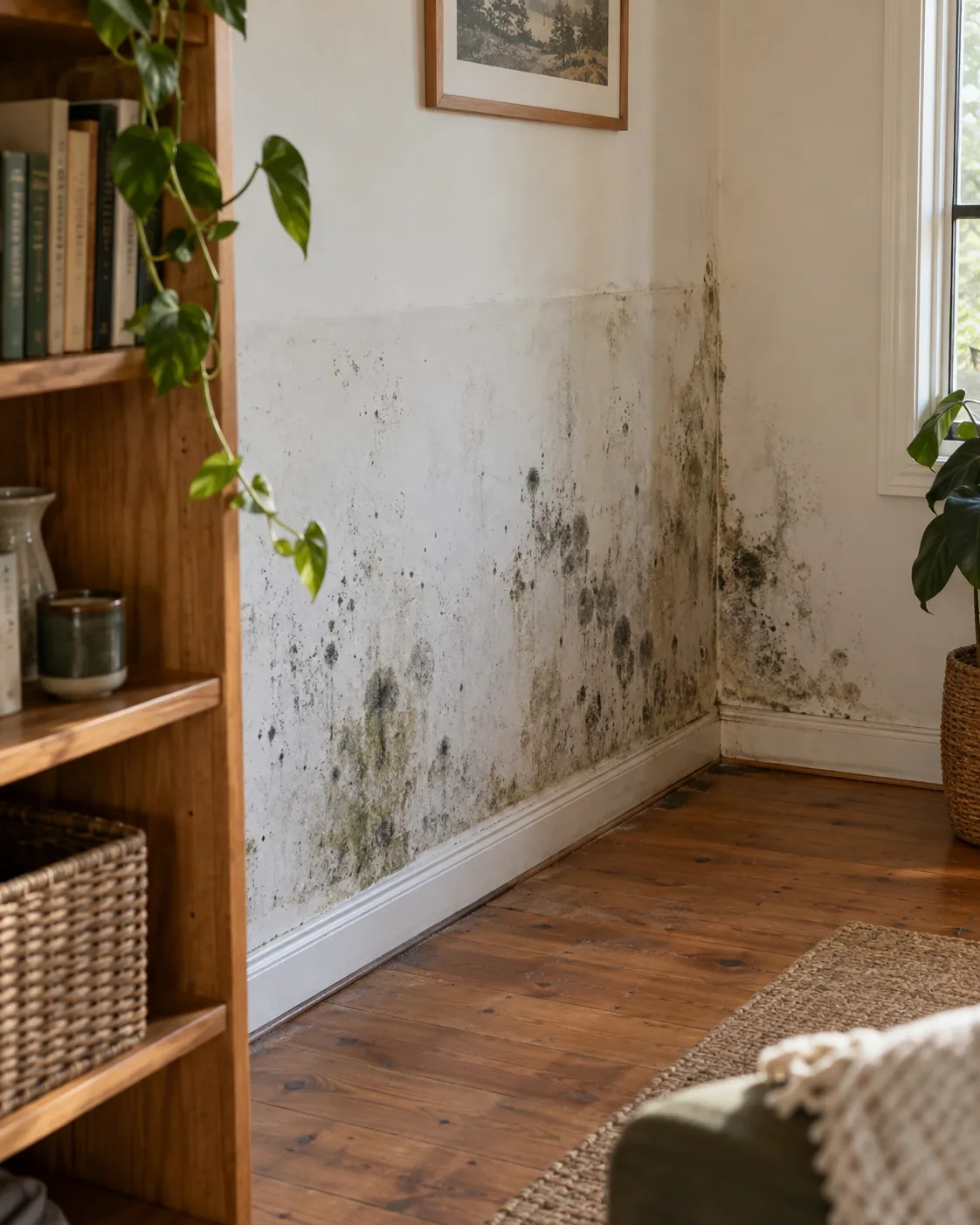
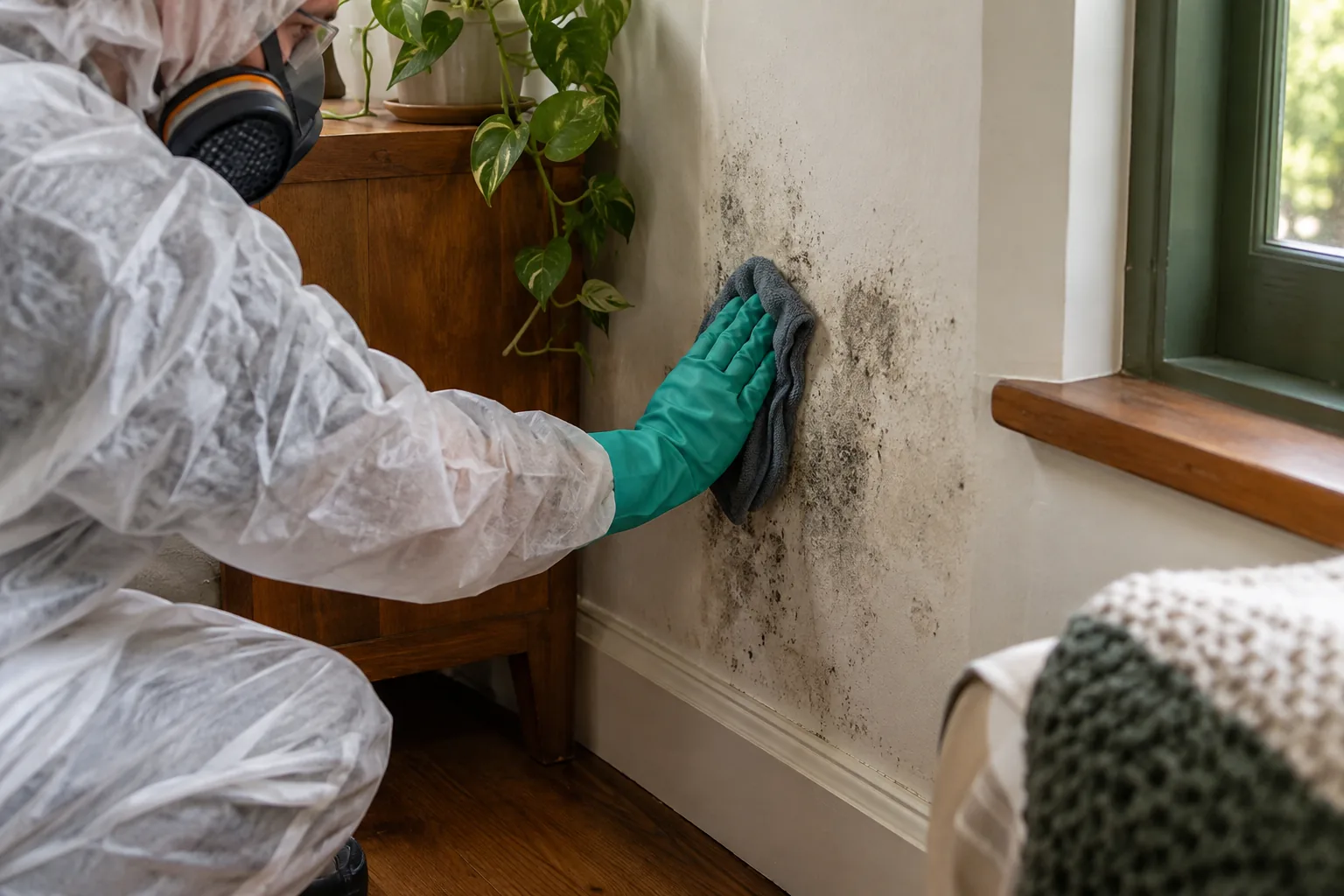
Spotting on a lower wall needs a material and moisture assessment. For Kananook, provide the address, room use and accessible surfaces. We discuss removal without diagnosing dampness from the patch’s height or locality.
Room use clarified
Lower-wall condition assessed
Repair needs separated
SURFACES & THEIR SETTING
Use the address to identify the room
Kananook is used for a local creek and precinct within the Frankston area. A street address avoids confusion between nearby properties and premises. The name does not establish a residential building type or a particular reason for dampness.
Growth near the skirting
Describe whether spotting is above the skirting, behind furniture or on a wider wall section. Our inspection information explains assessment of visible growth and moisture. A low patch alone cannot establish rising damp or a plumbing leak.
Access along the floor edge
Tell us about fitted cabinets and floor coverings. We cover accessible hard floors as agreed, but not carpet or furniture. If removing an obstruction would require another trade, that access work should be identified first.
Read the moisture pattern
Record changes after rain, cleaning or routine use. Inspection considers those observations with material condition; proximity to a creek does not diagnose the cause.
Material condition matters
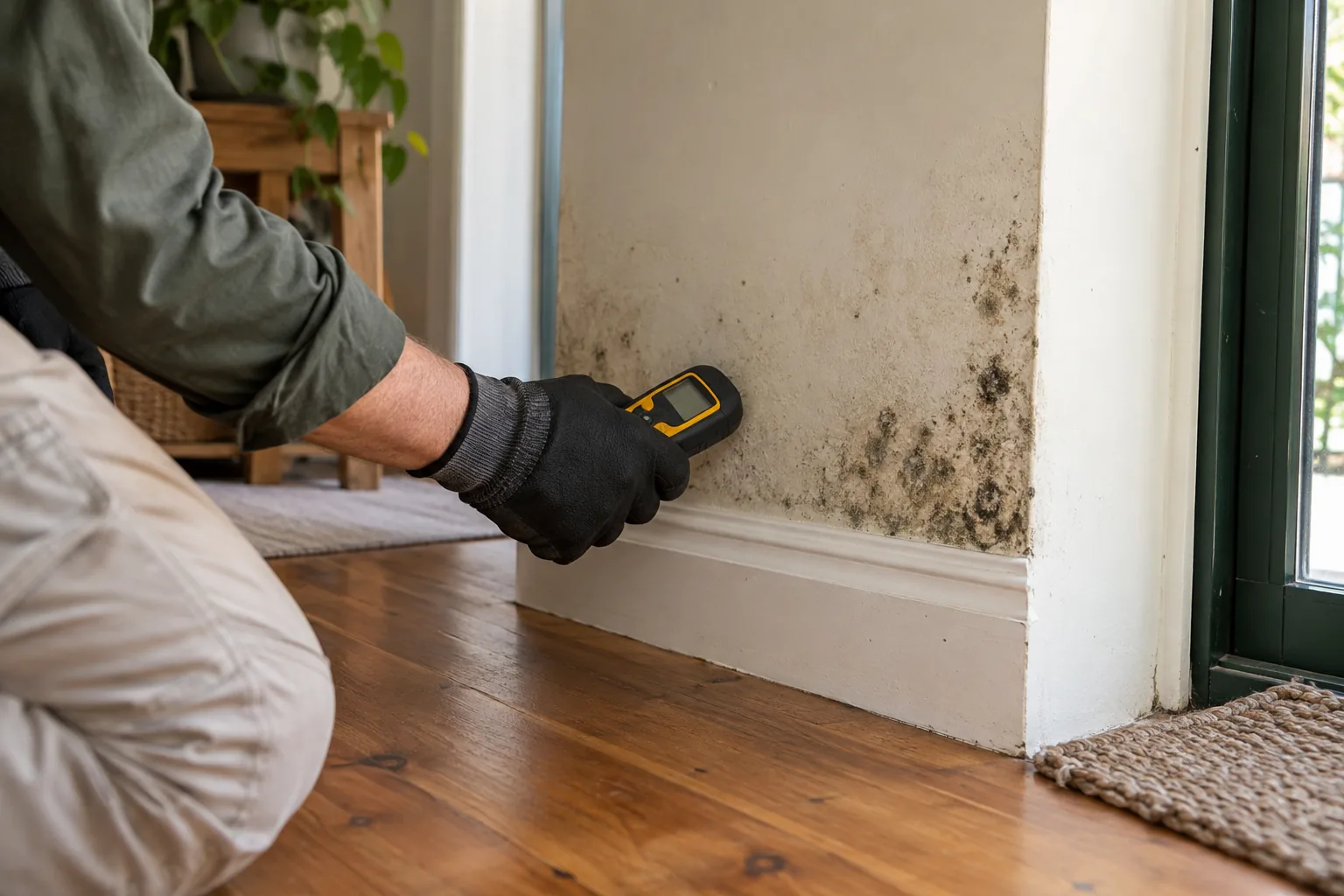
Swollen skirting, bubbling paint and a damp wall are useful details. Treatment of growth does not repair timber or plaster. A deteriorated surface may require a separate repair decision before cleaning can proceed.
Measurements have limits
A hygrometer supports moisture assessment. The findings do not certify concealed wall layers or identify every source behind them. Persistent dampness can need further specialist investigation beyond visible-surface work.
THE SURFACE REMOVAL PROCESS
A defined treatment sequence
01
Check the visible extent
Inspect the included wall, ceiling and hard floor areas. Note unstable finishes and obstacles. Confirm the surface boundaries with the owner or authorised premises contact rather than extending treatment to hidden structures by assumption.
02
Prepare air filtration
Set up the HEPA air scrubber and agreed protection. Arrange clearance and occupant or pet provisions before the visit. The equipment route and room restrictions should be explained along with the preparation responsibilities.
03
Choose an appropriate treatment
HOCl treatment may be part of the method where suitable. The material and its condition guide use. A discoloured skirting board or wall finish may retain marks after the growth is addressed.
04
Consider ULV application
Discuss ULV application if appropriate to the job. It works within the agreed preparation and scope. It does not repair damp-proofing, plumbing or concealed damage, and is not proof that a wall cavity has been inspected.
05
Physically remove residues
Use suitable H-class filtration equipment for accessible growth. The remediation overview describes combined treatment and removal. Any affected carpet, upholstery or other textile requires a separate decision.
06
Complete filtration and advice
Continue HEPA filtration through the finishing stage. Explain completed surfaces, residual staining and unresolved dampness. The follow-up should identify separate repair responsibilities so recurrence is not treated as merely another cosmetic mark.
VISIBLE & ACCESSIBLE
Details that help describe extent
Lower painted walls
Give the patch height and width. Mention loose coatings without scraping them for a photograph.
Ceiling junctions
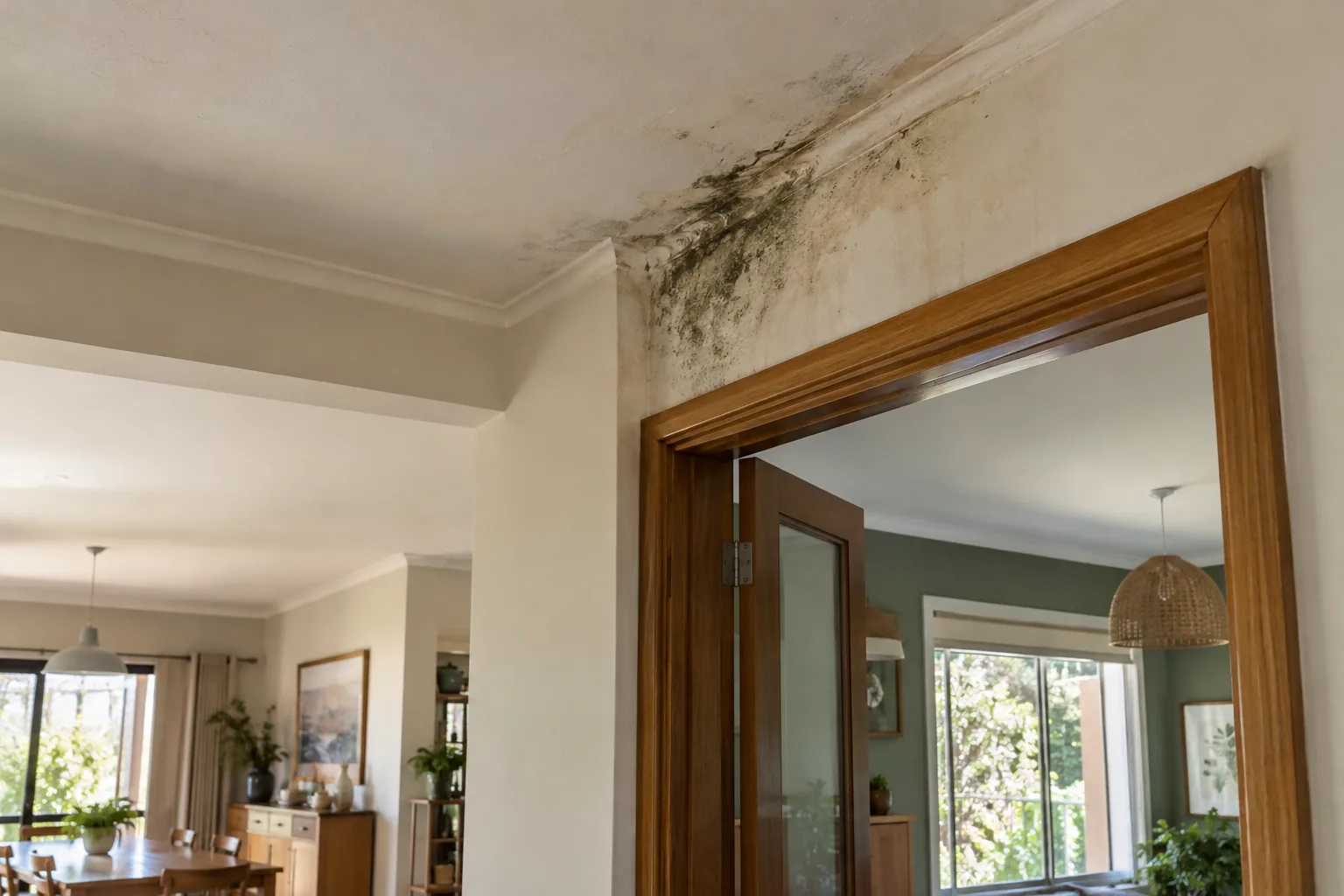
Say whether marks also occur above the wall. Several locations may need assessment rather than one assumed cause.
Wet-area walls
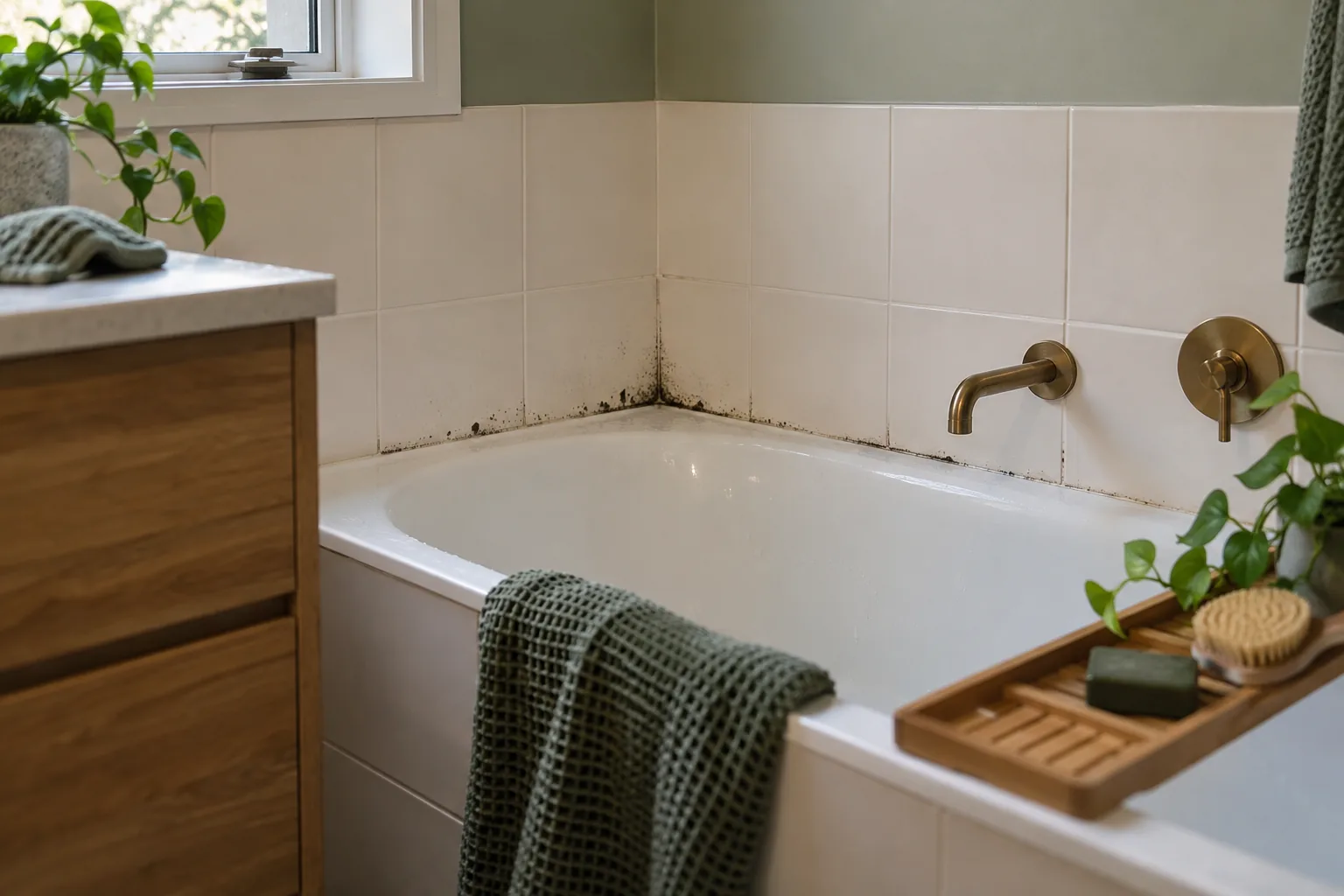
Explain nearby plumbing and surface wetness. A fitting or waterproofing repair is not included in removal.
Hard floor edges
Specify the material and any swelling. Carpeted areas are outside the structural floor scope.
PREPARATION & LIMITS
Agree expectations clearly
Only visible accessible walls, ceilings and hard floors are covered as agreed. Furniture, sofas, mattresses, carpets, curtains, clothing and other textiles are excluded. Identify mixed-material damage during the enquiry so the structural quote is not confused with the handling of belongings.
Around three hours per room is an average working guide, not hourly pricing. Extent and access influence the duration. Cosmetic marks may survive treatment; painting or decorating can be quoted separately and should follow any necessary moisture-source repair.
AFTER THE SURFACE WORK
Keep a useful moisture record
Track recurring damp patches with dated photographs and notes about weather or room use. Check ordinary extraction and airflow arrangements, but do not treat those steps as a substitute for investigating a persistent wet wall.
The general removal scope explains the surfaces covered. Ask the appropriate trade about damaged materials or a suspected leak. Correcting an ongoing source is important because surface treatment alone cannot prevent growth returning under damp conditions.
KANANOOK · NEARBY LOCATION PAGES
Nearby address choices
Seaford, Frankston and Karingal offer nearby navigation. Select the locality matching the full address when enquiring. A Kananook page does not imply an office beside the creek or a contract with a precinct building.
BEFORE YOU ARRANGE WORK
Questions for your enquiry.
Does proximity to the creek explain the mould?
No. A geographical feature cannot diagnose dampness in a particular room. Inspection considers the surface, moisture readings and history; plumbing, condensation or another issue may need separate assessment.
Can you diagnose rising damp from a photo?
A photo is useful for describing the patch, not establishing that diagnosis. Give the material condition and timeline. Further investigation may be needed to understand a persistent low-wall moisture problem.
Will swollen skirting be restored?
Removal is not a timber-repair service. Swelling or deterioration may require replacement or another repair, and cosmetic discolouration may remain. Discuss the condition before deciding what work is appropriate.
What if the wall is behind fitted cupboards?
Only safely accessible surfaces can be included. Dismantling fixed cupboards needs a separate arrangement. Do not assume treatment covers a wall that remains hidden behind cabinetry.
Are wet carpets part of the job?
No. Carpets and textiles are excluded. Mention them so separate handling or replacement decisions can be considered, especially when they obstruct an included hard floor or wall edge.
Should I keep cleaning a recurrent patch?
Repeated cosmetic cleaning can miss the continuing moisture issue. Record its recurrence and arrange assessment of the source. Removal and any required plumbing or building repair should have clearly separated scopes.
Discuss a Kananook interior
Call 03 8652 1296 with the address, material and dampness history to discuss accessible-surface assessment.
Useful references: Official local context