
MARYKNOLL · MELBOURNE
Mould Removal Maryknoll
ROOM USE · FINISHES · FOLLOW-UP
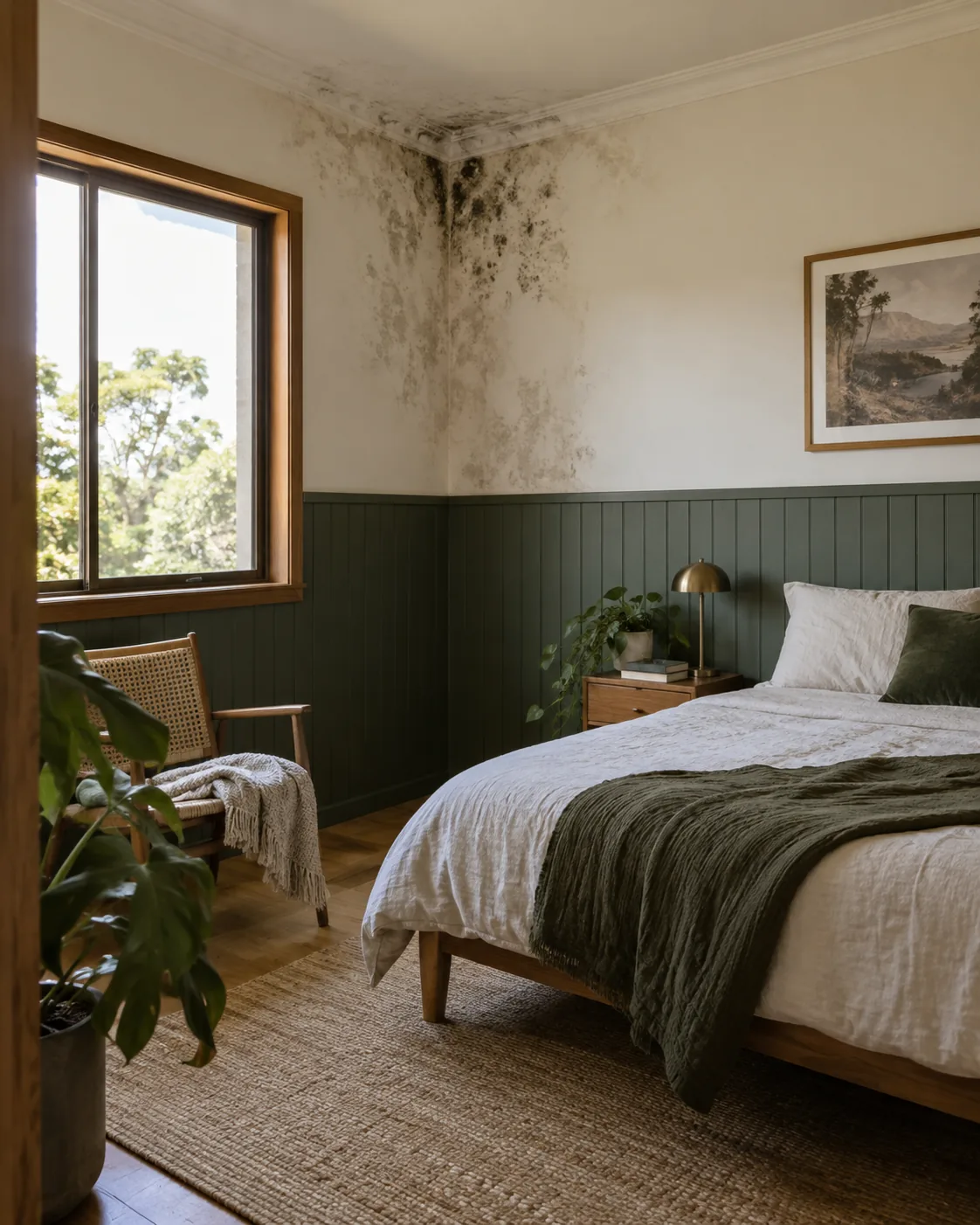
When a room in Maryknoll has been closed between uses, describe what changed when it was reopened. Spotting, damp finishes and affected belongings need separate decisions. We discuss address-based availability and accessible structural surfaces without assuming that closing the room explains its moisture source.
Reopening observations considered
Belongings kept outside scope
Preparation confirmed individually
SURFACES & THEIR SETTING
Start with the Maryknoll address
Maryknoll is a recognised Cardinia locality. Provide the full street address and entry contact when enquiring. Its local identity does not establish a building type or a predictable cause of growth at an individual property.
A room opened after storage
Describe the visible wall or ceiling and how much of it remains blocked. The inspection information covers visible growth and moisture assessment. Stored items can limit access without proving they caused the dampness.
Separate belongings from structure
List affected boxes, bedding or furniture separately. Those items are not included in this service. Clearance responsibilities need agreement before treatment, especially where heavy items obscure the wall.
Look at the room’s history
Explain the last observation, any known leak and whether surfaces remain wet. A room can become damp for several reasons; occasional use is only one contextual detail. Source repairs remain separate from growth removal.
Material condition
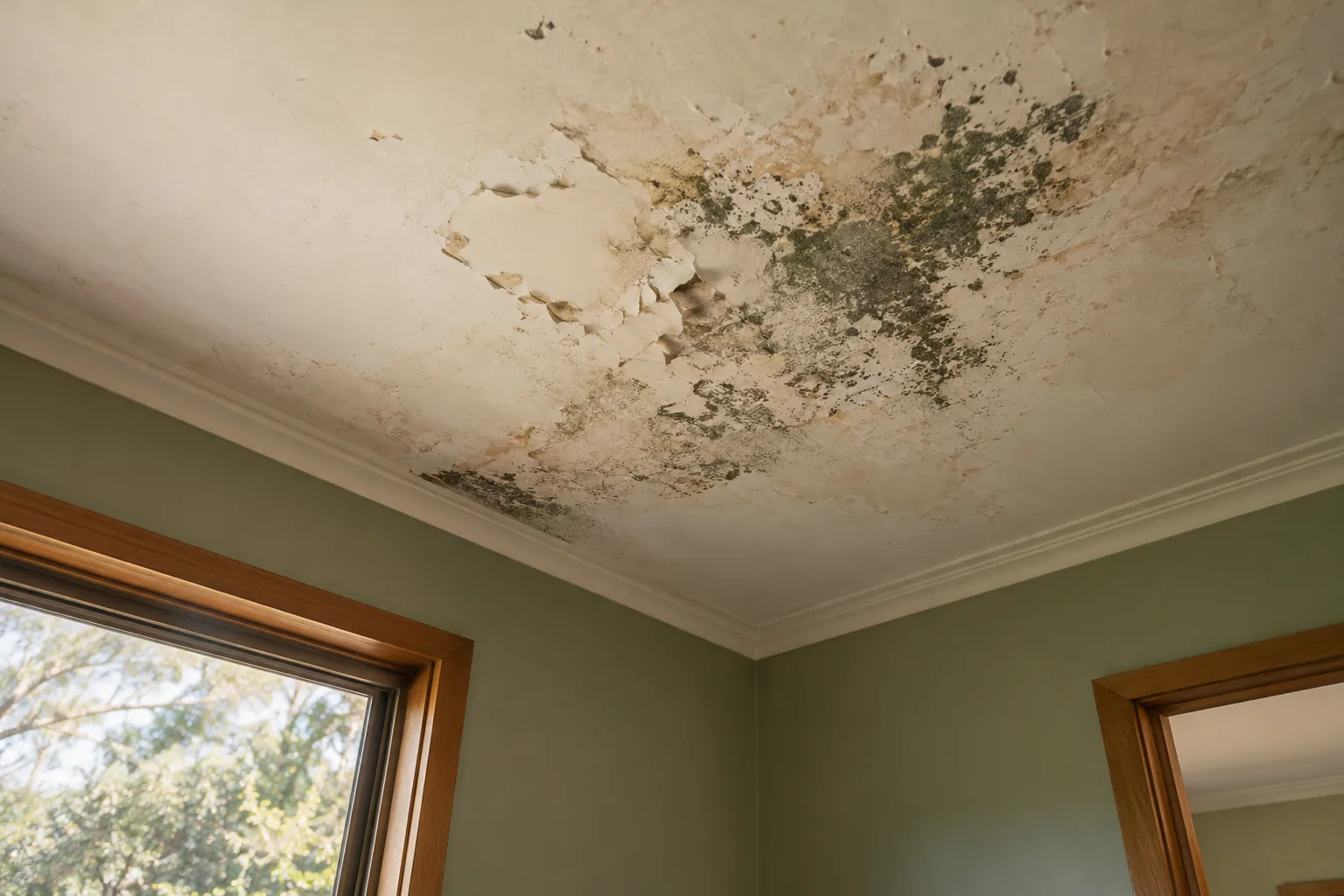
Describe loose paint, soft plaster or floor distortion without disturbing it. A deteriorated finish may require repair or replacement rather than routine cleaning. Treatment cannot restore its strength.
Measurements and hidden areas
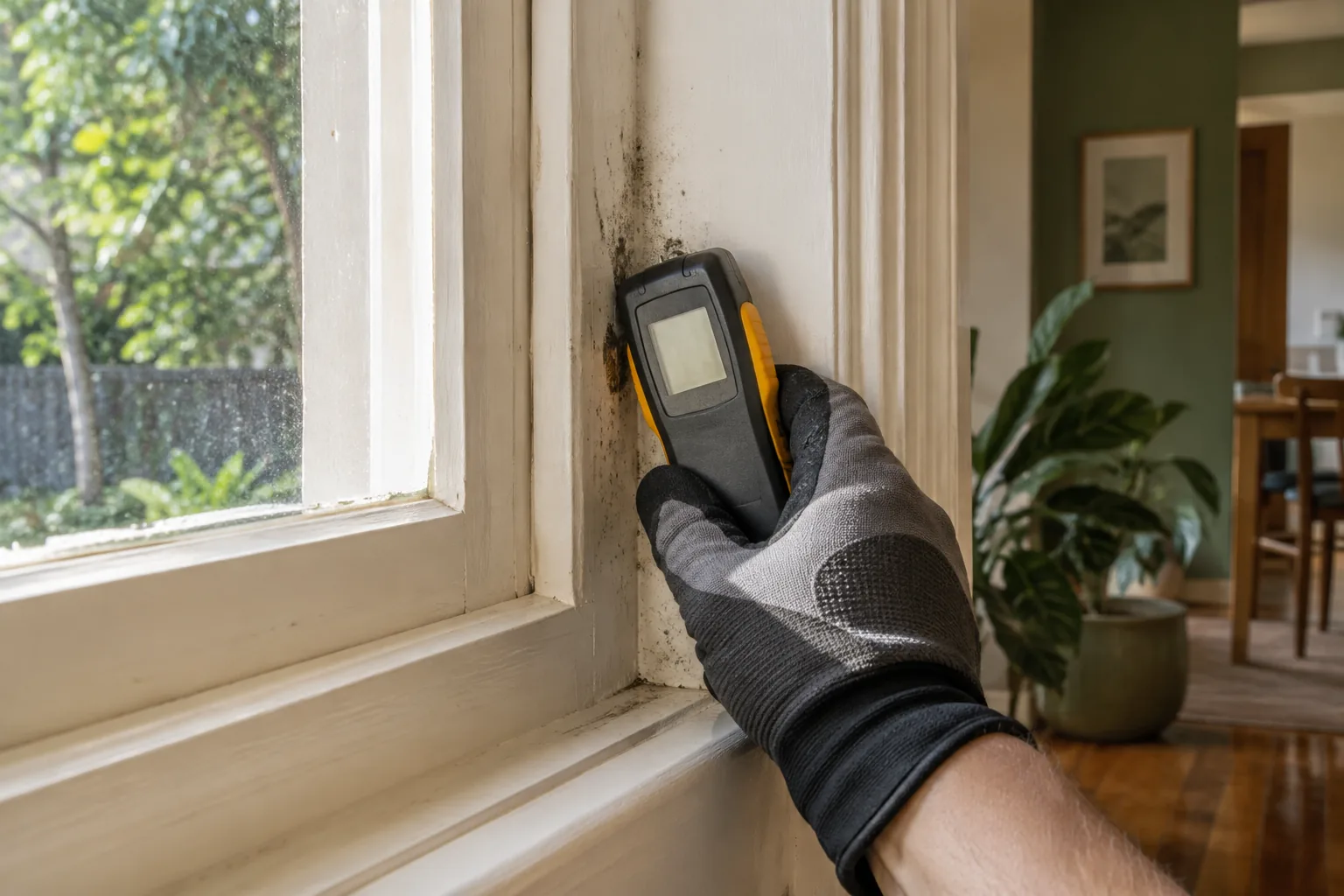
A hygrometer supports assessment of conditions in the room. It does not establish that cavities or concealed insulation are unaffected. Persistent dampness may need another investigation beyond the visible-surface scope.
THE SURFACE REMOVAL PROCESS
A careful reopening sequence
01
Inspect agreed surfaces
Check reachable walls, ceiling and hard floor. Discuss damage and storage obstacles. Define areas suitable for treatment and identify surfaces requiring separate access or repair before the method is selected.
02
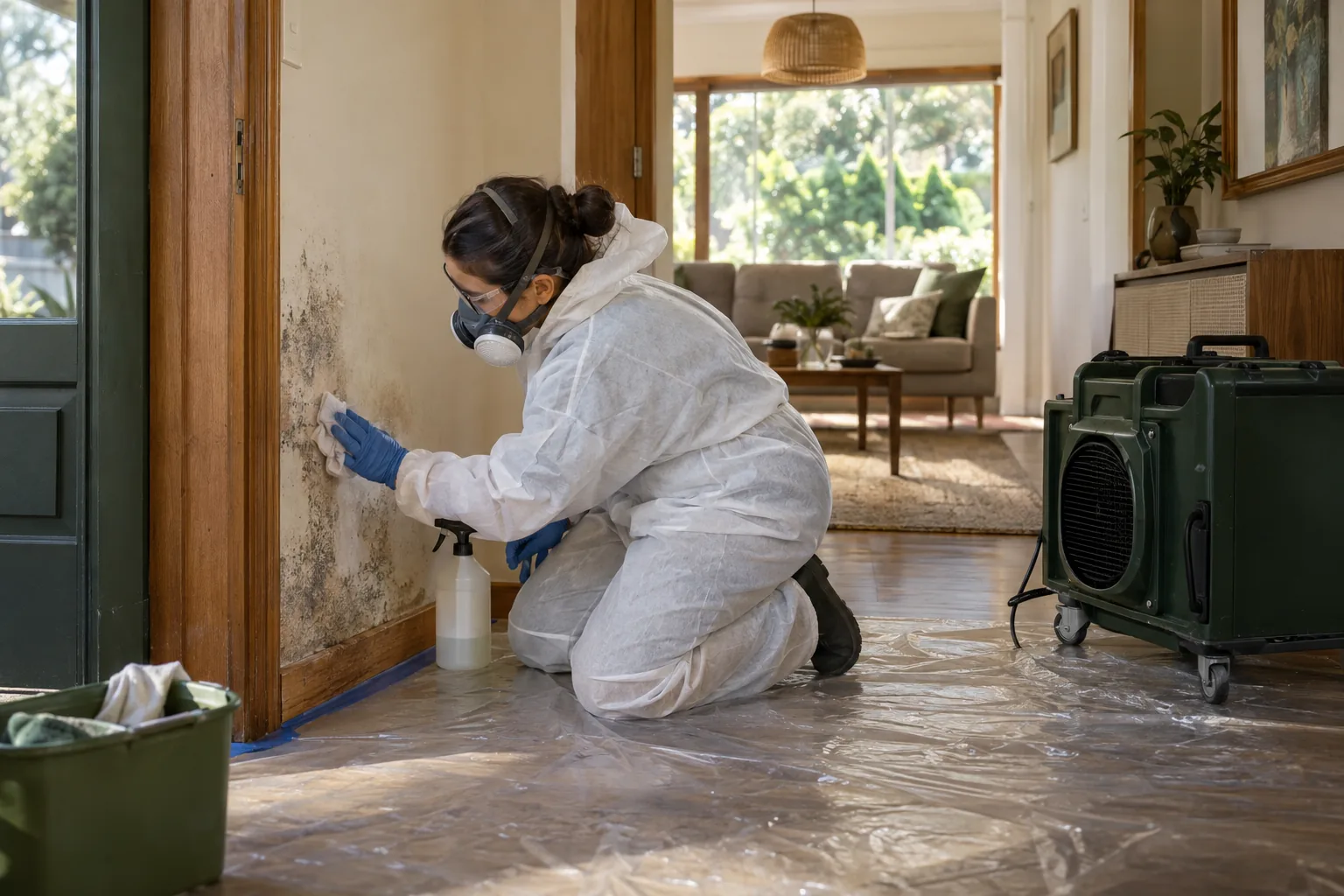
Prepare HEPA filtration
Set up air filtration and the working area. Agree clearance and people or pet provisions. A preparation plan should fit the actual room, including the equipment route through the property.
03
Choose compatible treatment
Appropriate HOCl treatment may form part of the method. Material condition guides use. Treating growth does not promise that old discolouration vanishes or that a neglected room is completely restored.
04
Discuss ULV application
If ULV application suits the job, explain preparation and restrictions first. It supports the agreed room method without inspecting every hidden wall or replacing source repairs.
05
Remove accessible residues
Use suitable equipment with H-class filtration for physical removal. The remediation overview combines this with treatment. Stored furniture, carpets and textiles remain excluded regardless of how long the room was closed.
06
Finish filtration and review
Continue filtration and explain treated surfaces, remaining marks and follow-up needs. The reopening plan should distinguish completed cleaning from unresolved dampness, repair or decorating tasks.
VISIBLE & ACCESSIBLE
Describe each surface
Walls behind stored items
Give the finish and extent. Explain which sections can actually be reached.
Ceiling corners
Mention height and any leak history. A concealed roof-space check requires another arrangement.
Wet-room finishes
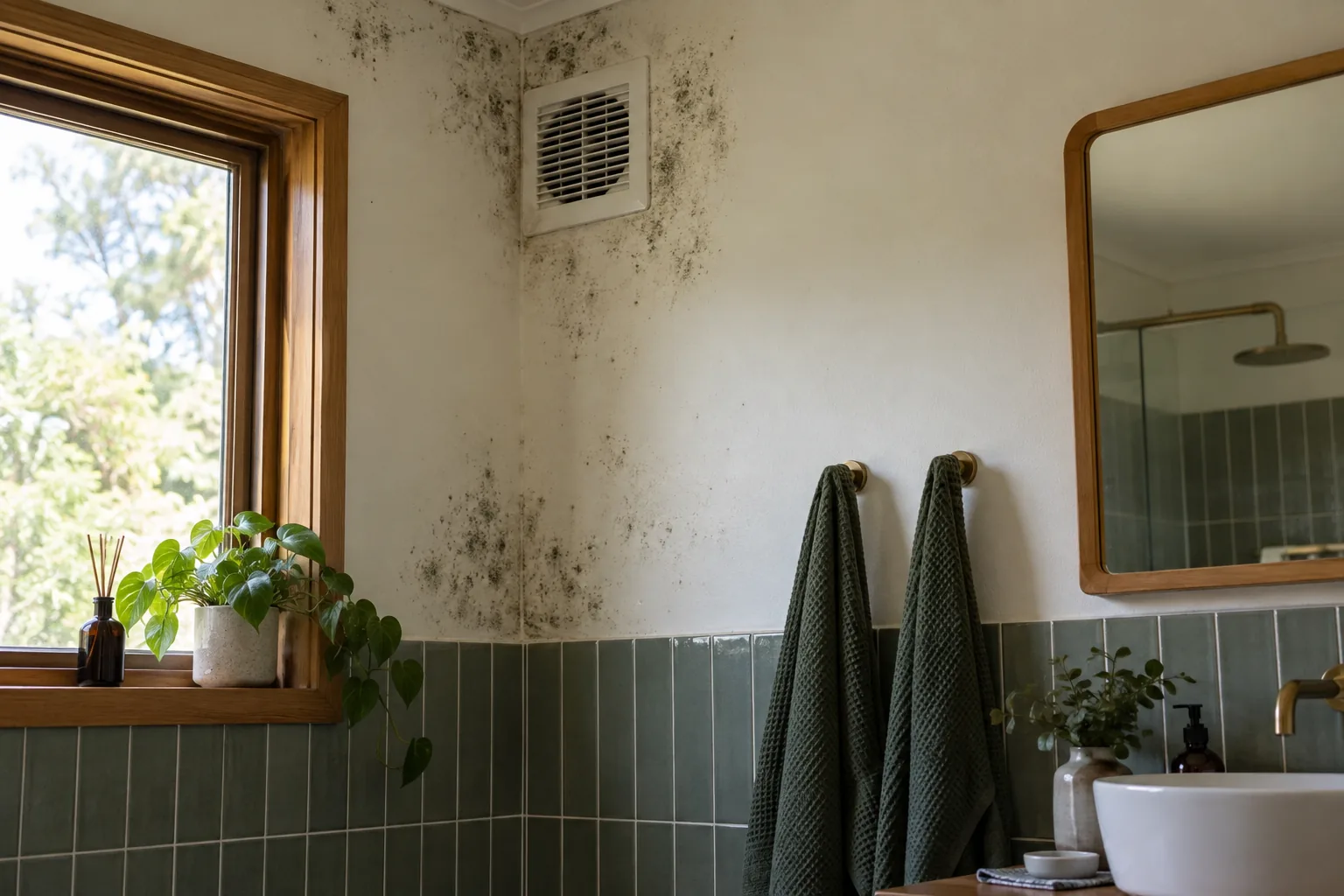
Describe use, extraction and recurring wetness. Plumbing repairs are separately managed.
Hard floor edges
Name the material and any damage. Carpets and rugs are outside the structural scope.
PREPARATION & LIMITS
Agree the practical result
Visible accessible walls, ceilings and hard floors are included as agreed. Furniture, sofas, mattresses, curtains, carpets, clothing and textiles are excluded. An affected item being moved out for access does not mean it is included for treatment.
An average working guide is about three hours per room, varying with extent and access; pricing is not hourly. Staining may remain after removal. Repainting or decorating can be separately quoted once ongoing moisture and damaged finishes have been addressed.
AFTER THE SURFACE WORK
Keep the reopened room observable
Check previously affected surfaces periodically and record recurring dampness. Review suitable extraction and practical airflow around storage. A dehumidifier can assist air-moisture management but cannot repair water entry or certify concealed materials dry.
The general removal scope explains structural-surface work. If growth returns, revisit the actual source and repair requirements instead of closing the room again or repeatedly covering the marks with paint.
MARYKNOLL · NEARBY LOCATION PAGES
Nearby locality enquiries
Nar Nar Goon, Tynong and Garfield provide surrounding-area pages. Confirm the Maryknoll address and visit availability by phone. Nearby navigation does not establish a separate local office or identical access conditions.
BEFORE YOU ARRANGE WORK
Questions for your enquiry.
Does closing a room cause mould by itself?
No. Room use provides context but does not establish the cause. Explain moisture, readings and known defects so assessment can distinguish visible growth from the source conditions needing follow-up.
Can stored bedding be treated?
No. Bedding and other textiles are excluded. Identify them separately so their handling is not confused with treatment of accessible walls, ceiling or the hard floor.
Should I empty every cupboard first?
Follow the agreed preparation instructions. Do not undertake heavy clearance before the scope and access needs are confirmed. Fixed cabinetry or blocked surfaces may require another arrangement.
Will you inspect behind all stored items?
Only surfaces that can be safely reached within the agreed job are included. Concealed or obstructed areas are not automatically inspected because a room is reopened.
Can the room be redecorated immediately?
Discuss material condition and moisture follow-up first. Decorating is separately quoted, and treatment does not guarantee a stain-free or undamaged finish ready for immediate painting.
Does this page confirm Maryknoll availability?
No. A visit is discussed for the actual address and proposed surfaces. Confirm entry, preparation and timing before making clearance or occupant arrangements.
Discuss the Maryknoll room
Call 03 8652 1296 with the address, storage access and visible condition. We can discuss availability and an appropriate structural-surface assessment.
Useful references: Official local context