
TYNONG · MELBOURNE
Mould Removal Tynong
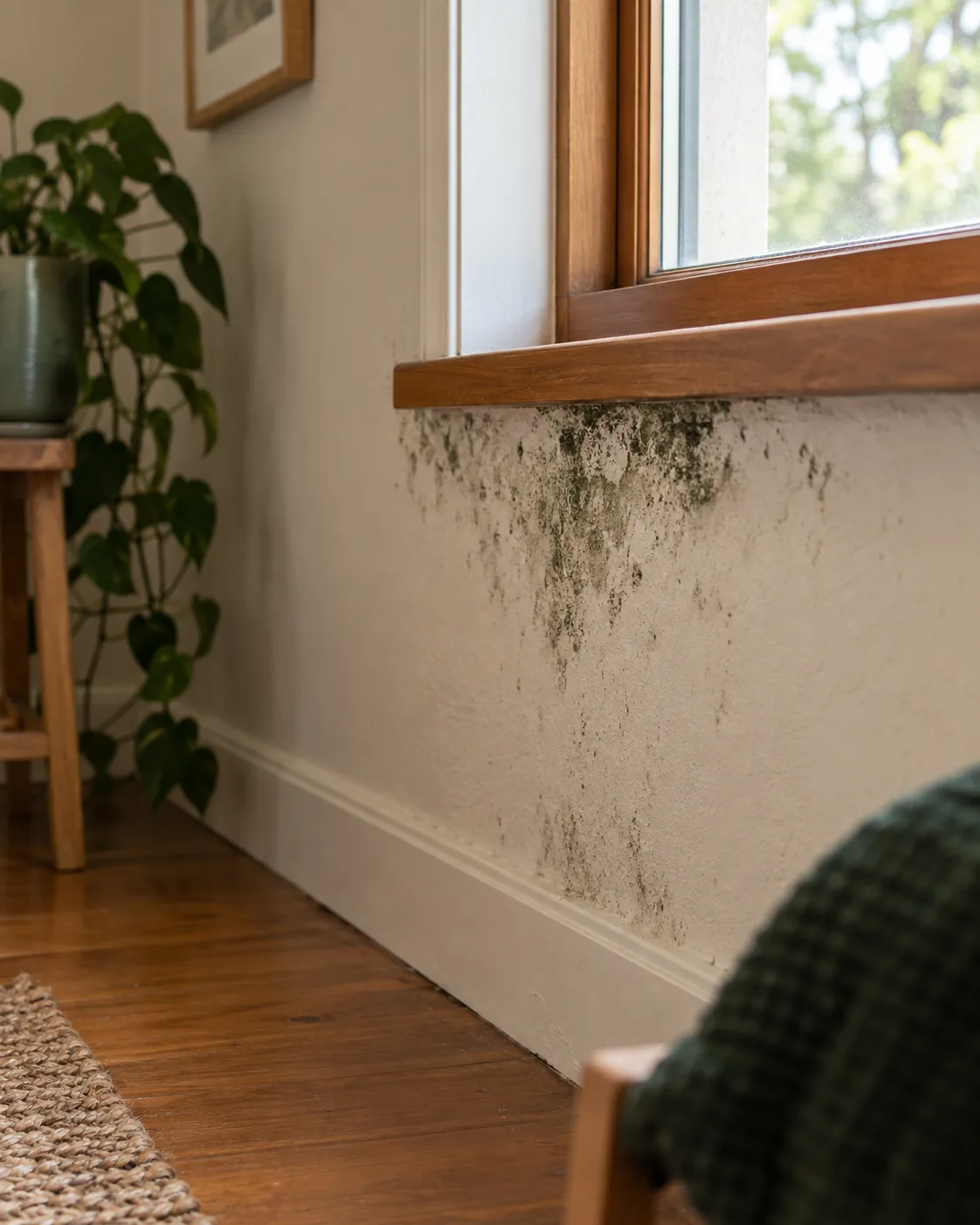
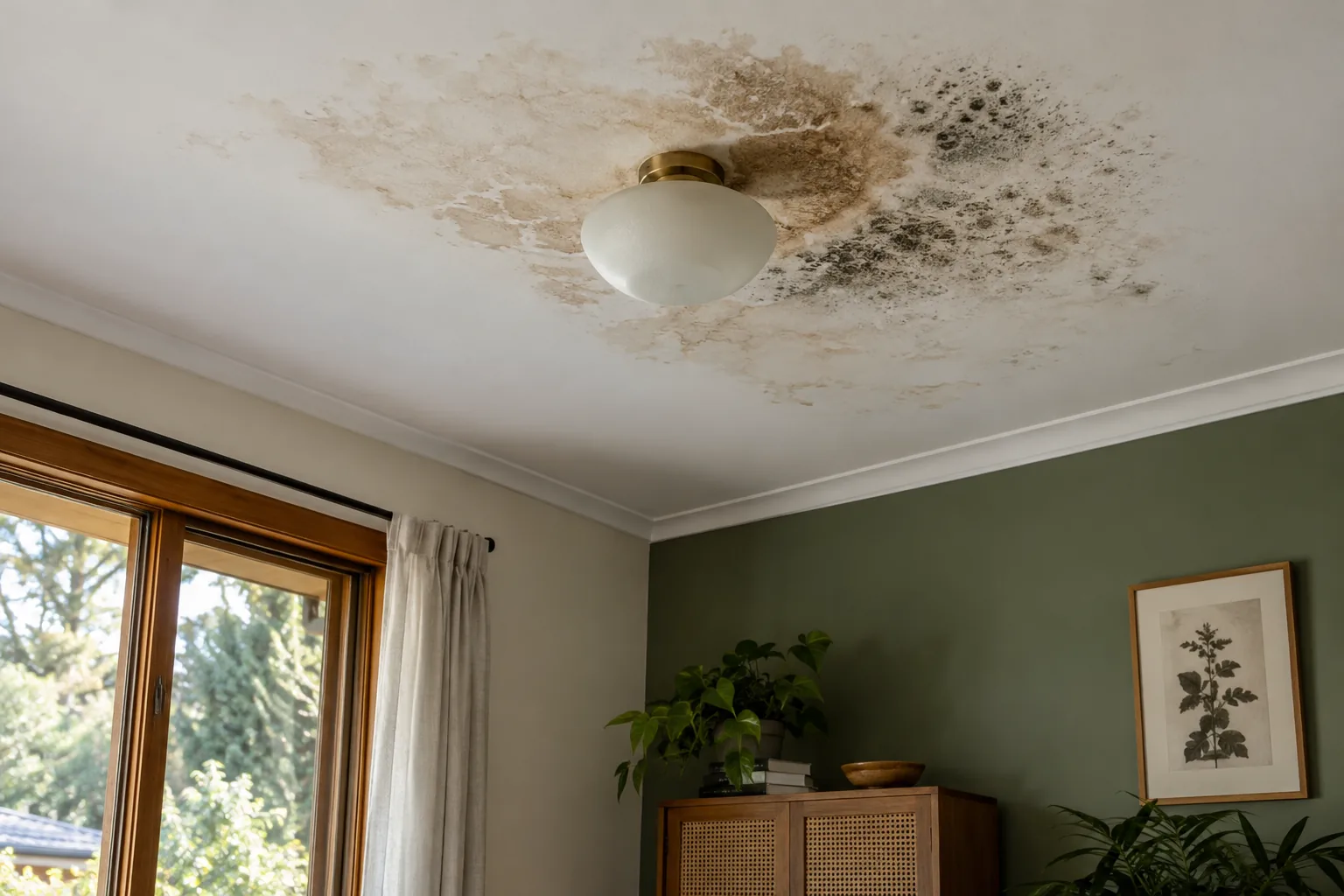
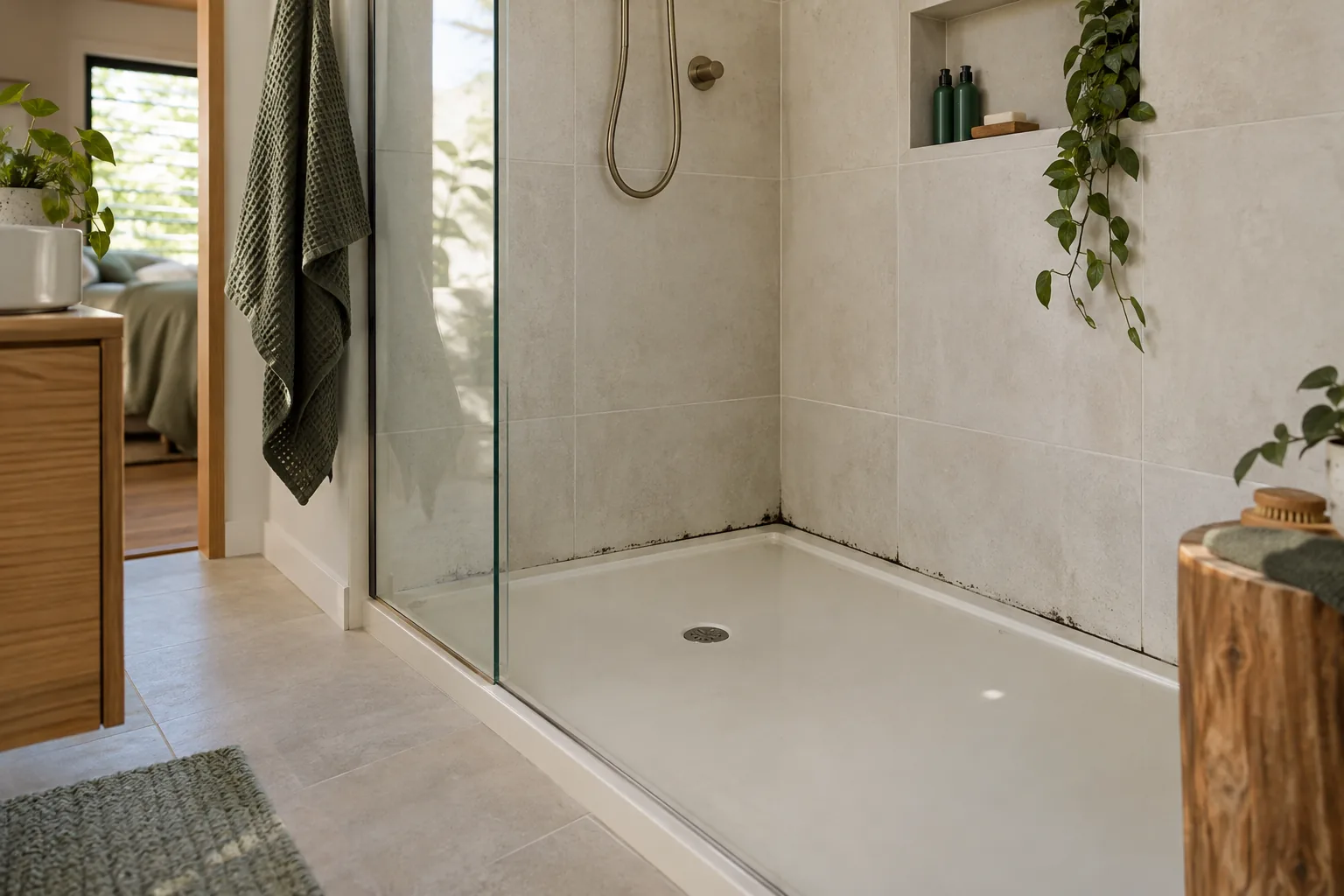
BATHROOM · EXTRACTION · CEILING
Bathroom ceiling growth in a Tynong room needs more than an assumption that shower steam is the only issue. Describe extraction, paint condition and any leak history. We discuss address-based availability and accessible structural surfaces alongside the repairs or moisture changes that may be needed.
Extraction observations considered
Paint condition checked
Source repair kept separate
SURFACES & THEIR SETTING
Start with the Tynong address
Tynong is one of Cardinia’s recognised railway towns. Give the full property address and entry contact when enquiring. Its town identity does not establish a particular bathroom layout or explain growth at an individual home.
Spotting above the shower
Explain whether marks are scattered, follow a junction or sit near a fitting. Our inspection information covers visible growth and moisture conditions. The pattern helps describe the room without proving a source.
Reaching painted surfaces
Give ceiling height and mention fixed fittings or loose paint. Do not climb onto furniture for photographs. The service needs safe access to included structural surfaces, and repair or replacement may be appropriate for compromised material.
Consider the drying routine
Note whether the room stays wet after bathing and whether the fan appears to work. A running fan does not prove adequate extraction. A separate trade may need to assess ventilation, plumbing or waterproofing concerns.
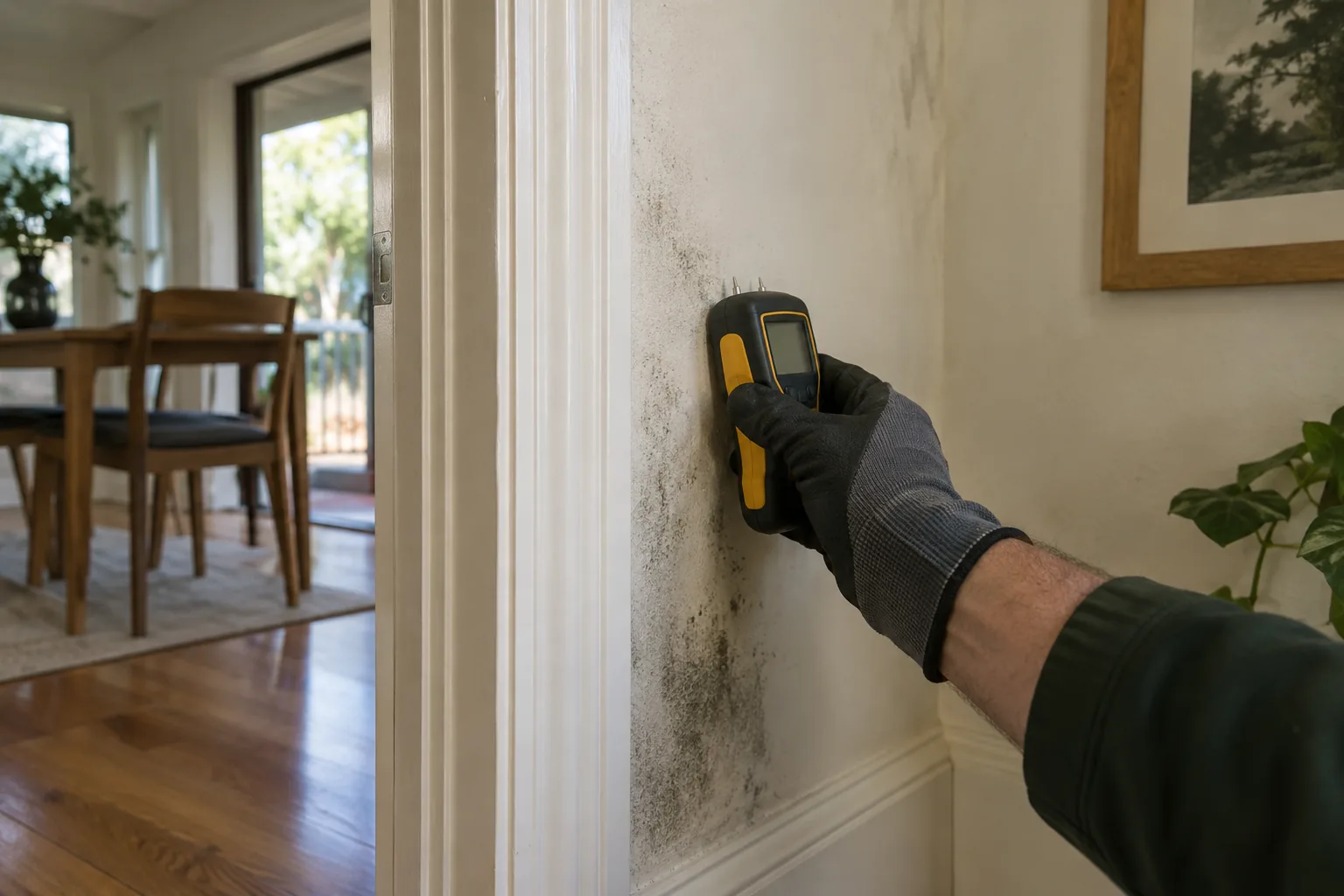
Room observations
Record condensation, changes after rain and any known water event. Those details help distinguish questions that ordinary bathroom use alone cannot answer. Include an overall room image as well as a safe closer view.
Assessment limits
A hygrometer supports moisture assessment alongside the material condition. It does not certify fan installation or hidden plumbing. Persistent dampness may need further investigation beyond visible-surface work.
THE SURFACE REMOVAL PROCESS
A bathroom-specific sequence
01
Inspect the agreed finishes
Check reachable walls, ceiling and hard floor. Discuss paint damage, access and scope. Any fitting repair, hidden cavity or material needing replacement is separately identified before treatment.
02
Prepare HEPA filtration
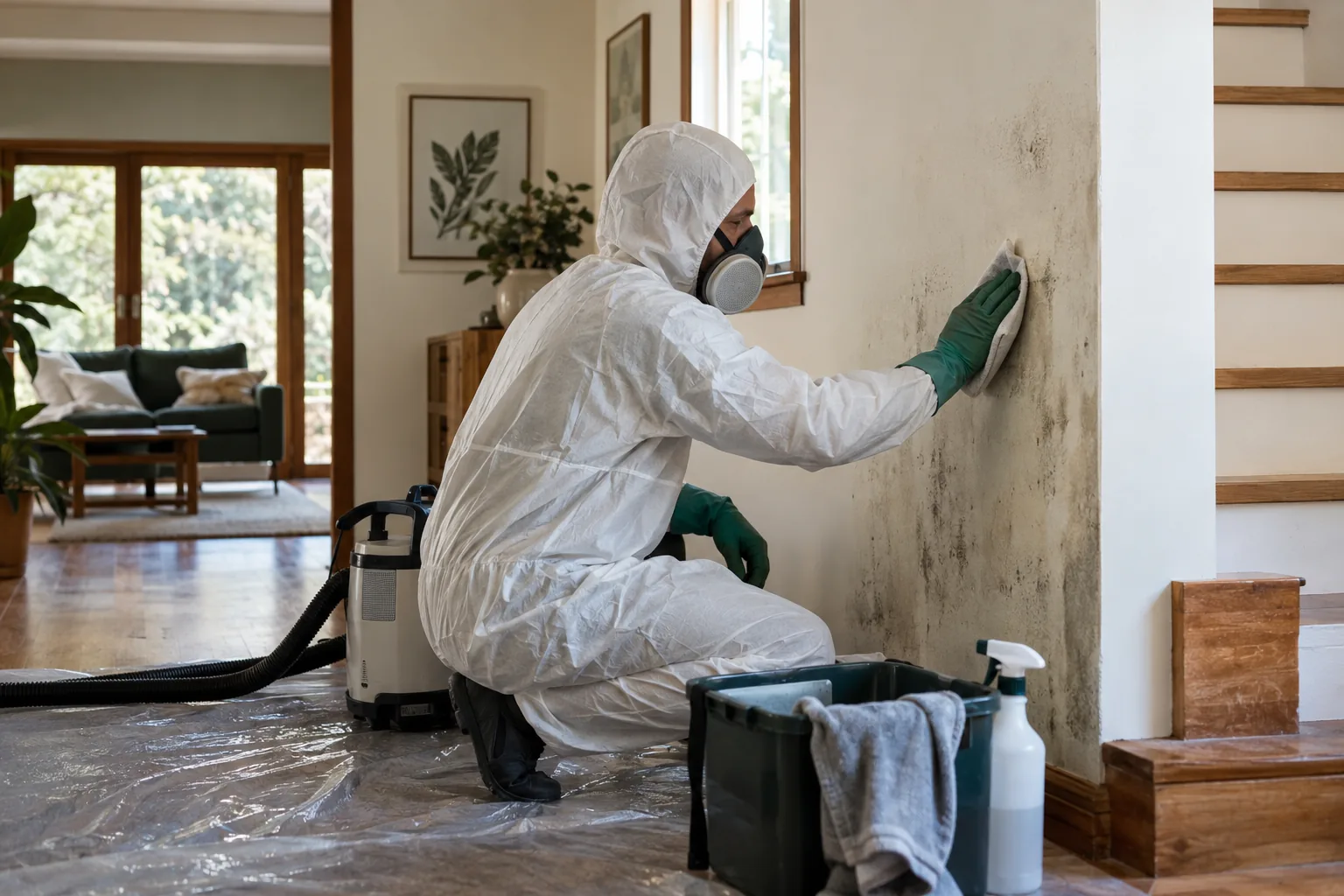
Set up air filtration and the working area. Agree clearance of personal items and provisions for people and pets. Bathroom use and entry restrictions should follow the preparation instructions.
03
Choose compatible treatment
HOCl may form part of the method where suitable. Compatibility and condition guide its use. Growth treatment does not promise that aged paint, sealant or every existing bathroom mark will look new.
04
Discuss ULV application
Where ULV application suits the room, explain preparation and restrictions beforehand. It supports the agreed removal method without fixing ventilation faults or establishing that concealed wall layers are unaffected.
05
Remove accessible residues
Use suitable H-class filtration equipment for physical removal. The remediation overview combines this stage with treatment. Towels, bathmats, curtains and other textiles remain excluded.
06
Finish filtration and review
Continue filtration and discuss treated surfaces, cosmetic staining and moisture follow-up. Any ventilation, plumbing or decorating work should be separately arranged rather than implied by room cleaning.
VISIBLE & ACCESSIBLE
Areas to describe
Painted ceiling
Give height and coating condition. Loose or deteriorated material may need another decision.
Shower-side wall
Identify the finish and routine wetness. Fitting and waterproofing repairs are outside removal.
Window reveal
Explain condensation or rain-related changes. Cleaning cannot repair a leaking frame.
Hard floor edges
State material and any distortion. Soft mats, rugs and carpets are excluded.
PREPARATION & LIMITS
What the room service covers
Visible accessible walls, ceilings and hard floors are included as agreed. Furniture, sofas, mattresses, curtains, carpets, clothing and textiles are excluded. List affected belongings separately; moving personal items for access does not make them part of treatment.
Average working time is about three hours per room, with access and extent affecting duration; charging is not hourly. Cosmetic marks can remain. Repainting or decorating requires a separate quotation after dampness and damaged finishes have been addressed.
AFTER THE SURFACE WORK
Help the room dry appropriately
Use suitable extraction during moisture-producing activities and monitor whether surfaces dry afterwards. Ask the appropriate trade about ineffective ventilation or known leaks. Everyday habits can assist without replacing repairs or proving that a concealed problem has ended.
The general removal scope explains structural-surface work. Keep dated observations if the same ceiling patch returns. Recurrent growth needs attention to the source conditions, rather than repeated cosmetic cleaning alone.
TYNONG · NEARBY LOCATION PAGES
Nearby township enquiries
Garfield, Nar Nar Goon and Maryknoll provide surrounding-area navigation. Confirm the actual Tynong address and visit availability. Nearby pages do not establish a local office or unrestricted access to every property.
BEFORE YOU ARRANGE WORK
Questions for your enquiry.
Does ceiling spotting prove poor extraction?
No. Extraction can be relevant, but it is not the only possible concern. Describe rain changes, known leaks and finish condition so the room can be assessed without assuming a cause.
Can you replace shower sealant?
Replacement is a separate repair task. Discuss its condition during the enquiry, but do not assume structural-surface treatment includes installing sealant or repairing waterproofing behind it.
Are towels and bathmats included?
No. Textiles are excluded. Identify them separately and follow the agreed preparation so accessible walls, ceiling and hard floor can be treated without confusion about belongings.
Will peeling paint be restored?
Removal does not restore a damaged coating. Repair or decorating may be needed separately, and old stains may remain. The material condition should be discussed before treatment is selected.
Can a high bathroom ceiling be treated?
Describe height and obstacles before booking. Safe access affects suitability and planning. A small visible patch does not guarantee a straightforward job when the surface is difficult to reach.
Will treatment stop all future bathroom mould?
No permanent prevention is promised. Ongoing moisture or a defect can allow growth to return. Follow-up should address the actual room’s source conditions and suitable drying arrangements.
Discuss the Tynong bathroom
Call 03 8652 1296 with the address, ceiling condition and extraction observations. We can discuss availability and assessment of the accessible surfaces.
Useful references: Official local context