
MOONEE VALE · MELBOURNE
Mould Removal Moonee Vale
MOONEE VALE / ADDRESS AND INTERIOR
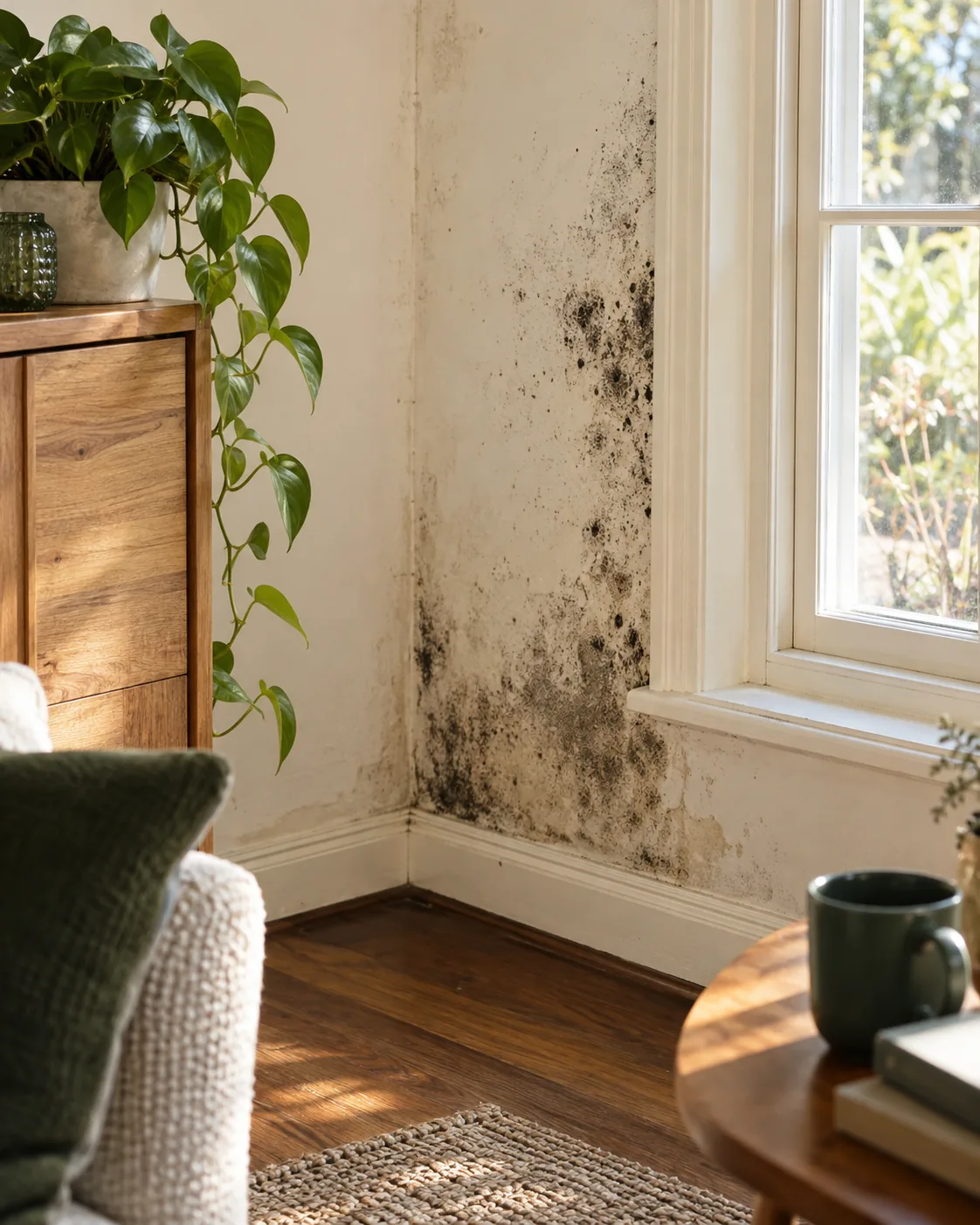
If growth appears along a bedroom wall after the room’s layout changes, describe the wall and what now blocks it. A Moonee Vale enquiry needs the complete street address as well as the local name. We can then discuss accessible surfaces, preparation and unresolved dampness.
Full address clarified
Bedroom layout considered
Visible surface scope explained
SURFACES & THEIR SETTING
Use the delivery-area name accurately
Australia Post lists Moonee Vale as a delivery area with postcode 3055. Provide the actual property address and the suburb used for it; the delivery label alone does not define a treatment boundary.
A changed bedroom arrangement
Explain whether the patch was revealed behind a moved bedside unit or wardrobe. The inspection discussion can consider accessible condition without assuming furniture placement proves the moisture source. Photographs should show the surrounding wall, not only a close-up.
One property, one agreed enquiry
Use the full address even if household members describe the neighbourhood differently. Give the contact authorised to book and the affected room list. Accurate details help prevent duplicate enquiries for one property under different local names.
Separate the wall from the belongings
Visible growth on a painted surface and possible contamination on stored items require different decisions. Tell us about both so the service limits are understood.
Structural surfaces only
Our mould removal scope concerns accessible walls, ceilings and hard floors. Furniture, mattresses, clothing, carpet and curtains are excluded. Describe fragile paint and material damage before assuming a routine application is suitable.
What remains wet
Note condensation, active leaks and any maintenance history. Moisture readings can add context but cannot establish dryness throughout hidden construction. Repair of a pipe, roof or building defect must be arranged separately from surface treatment.
THE SURFACE REMOVAL PROCESS
Agree six stages for the actual room
01
Review growth and condition
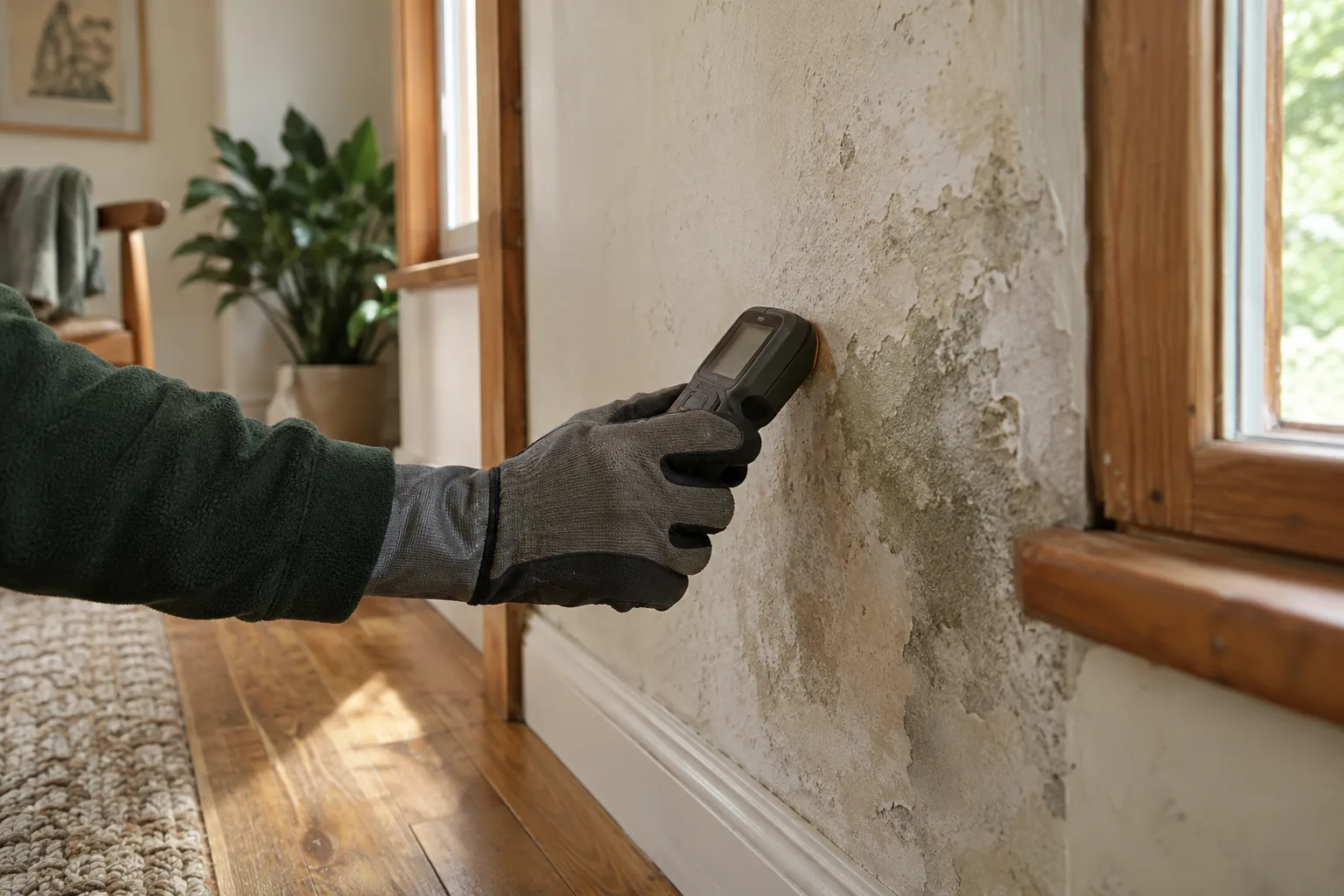
The technician examines visible extent, materials and finish. Hygrometer readings may assist the room assessment. Blocked sections and concealed cavities are treated as limitations unless additional access or investigation is separately agreed.
02
Plan clearance and air filtration
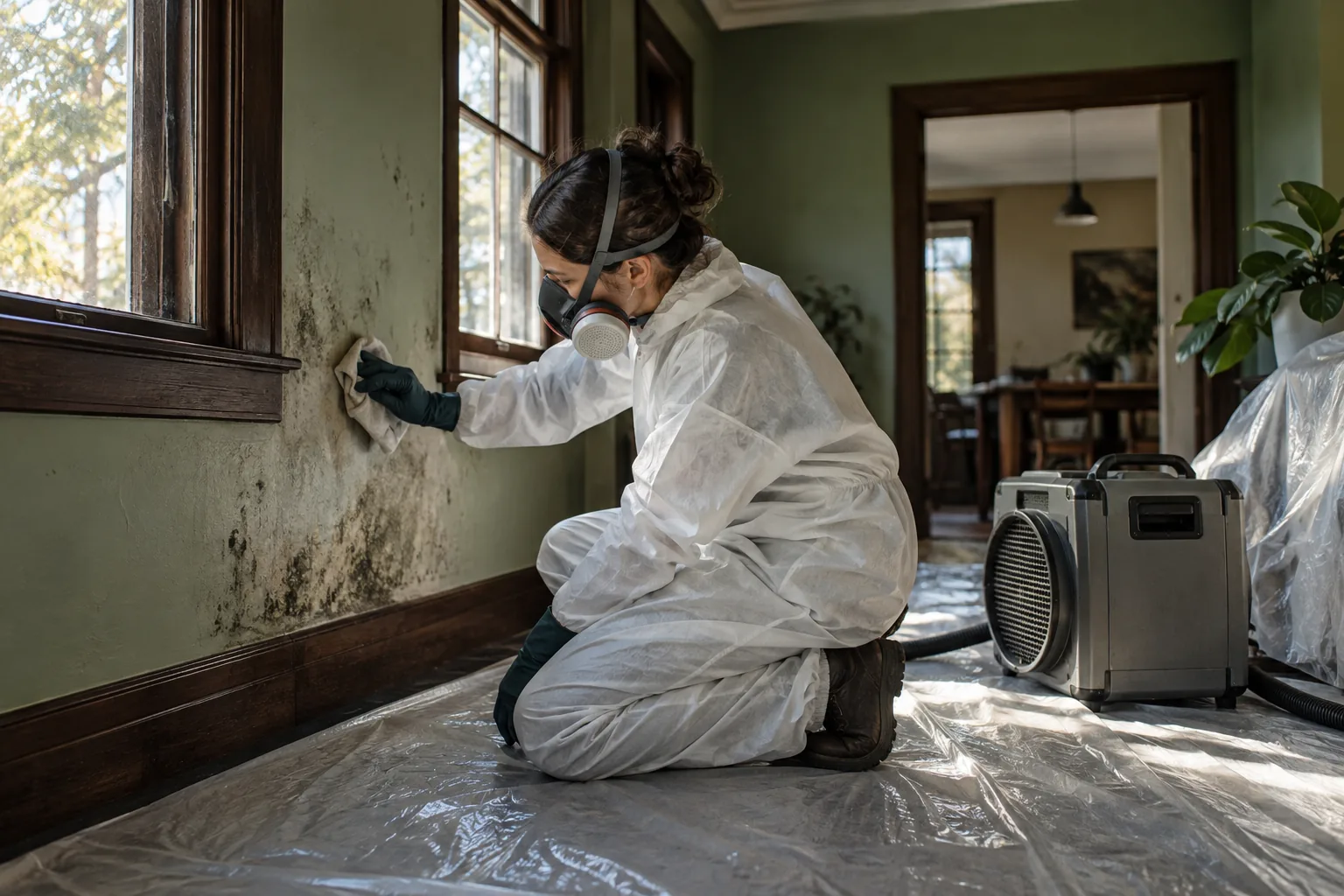
Agree people and pet arrangements and the handling of belongings. A HEPA scrubber filters airborne particles during the work as appropriate. Do not assume a wardrobe or mattress receives treatment because it needed movement for wall access.
03
Choose suitable treatment
Appropriate HOCl application is considered for the material. Mention recent painting and previous cleaning. Treatment should address the agreed growth rather than promise to restore damaged coatings or remove every cosmetic stain.
04
Apply ULV fog where suitable
Fog application may form part of the plan. Follow the technician’s preparation and return arrangements. Any alarm procedure requires the responsible person’s approval rather than an independent instruction to disable the system.
05
Remove accessible residue physically
Professional equipment with H-class filtration is used for suitable visible removal. Soft furnishings and personal textiles remain excluded. Concealed wall spaces, damaged insulation and reconstruction need separately defined work.
06
Complete filtration and review
Final filtration continues as appropriate. Discuss remaining appearance, unresolved dampness and further repair or decorating requirements. Record those differences so completed treatment is not confused with correction of the moisture source.
VISIBLE & ACCESSIBLE
Four useful surface descriptions
Bedroom walls
Explain furniture clearance, finish and visible extent.
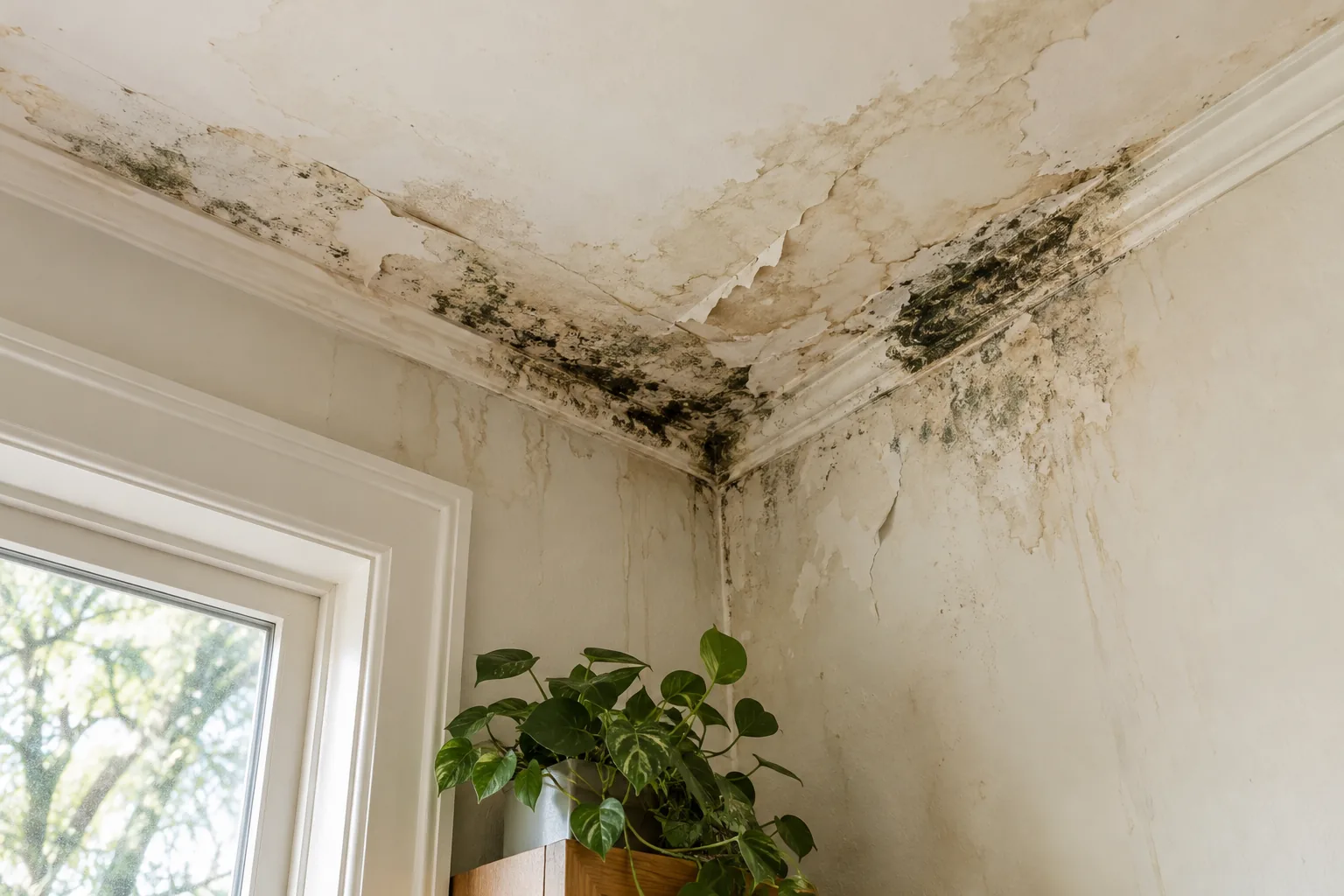
Ceiling corners
Note wetness and changes over time.
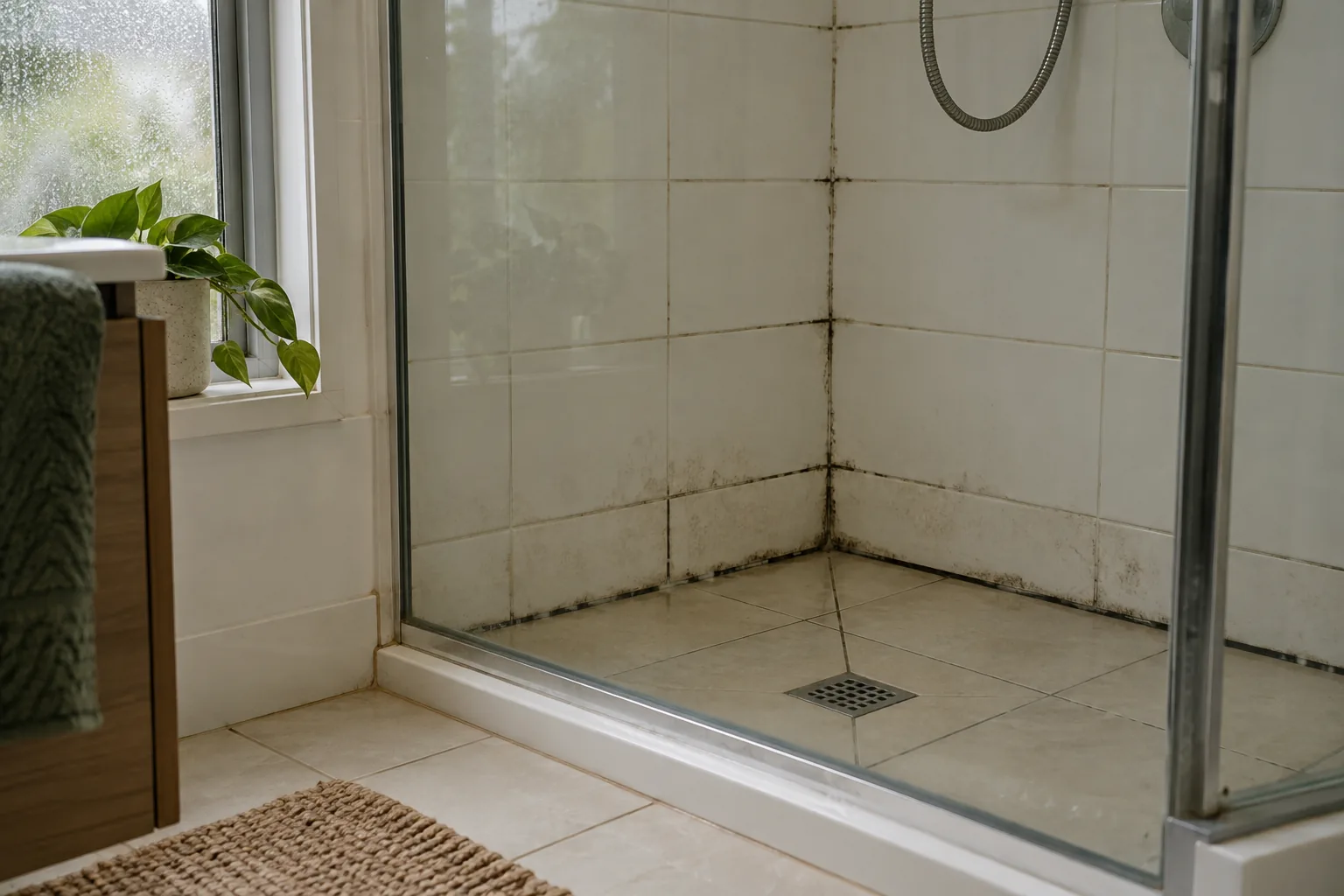
Bathroom painted areas
Describe steam extraction and accessible growth.
Hard-floor edges
Give the floor finish and location of water marks.
PREPARATION & LIMITS
Clarify time, price basis and appearance
Around three hours per room is an average working estimate. Size, contamination and access affect timing, and the service is not hourly-based. Describe the actual room before setting a fixed period away from the property.
Remediation does not guarantee complete cosmetic stain removal. Decorating requires a separate quote. A leak or persistently damp room can support recurrence, so moisture repairs and treatment should have distinct responsibilities.
AFTER THE SURFACE WORK
Keep the changed layout practical
After the agreed return time, avoid blocking ventilation paths with the new furniture arrangement. Check effective extraction where steam is produced and leave reasonable airflow beside wall-facing belongings. Those practical steps do not substitute for repair of active water entry.
Keep a dated record if condensation or growth returns. Room humidity information can help the next discussion, but it cannot diagnose every concealed defect. Share recurring dampness with the appropriate property contact before covering the area with storage or fresh paint.
MOONEE VALE · SURROUNDING ADDRESS ENQUIRIES
Neighbouring location guides
The nearby guides below can help orient your Moonee Vale enquiry. Give the street address and postal suburb when calling, especially where delivery names and everyday neighbourhood descriptions differ.
BEFORE YOU ARRANGE WORK
Questions for your enquiry.
Is Moonee Vale the same as Moonee Valley?
Use the actual address rather than treating similar names as interchangeable. Australia Post lists Moonee Vale as a delivery area.
Can I book for a bedroom wall only?
Explain the visible section, material and access so an appropriate scope can be discussed. Do not assume other rooms or nearby furnishings are included.
Does a moved wardrobe become part of treatment?
No. Furniture and its contents are excluded. Movement may be needed for access, but handling must be agreed separately.
What if the wall was recently painted?
Mention the date, coating and any dampness that preceded it. A new finish can conceal an unresolved problem.
Can humidity readings prove the wall is dry?
Room readings provide context rather than a complete assessment of hidden layers. Explain leaks and wetness as well. Concealed construction may require separate investigation before anyone can draw conclusions about its condition.
What if the same corner becomes affected again?
Record the date and relevant room changes, then discuss the unresolved moisture issue. Recurrence is possible when damp conditions persist. The earlier removal should not be treated as repair of a roof, pipe or ventilation fault.
Give the address and describe the wall
Call 03 8652 1296 with your Moonee Vale property details and visible surface concern. Discuss assessment and access before arranging treatment.
Useful references: Australia Post Moonee Vale delivery area