
ROOMS · MATERIALS · MOISTURE
SANDRINGHAM · MELBOURNE
Mould Removal Sandringham
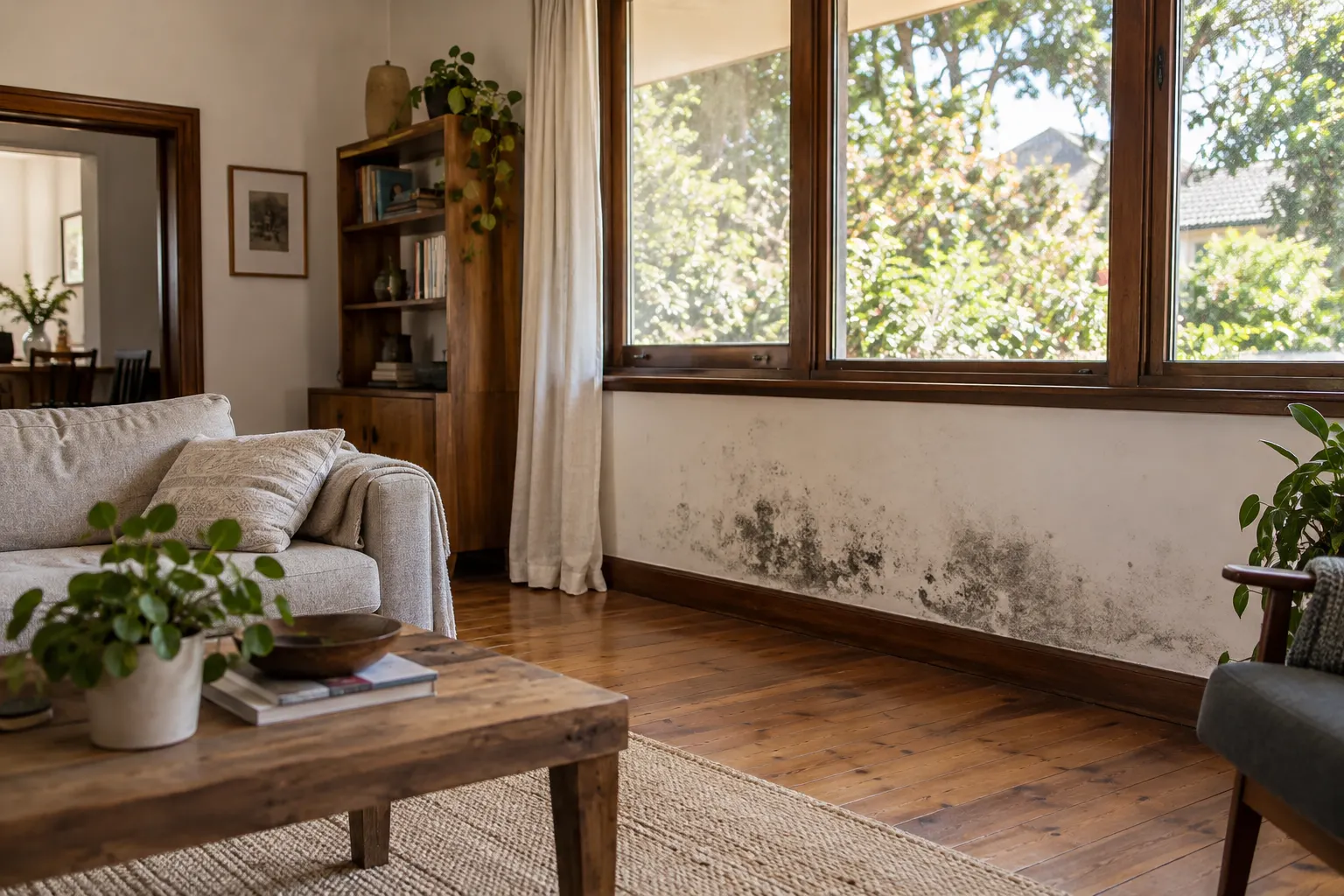
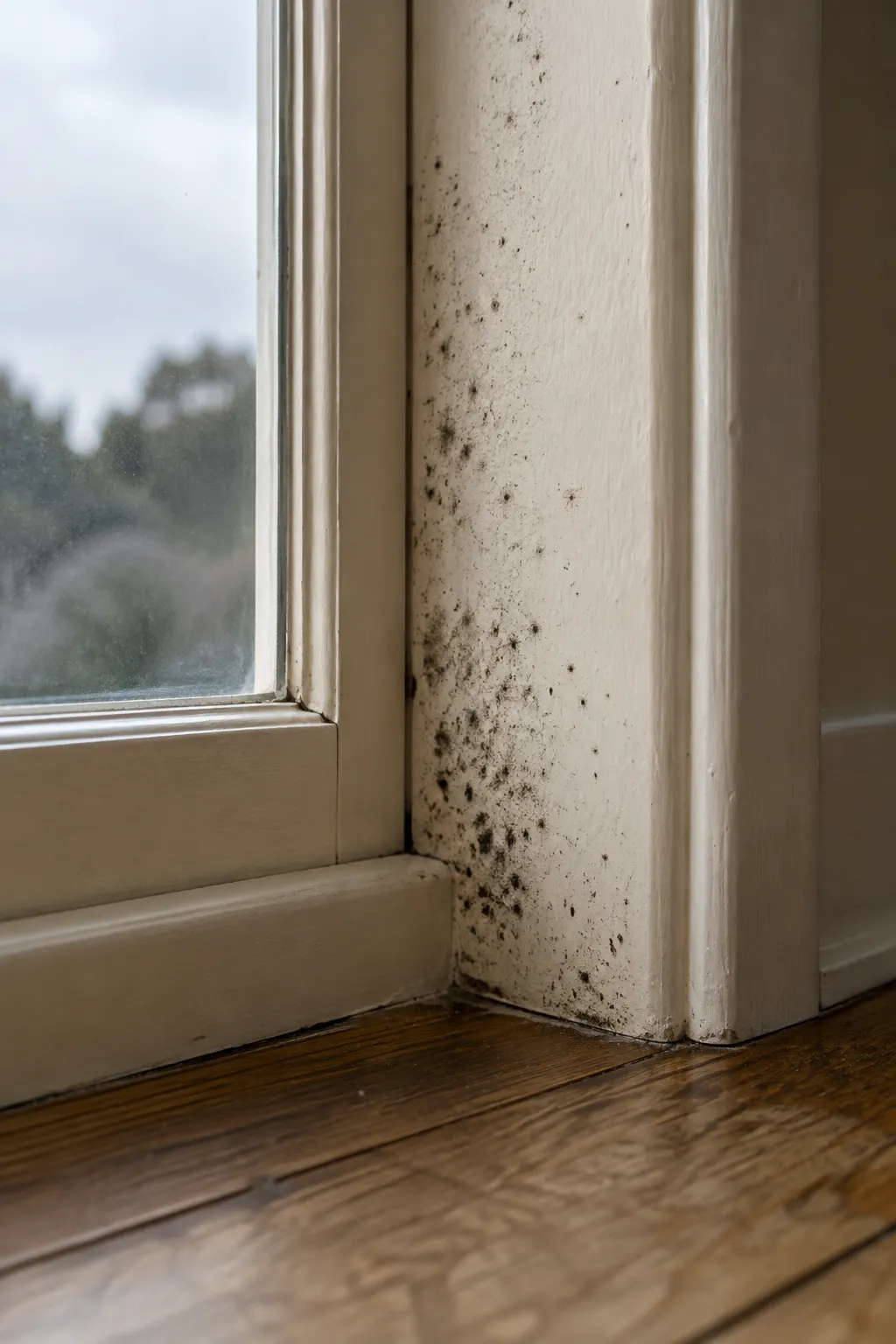
Mould near a bedroom door may reveal how moisture moves between rooms. A Sandringham enquiry should describe the bathroom and bedroom relationship as well as the wall patch. Room layout, drying and material condition are more useful than assuming the bay is responsible.
Material condition considered
Accessible work agreed first
Moisture observations kept in view
THE ROOM TELLS A STORY
The door layout helps explain the room.
Sandringham is included in Bayside’s coastal management area.
Where a bathroom opens close to a bedroom, note whether moist air moves into the sleeping space after use. Show both door positions in the wider room photo. This is a possible pathway to consider, not evidence that the bathroom explains every patch on the bedroom wall.
UNDERSTANDING MOISTURE
Consider the bedroom and wet room together.
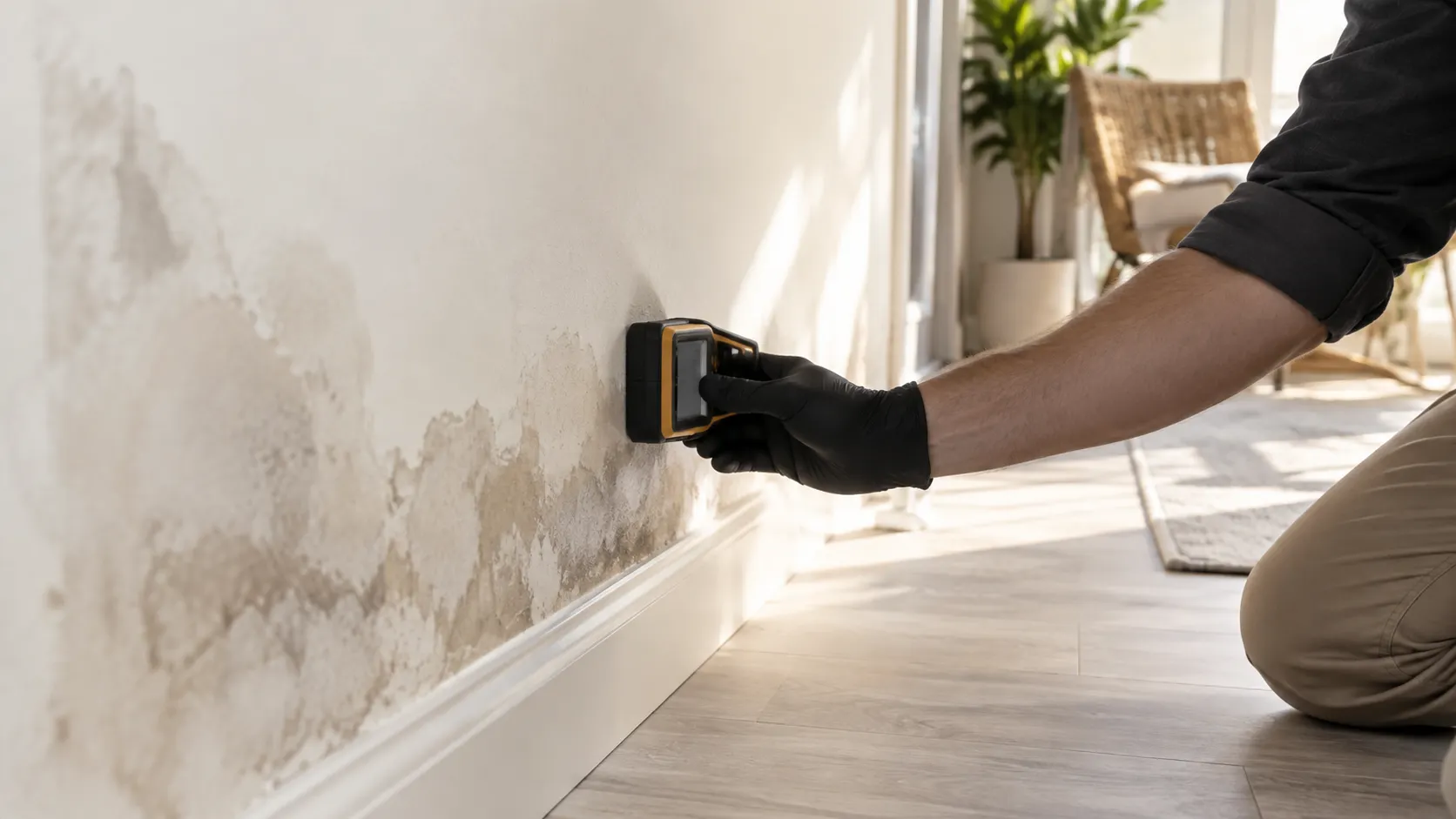
Bathroom drying
Record whether mirrors and finishes remain wet after use, and describe the available extraction. Moist air moving towards a bedroom is a possible pathway, not proof that the bathroom explains every patch on the adjoining wall.
Bedroom observations
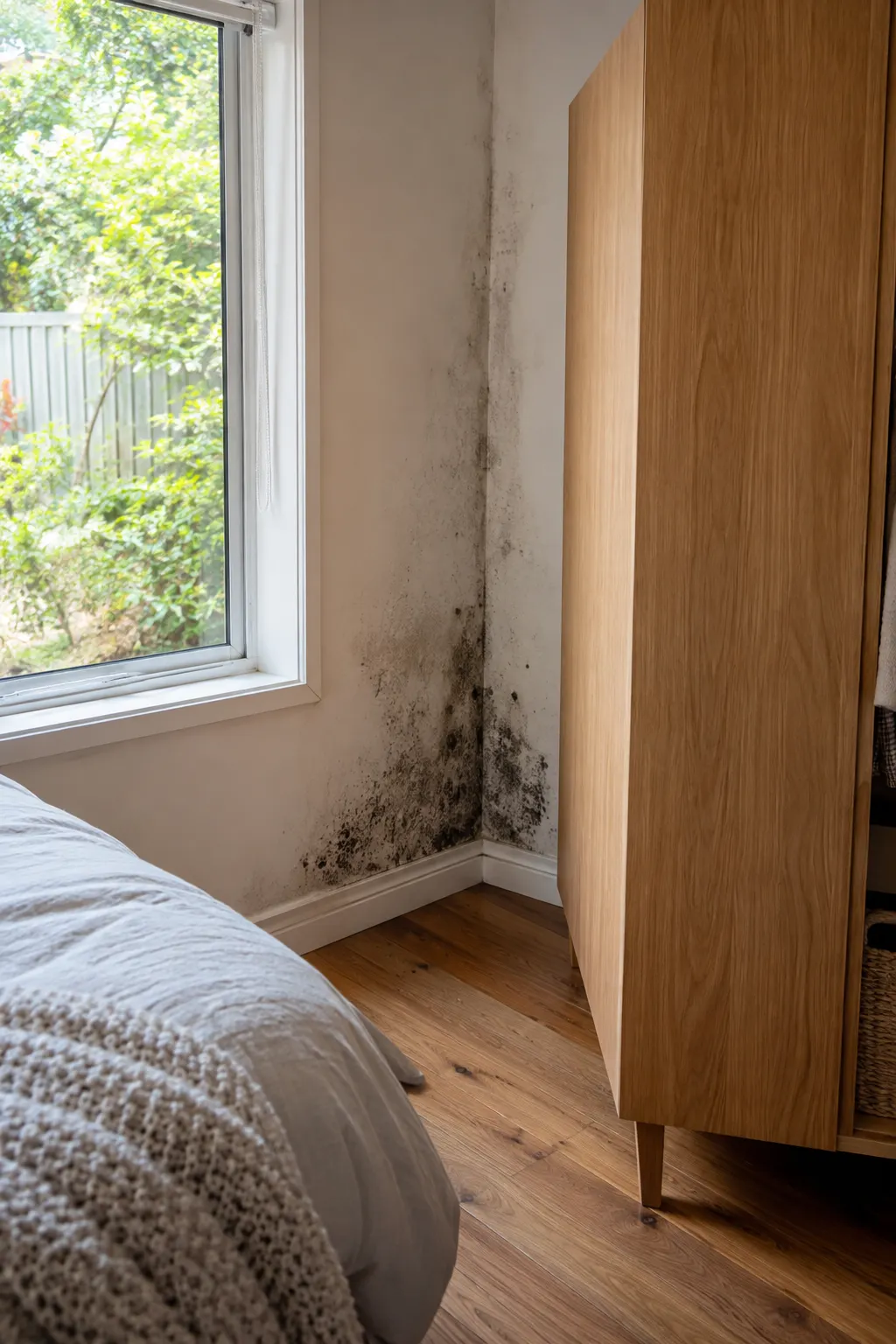
Note window condensation, furniture position and any rain-related change independently. The room may have several relevant conditions. A doorway relationship should not replace an account of where the bedroom itself becomes visibly damp.
Material and access
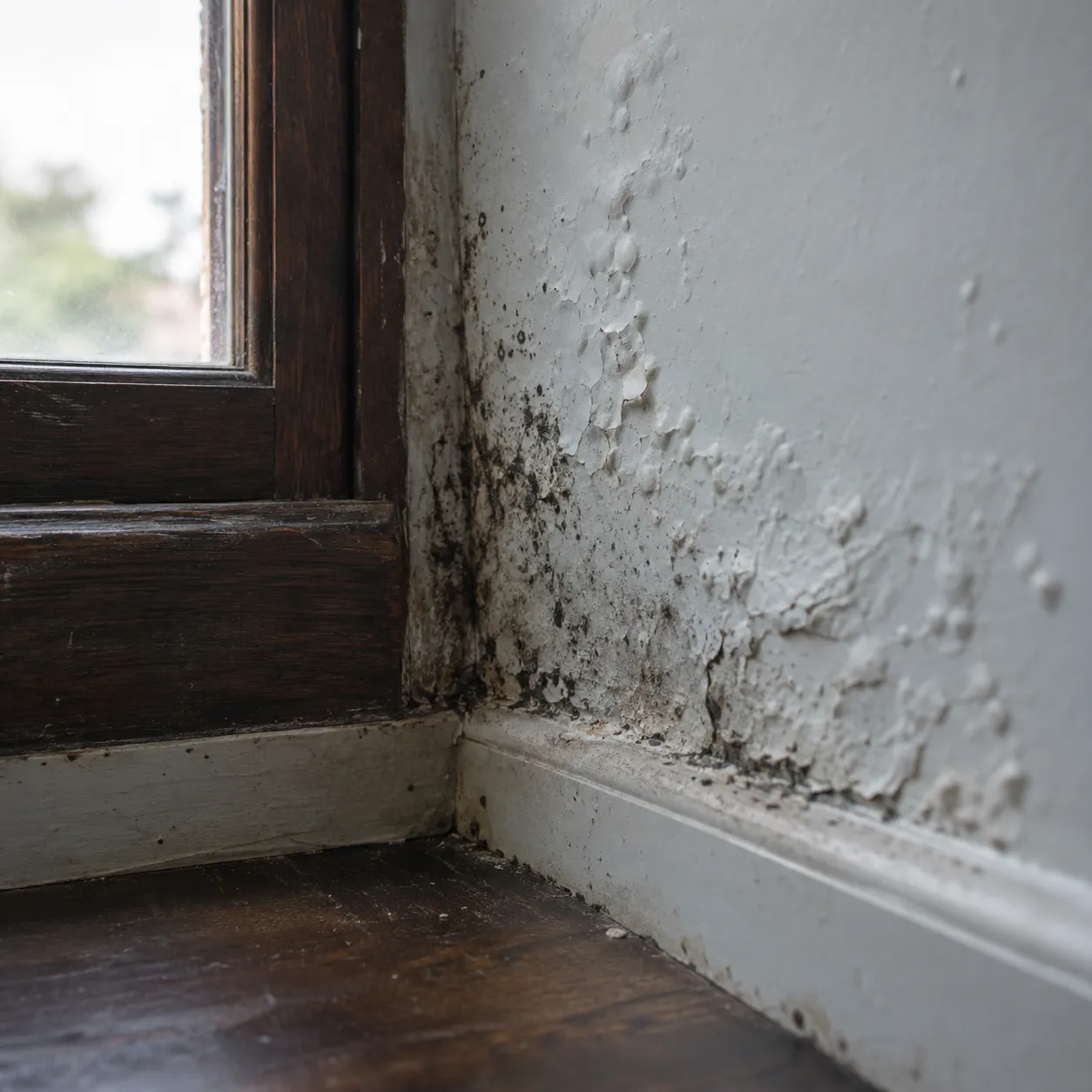
A mould inspection considers accessible finishes in context. Describe paint damage and any concealed wall behind furniture, with fixed fittings or closed cavities identified as limits rather than assumed part of a complete room diagnosis.
OUR REMOVAL PROCESS
A room-to-room scope with clear materials.
Use a connected photograph
Show the bathroom entrance and bedroom wall together where practical. It explains layout and access better than isolated patch images, without requiring furniture movement or disturbance of the affected finish.
Separate the observations
Keep bathroom drying, bedroom glass moisture and rain-related wetting as distinct notes. This avoids allowing one plausible room relationship to hide evidence of a separate building or window problem.
Clarify belongings
Mention growth on bedding or furniture before the appointment. The bedroom wall and possessions are different materials, and accessible removal should not silently imply care or restoration of everything in the room.
01
Describe both door positions
Send a layout view and close photographs of affected finishes. Identify visible extent and any known water event. The surface-removal scope should name accessible surfaces rather than use the nearest bathroom as a diagnosis for the bedroom.
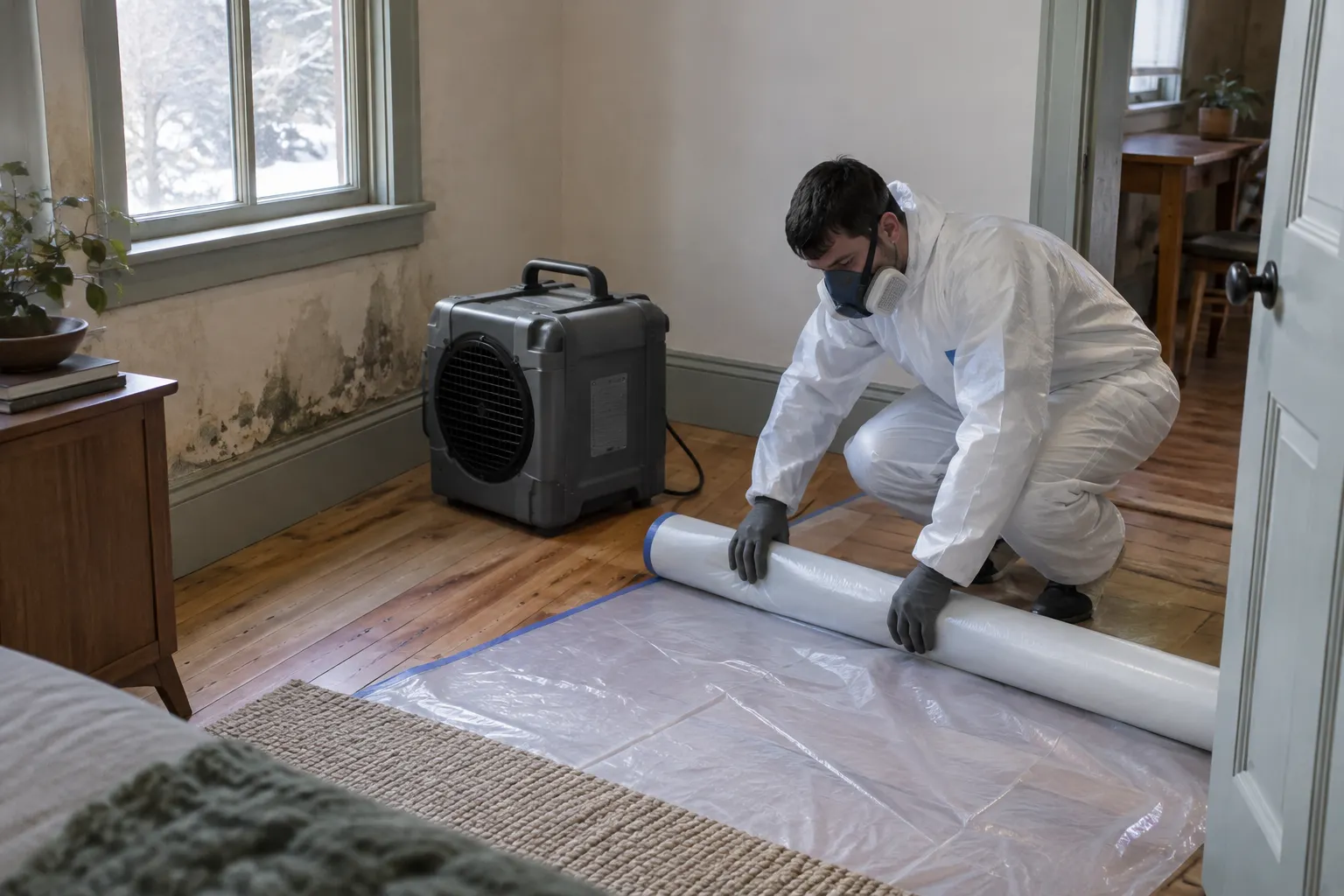
02
Prepare around occupants and access
Discuss furniture, bedding and wet-room belongings before movement. Protection and equipment should fit the agreed work area. Explain occupants’ concerns and delicate finishes in advance, with any separate ventilation or building repair coordinated rather than assumed inside removal.
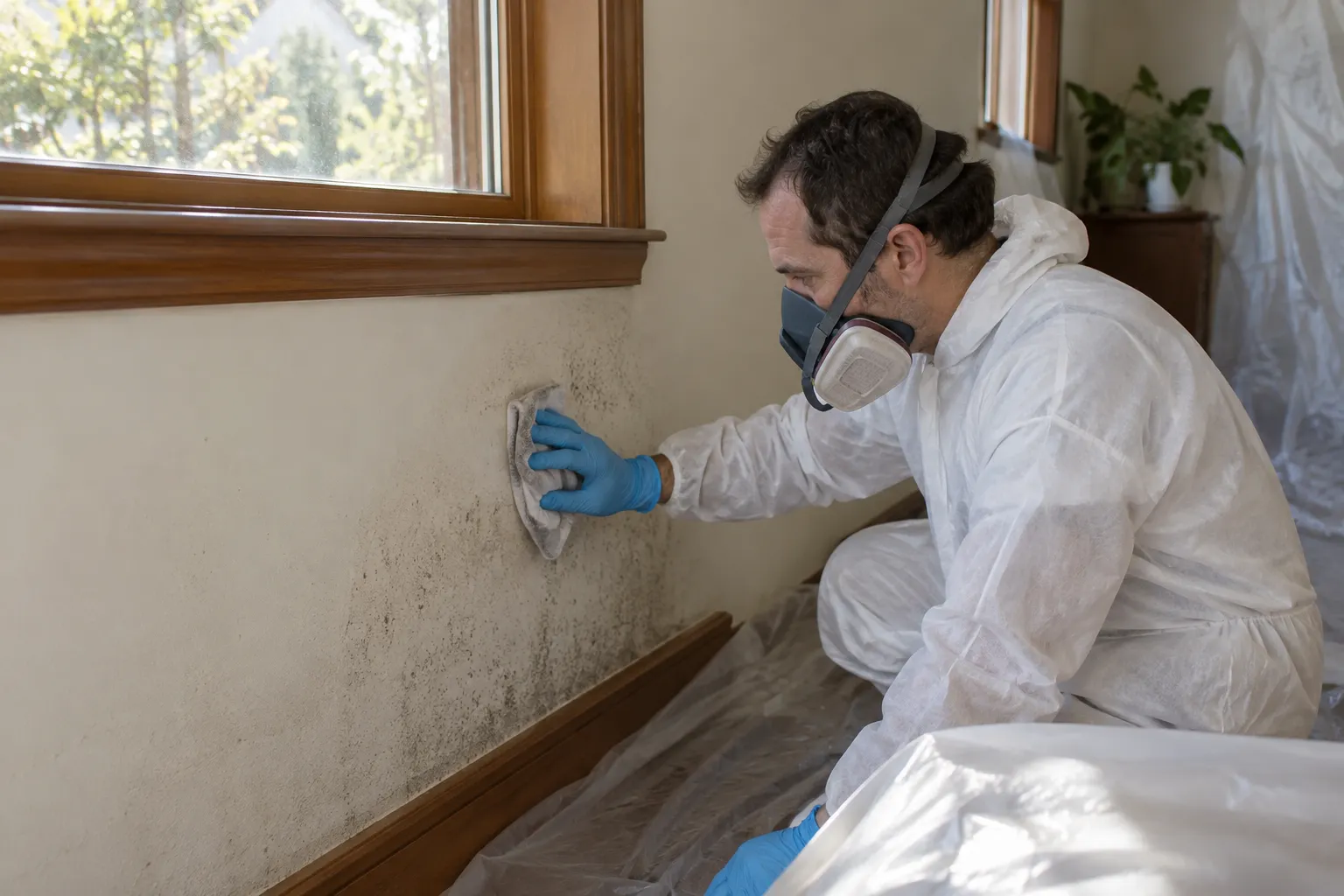
03
Review drying after the task
Consider remaining stains and continued wetting after accessible removal. Remediation planning links material and moisture decisions, but changing a door routine does not repair a leak or guarantee the neighbouring wall stays unaffected indefinitely.
COMMON AREAS AFFECTED
Adjacent rooms can need different decisions.
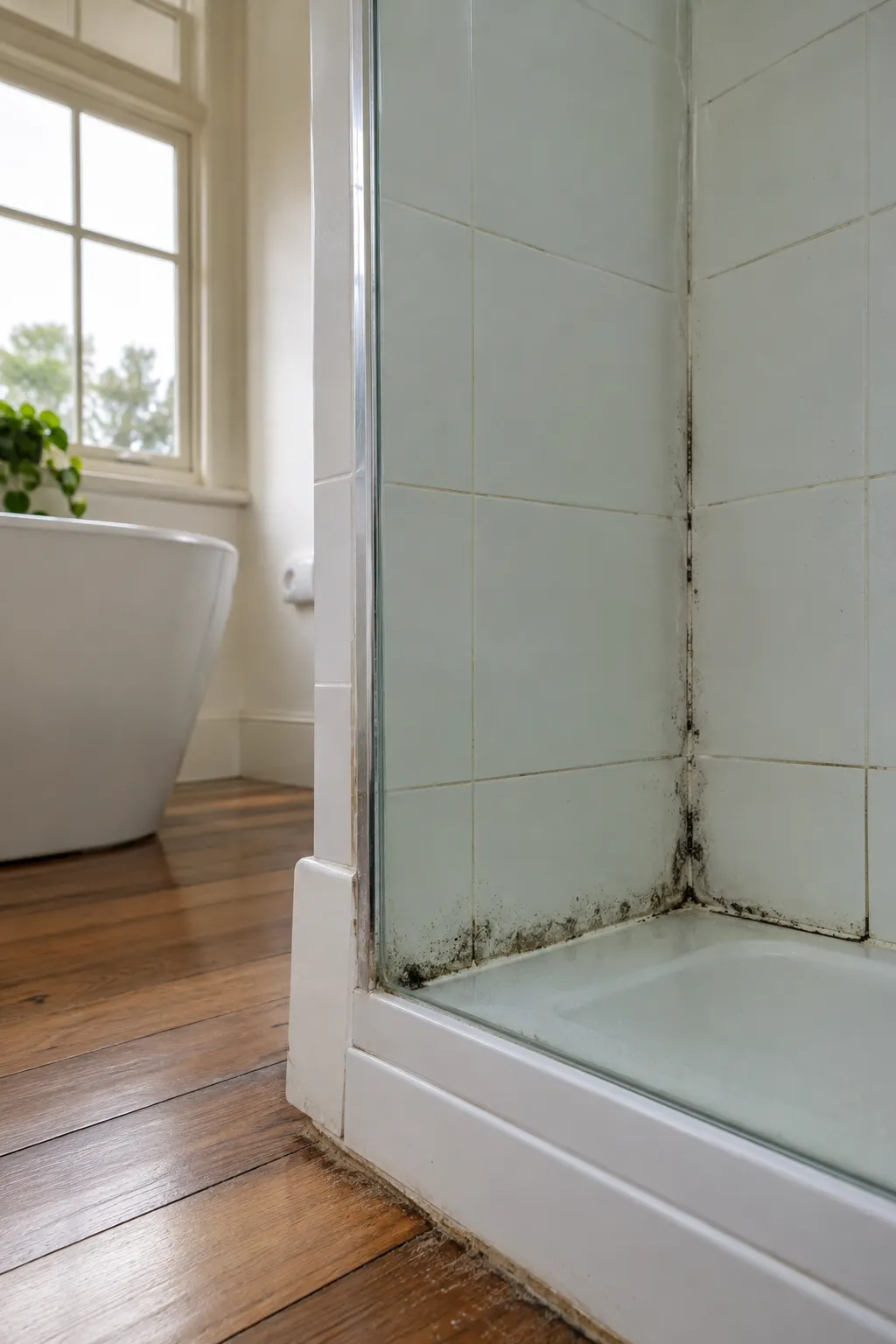
Bathroom surfaces
Bathroom joints and ceiling paint need their own drying observations and material condition recorded.
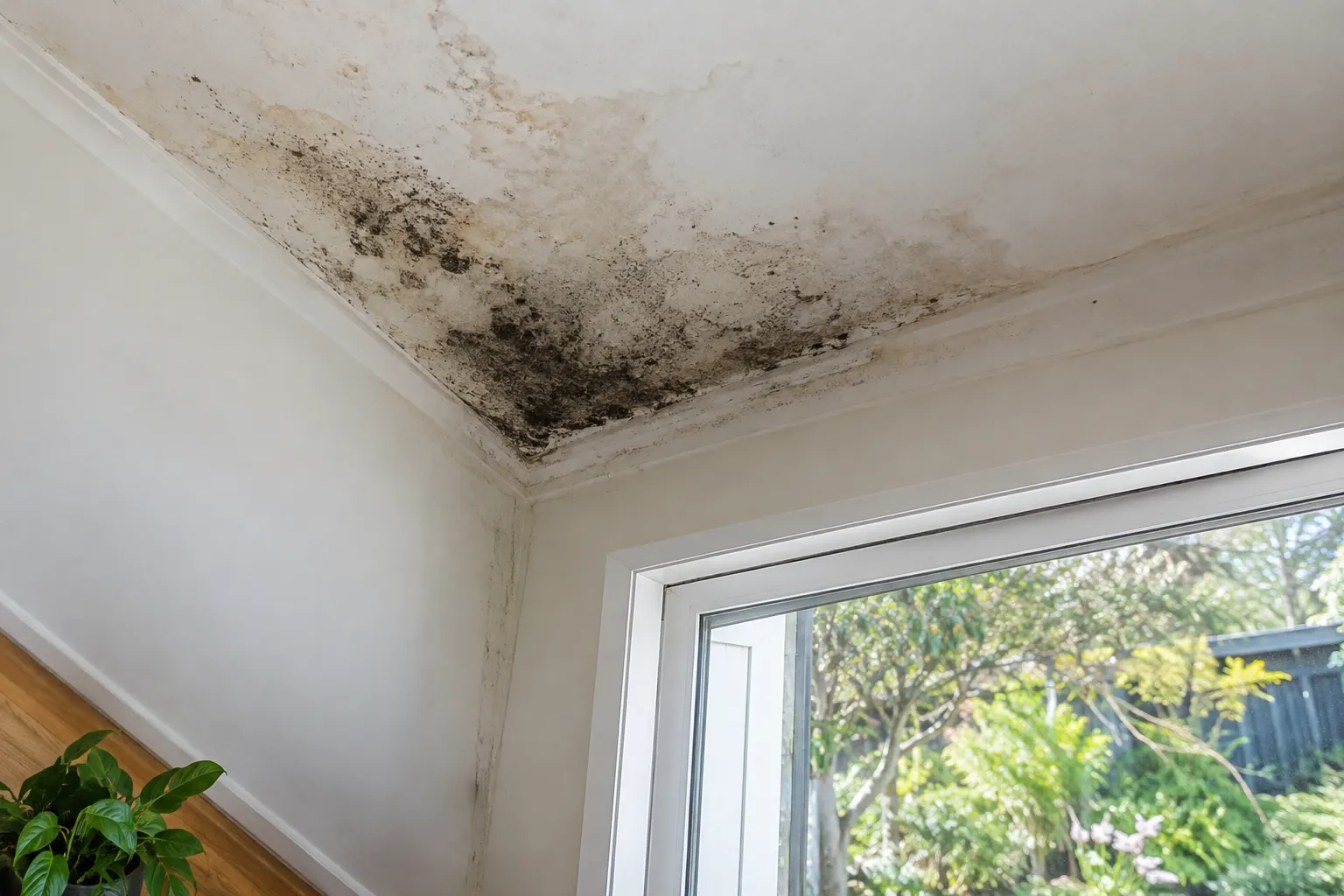
Ceiling condition
A bedroom ceiling patch should have its own rain or plumbing history.
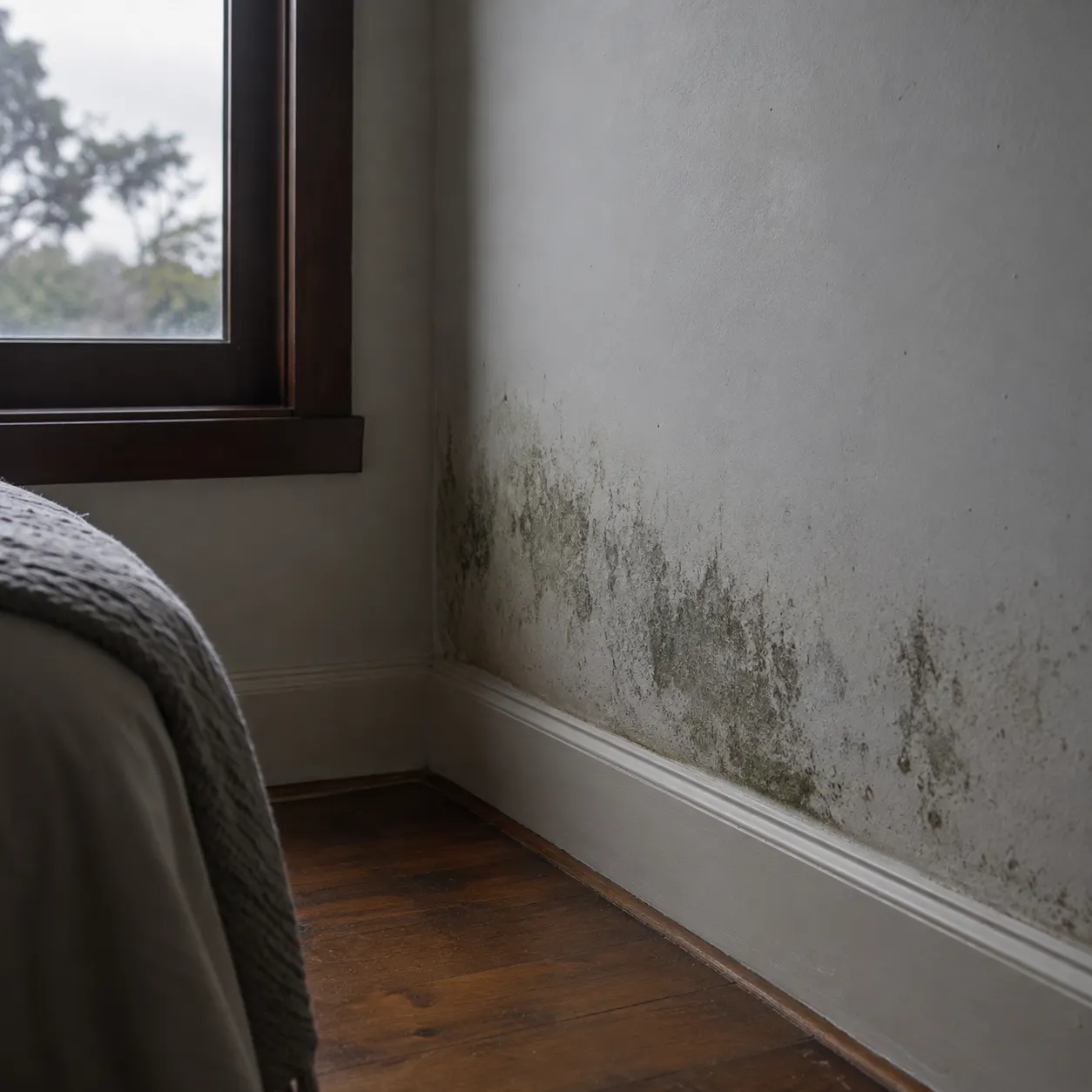
Walls and finishes
Wall paint facing a bathroom entrance may be partly hidden by furniture. Explain what can be seen and reached, with damage and concealed access separated from the observed growth.
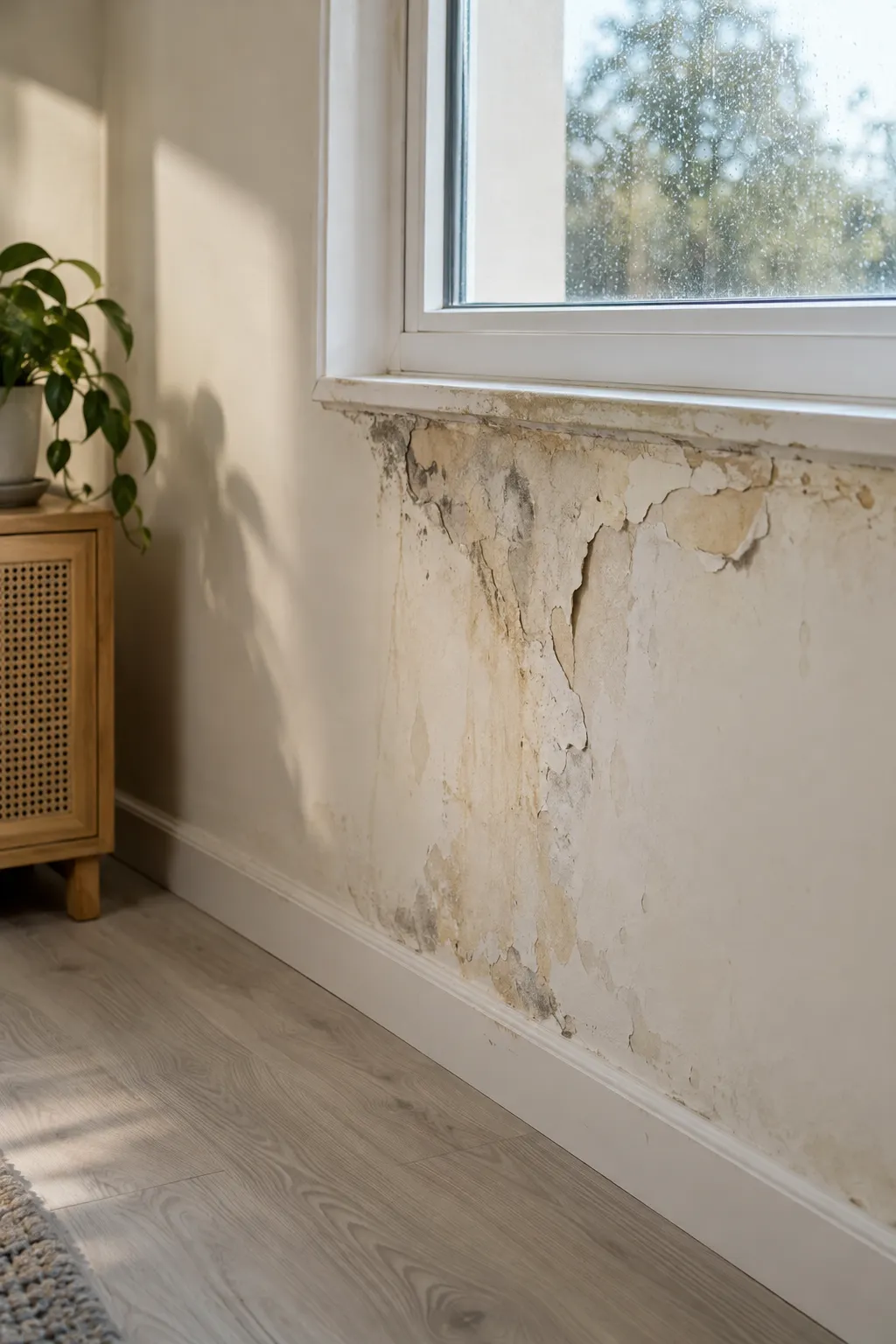
After water damage
After a leak between rooms, flooring and low walls can be affected beyond the most visible patch. Keep the incident and drying sequence available rather than judging recovery only by painted appearance.
PREVENTION STARTS WITH
Let the wet room dry.
Keep the bedroom in view.
A practical household check
Use the bathroom’s intended extraction and give wet surfaces an opportunity to dry. Observe the bedroom wall independently rather than assuming a door-position change has solved the problem. Persistent or rain-related damp needs its own investigation.
Review each room on its own evidence
After any separate ventilation or leak work, compare bathroom drying and bedroom damp independently. Record changes rather than assume one routine has solved both. Persistent wetting should be investigated before the same surfaces are repeatedly coated or cleaned for appearance alone.
SANDRINGHAM & NEARBY
Around Sandringham
Follow the local links to Hampton, Black Rock and Cheltenham for other addresses. Their room connections and ventilation arrangements should be described independently, even where a bathroom and bedroom appear similar.
BEFORE YOU CALL
The useful
questions.
Could an open bathroom door affect the nearby bedroom?
Moist air can move into adjoining rooms, particularly while the bathroom is still wet. Tell us about the layout and extraction routine. The relationship is worth assessing alongside window condensation, leaks and other evidence in the affected bedroom.
Should the bathroom and bedroom have one assumed cause?
No. Their layout can be relevant, but each room may have other moisture pathways. Describe condensation, leaks and use separately so the enquiry does not overlook an independent bedroom concern.
Will changing the bathroom door position guarantee prevention?
No. A routine can affect airflow, but does not repair a defect or establish material condition. Keep observing the accessible rooms and report persistent damp rather than treating one change as a permanent result.
What photos explain the two-room relationship?
Include a connected view of the doors and affected bedroom wall, then close views of each material. Label which room is shown so drying observations and surface conditions remain clear.
Are affected bedding and furniture part of wall removal?
Not by default. Identify belongings separately during the call so the agreed scope distinguishes accessible lining from textiles, furniture and any additional care or material decisions.
How do I enquire for Sandringham?
Call 03 8652 1296 with the address, layout and drying notes. Discuss availability, preparation and any separate ventilation or repair issue before accessible surfaces are agreed.
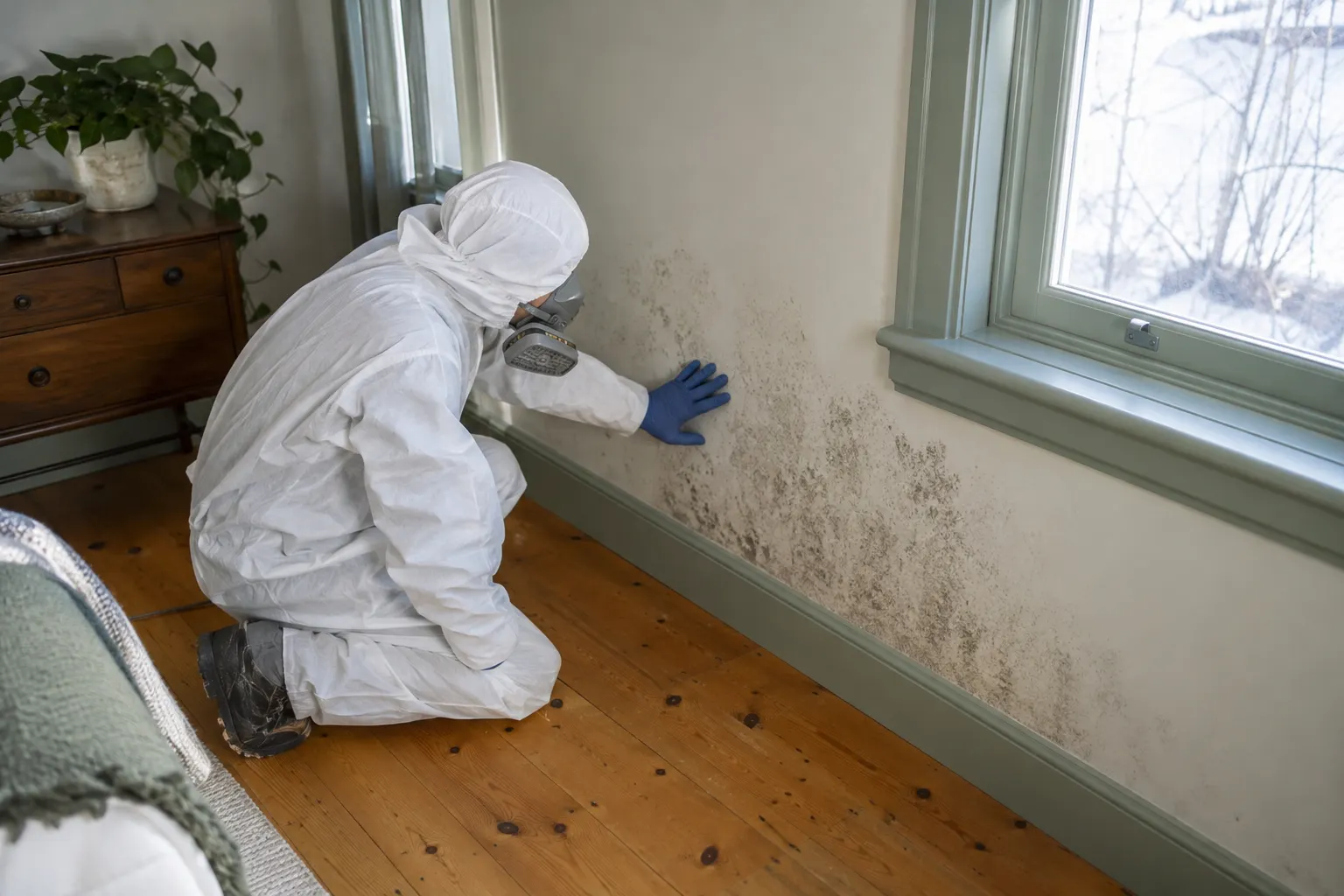
TELL US WHAT YOU CAN SEE
Tell us how the rooms behave.
A useful call keeps bathroom drying and bedroom condition together without assuming one source. Discuss availability, material limits and practical preparation before the accessible removal appointment is arranged.
Local context: Bayside — coastal management area