

ROOMS · MATERIALS · MOISTURE
HAMPTON · MELBOURNE
Mould Removal Hampton
A downstairs ceiling patch may relate to the room above rather than the nearest exterior wall. For Hampton, describe the floor plan and any plumbing event before arranging surface work. The assessment should separate the visible ceiling finish from concealed water pathways.
Material condition considered
Accessible work agreed first
Moisture observations kept in view
THE ROOM TELLS A STORY
The room above is useful context.
Bayside’s coastal management area includes Hampton.
If a bathroom sits above the affected ceiling, note whether marks change after showers or other use. That relationship is useful, but not proof of a plumbing fault. Avoid opening the ceiling for a photograph; tell us about access, softness and prior repairs instead.
UNDERSTANDING MOISTURE
Link the ceiling to an actual timeline.
Use-related changes
Note whether the ceiling mark changes after upstairs bathroom use, during rain or independently of both. That timeline is useful to describe but cannot identify a concealed water pathway simply from the floor plan.
Visible lining condition
Mention lifting paint, cracking or sagging from a stable floor position. The condition can affect the appropriate next step before cleaning. Do not press or cut the ceiling to demonstrate what may be hidden above it.
Access and investigation
A mould inspection considers accessible room evidence. Plumbing, closed floor layers and concealed ceiling materials may need suitable separate investigation, with permission and access arranged instead of assumed from an enquiry photograph.
OUR REMOVAL PROCESS
Define the ceiling work beneath the wet room.
Save the floor-plan relationship
A simple room description showing what is above the patch can supplement photos. Keep known layout facts separate from an assumption that the upstairs bathroom must be responsible for the moisture.
Explain prior opening work
Mention if a ceiling section was opened, dried or replaced after an incident. Each is a different event, and their sequence matters more than a broad statement that repairs were completed.
Keep investigation planned
Any opening into the ceiling should be undertaken with suitable assistance and permission. It is not preparation required merely to provide a better photograph for a surface-removal enquiry.
01
Describe the position and condition
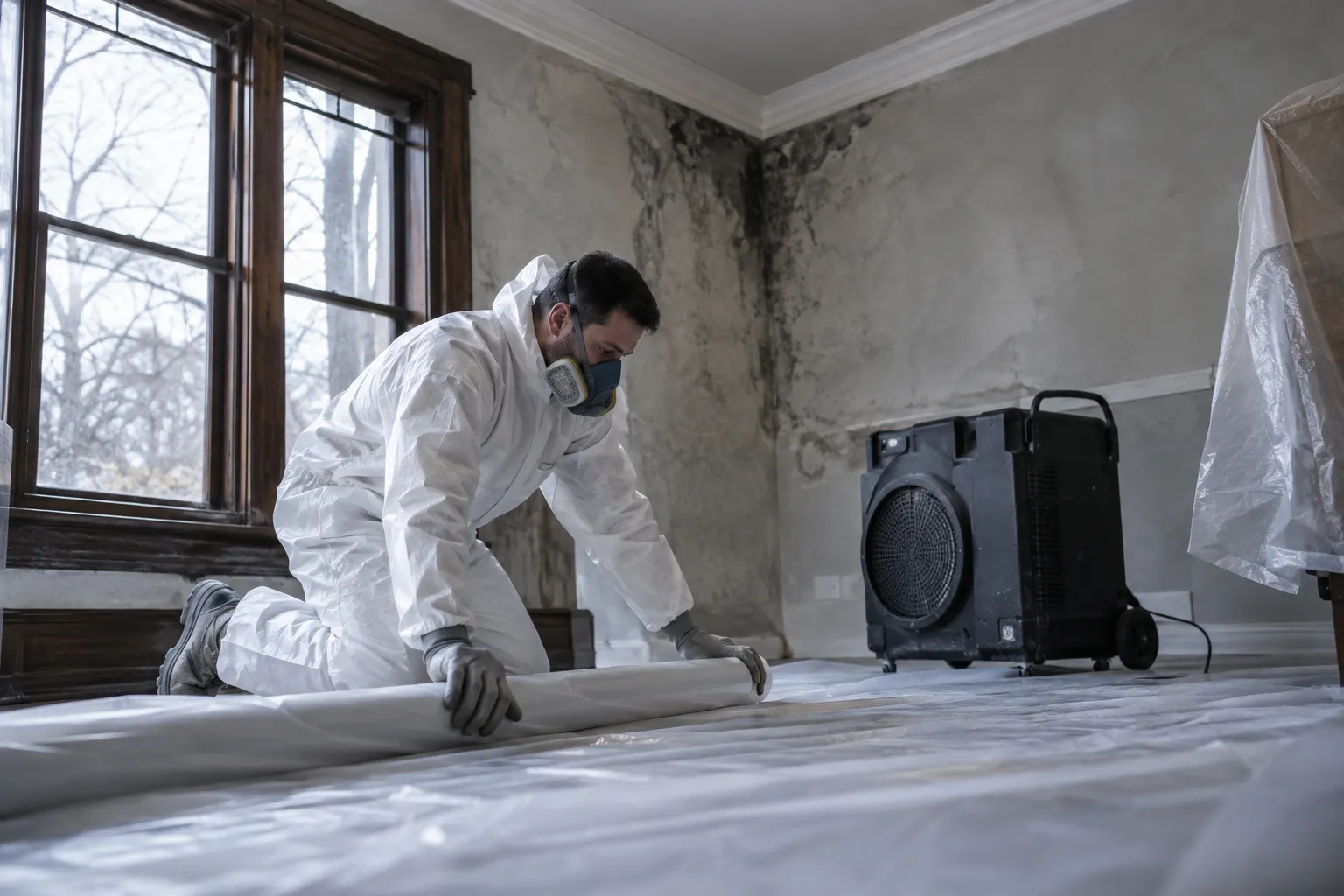
Provide room photos showing where the patch sits and explain known repairs or wetting. Identify questionable lining before work. The removal scope should not treat a damaged overhead surface as though only sound decorative paint is involved.
02
Coordinate before preparation
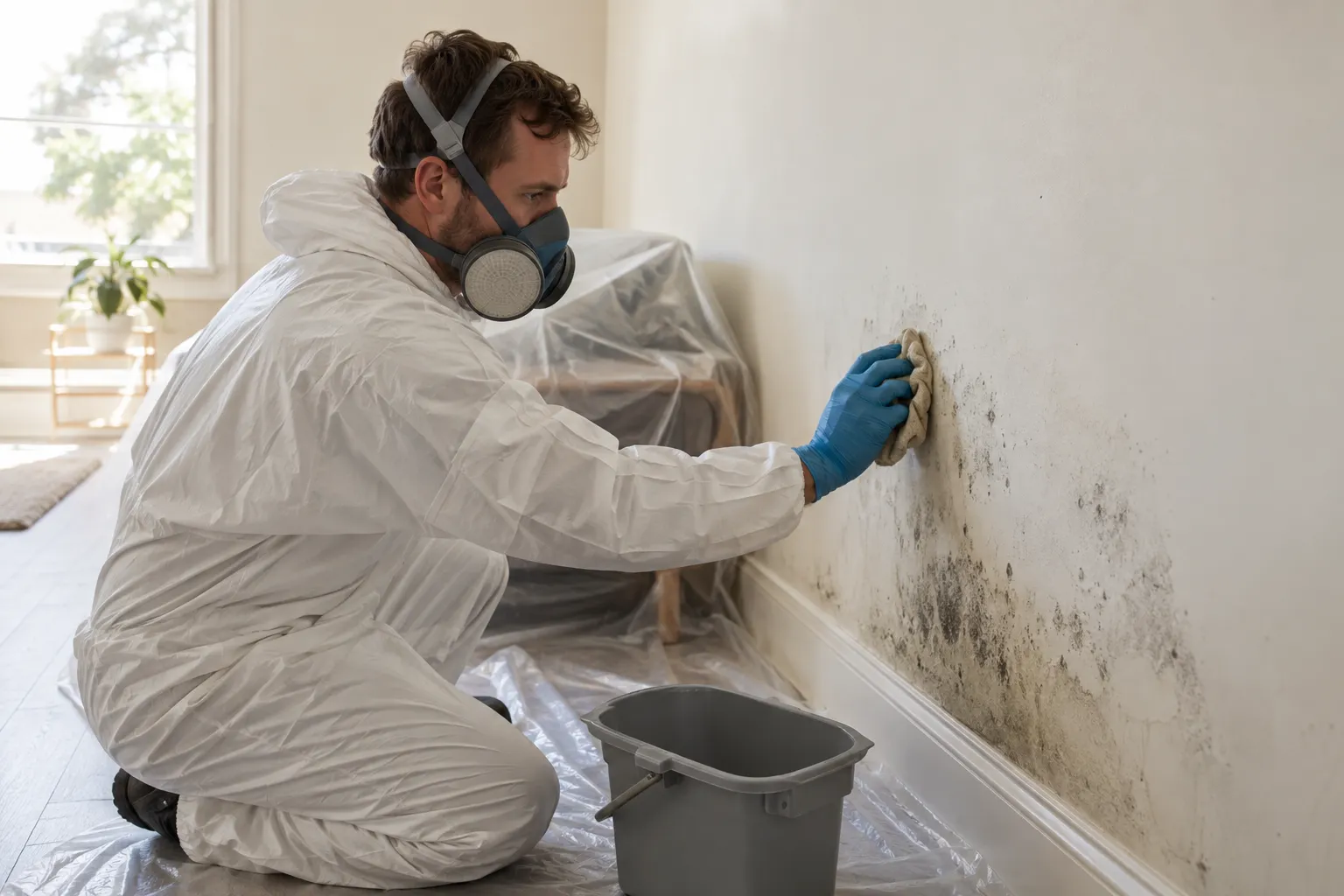
Discuss furniture protection, practical access and occupants’ concerns. If plumbing or material work should precede removal, explain its status. Equipment and preparation should fit the agreed task without requiring an unauthorised opening or assuming every ceiling can be addressed immediately.
03
Review repair and finish separately
Consider stains, deterioration and any further wetting after accessible removal. Remediation decisions keep source and material condition connected, but a cleaner ceiling does not establish that an upstairs leak has stopped or all concealed layers have recovered.
COMMON AREAS AFFECTED
Overhead wetting and room surfaces differ.
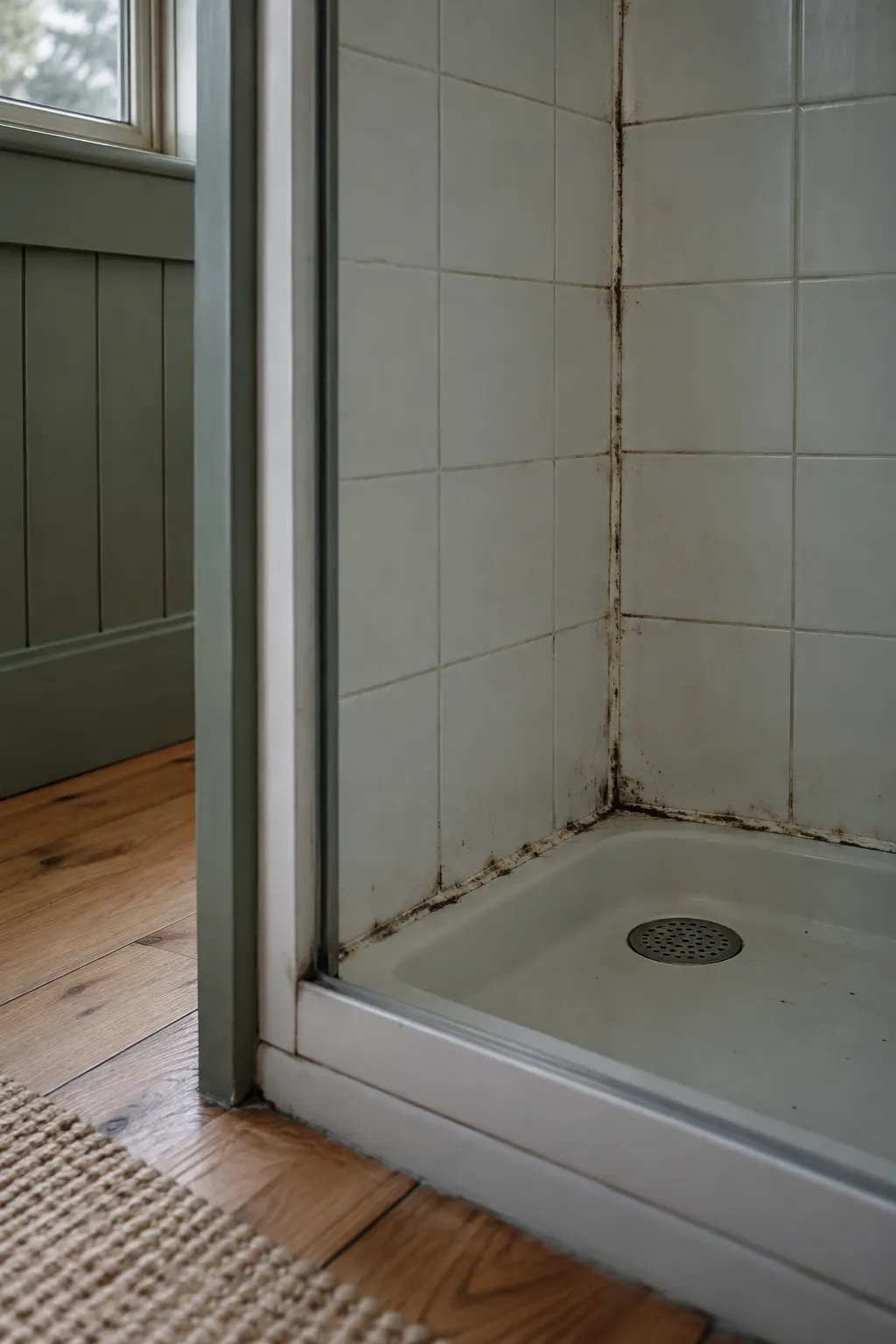
Bathroom surfaces
Bathroom growth upstairs may have a separate shower-drying pattern from the downstairs stain.
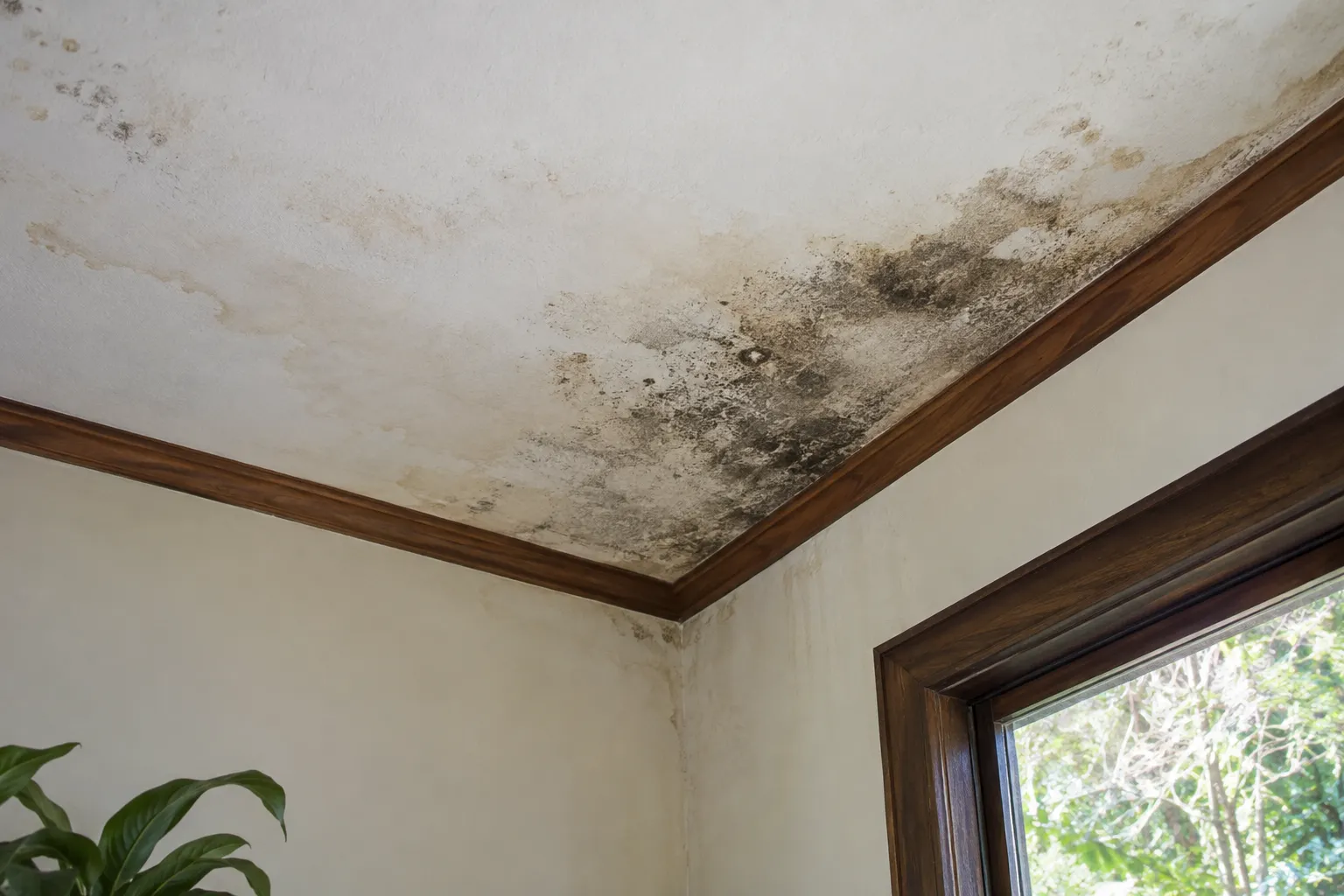
Ceiling condition
The ceiling finish needs sagging, cracks or softness reported before work. Visible growth and deteriorated lining require different decisions about a suitable accessible task and separate material repair.
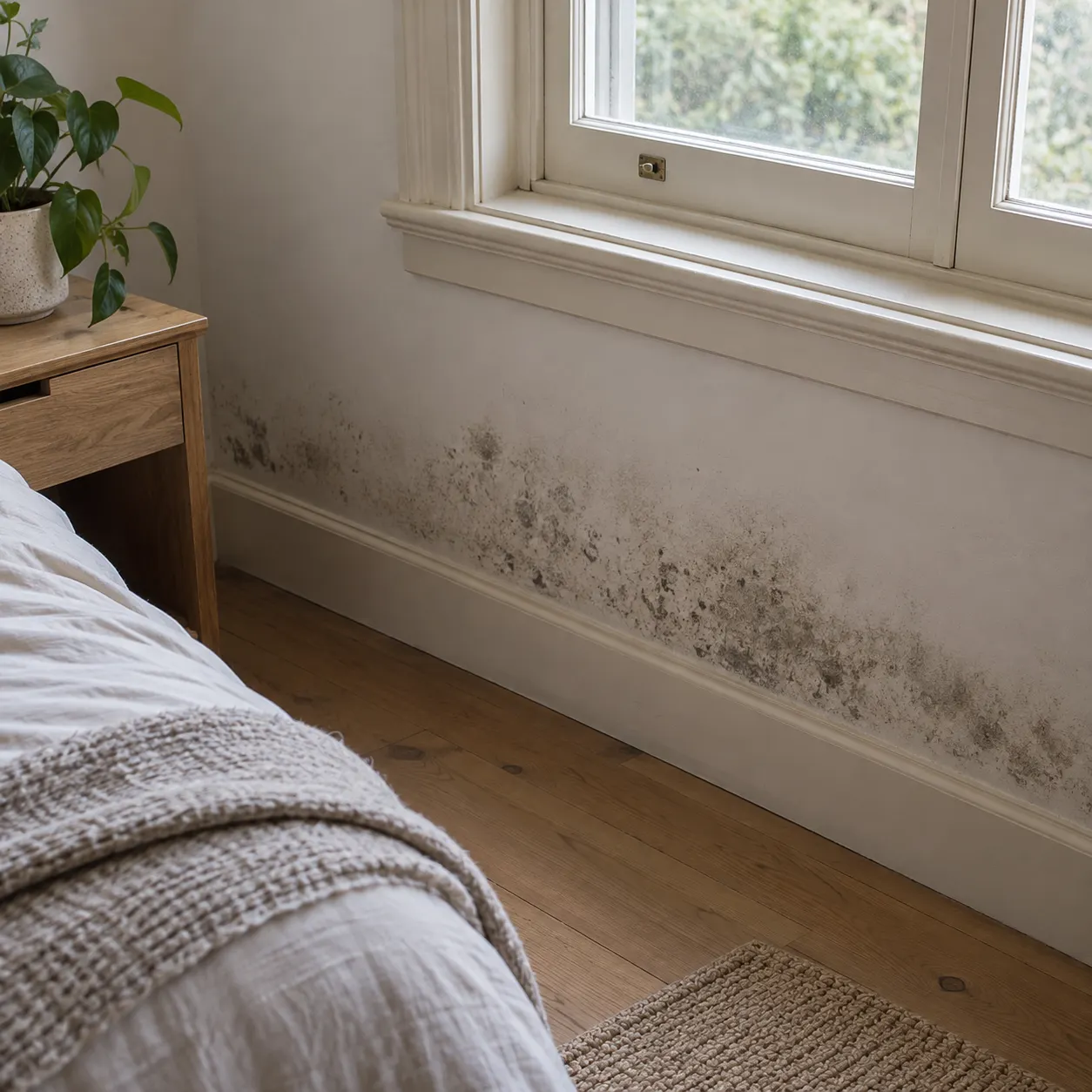
Walls and finishes
An adjoining wall may have been wet during the same incident. Include the junction and visible condition in photographs rather than focusing only on the most obvious ceiling mark.
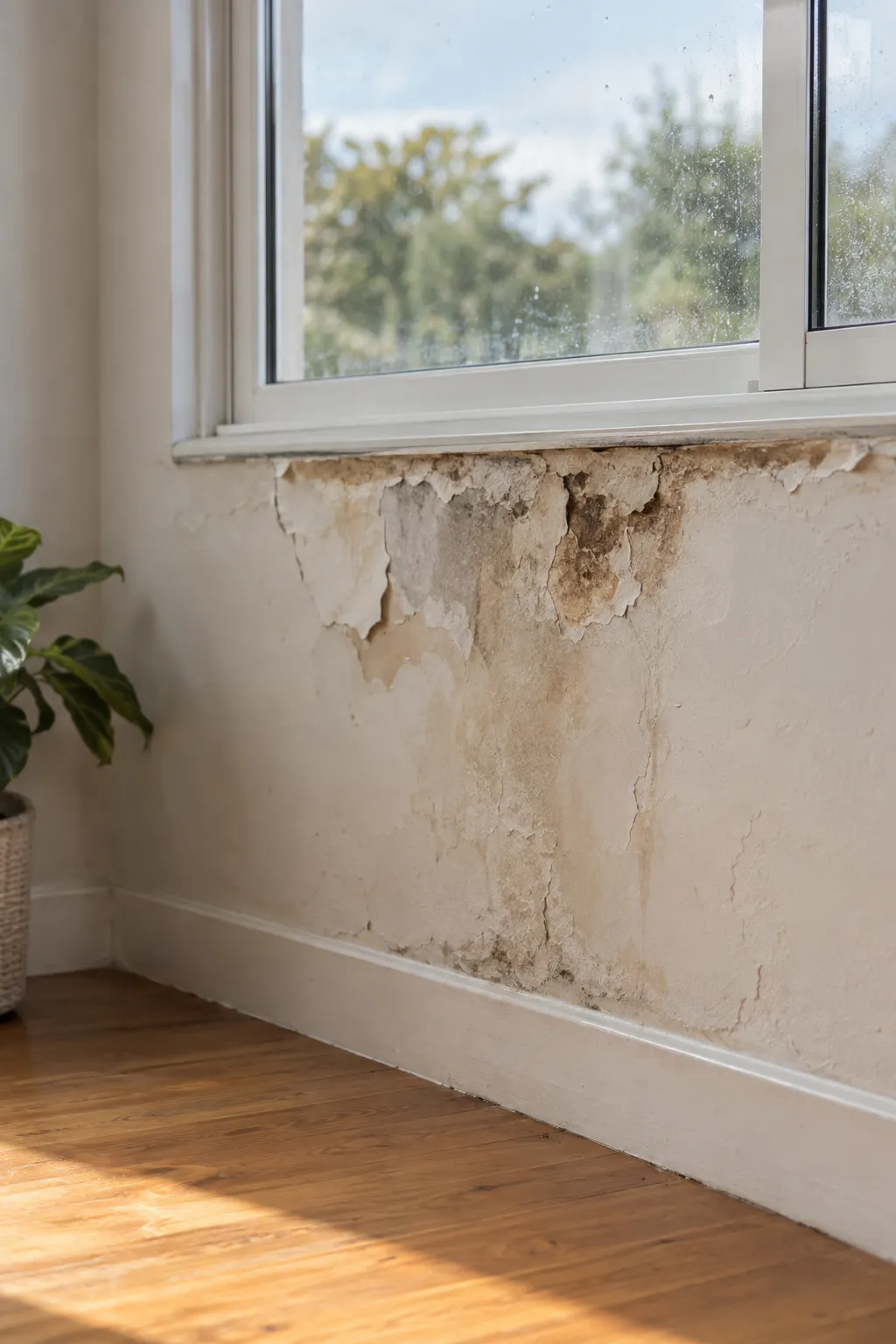
After water damage
After water passes between floors, closed layers may need consideration beyond room paint. Keep the incident, drying and reinstatement records available without claiming surface appearance confirms concealed recovery.
PREVENTION STARTS WITH
Follow the history
through both floors.
A practical household check
Report any renewed stain beneath an upstairs wet room promptly to the relevant property contact. Keep the dates of bathroom use and visible changes distinct. Once a defect is addressed, discuss the remaining ceiling condition before closing or decorating the area.
Review after separate plumbing work
Keep dated observations following any repair and ordinary upstairs use. Distinguish an unchanged stain from renewed wetting. Continuing water should be discussed with the relevant professional before decoration conceals the ceiling, rather than assumed to need only another surface clean.
HAMPTON & NEARBY
Around Hampton
Nearby reading extends to Brighton, Sandringham and Moorabbin. Where the concern is beneath another wet room, bring that property’s floor-plan and repair information to the enquiry rather than assume identical concealed services.
BEFORE YOU CALL
The useful
questions.
Should I cut an opening in the ceiling to check underneath the bathroom?
Do not create an opening as preparation for a removal enquiry. Concealed investigation should be planned with an appropriate professional and permission. Start with room photos and the timing of changes; the accessible ceiling scope can then be discussed with those limits in mind.
Does a bathroom above the patch prove a plumbing cause?
No. The layout is useful context, but timing and actual evidence matter. Describe known services and wetting without ruling out other sources solely because of the room above.
What if ceiling paint is lifting?
Mention it before an appointment. Damaged finishes may affect method and remaining appearance, with separate material repair considered rather than promised restoration through removing accessible growth alone.
Can you check inside the floor cavity during removal?
Concealed investigation is not assumed within surface removal. Discuss the concern, permission and appropriate access so any separate professional assessment has a clear scope.
Should I wait until another trade has inspected?
Explain the situation first. Outstanding plumbing or material questions can affect useful timing. The appointment should acknowledge unresolved work rather than assume surface treatment is suitable regardless of continuing wetting.
How do I enquire for Hampton?
Call 03 8652 1296 with the address, ceiling photos and upstairs-use or repair history. Discuss availability, condition and any investigation needed before accessible removal is agreed.
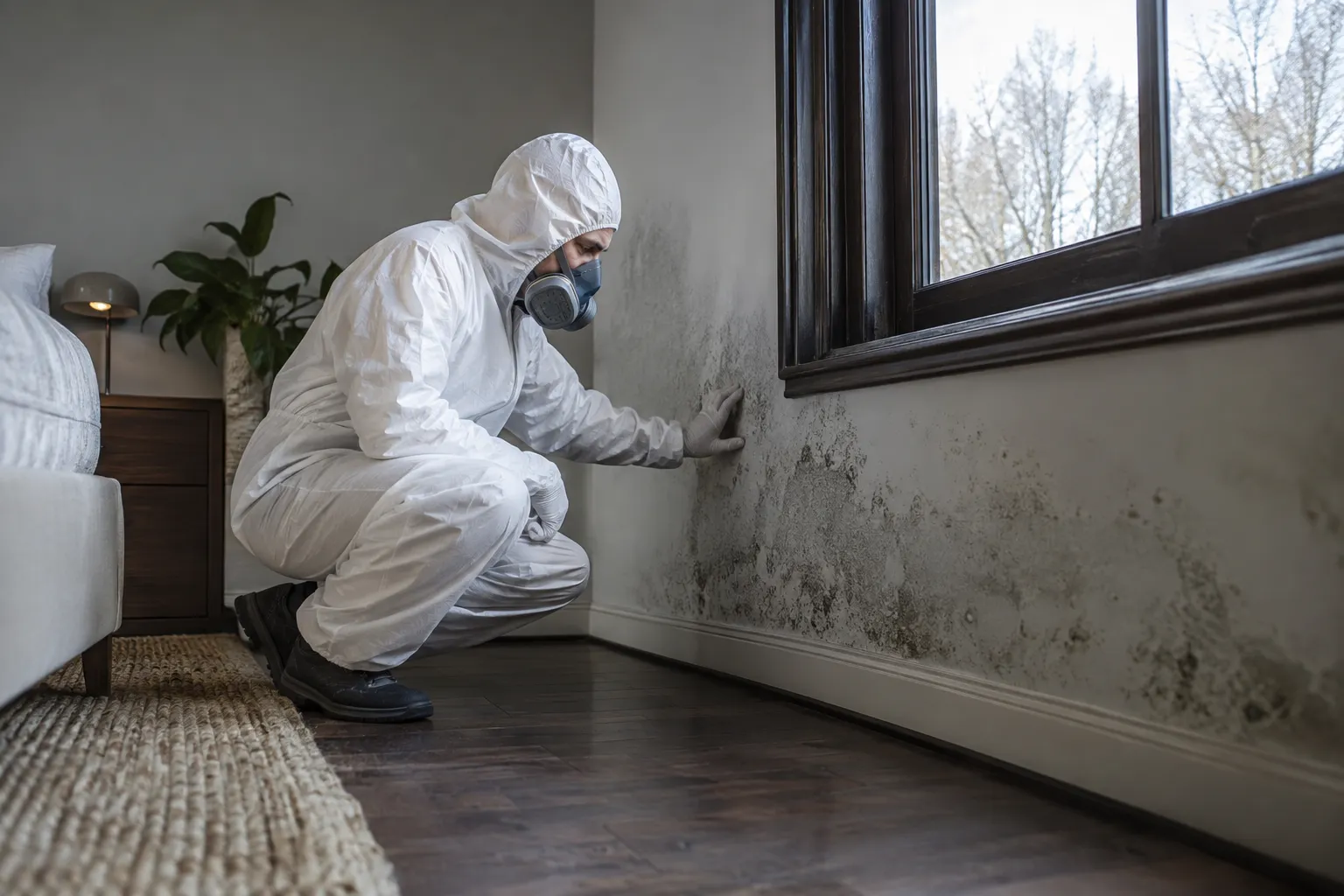
TELL US WHAT YOU CAN SEE
Bring the timeline, not a ceiling opening.
Describe the room above, visible condition and repair sequence. Discuss address availability and practical scope, with concealed investigation and damaged lining kept distinct from the agreed accessible work.
Local context: Bayside — coastal management area