
ROOMS · MATERIALS · MOISTURE
BRIGHTON · MELBOURNE
Mould Removal Brighton
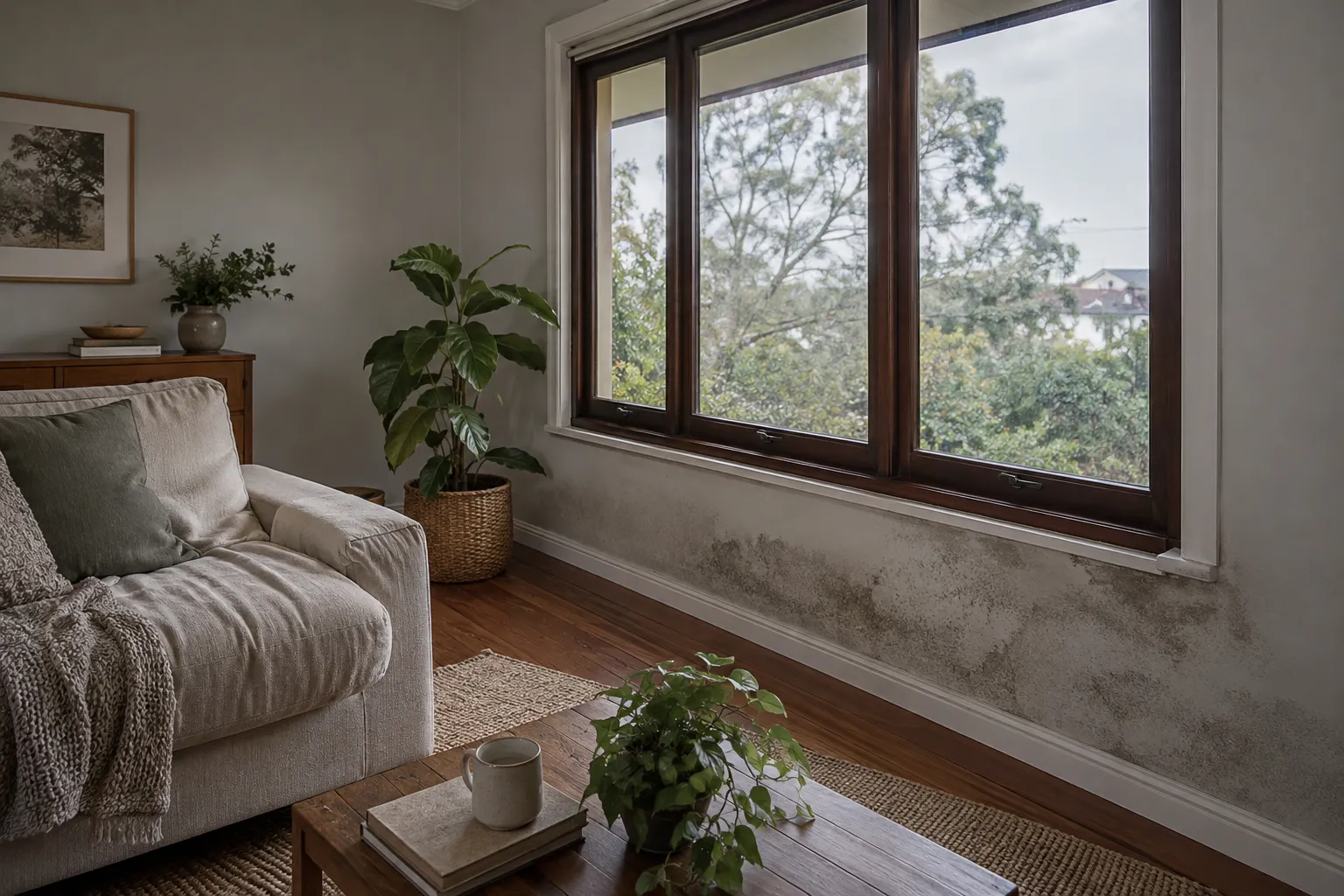
A glazed living room may feel bright while a shaded corner stays slow to dry. For mould removal in Brighton, show the affected wall and its relationship to the windows. A coastal address does not establish the cause; surface condition and actual moisture evidence guide the enquiry.
Material condition considered
Accessible work agreed first
Moisture observations kept in view
THE ROOM TELLS A STORY
A bright room can have a cooler edge.
Brighton is part of the coastal area covered by Bayside’s marine-management planning.
If a living room has broad glazing, compare the affected shaded corner with the exposed wall nearby. Note curtains, furnishings and visible condensation. The contrast can help describe the room, while a rain-related leak remains a separate possibility that should not be dismissed because the room is bright.
UNDERSTANDING MOISTURE
Compare surfaces within the room.
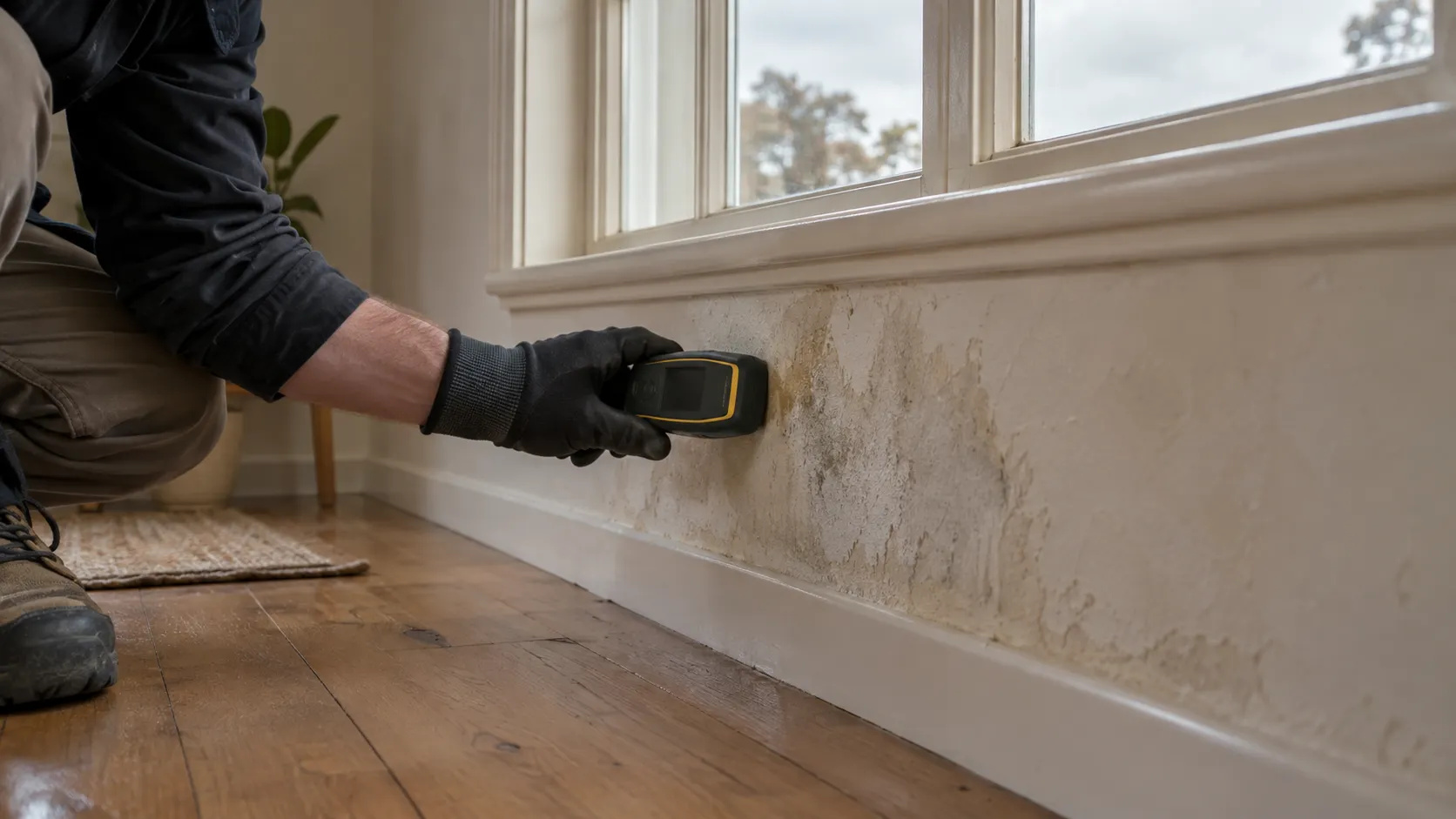
Shade and concealment
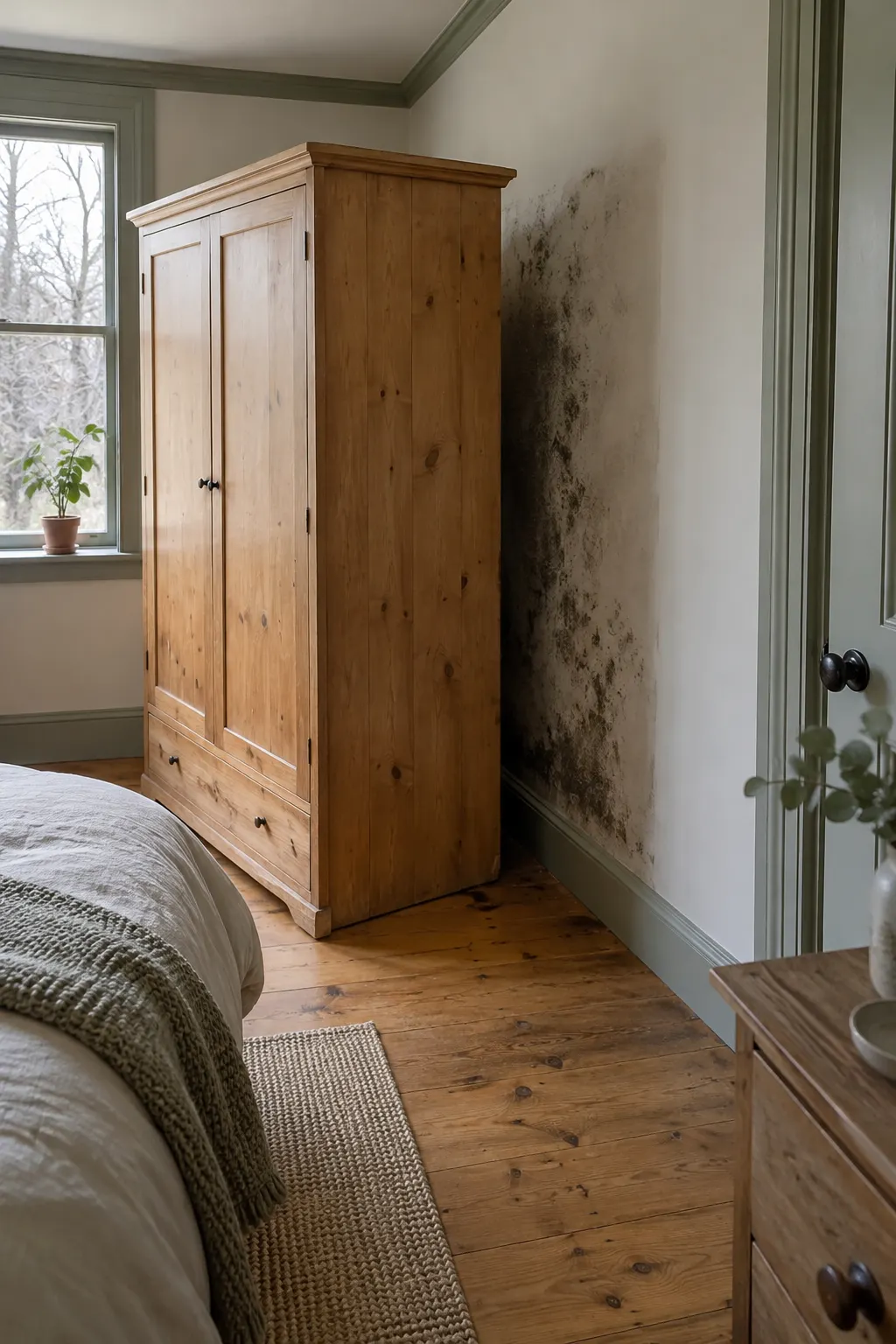
Explain which corner is affected and how furniture or curtains sit nearby. A bright centre does not describe the drying of every edge. The wider layout is useful without diagnosing damp from sunlight or shade alone.
Glazing observations
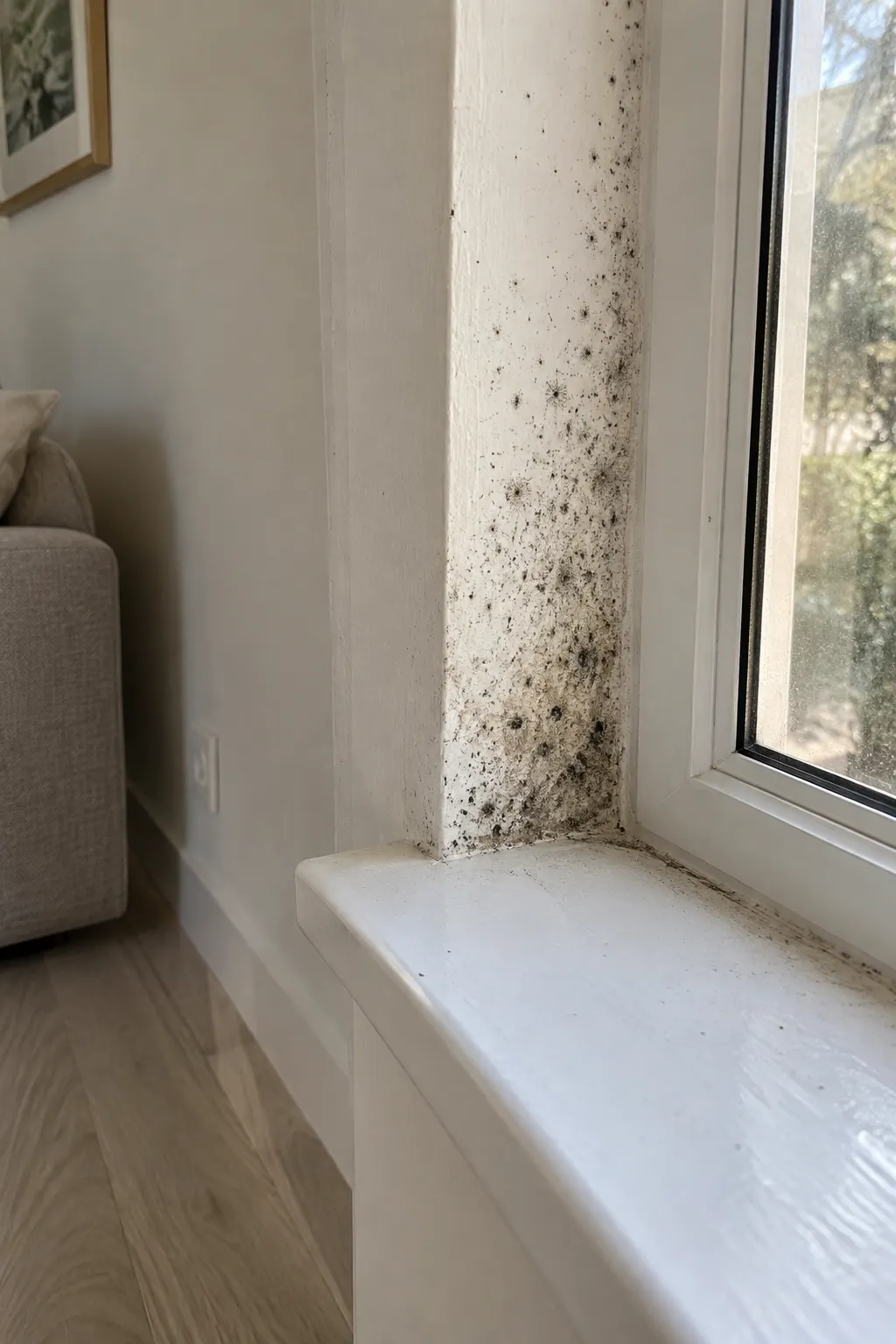
Note visible condensation and whether the adjoining paint dries during the day. Keep rain-related water separate from indoor droplets. Those differences matter more to the enquiry than assuming a coastal address explains the wall.
Material differences
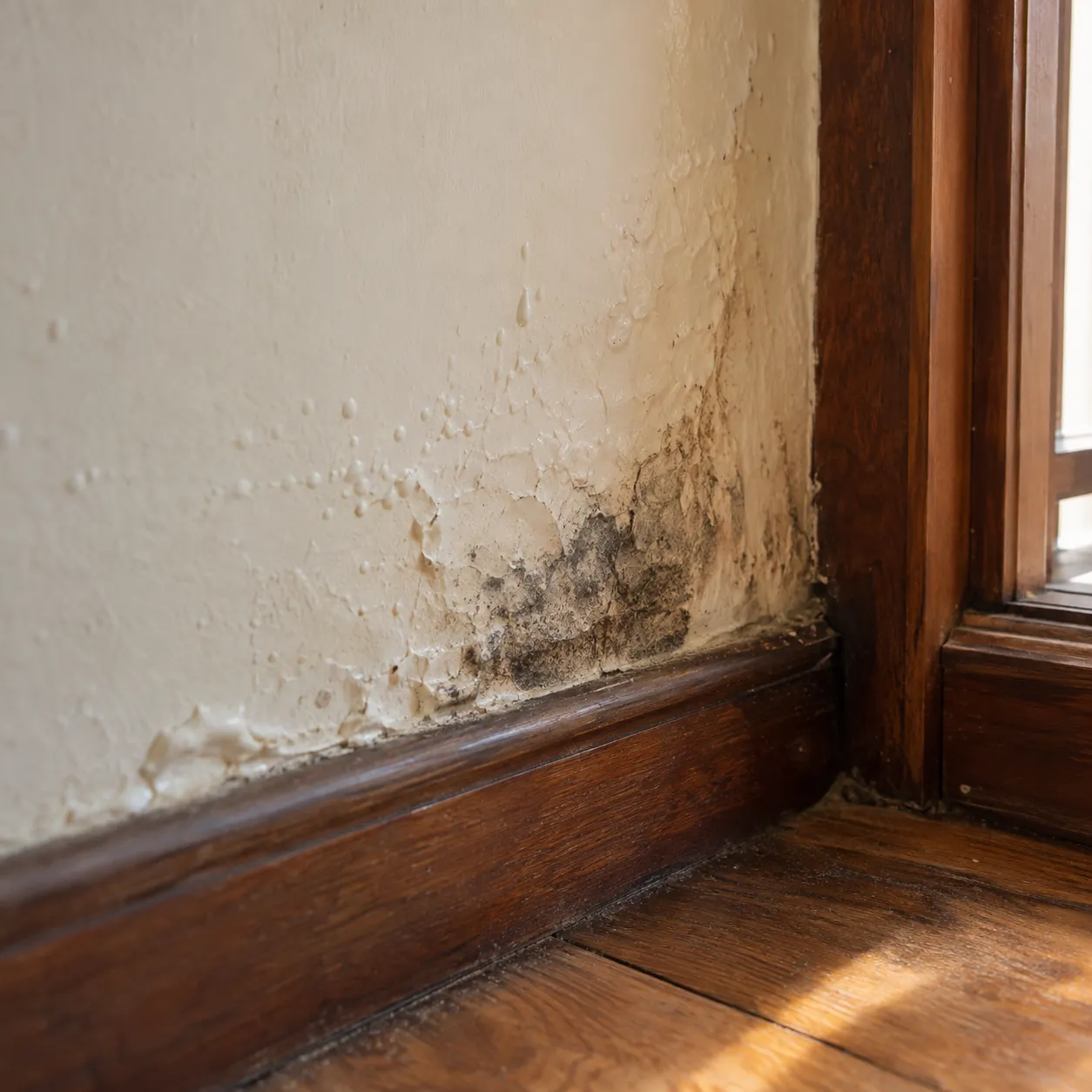
Describe lifting paint, swollen trim or softness near the corner. A mould inspection considers accessible condition and scope limits, with concealed glazing details or damaged materials referred for suitable separate attention where needed.
OUR REMOVAL PROCESS
Plan for the affected edge, not the room’s brightness.
Keep an exposed comparison
Include a nearby open wall in the photographs. It helps describe the pattern without suggesting that an unaffected surface proves the condition of all hidden corners or concealed materials in the room.
Explain curtain movement
Tell us if curtains ordinarily cover the patch or glass for long periods. Describe the usual arrangement before changing it so the first conversation has context about both access and room use.
Separate frame repairs
Mention visible water entry or earlier glazing work. Repairing a frame is a distinct task from removing growth from adjoining paint, even when the two decisions need to be coordinated.
01
Describe the comparison
Send the corner and wider glazing views, noting any furniture that limits access. Identify material and approximate extent. The surface-removal scope should follow visible condition rather than presume a light-filled room contains only a minor cosmetic task.
02
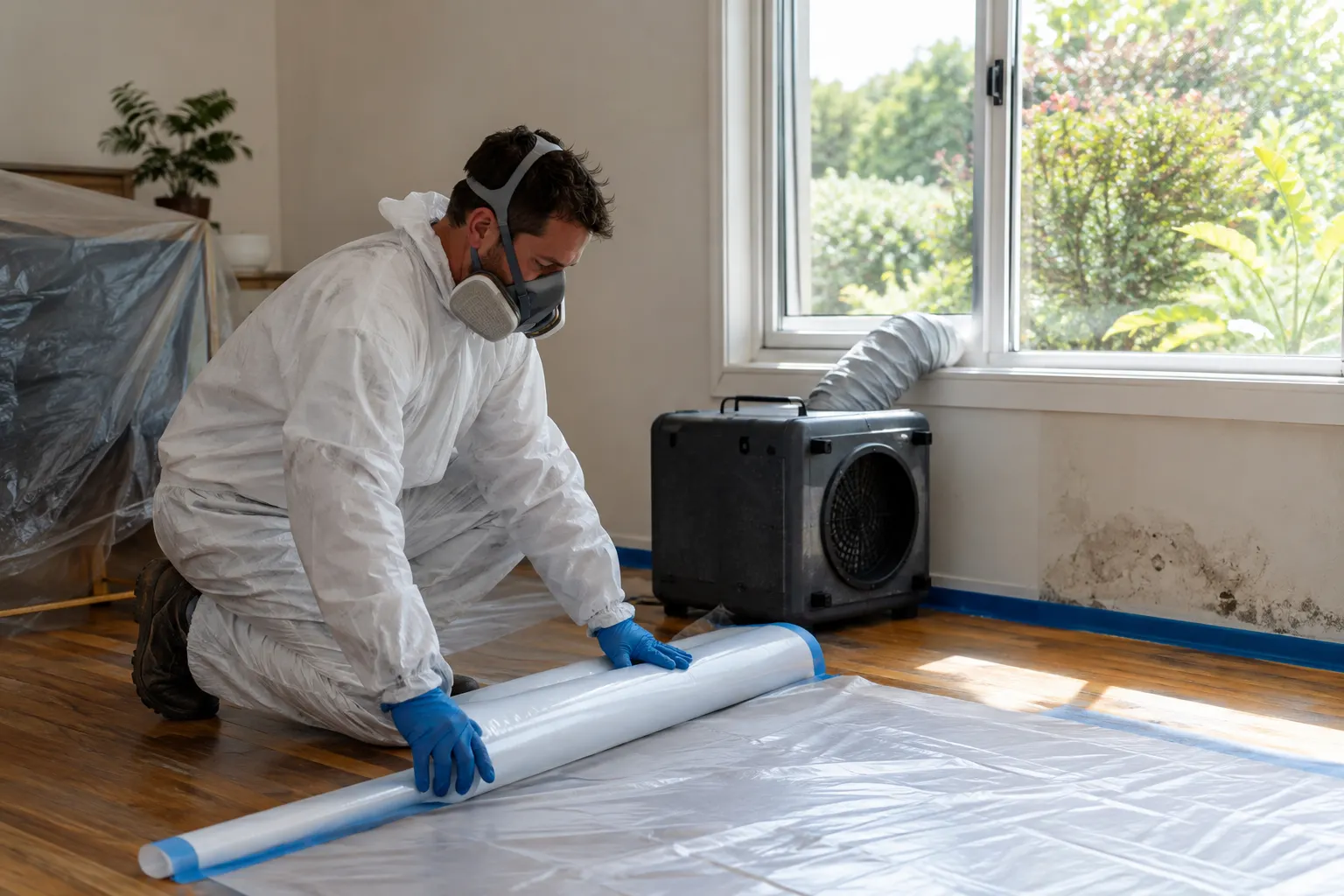
Prepare around the layout
Agree how curtains, furniture and belongings will be managed. Protection and equipment need to suit the work area and surfaces. Tell us about delicate finishes and occupants’ concerns before an appointment so preparation is practical and expectations are clear.
03
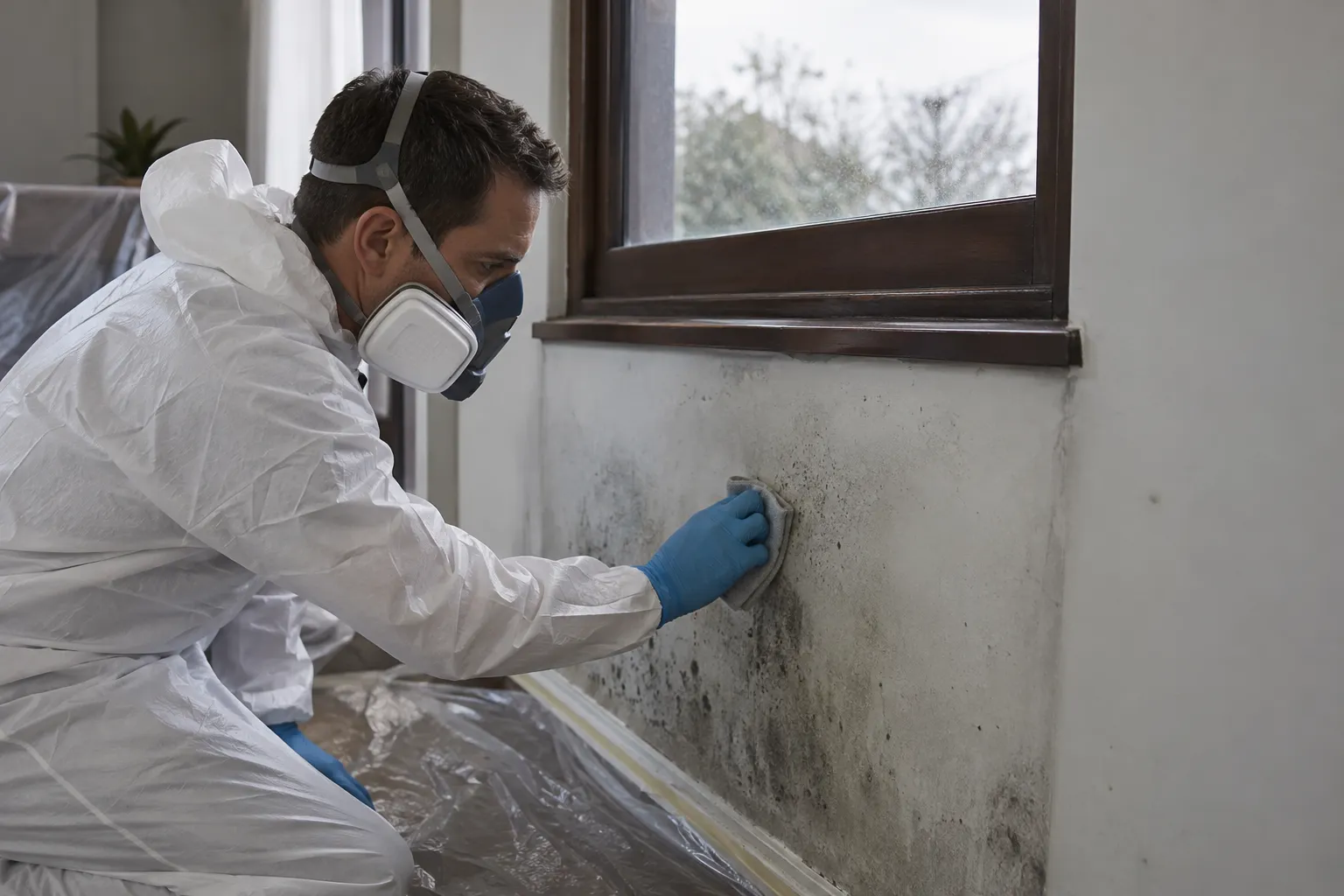
Review the material outcome
Discuss remaining stains, finish damage and continuing wetting after agreed removal. Remediation planning keeps those decisions connected to moisture, without promising that clearing a shaded corner repairs an exterior defect or makes every surface permanently unaffected.
COMMON AREAS AFFECTED
Look across the home’s different finishes.
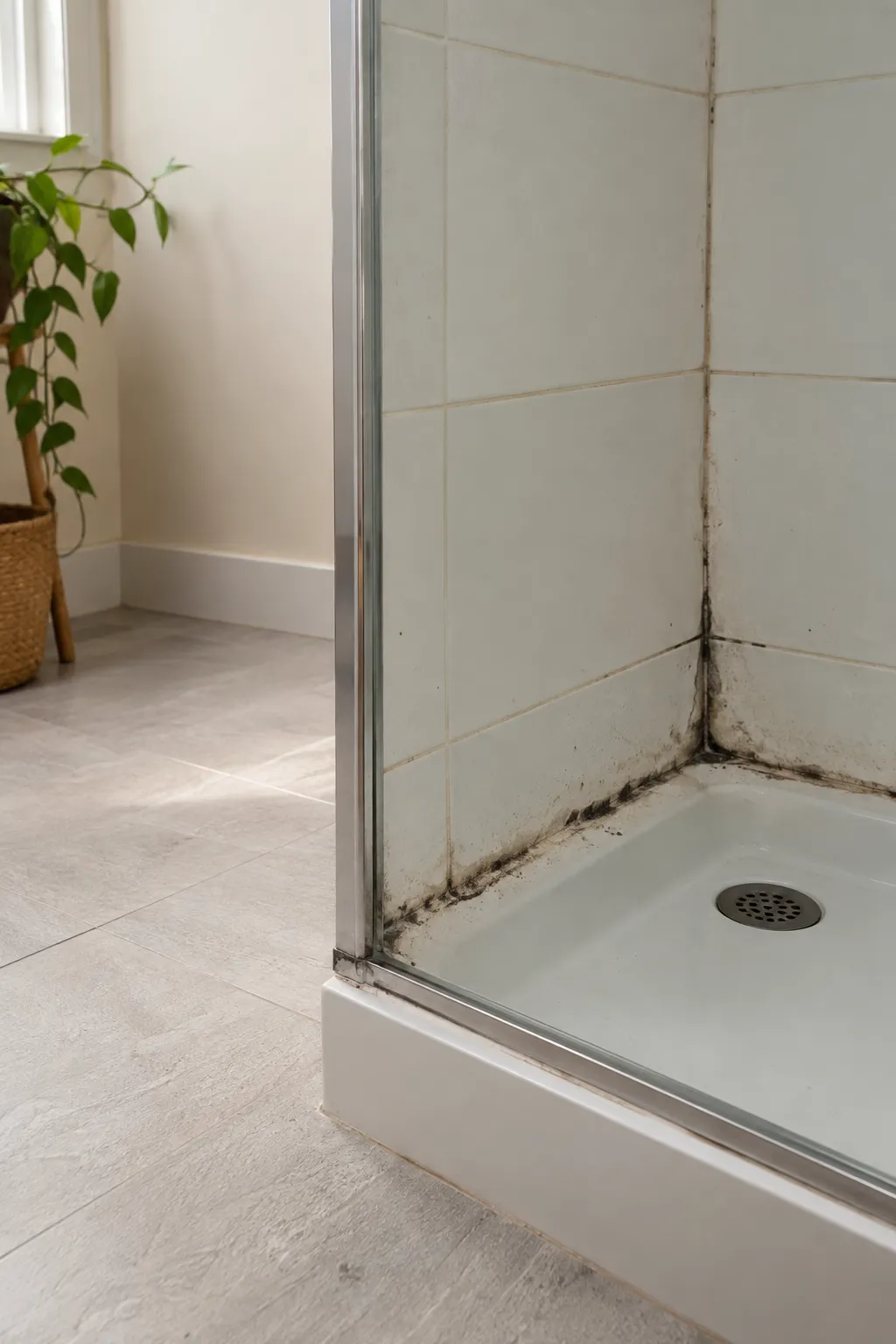
Bathroom surfaces
Bathroom surfaces need their own extraction and joint-material observations. Do not transfer a living-room explanation to shower growth merely because the patches occur at the same address.
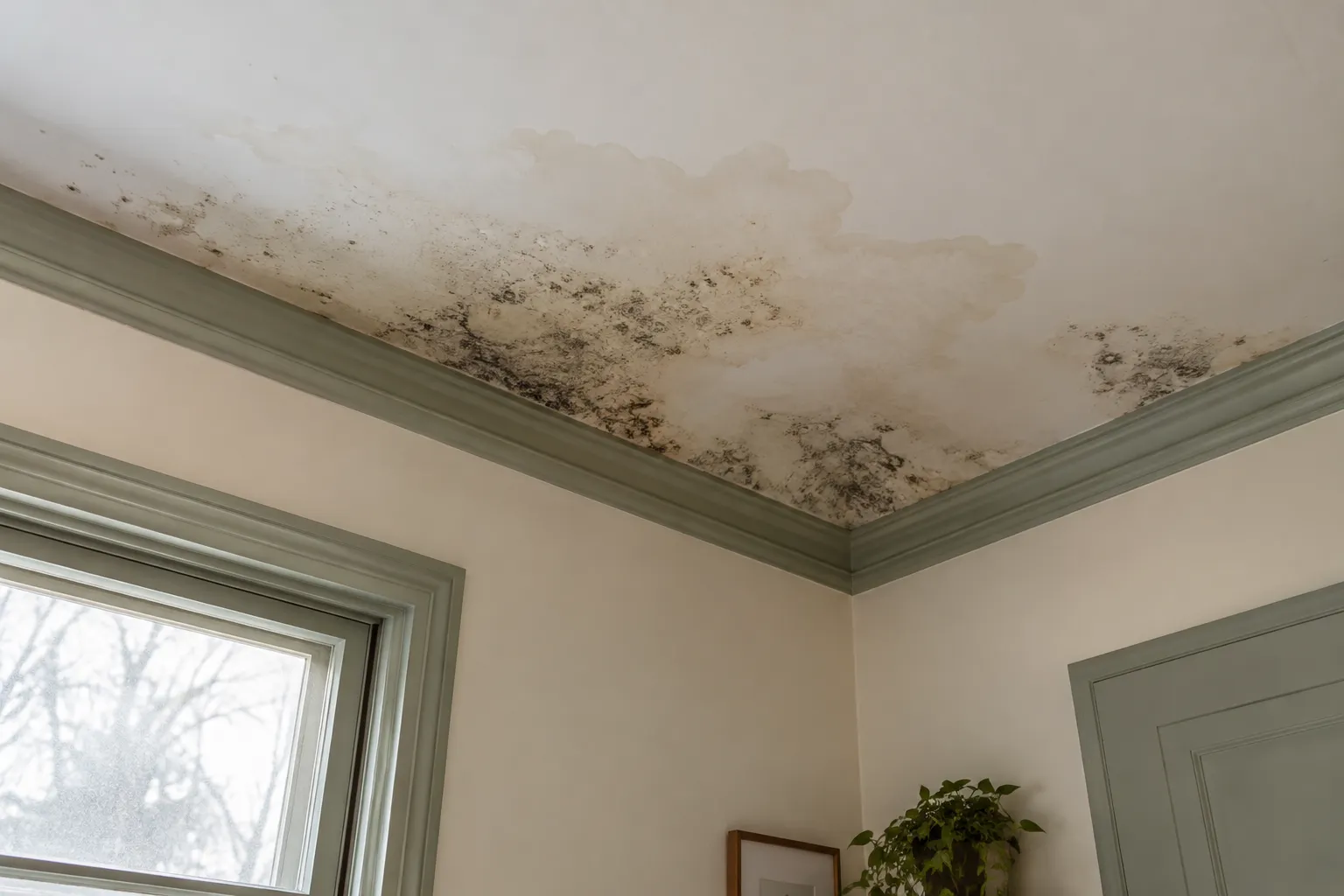
Ceiling condition
A ceiling mark beside glazing needs lining condition and rain history noted.
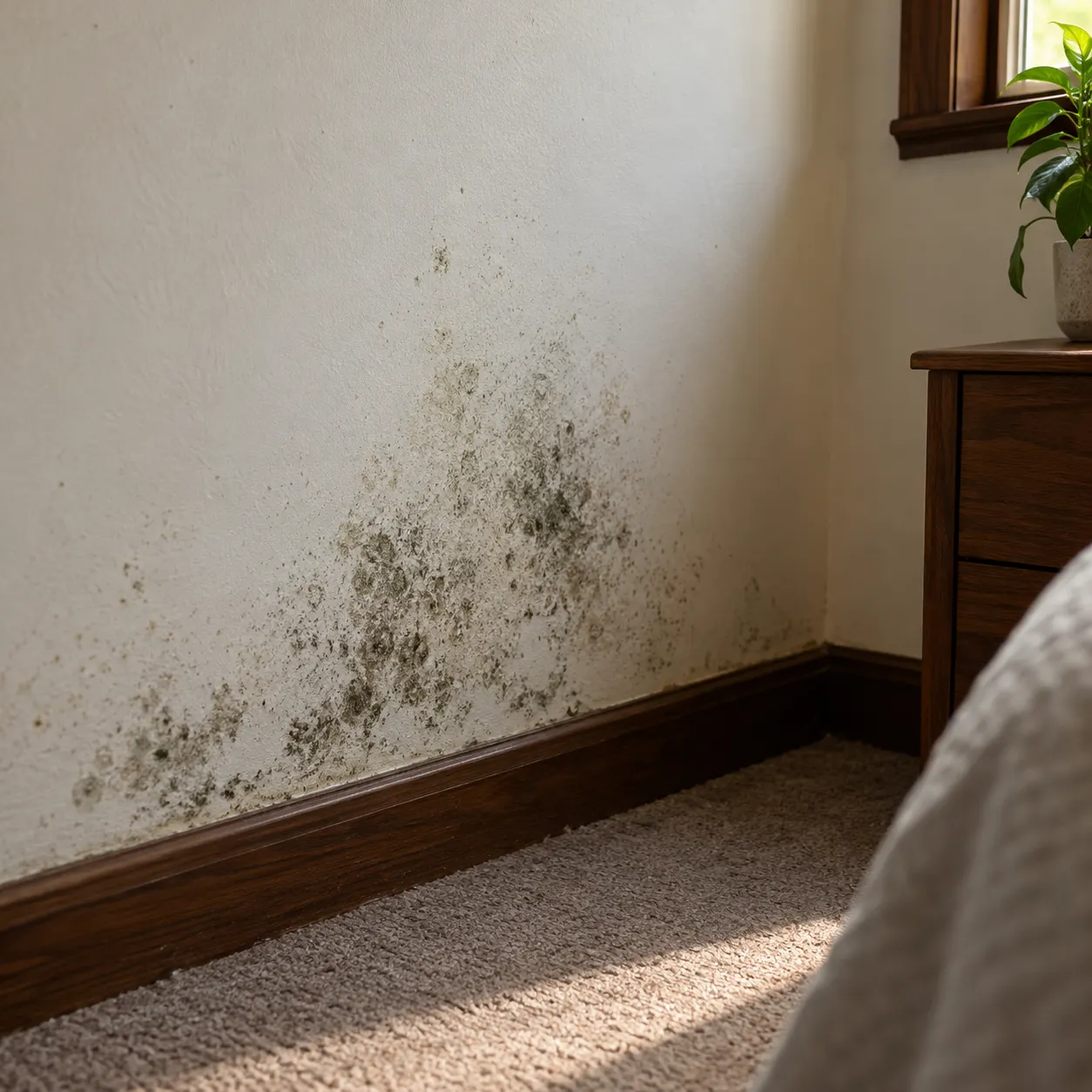
Walls and finishes
At the shaded wall, identify paint and trim separately. A damaged timber edge can need a different material decision from accessible growth on sound plaster.
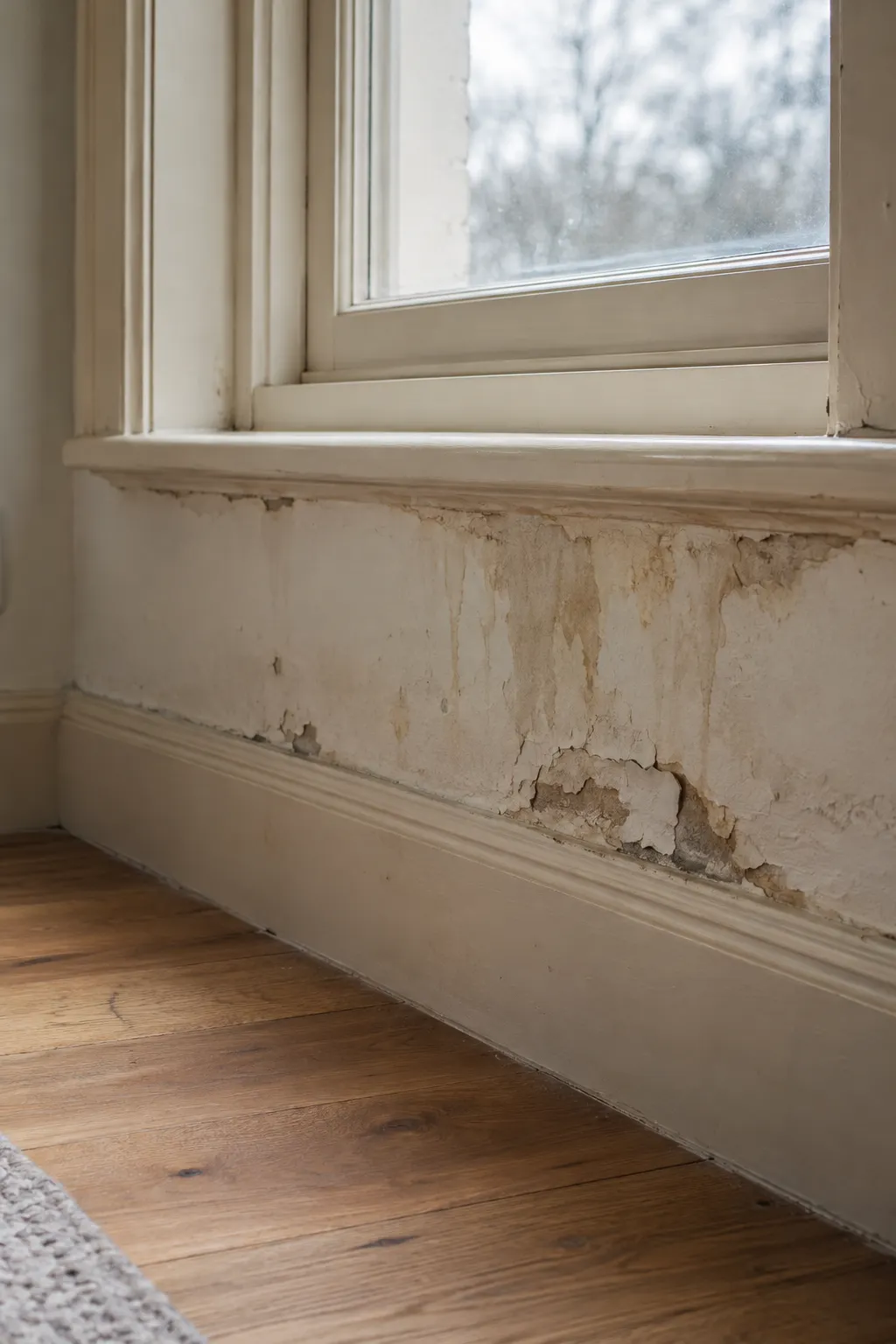
After water damage
After water entry, adjoining flooring or closed linings may be affected beyond visible paint.
PREVENTION STARTS WITH
A clear corner.
An observable surface.
A practical household check
Keep furniture and curtains from concealing the same corner indefinitely. Observe whether it dries during ordinary use of the room. If damp continues independently of window condensation, arrange consideration of a possible building defect before changing finishes.
Look for renewed wetting
Check the accessible corner after separate repairs and ordinary room use. Compare damp observations rather than simply judging colour. If water continues independently of condensation, keep that distinction available for suitable investigation before another coating or furniture arrangement hides the evidence.
BRIGHTON & NEARBY
Around Brighton
For an enquiry elsewhere around this part of Melbourne, browse Gardenvale, Hampton or Elwood. The room’s own glazing, shading and wetting observations remain more useful than a general coastal assumption.
BEFORE YOU CALL
The useful
questions.
Can a bright room still have a damp shaded corner?
Yes, conditions can differ within one room. Sunlight elsewhere does not confirm that a concealed or cooler surface dries adequately. Describe the corner, furniture and glazing together, and mention any water appearing after rain so the enquiry considers more than room brightness.
Does sunlight elsewhere prove the affected wall is dry?
No. Conditions can vary within one room. Describe the corner and surrounding layout rather than infer the state of a concealed surface from the brightness of the open living area.
Should I move curtains before the first enquiry?
Show their usual arrangement first and discuss preparation. Curtain fabric and wall paint are separate materials, so affected belongings should be identified without assuming the same method or scope includes everything.
Could rainwater and condensation both matter here?
Yes. Keep their timing and visible observations distinct. A possible condensation pattern should not exclude a frame or building defect before the relevant evidence is considered.
Will wall removal also repair glazing seals?
No. Describe suspected entry so suitable building work can be arranged separately. The accessible removal scope should state what material is treated and what repair remains outside the task.
How do I enquire for Brighton?
Call 03 8652 1296 with the address, glazing layout and moisture history. Discuss availability, access and material limitations before the surface work and any separate repair are arranged.
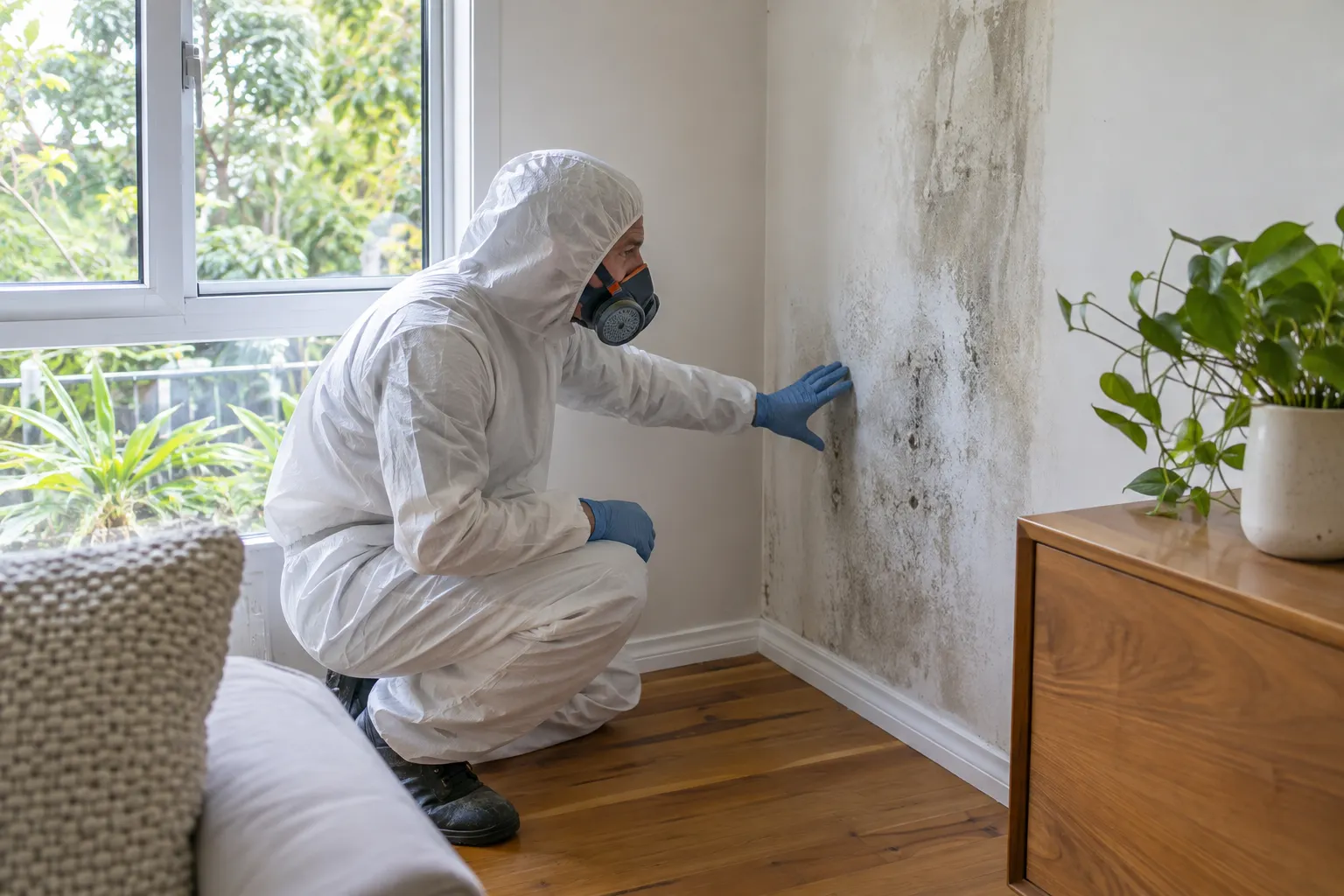
TELL US WHAT YOU CAN SEE
Show the corner in the room.
Call with wider glazing photos and the affected finish. Discuss address availability and practical preparation, with exterior repairs and material damage separated clearly from the agreed removal scope.
Local context: Bayside — coastal management area