
SURFACE TREATMENT · MOISTURE FOLLOW-THROUGH
Mould Remediation Reservoir
If stored belongings obstruct a marked Reservoir wall, explain how the visible area can be reached before booking treatment. Clearing a room is a practical arrangement, not a promise that everything stored there will be cleaned. Identify fragile items and excluded possessions separately from the structural contamination.
Agree useful clearance before work
Separate belongings from wall treatment
Keep the moisture problem in view
TREATMENT & FOLLOW-THROUGH
UNDERSTANDING THE AFFECTED ROOM
An accessible wall needs a realistic clearance plan
Describe the exposed patch and obstacles, including fixed or fragile belongings. Agree clearance rather than emptying everything or moving heavy items unaided. A practical access plan does not establish an included moving service.
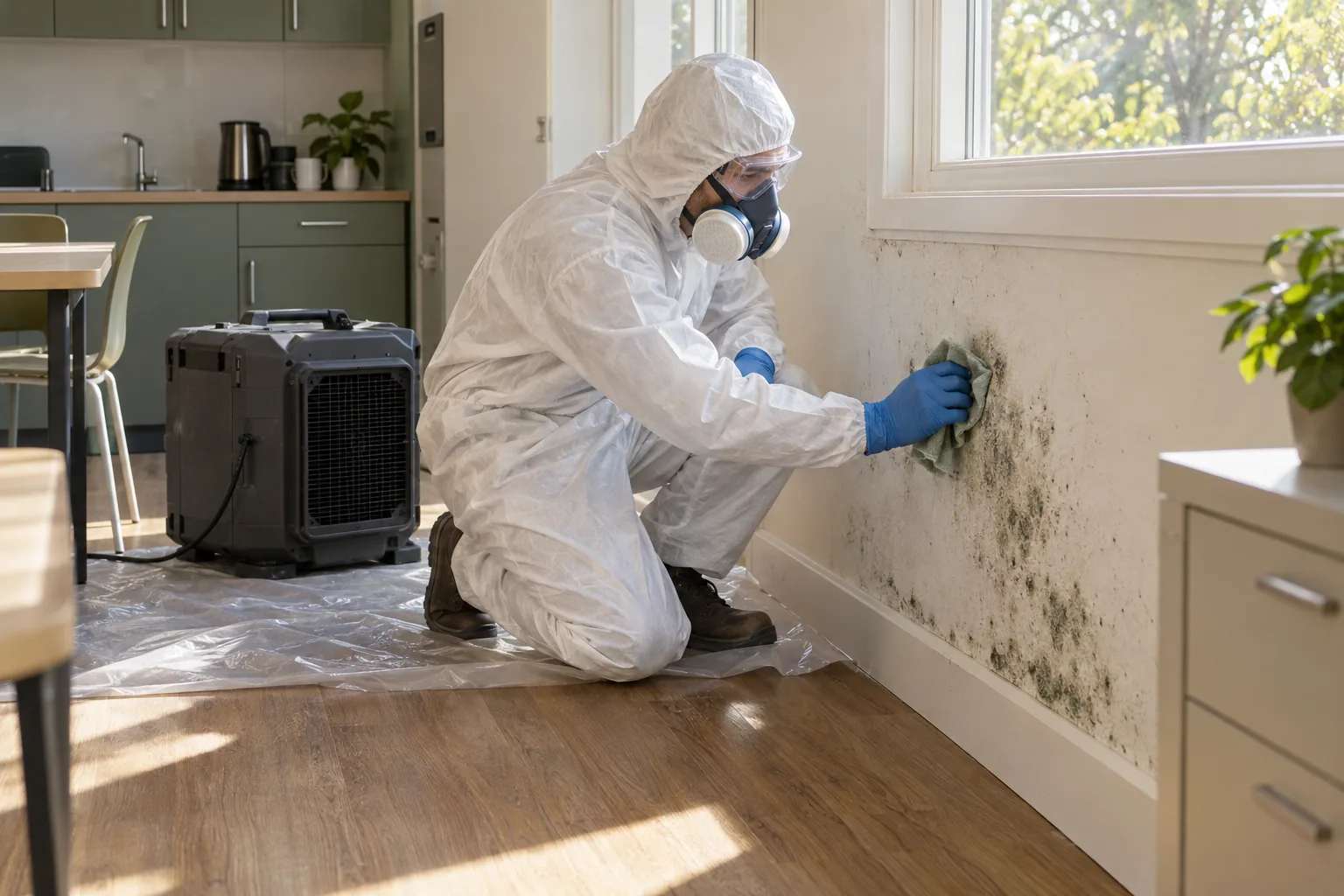
Our remediation service addresses existing visible structural contamination through assessment, filtration, treatment and physical removal. Stored contents are not automatically included. Furniture, carpet, curtains, clothing and other textiles are excluded, and concerns about those items need a separate response rather than being absorbed into wall scope.
MOISTURE & CONTAMINATION
Storage can hide observations without explaining the source
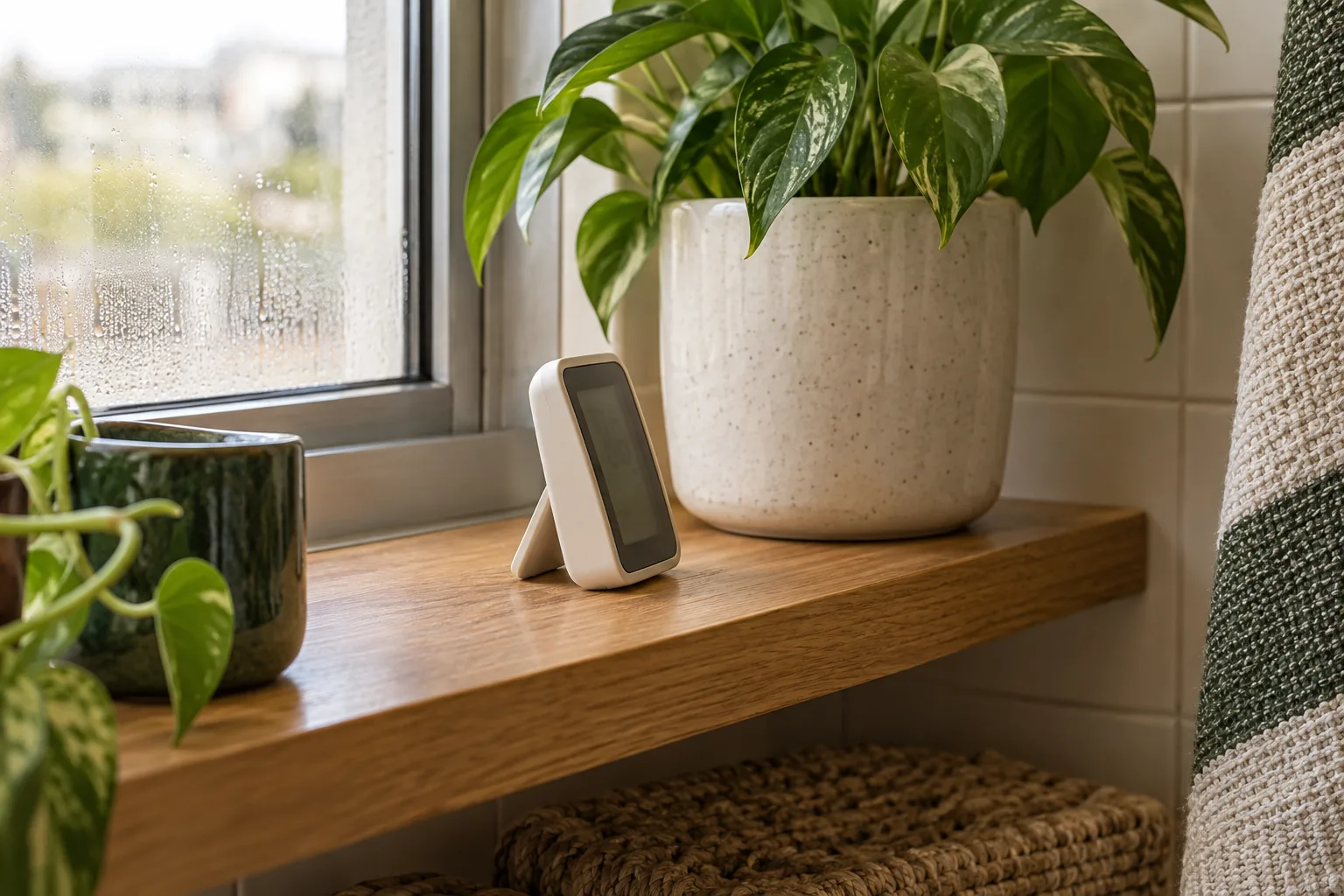
Tell the technician when the patch was discovered and whether any wetting was noticed before belongings obscured it. Position alone does not diagnose the cause. A professional hygrometer measures room-air relative humidity; it cannot establish moisture inside a box, furnishing or concealed wall material.
Discuss accessible inspection if the visible extent remains uncertain. Leaks and structural defects need separate repairs. If dampness continues, treated growth can return; restoring the storage arrangement without considering moisture or observation may simply hide the next change.
A DEFINED TREATMENT SEQUENCE
Treatment after the wall access is agreed
1
Assess visible areas and obstructions
Show the exposed growth and describe remaining obstacles. Agree structural surfaces, material concerns and any concealed area requiring another scope decision.
2
Set up HEPA air protection
The confirmed HEPA air scrubber is established before treatment. Clearance should allow practical equipment access; filtration does not establish that stored contents or room air are completely free of spores.

3
Apply appropriate HOCl treatment
HOCl follows the assessed plan. ULV dry fog is applied in most cases where suitable, without adding furnishings or unseen storage spaces to standard structural scope.
4
Remove exposed contamination
Professional H-class filtered equipment is used for physical removal. Discuss fragile finishes beforehand and do not assume a furniture-moving or item-cleaning service is included.
5
Continue final air cleaning
HEPA remains running during and after work. Obtain return instructions and discuss remaining marks and moisture action before deciding how storage will be arranged again.
Explain the building surface behind the belongings
Walls
Identify the exposed wall finish and fixed obstructions. An unseen area behind lining is not equivalent to a cleared patch.
Ceilings
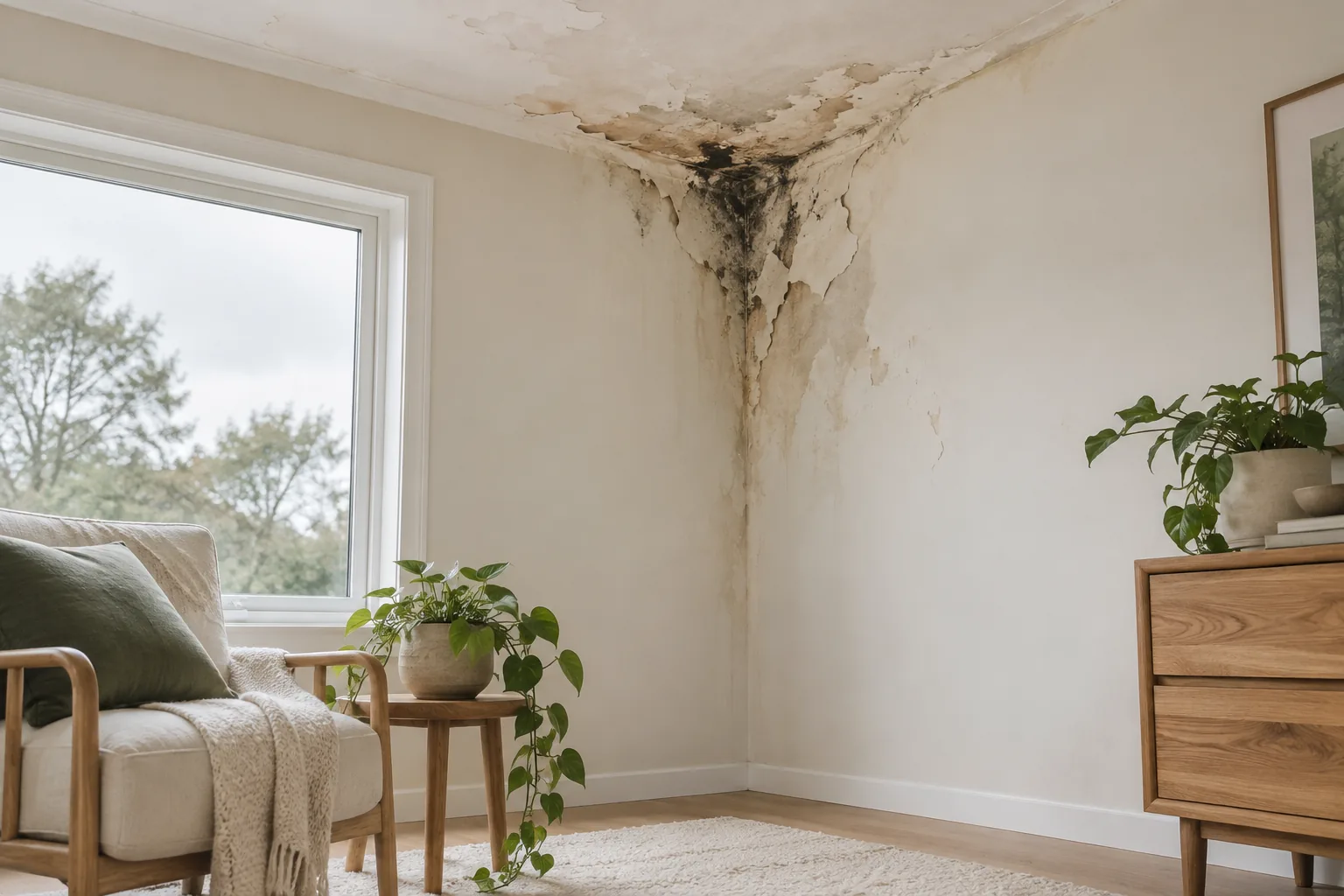
Mention overhead growth independently of wall storage. Water-entry repair above the ceiling remains separate.
Bathrooms
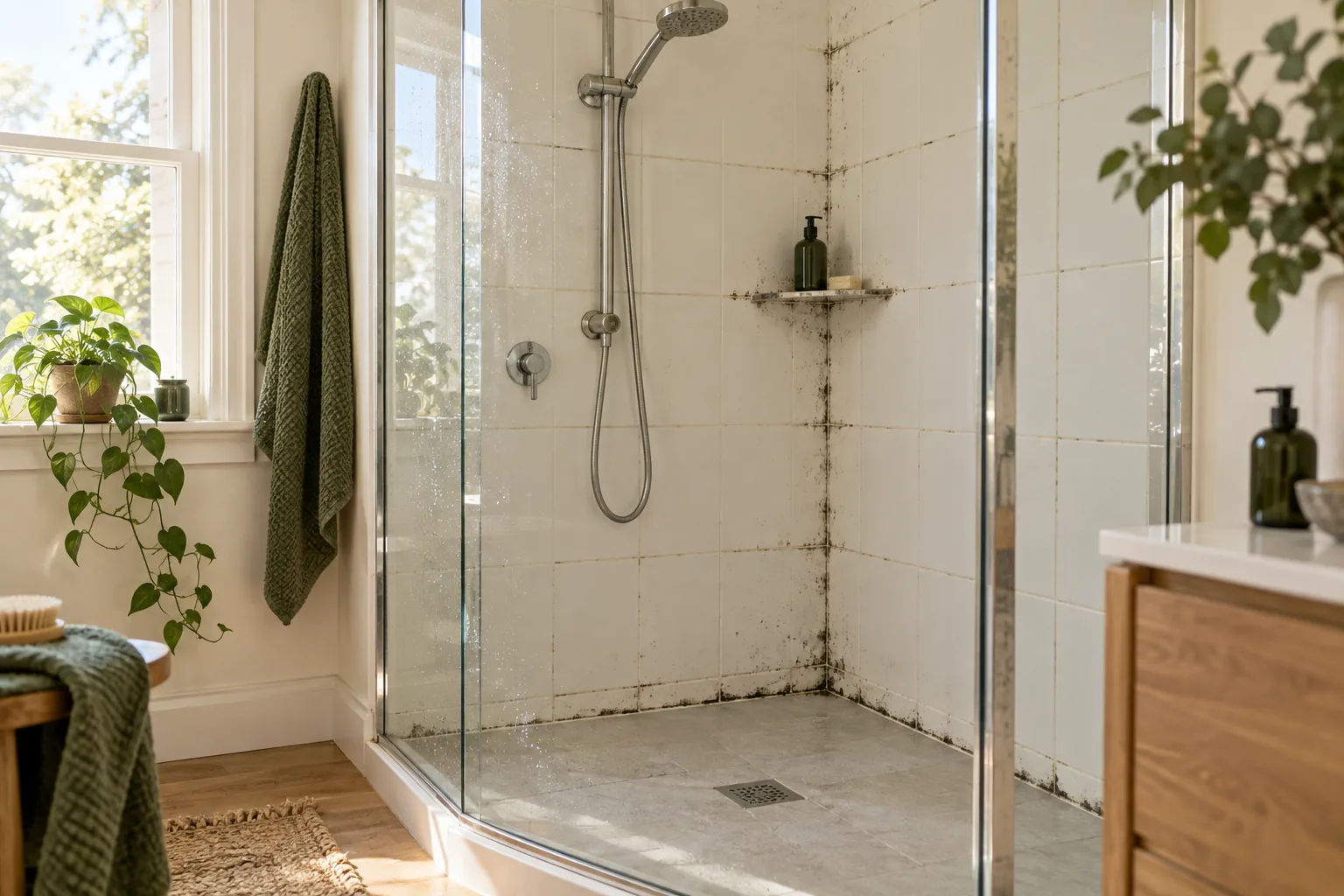
Show affected structural bathroom areas and extraction observations. Towels or other stored fabrics are excluded.
Kitchens
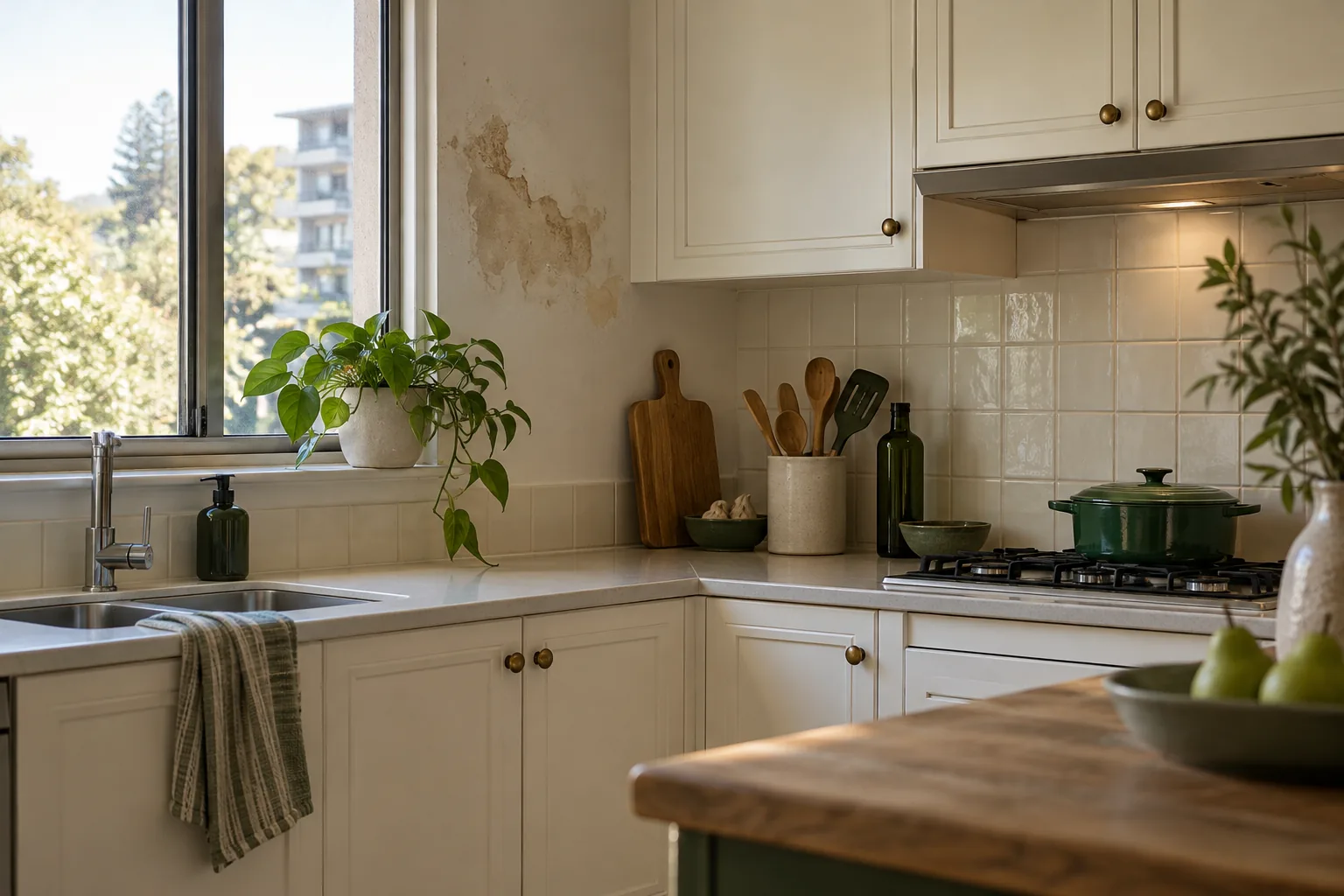
Describe accessible kitchen wall growth separately from cupboard contents. Fixed cabinets can limit the actual treatment boundary.
Accessible affected surfaces
Describe the floor revealed by the agreed storage clearance. Carpet and furniture remain excluded rather than becoming included because they were moved.
AFTER TREATMENT
Preparation should make the room workable
Agree what needs moving and how fragile belongings will be protected. People and pets leave during treatment; confirm specific departure and return arrangements. Average guidance is approximately three hours per room, depending on size, contamination and accessibility, with no hourly-based pricing or fixed completion promise.
Cosmetic marks may remain and decorating needs separate scope. Ask what was treated and what remains unresolved. Visible improvement cannot establish that an excluded item or concealed material was cleared, so keep those decisions distinct before returning belongings to their original positions.
KEEP MOISTURE IN VIEW
Reset storage with observation in mind
A practical arrangement leaves a way to notice renewed wetting. Airflow and separate source correction still matter; clearance alone is not a permanent prevention guarantee.
Keep accessible treated areas observable where practical.
Maintain suitable room ventilation for moisture-producing activities.
Arrange separate attention to continuing leaks or defects.
Explain clearance when asking about cost
Describe accessible extent and storage restrictions when discussing pricing applicability. The published room table is labelled Mould Removal. Confirm how it applies to remediation without assuming moving, excluded-item cleaning or decorating is included.
RESERVOIR · EXACT ADDRESS & ACCESS
Reservoir and nearby address enquiries
Give the actual premises and authorised contact, including clearance constraints. Nearby pages cannot confirm attendance or decide which belongings must move for your particular scope.
Questions about remediation
Must every stored item leave the room?
Agree preparation first. Explain the affected wall and obstacles so clearance is based on workable access rather than an assumption about every possession.
Is moving heavy shelving included in the booking?
No moving service is confirmed. Describe weight, fixing and access issues before assuming the technician will move it or that you must shift it unaided.
Will stored papers be treated alongside the wall?
Item treatment is not confirmed within structural remediation. Describe affected contents separately instead of assuming proximity includes them.
Does a patch behind storage prove airflow was the only cause?
No. Share wetting and repair history as well. The storage position is an observation, not a complete diagnosis of the moisture source.
Can I stack everything against the opposite wall during treatment?
Ask about the clearance plan first. A new obstruction can affect access or equipment space, and excluded items still need separate consideration.
What should change before the storage returns?
Discuss the remaining moisture and finish questions. Keep a practical way to observe recurrence rather than hiding new dampness behind the same arrangement.
Discuss the Reservoir wall and clearance
Call 03 8652 1296 with visible growth, access obstacles and wetting history. Agree structural treatment and the separate needs of stored belongings.