
SURFACE TREATMENT · MOISTURE FOLLOW-THROUGH
Mould Remediation Upper Ferntree Gully
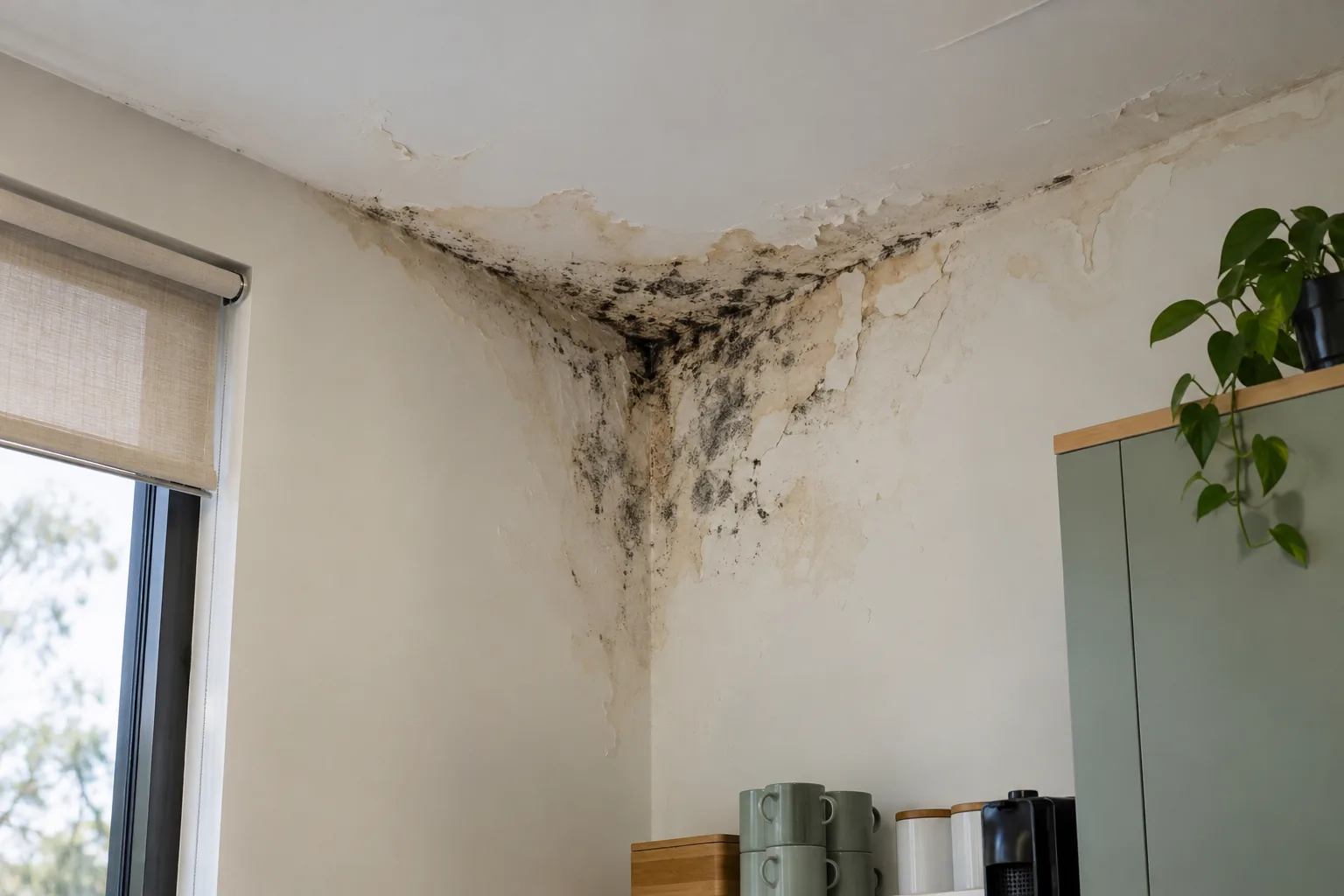
A ceiling patch above a stair or tall room can be easy to notice and difficult to reach. For Upper Ferntree Gully, describe its position from a safe place and explain the access below it. Treatment planning needs more than a photograph of the mark itself.
Ceiling position described
Working access reviewed
Repair responsibilities clarified
TREATMENT & FOLLOW-THROUGH
UNDERSTANDING REMEDIATION
Describe the height without climbing
Give the room, approximate position and any furniture or stair arrangement beneath the patch. Do not climb improvised supports to inspect it closely. Explain whether the visible area is expanding, while leaving its cause and suitable working method for assessment.
The remediation enquiry concerns visible accessible structural contamination. A high ceiling is not automatically an accessible surface simply because it can be seen. Discuss the working arrangement before assuming roof access, specialised platforms or opening the lining are included.
THE MOISTURE CONNECTION
A ceiling mark does not identify the source
Mention recent water entry, dripping or changes after weather if you have observed them. A visible pattern alone does not confirm a roof leak, condensation or a concealed pipe problem. Any building or plumbing repair needs a separate responsible trade.
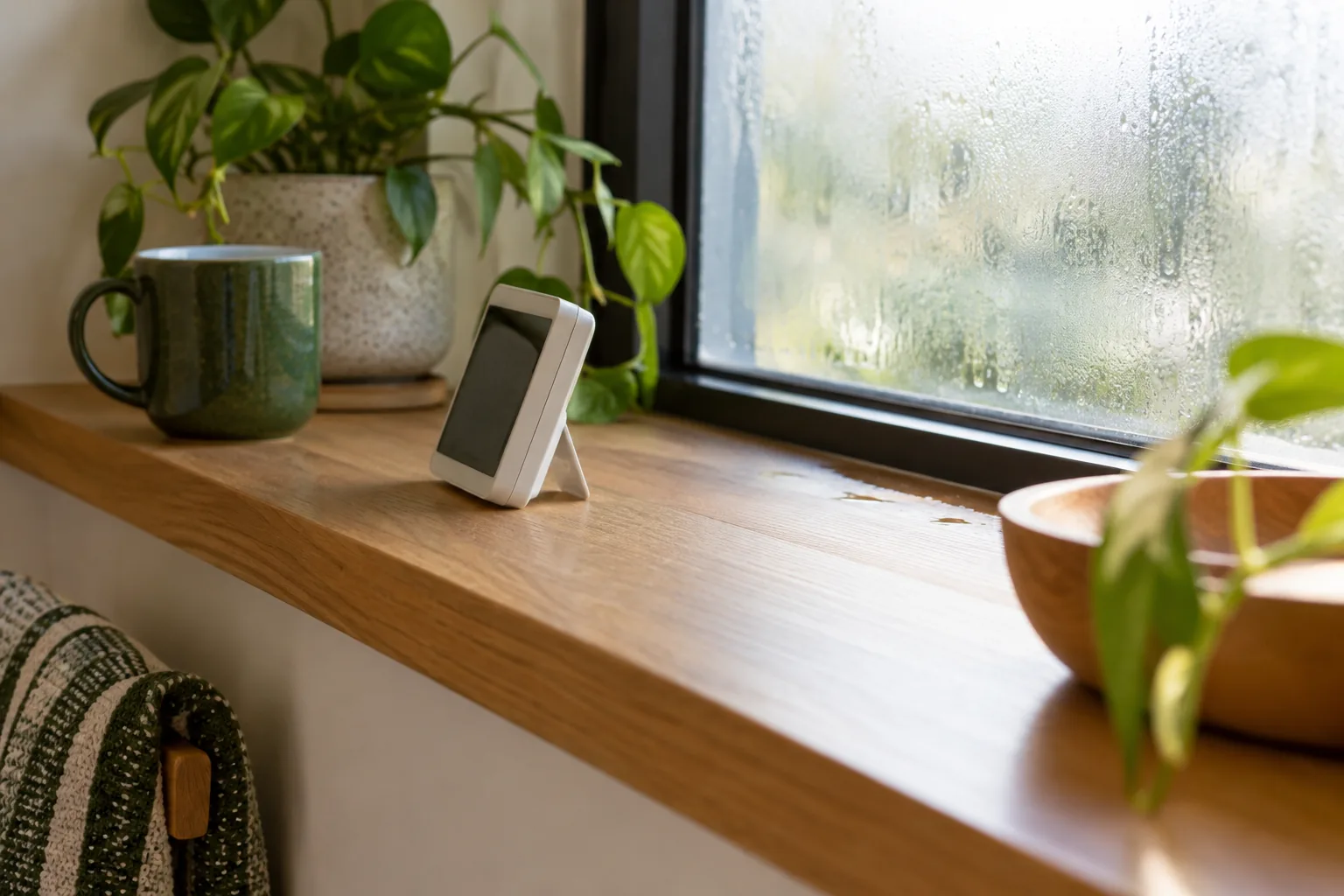
Room-air relative humidity can be checked with the confirmed professional hygrometer. That reading does not measure ceiling-board moisture or clear a roof cavity. Where the cause is uncertain, ask about appropriate assessment rather than expecting a particular scanner or hidden-space investigation.
PLAN · FILTER · TREAT · REMOVE · CONTINUE
Agree the working method before application
1
Review visibility and access together
Assessment considers the exposed patch and the room arrangement below it. Identify any ceiling area that cannot be reached within the proposed working scope.
2
Set up air filtration
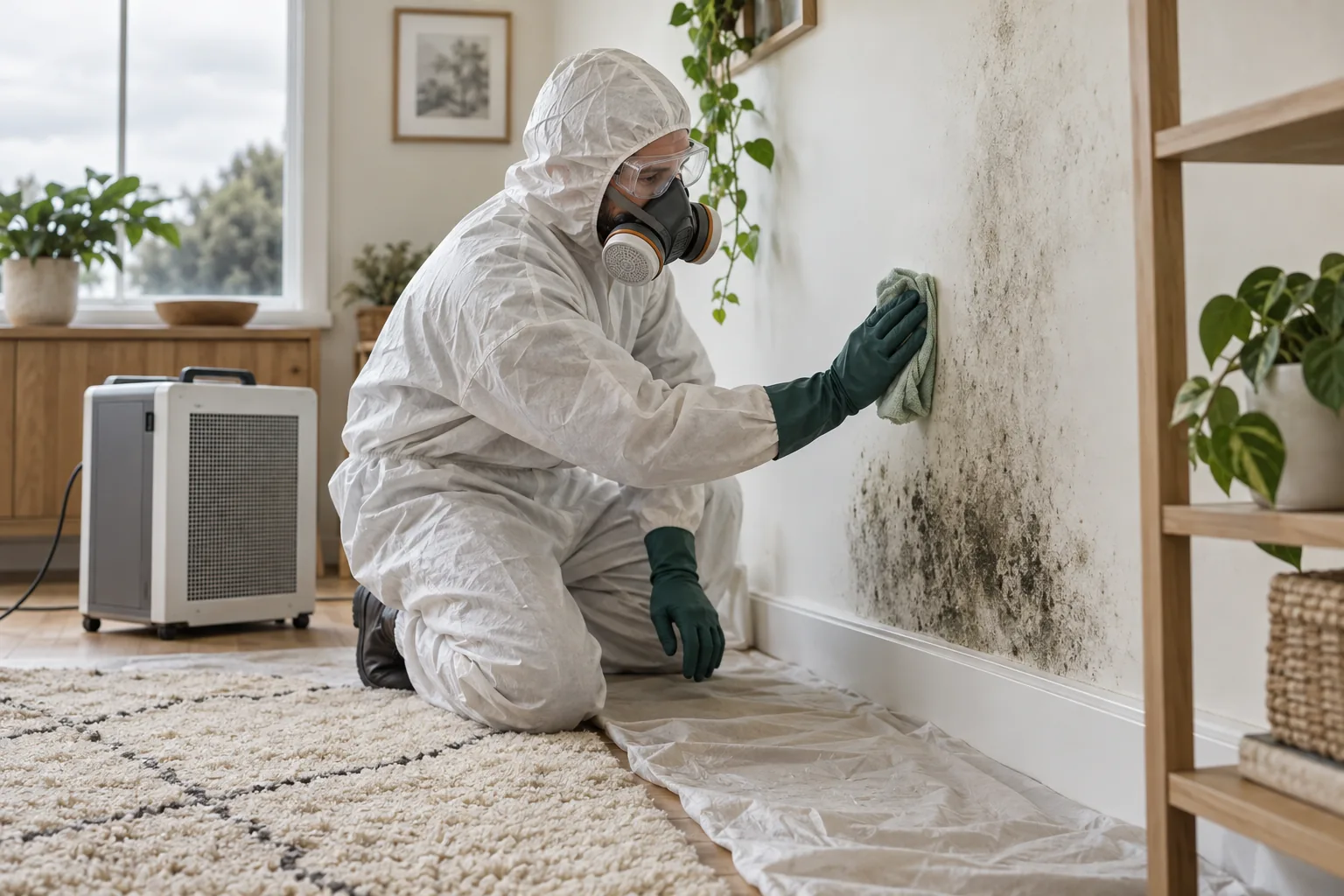
HEPA air-scrubber protection begins before treatment. Allow the technician to plan equipment placement without blocking the route needed for the ceiling work.

3
Apply suitable surface treatment
The confirmed application is HOCl, with ULV dry fog where appropriate in most cases. A fogging stage is not a promise to treat every surface in an inaccessible roof space.
4
Remove accessible growth physically
Professional H-class filtered equipment is used for visible mould removal. Ceiling replacement and work above the lining require their own scope, rather than being inferred from surface treatment.
5
Finish with ongoing air cleaning
HEPA filtration continues during and after the process. Discuss the visible condition at completion, residual stains and separate repair or decorating decisions before arranging the next trade.
Record additional areas clearly
Walls
For walls, describe any growth below the ceiling patch without assuming water has followed that path. Show accessible junctions separately.
Ceilings
For the ceiling, distinguish the main visible patch from faint discolouration nearby and explain what obstructs the work below.
Bathrooms
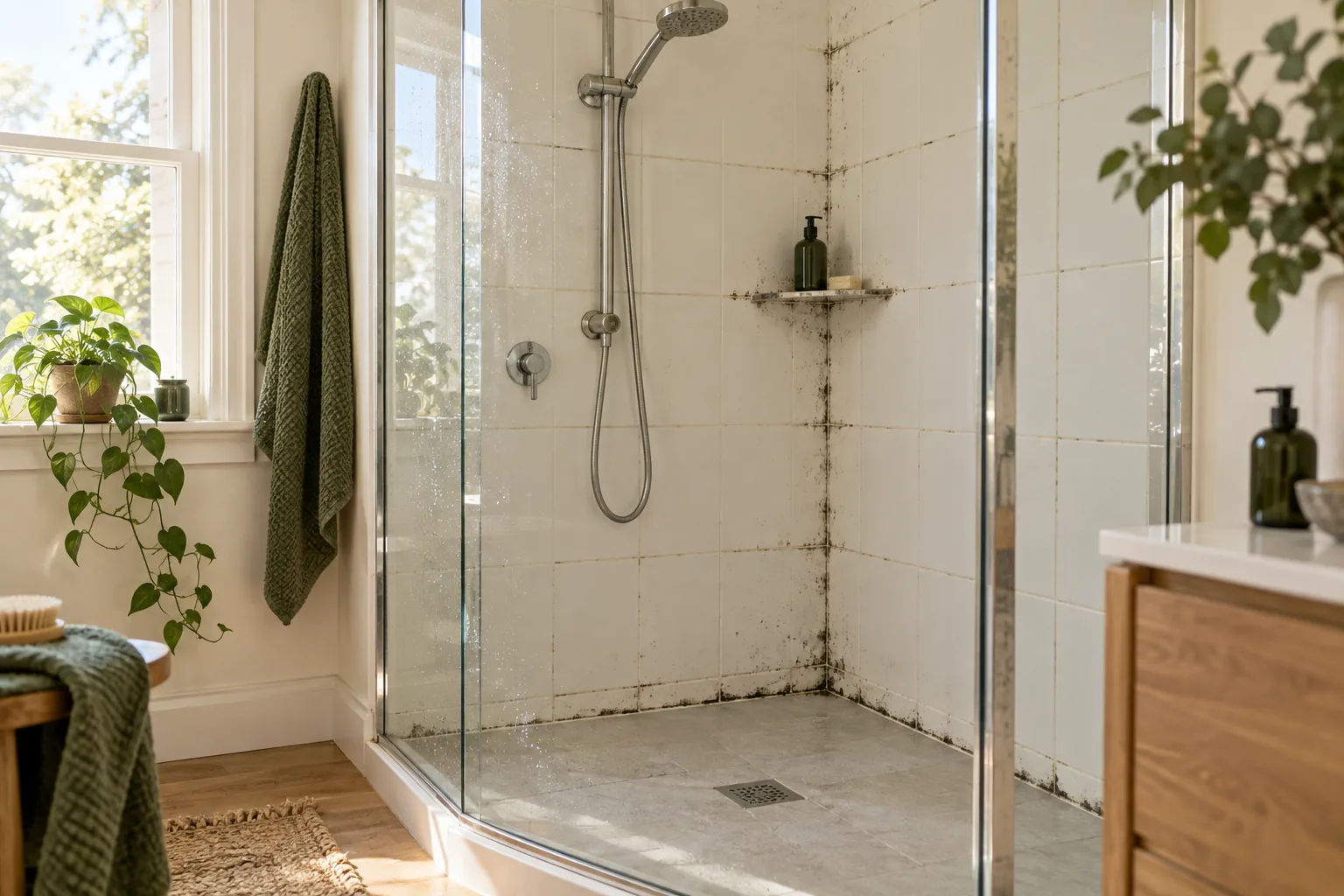
A bathroom ceiling may be another affected area; mention extraction and condensation observations without diagnosing the cause from room use alone.
Kitchens
Kitchen wall or ceiling marks need their own access description, particularly around fixed cupboards and appliances.
Accessible affected surfaces
Exposed structural floors are considered separately. Carpet, rugs and soft furnishings beneath the ceiling remain excluded from treatment.
WHAT TO EXPECT
Access affects the appointment plan
Discuss room clearance before moving large items or arranging equipment yourself. People and pets leave during treatment, following the job’s departure and return advice. Average room guidance is approximately three hours, with size, extent and accessibility affecting the actual programme.
Cosmetic marks can remain after the growth is treated. The work does not establish that concealed insulation is dry or that a roof defect is repaired. Ask which surfaces were included and keep the separate repair and decorating decisions explicit, particularly when ceiling access was restricted.
FOLLOW THE MOISTURE
Use a safe follow-up viewpoint
Monitor visible change from the floor instead of creating a new access risk.
Take comparable photographs only where you can do so safely.
Report continuing water entry to the appropriate repair trade.
Maintain ventilation and note renewed condensation or staining after treatment.
Explain the access challenge when asking about cost
Refer to published price information, then describe the height, room layout and visible area. The table is labelled Mould Removal, so its examples do not establish a separate remediation or access-equipment package. Confirm the actual scope and applicability before booking.
UPPER FERNTREE GULLY · EXACT ADDRESS & ACCESS
Nearby enquiries with different access
For another address around Upper Ferntree Gully, provide its ceiling and room details separately. Similar-looking patches can involve different working arrangements, and appointment availability needs confirmation for each property.
Ferntree Gully · Upwey · Tecoma · Boronia
Questions about remediation
Should I climb up to get a close photograph?
No close photograph warrants unsafe climbing. Describe the patch from a safe position and explain the height and obstructions.
Does seeing the ceiling mean it can be treated?
Visibility does not guarantee workable access. The technician needs to discuss how the included surface can be reached safely.
Will the roof cavity be treated as well?
Do not assume roof-cavity treatment is included. The confirmed service scope is visible accessible structural surfaces, with concealed areas requiring separate discussion.
Can I hire a platform before the visit?
Confirm the working arrangement first. Equipment suitability and whether an additional arrangement is needed should not be guessed from the ceiling height alone.
Does the ceiling need replacement if a stain remains?
A remaining stain does not by itself establish that replacement is required. Discuss the visible finish and obtain separate repair advice where material condition is a concern.
What helps distinguish an old stain from a current problem?
Describe when you first noticed it and any subsequent wetting or visible change. History helps frame the enquiry, but appearance alone does not settle the cause.
Discuss a reachable ceiling scope
Call 03 8652 1296 with the patch position, room access and moisture observations. Agree the treatment boundary before organising separate ceiling work.