
VISIBLE SURFACES · THOUGHTFUL RESTORATION
Mould Remediation Tarrawarra
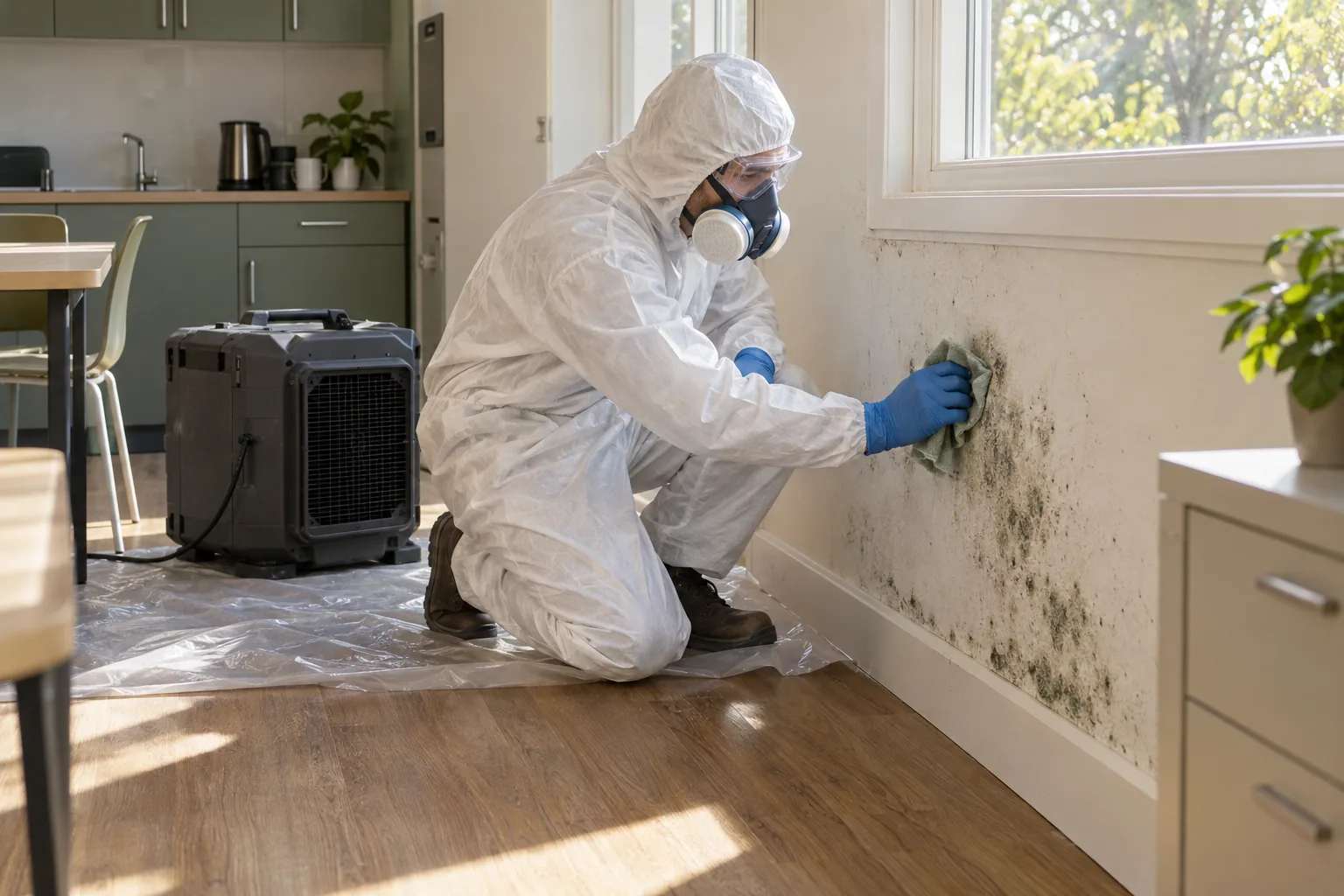
A door left open can conceal part of a wall without making that area a separate room. For Tarrawarra, explain where visible growth sits when the door moves and whether the full wall can be reached. Agree treatment of the structural surface separately from the door, hardware and any concealed construction.
ASSESS · FILTER · RESTORE
Door position explained
Working clearance reviewed
Wall scope kept distinct
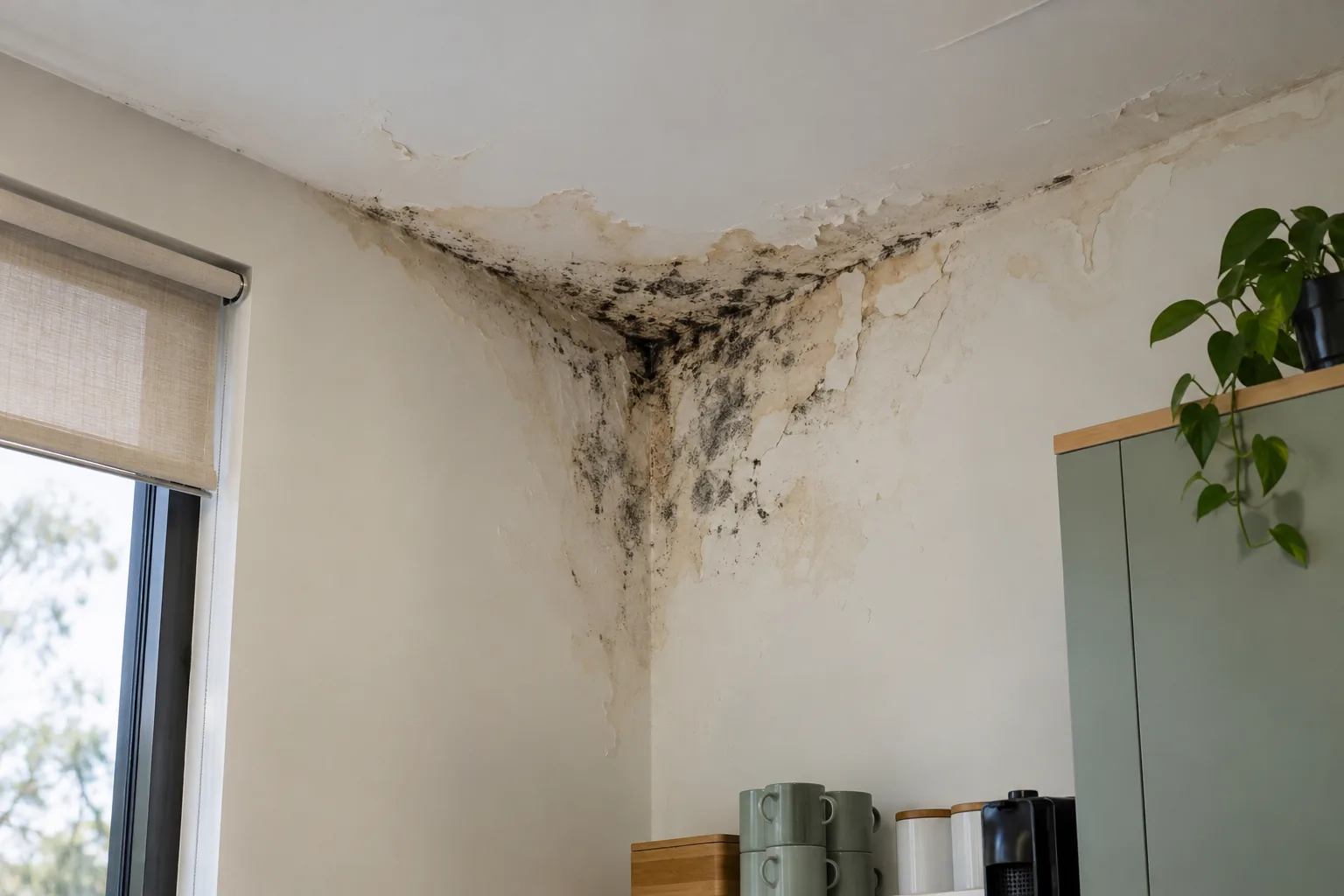
Show how the obstruction affects the surface
Describe the accessible patch and any remaining section hidden by the open door or furniture. Mention fixed restrictions without removing hardware for the enquiry. The practical issue is whether the technician can reach the included finish, not how the room happens to be arranged in one photograph.
Our confirmed remediation work concerns visible accessible structural contamination. Doors, fittings and belongings are not automatically treated with an adjoining wall. Agree preparation and any separate access work rather than assuming a hinge change or door removal is included.
Keep the damp history on the actual wall
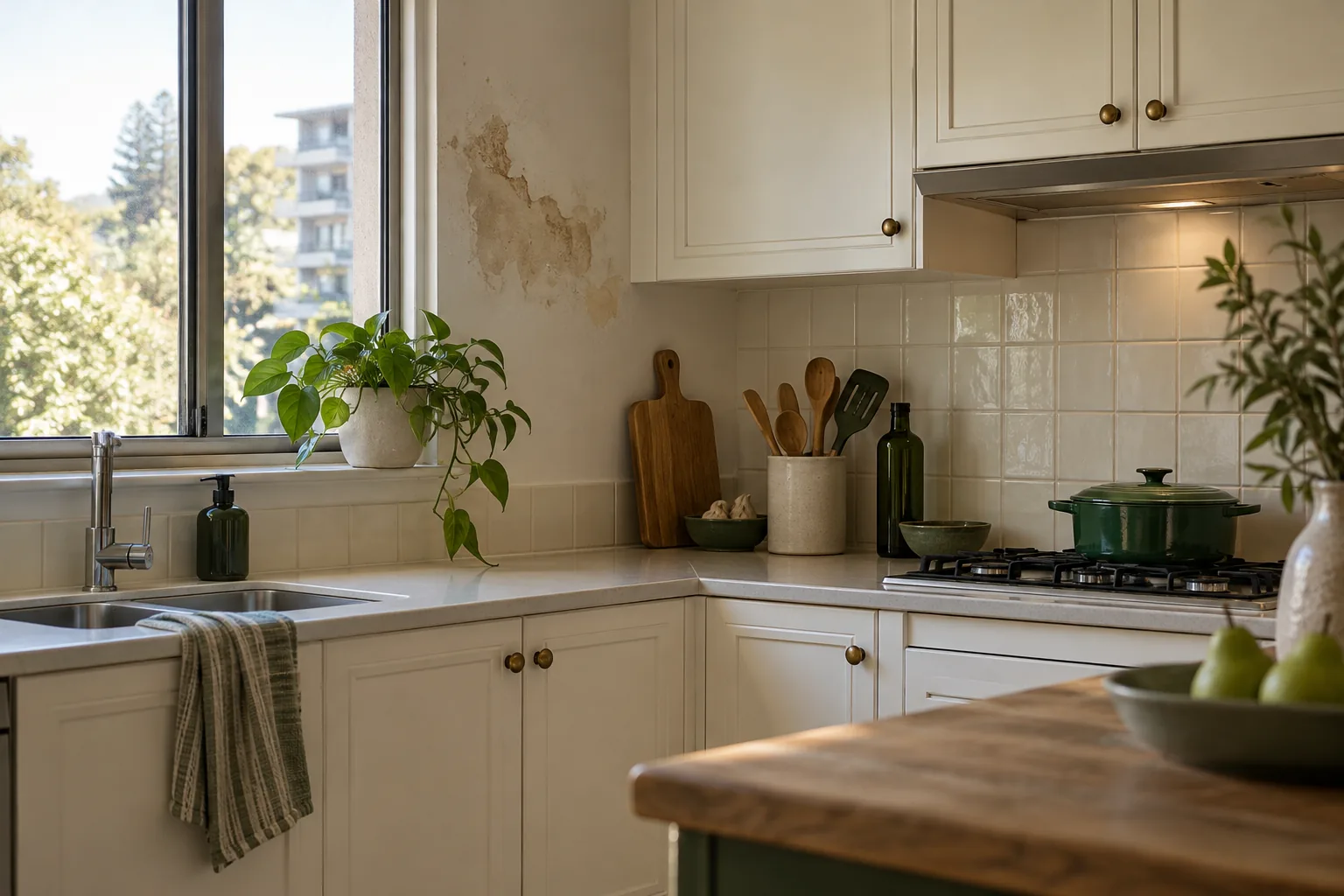
Mention condensation, wetting or known leaks where observed, including changes while the door was closed or open. Its position does not prove why the wall is affected or establish that an unseen section is dry. Plumbing and building defects require separate repairs.
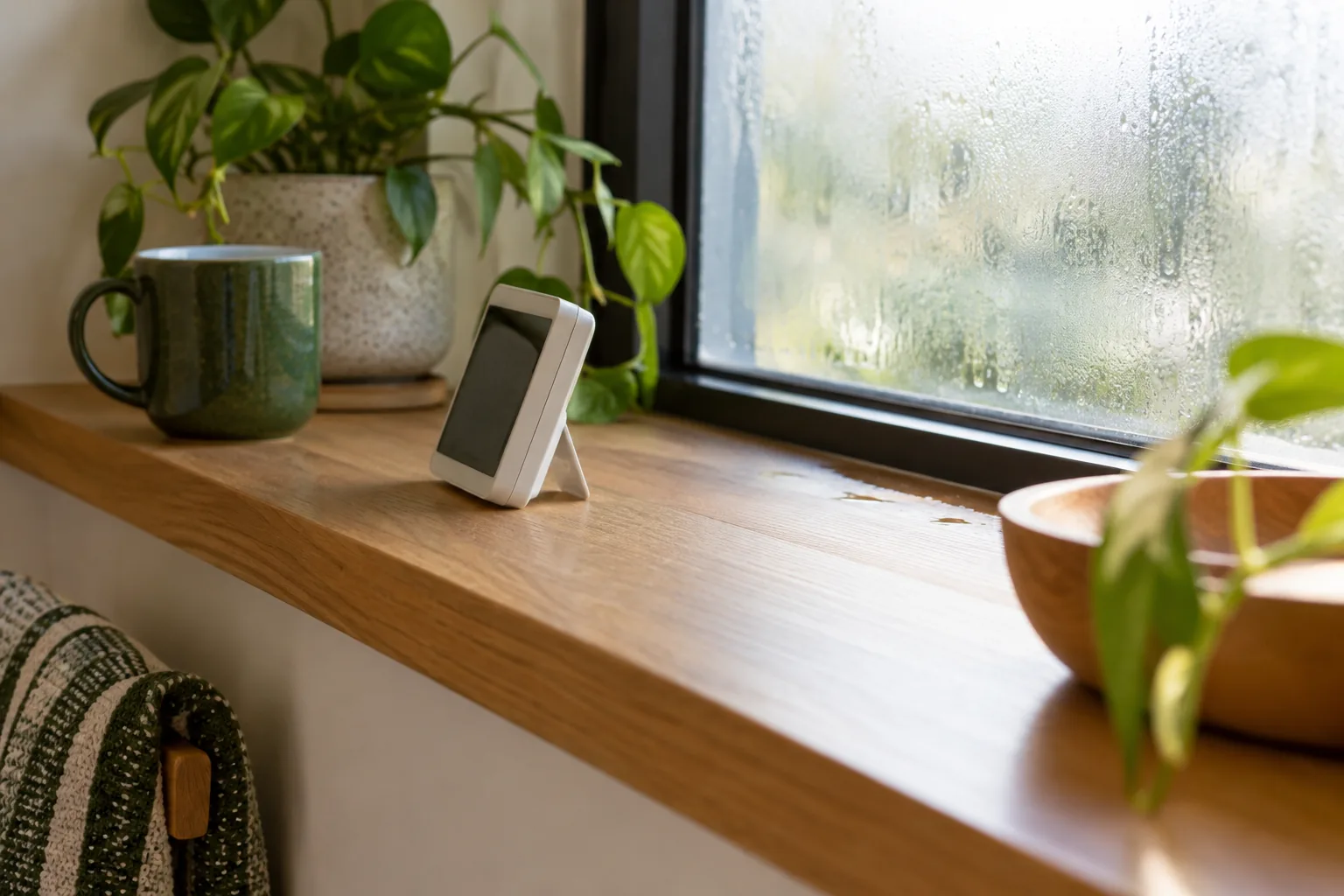
The professional hygrometer checks room-air relative humidity, not moisture within the door or wall. If the extent or cause remains uncertain, discuss assessment needs. Particular material probes, concealed-area testing and written clearance are not confirmed.
PLAN · FILTER · TREAT · REMOVE · CONTINUE
Treatment after access is defined
1
Review the exposed face
Assessment identifies accessible growth, finish and the door’s effect on reach. Explain remaining obstructions before counting the full wall in the accepted scope.
2
Establish air protection before application
The HEPA air scrubber is arranged before treatment, with a usable route through the doorway and space for equipment near the included structural area.

3
Apply suitable treatment
HOCl is used within assessed scope; ULV dry fog is used in most cases where appropriate. Application does not include door hardware or guarantee hidden-wall coverage.
4
Remove visible growth physically
Professional equipment with H-class filtration removes accessible contamination. Altering the door or repairing the finish remains a separate task rather than an assumed removal-stage inclusion.
5
Maintain air cleaning afterwards
HEPA runs during and after treatment. Confirm return advice and discuss remaining marks or moisture questions before restoring the usual door and furniture arrangement.
Identify other surfaces individually
Walls
For walls, name the actual face and the section still blocked when the door is in its normal position.
Ceilings
For ceilings, describe a separate patch and working access underneath rather than extending the wall request automatically.
Bathrooms
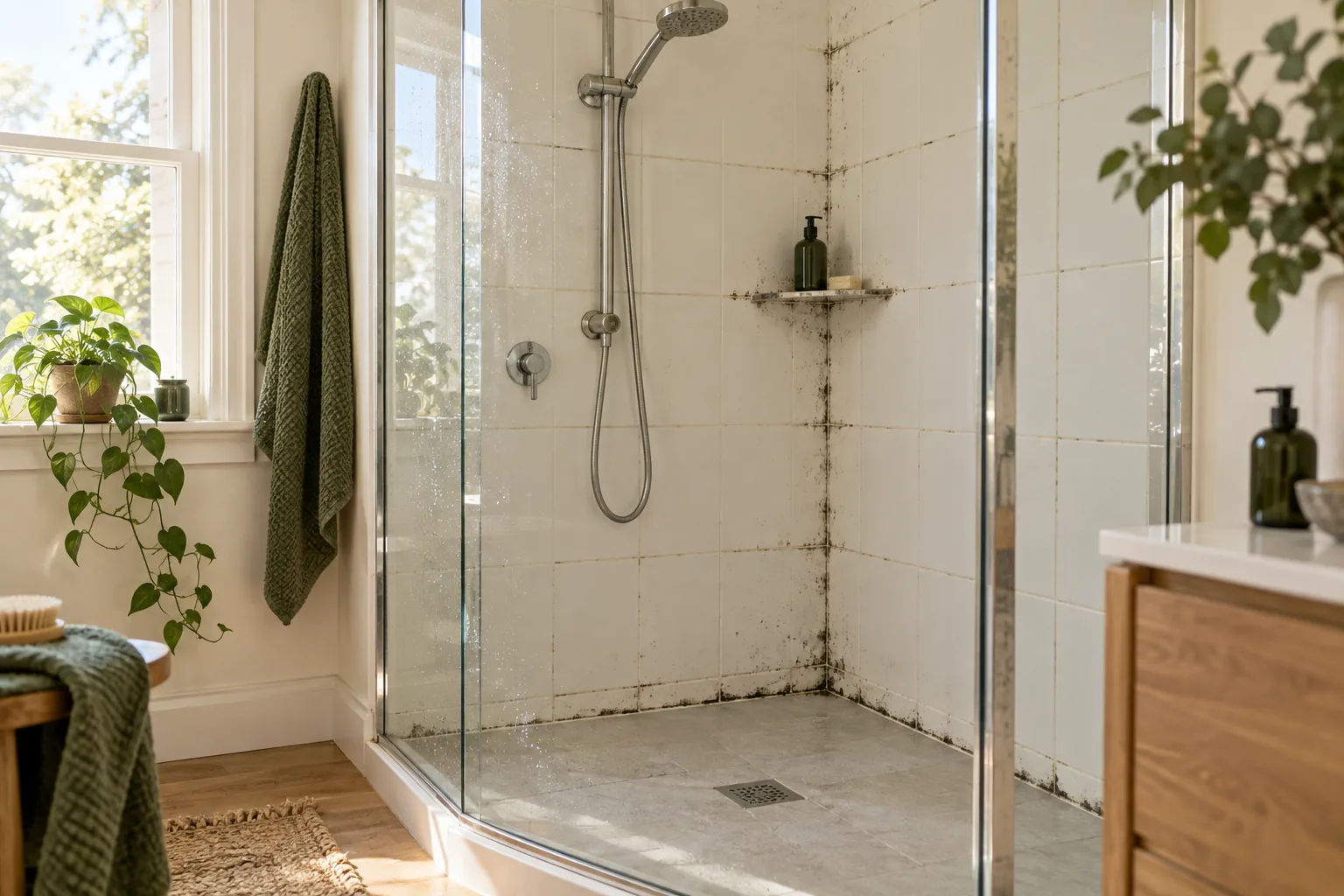
Bathroom wall or ceiling areas need their own scope; towels and bathmats remain excluded.
Kitchens
Kitchen structural marks should be distinguished from appliance, plumbing or cabinetry work.
Accessible affected surfaces
An exposed structural floor may be discussed, while carpet, rugs and loose belongings are not part of an assumed wall-treatment package.
WHAT TO EXPECT
Prepare a usable route
Ask about clearance and fragile items before changing fittings or moving difficult belongings. People and pets leave during treatment and obtain instructions about departure and return for the job. Average source guidance is approximately three hours per room, varying with size, contamination and access rather than a fixed slot for the visible door-side patch.
Cosmetic discolouration may remain and decorating is separate. Treatment does not certify concealed materials dry or guarantee prevention under persistent dampness. Keep the included wall and excluded fitting tasks clear so a cleaner appearance is not presented as a complete room restoration.
FOLLOW THE MOISTURE
Keep monitoring practical when the room is reset
The normal door arrangement should not obscure every later observation of the area.
Note renewed dampness or growth on the same structural face.
Arrange repair advice where water entry continues.
Maintain ventilation and discuss a layout that leaves the treated patch reasonably observable.
Quote the surface and access together
Use published prices with the exposed wall and doorway restriction. The table concerns Mould Removal examples, not a confirmed door-side remediation tariff. Ask how it applies without assuming fitting alteration, a contents service or decorative restoration is included.
TARRAWARRA · EXACT ADDRESS & ACCESS
Other Tarrawarra-area addresses
For another property nearby, supply its actual address, authority and room access. A similar door arrangement does not establish identical treatment needs or attendance availability; the scope is discussed for each enquiry.
Questions about remediation
Must the door be removed before I call?
No removal is required merely for an enquiry. Describe its effect on access and discuss any suitable separate preparation first.
Is the door itself included with the wall?
Do not assume it is. Agree the structural surface and raise the door or hardware concern separately.
Can one photograph show the whole treatment boundary?
It may not show what the open door conceals. Explain the layout and visible limits so the image is not treated as a complete access assessment.
Does the door position explain the moisture source?
Not by itself. Describe actual condensation or wetting observations without diagnosing the cause from room layout.
Will fog treat a part the technician cannot reach?
Concealed or unavailable coverage is not promised. Suitable ULV use does not replace agreement on the accessible surface.
What if another mark appears when the door is moved later?
Describe it as newly visible information and clarify whether it was included. Do not assume an earlier limited scope covered every obstructed section.
Explain the doorway and the affected face
Call 03 8652 1296 with the visible wall, door arrangement and wetting history. Agree practical access and the structural treatment boundary.