
SURFACE TREATMENT · MOISTURE FOLLOW-THROUGH
Mould Remediation Kooyong
A fixed appliance can leave a marked wall visible only along one side. For your Kooyong enquiry, explain the exposed boundary and whether safe clearance is available without disconnecting the unit. Remediation planning should not promise appliance removal, servicing or complete treatment behind equipment simply because its surrounding room can be entered.
Reachable wall edges are identified.
Separate appliance work is acknowledged.
Preparation avoids assumed disconnection.
TREATMENT & FOLLOW-THROUGH
UNDERSTANDING THE AFFECTED ROOM
A visible edge is not access behind the appliance
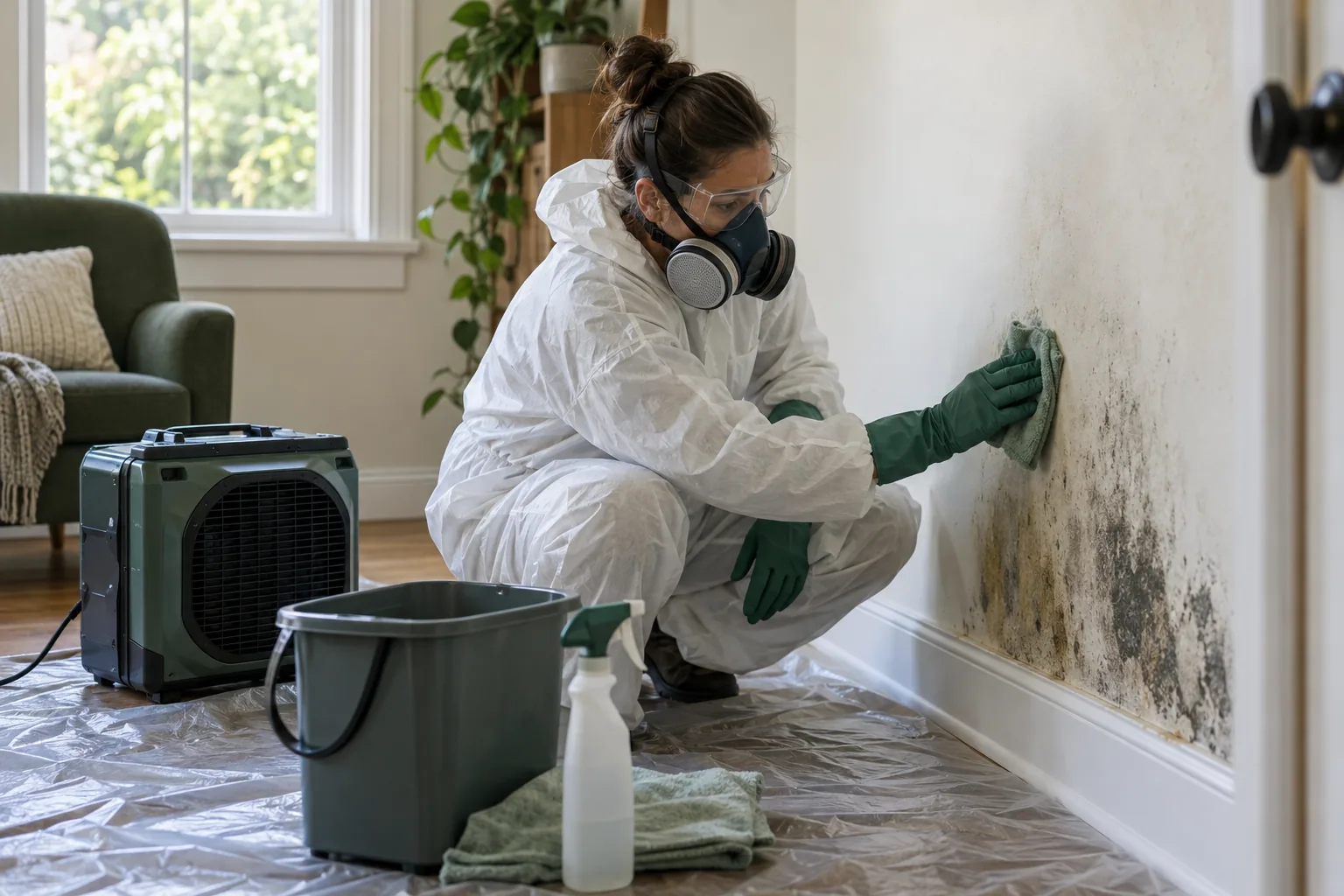
Remediation coordinates assessment, filtration, suitable application and physical removal of visible mould on accessible finishes. Name the material at the exposed edge and any known surface deterioration. An image beside an appliance may locate a concern without establishing that the full wall is available.
Our remediation information describes supported work, not appliance servicing or disconnection. Those tasks and any necessary repair require separate arrangements. Contents, textiles and concealed layers are excluded from standard treatment, regardless of how close they are to the visible mark.
MOISTURE & CONTAMINATION
Locate actual water without assigning an internal fault
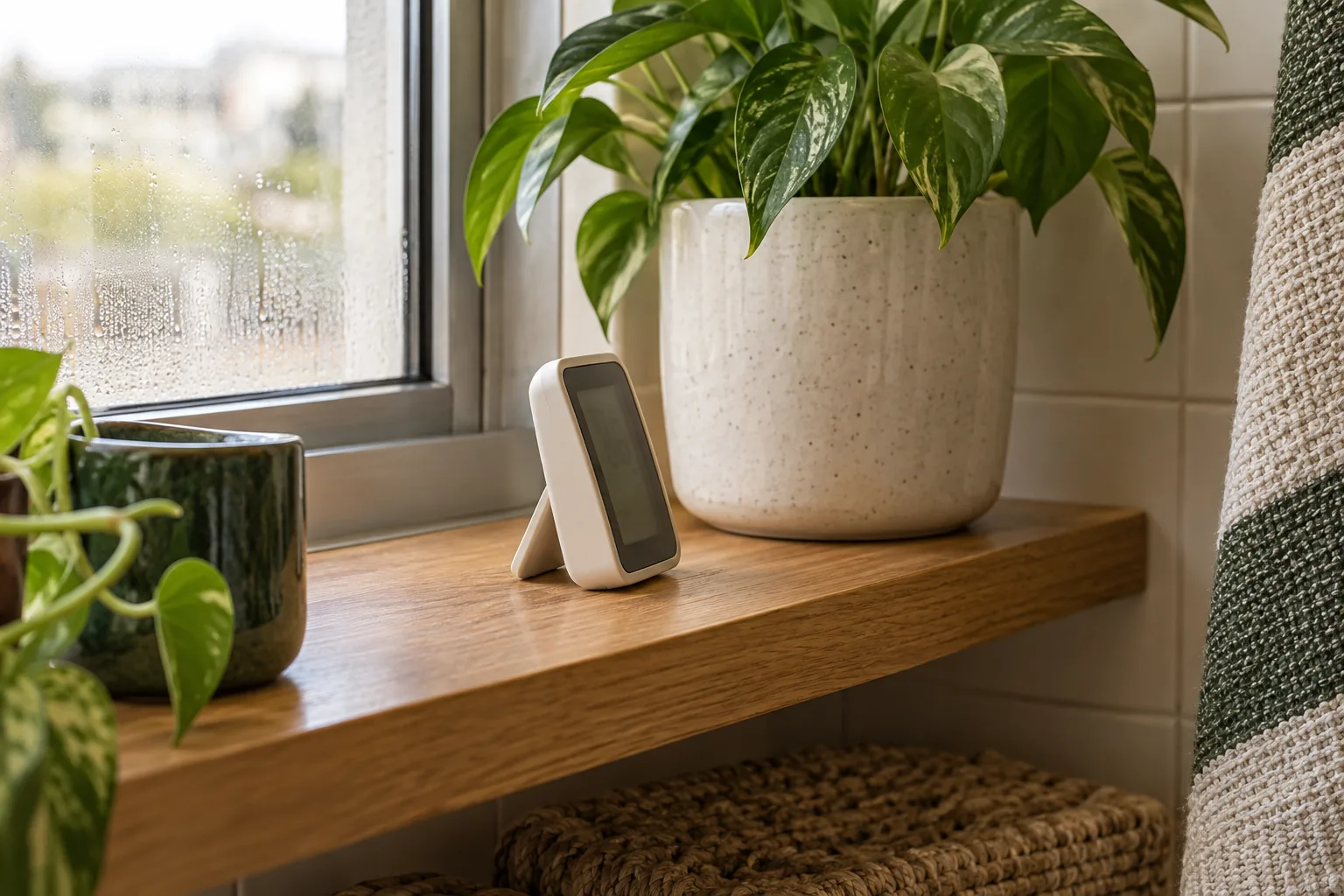
Describe water observed on the wall, floor or unit as separate information, and identify any repair finding actually confirmed. A professional hygrometer informs room-air relative humidity; it does not diagnose an appliance, test behind fixed equipment or measure water inside a covered lining.
Correct a known leak or ventilation concern separately. Recurrence remains possible if damp conditions continue after surface work. Discuss inspection of accessible condition when needed, without promising an appliance fault investigation, material probing or concealed-wall access.
A DEFINED TREATMENT SEQUENCE
Treat only the finish agreed as reachable
1
Agree the accessible scope
Assess the exposed finish and safe clearance, agreeing suitable checks, reachable boundaries and any unavailable wall section.
2
Begin air protection
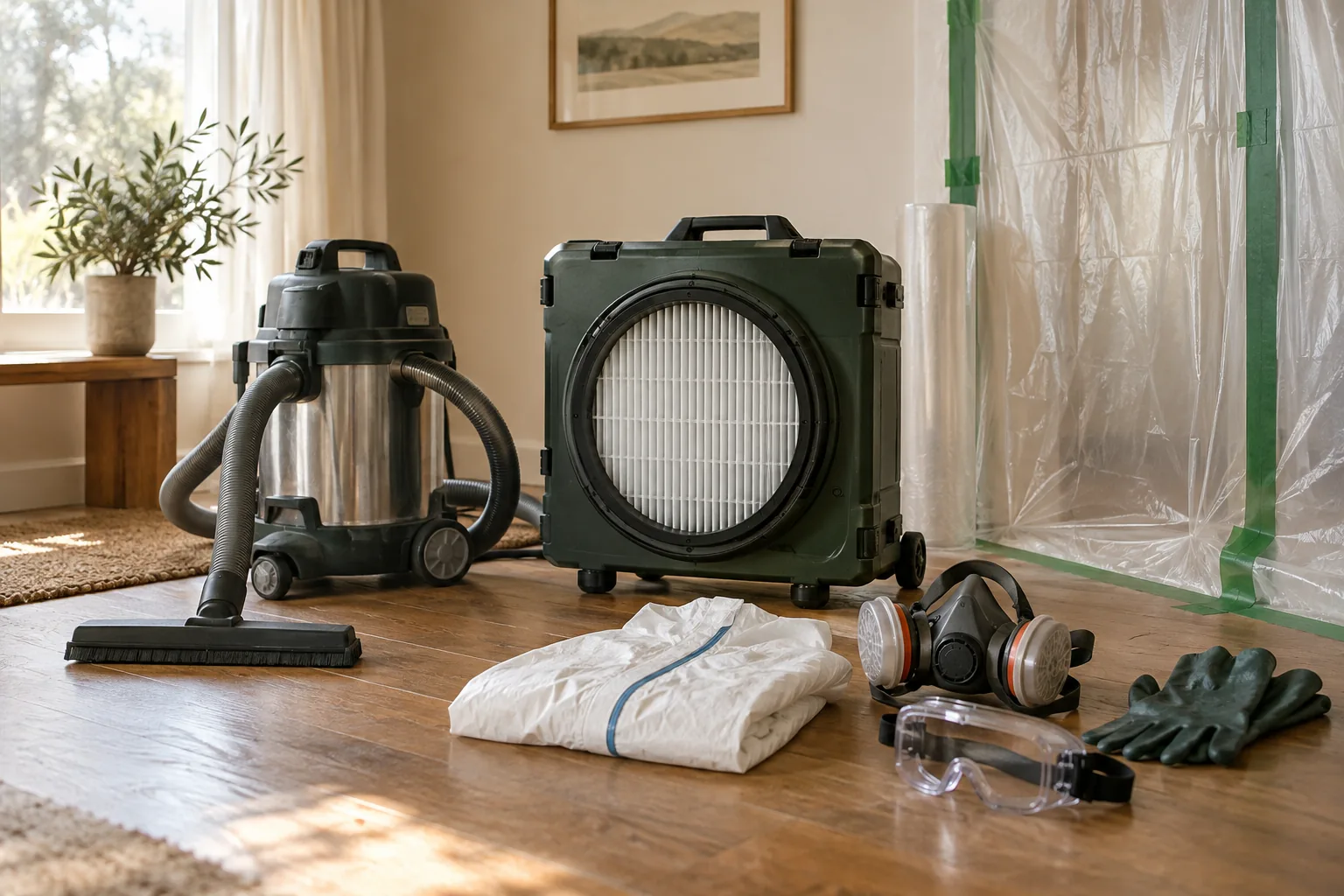
Begin confirmed HEPA air-scrubber protection before application, placing equipment within the prepared accessible work area.
3
Choose the treatment application
Apply HOCl appropriately to suitable agreed finishes; use ULV dry fog where appropriate without promising coverage behind the unit.
4
Remove visible growth
Remove visible mould using professional H-class filtered equipment within the accepted boundary, leaving appliance work and contents separate.
5
Continue final air cleaning
Continue HEPA air cleaning during and after treatment, explaining remaining access limits and the technician’s particular advice for return.
Separate building surfaces from equipment
Walls
Walls beside appliances need their exposed edges distinguished from the covered face behind equipment.
Ceilings
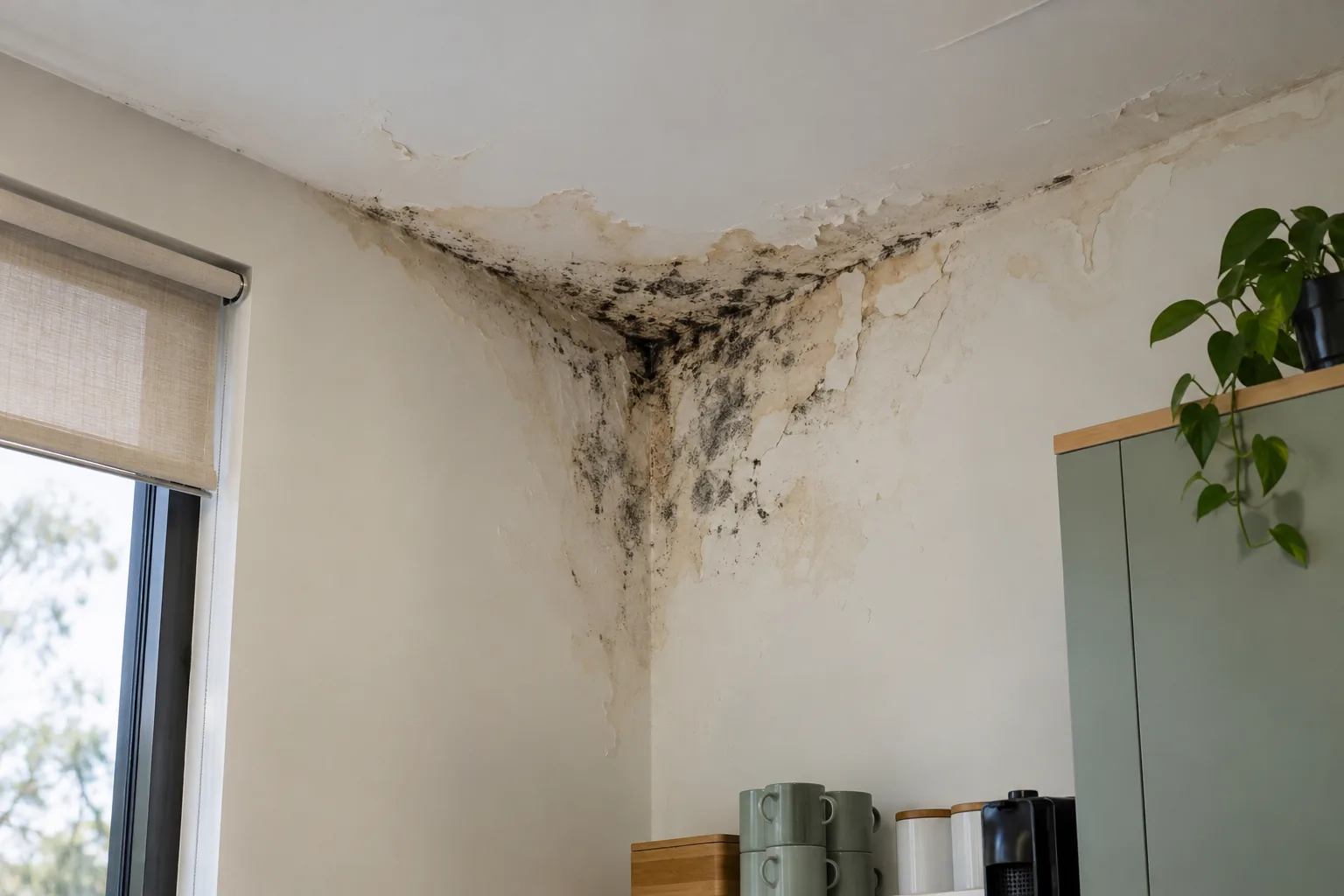
Ceiling concerns require independent safe access and disclosure of fittings or damaged finishes.
Bathrooms
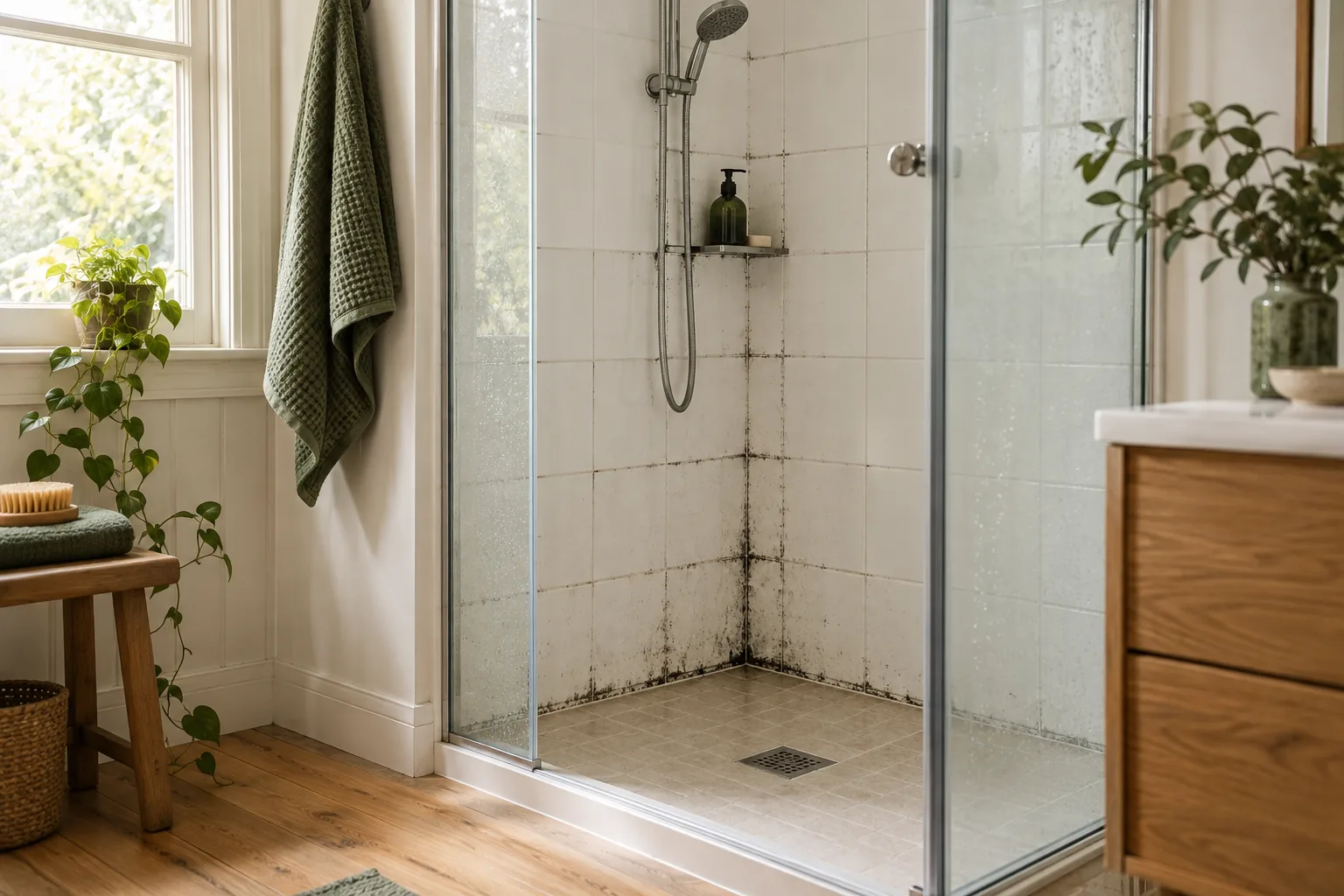
Bathroom paint, tiles and joints remain different requests; an appliance nearby does not renew plumbing or seals.
Kitchens
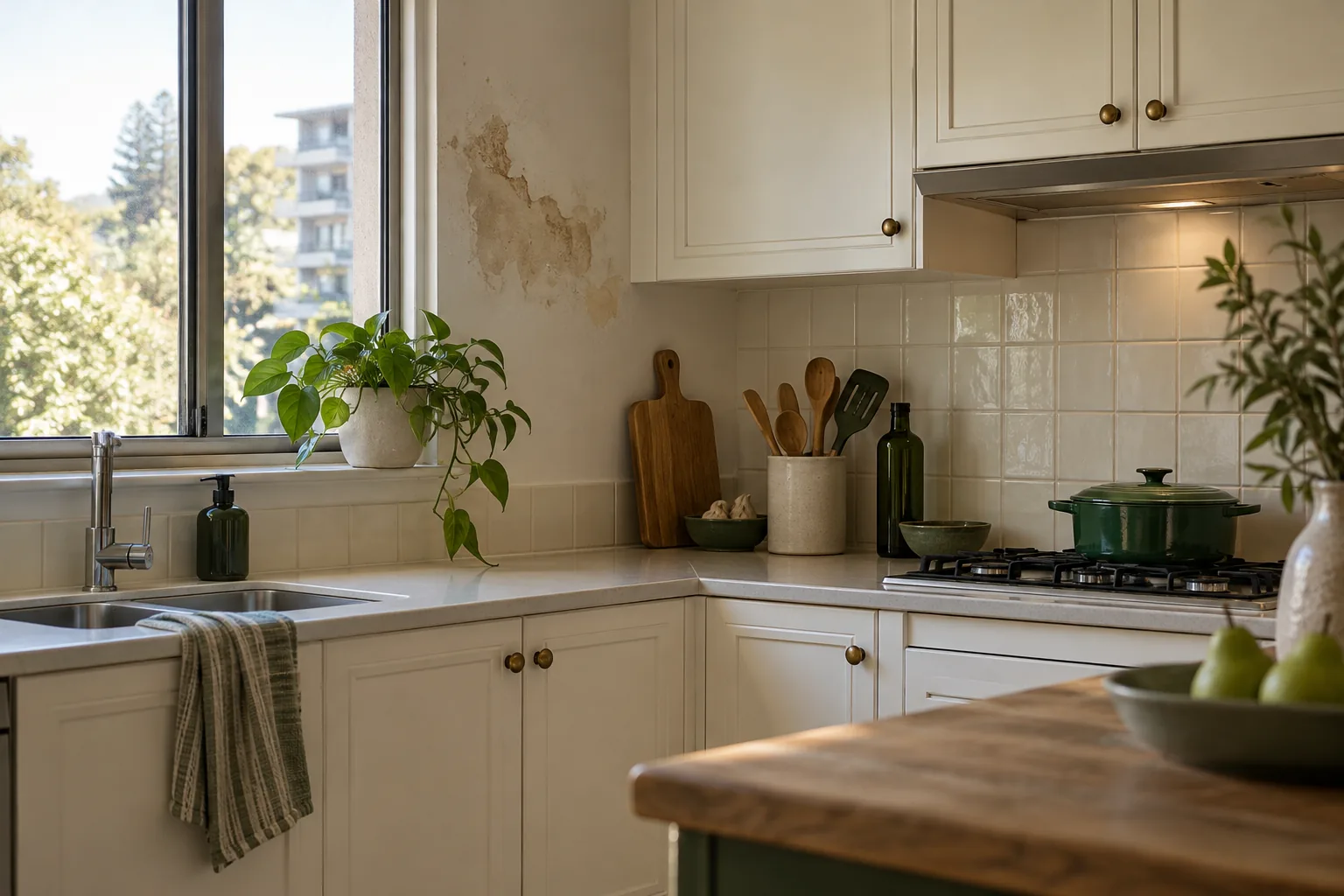
Kitchen surface work relates to agreed exposed finishes, not automatic appliance servicing or cabinet removal.
Accessible affected surfaces
Other affected accessible hard floors, walls or ceilings may be agreed, excluding textiles and concealed materials.
AFTER TREATMENT
Prepare around the existing safe clearance
Do not disconnect a fixed unit merely to prepare the room. Describe its access impact and arrange any necessary separate work with the appropriate provider. People and pets leave during treatment. Around three hours per room is average source guidance, dependent on area, contamination and accessibility rather than an appliance-clearance promise.
Cosmetic marks or existing finish damage can remain after visible work. Repairs and decorating need separate agreement. Obtain return instructions directly and keep any covered remainder explicit; a clean-looking edge or operating air scrubber does not certify the appliance, hidden wall or excluded belongings.
KEEP MOISTURE IN VIEW
Follow the exposed wall independently
Keep later observations tied to the exposed boundary that was actually treated.
Report fresh water with its exact surface and timing.
Complete confirmed source or ventilation repairs separately.
Describe newly exposed wall information as new, rather than an assumed earlier treatment outcome.
Quote for the actual available finish
Explain the fixed unit, available clearance and reachable wall area when requesting the quote. Because the listed examples describe Mould Removal, ask which pricing applies to the reachable remediation work. Servicing, disconnection and complete hidden-wall coverage should not be inferred from a room amount; agree the particular exposed finish and exclusions.
KOOYONG · EXACT ADDRESS & ACCESS
Enquiries for nearby addresses
Provide the full Kooyong address and identify the room and fixed unit limiting access. An authorised contact should understand what can be reached without equipment work. Nearby pages navigate separate premises; attendance and the available treatment boundary need confirmation for this property.
Toorak · Armadale · Glenferrie · Burnley
Questions about remediation
Can the technician disconnect the unit for access?
No disconnection or servicing is promised. Arrange any necessary equipment work separately and describe the present safe clearance before booking.
Does treating one edge include the wall behind the unit?
No automatic hidden coverage is established. Agree the reachable finish and keep the unavailable wall area explicit in the scope.
Can water nearby prove the appliance caused the mark?
Not conclusively. Report actual locations and separately confirmed repair findings rather than diagnosing an internal fault from a stain alone.
Will fogging resolve the fixed obstruction?
No. Appropriate ULV use does not remove the access limitation or promise treatment behind a fixed unit.
Is appliance condition certified after filtration?
No. Filtration supports surface work and does not provide appliance servicing, safety assessment or hidden-condition certification.
What if the unit is moved by another provider afterwards?
Describe any newly exposed finish as a separate concern. Do not present an area unavailable during the earlier job as already treated.
Explain the appliance’s effect on access
Phone 03 8652 1296 with the exposed edge and current safe clearance. Clarify separate appliance work before agreeing remediation of the available finish.