
SURFACE TREATMENT · MOISTURE FOLLOW-THROUGH
Mould Remediation Mitcham
When a marked wall has an unfamiliar coating, identifying the finish matters before choosing treatment. For your Mitcham enquiry, explain what is visible and whether you know how the surface was finished. Remediation planning should acknowledge uncertain material suitability, rather than assuming a wall photograph establishes a compatible application or guarantees that its decorative appearance will be preserved.
The existing finish is discussed.
Treatment suitability is agreed.
Cosmetic restoration is kept separate.
TREATMENT & FOLLOW-THROUGH
UNDERSTANDING THE AFFECTED ROOM
An unknown coating needs an honest description
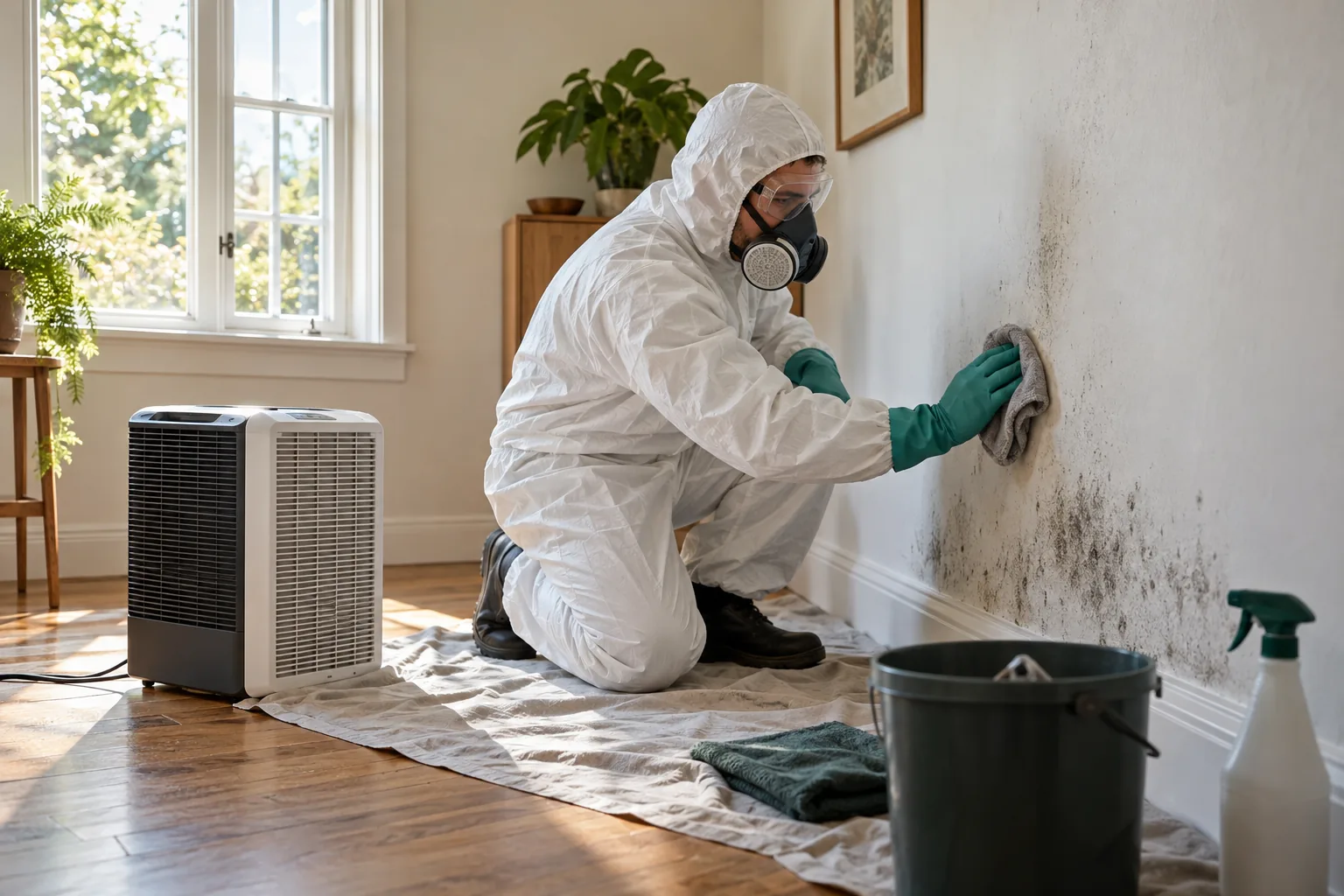
Remediation coordinates assessment, filtration, appropriate application and physical removal of visible mould on accessible surfaces. Give the current finish description and say when its material is unknown. Product names guessed from appearance can obscure the information needed to discuss whether the requested area suits treatment.
The service outline describes supported work, not universal compatibility with every coating. Stripping, recoating and decorative restoration require separate agreement. Furniture and textiles remain excluded, and concealed material condition cannot be established simply because the room wall is visible.
MOISTURE & CONTAMINATION
Keep water observations independent of coating labels
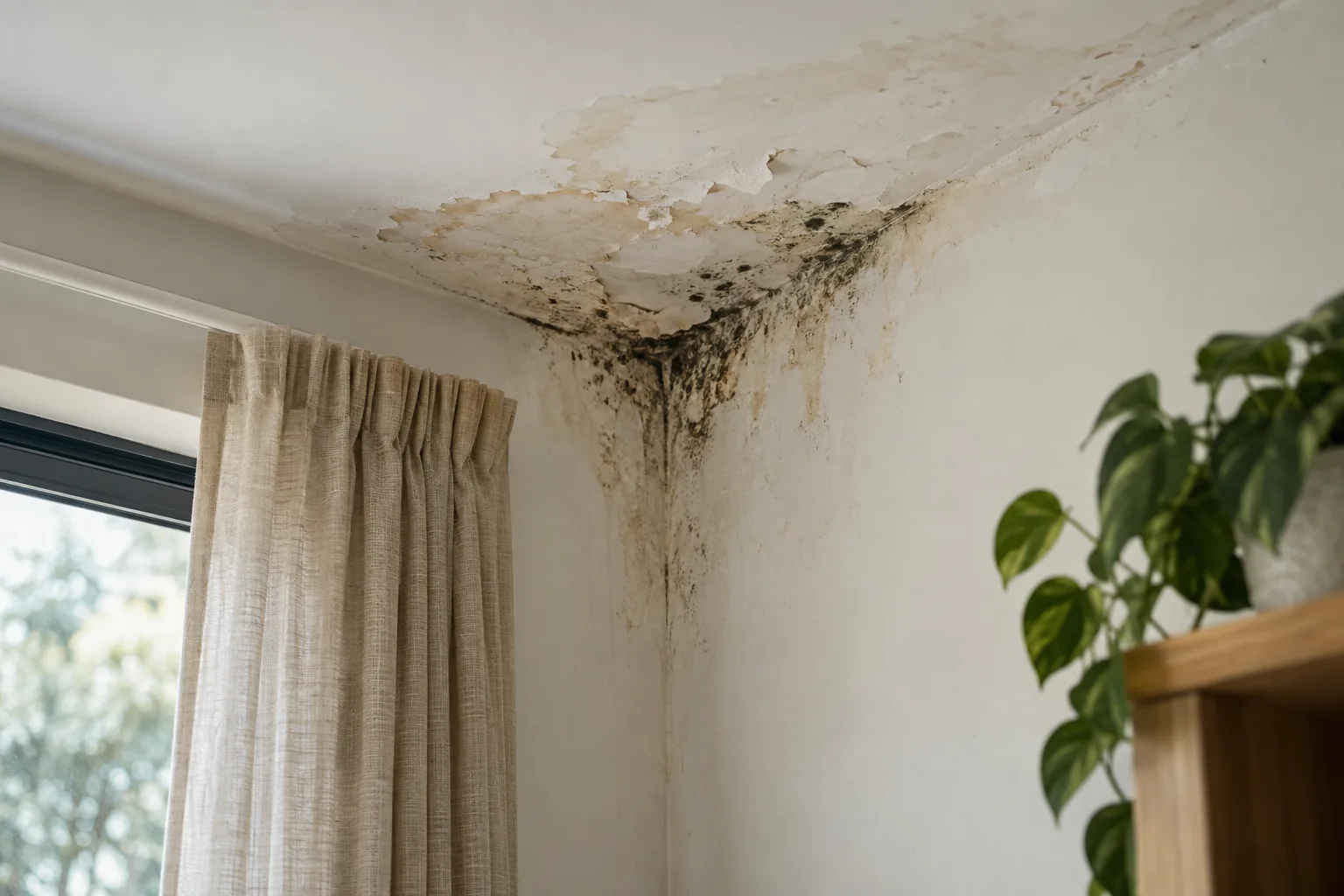
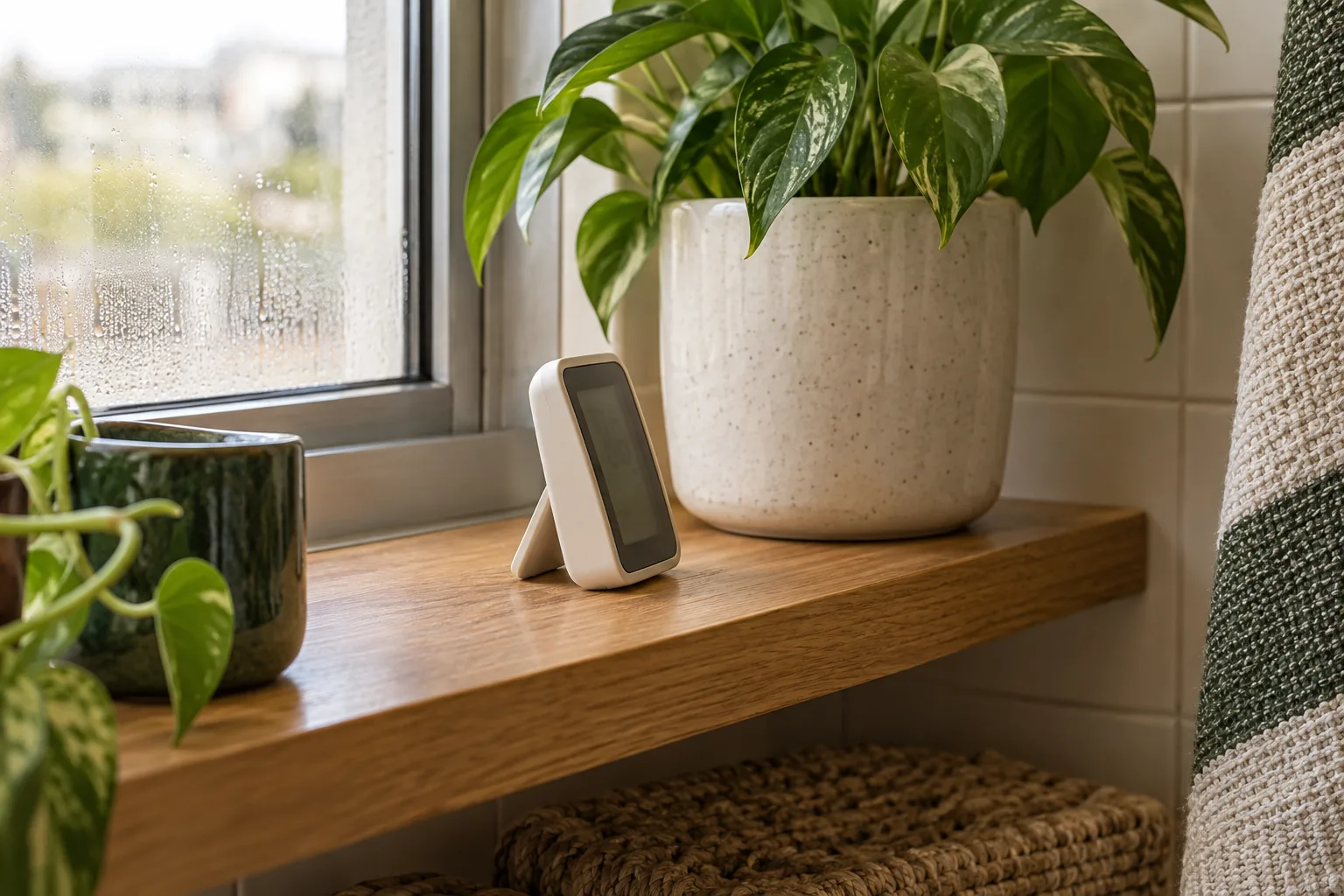
Explain water or condensation seen on the exposed finish, with dates where known. A professional hygrometer provides room-air relative-humidity information. That differs from a material-moisture reading beneath a coating, and it does not certify the wall lining or a concealed cavity as dry.
Arrange separate correction for a known leak or ventilation fault. Continuing dampness may contribute to another occurrence after visible work. A surface inspection enquiry can help clarify the accessible concern, without promising chemical analysis, destructive coating tests or laboratory identification.
A DEFINED TREATMENT SEQUENCE
Apply confirmed methods only within suitable scope
1
Agree the accessible scope
Assess the exposed finish and available material information, agreeing suitable checks, application limits and accessible boundaries.
2
Begin air protection
Put the confirmed HEPA air scrubber in operation before treatment begins, supporting air protection for the agreed work.

3
Choose the treatment application
Use HOCl appropriately on suitable surfaces; discuss ULV dry fog only where appropriate, without promising coating compatibility.
4
Remove visible growth
Physically remove visible mould using professional H-class filtered equipment within the accepted finish scope, not an assumed restoration task.
5
Continue final air cleaning
Continue HEPA air cleaning during and after treatment, explaining remaining appearance limitations and the particular instructions for returning.
Name the materials actually exposed
Walls
Walls with unfamiliar coatings need their visible condition described before a method is agreed.
Ceilings
Ceiling paint or decorative finishes need separate suitability and safe-access consideration rather than a wall-based assumption.
Bathrooms
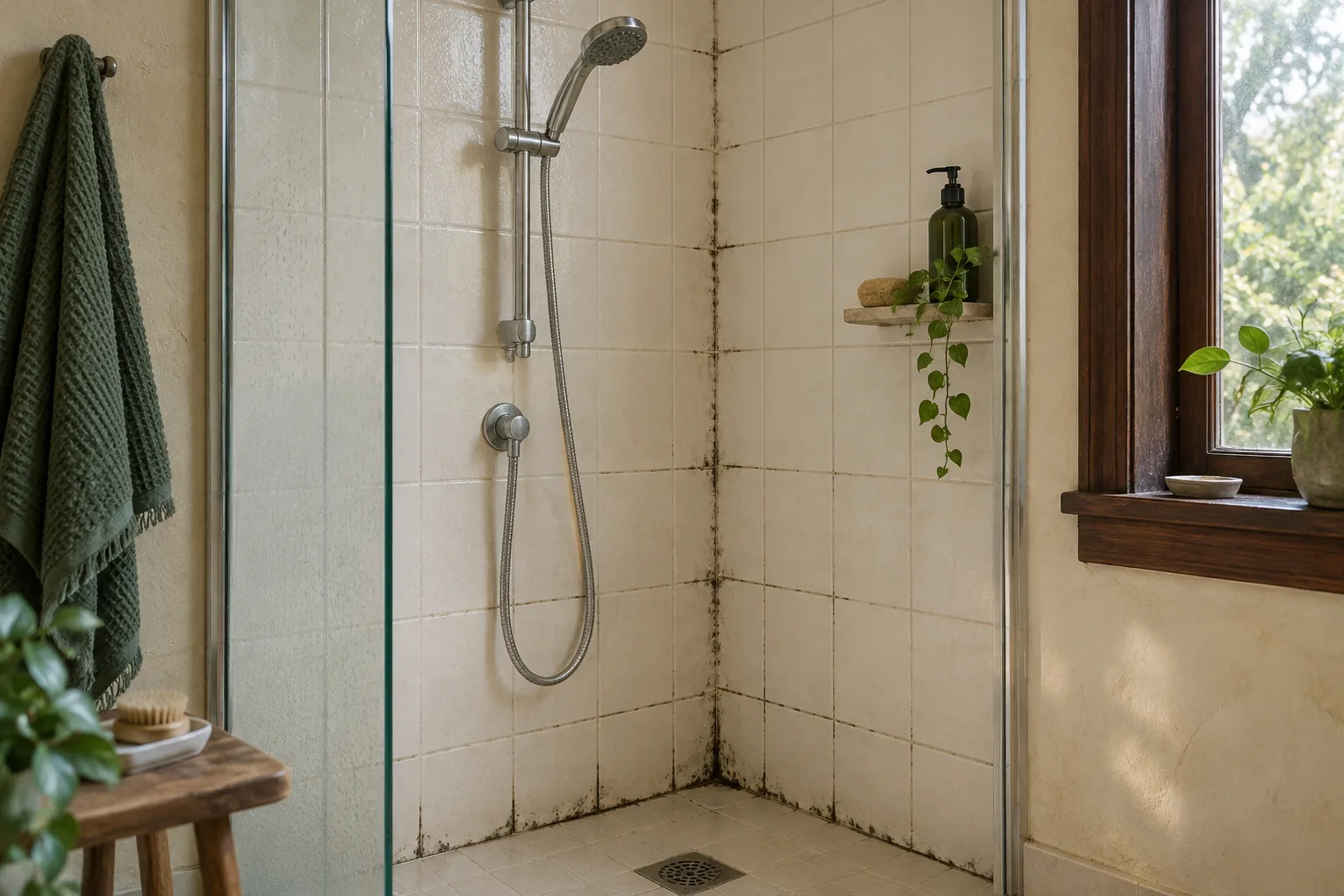
Bathroom joints, paint and tiles are distinct materials; a coating label does not describe all three.
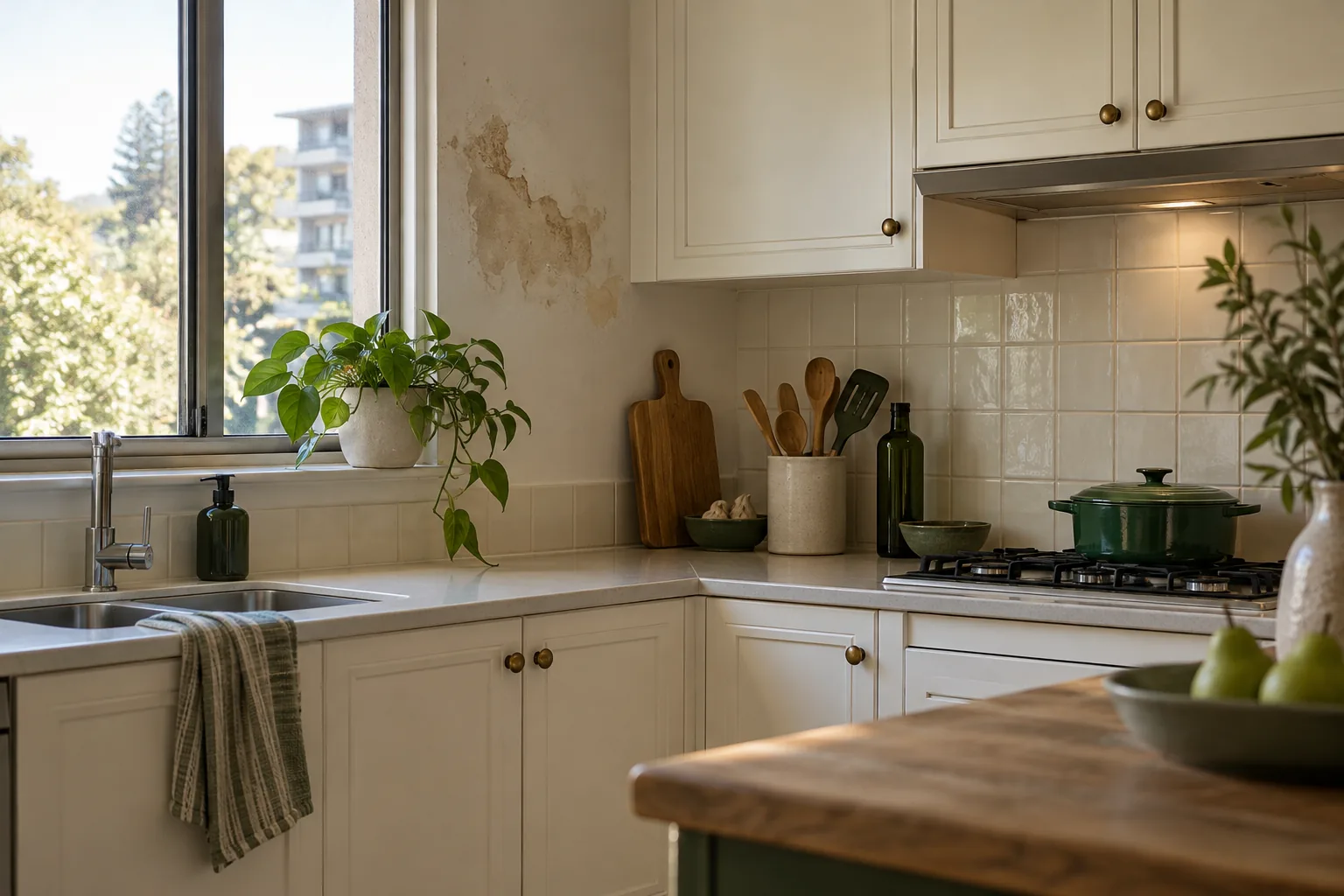
Kitchens
Kitchen exposed surfaces may differ around a splashback, with stored items and appliances outside assumed inclusions.
Accessible affected surfaces
Other affected accessible walls, ceilings or hard floors require agreement; textiles and hidden construction layers remain excluded.
AFTER TREATMENT
Prepare without adding another coating
Avoid applying another cleaner or coat merely as preparation. Supply any known finish information and follow the agreed instructions for movable belongings. People and pets must leave during treatment. The source averages around three hours per room, with size, contamination and access affecting actual timing; this is not a fixed appointment or return interval.
Colour, sheen or old cosmetic marks may remain different after visible contamination work. Discuss separate decorating needs before expecting restoration. The technician’s return instructions apply to the specific job, without a promised clearance certificate or laboratory finding about either the finish or the room air.
KEEP MOISTURE IN VIEW
Follow the finish’s visible changes
Preserve a useful account of the original finish and later visible changes.
Note new water, growth or deteriorated coating with its location.
Follow through on separately identified source repairs.
Do not use an added paint layer as evidence that dampness has been corrected.
Quote after the finish is clarified
When requesting a quote, identify the exposed area and what is known about the coating. The published examples refer to Mould Removal, so confirm their applicability to remediation. Coating analysis, stripping and finish restoration should not be inferred from a room amount; clarify suitability and the accepted treatment boundary first.
MITCHAM · EXACT ADDRESS & ACCESS
Enquiries for nearby addresses
Give the complete Mitcham address and identify the room with the unfamiliar wall finish. Let the entry contact know what material information is available. Nearby pages help navigate other premises; this enquiry still needs its own availability, preparation and suitable-surface agreement.
Heatherdale · Nunawading · Vermont · Ringwood
Questions about remediation
Can you identify an unknown coating from a photograph?
Do not rely on a photograph for a definitive material identification. Describe what you know and flag uncertainty before assuming a treatment method is suitable.
Should I guess the paint type on the enquiry?
No. State that it is unknown and supply any genuine finish records. A guessed label should not become the basis of a suitability promise.
Will stripping the coating be included?
No stripping scope is confirmed automatically. Raise it separately and distinguish the visible mould request from removal or restoration of decorative layers.
Does HOCl preserve every colour and sheen?
No universal cosmetic result is promised. Identify the finish and discuss appearance limitations, including existing damage and residual stains.
Can humidity tell whether the coating hides damp plaster?
No. Room-air relative humidity is not a measurement beneath the coating, and the confirmed hygrometer does not certify concealed material dryness.
What should I record if the finish changes later?
Locate the changed area and note its timing, fresh water or renewed growth. Keep cosmetic variation separate from an unsupported conclusion about hidden layers.
Discuss the coating before arranging treatment
Call 03 8652 1296 with the present coating, visible concern and accessible area. Discuss suitability and appearance expectations before accepting a treatment quote.