
SURFACE TREATMENT · MOISTURE FOLLOW-THROUGH
Mould Remediation Nunawading
If fixed shelving and room equipment limit access to more than one patch at your Nunawading address, agree reachable sections instead of promising whole-room clearance. List the shelving and fixed equipment that obstruct access before deciding which visible surfaces can be included.
Reachable sections specified
Fixed obstructions recorded
Blocked remainder acknowledged
TREATMENT & FOLLOW-THROUGH
UNDERSTANDING THE AFFECTED ROOM
Define the reachable patches beside fixed shelving
Fixed shelving and equipment can leave several visible edges but no complete wall access. Define each reachable section and the blocked remainder. Remediation should not be represented as whole-room clearance simply because the technician can enter the interior. Review remediation scope before selecting the structural-surface job.
Visible edges can be discussed without treating the entire obstructed wall as available. Explain what clearance will occur and what remains a fixed limitation before the work is agreed. The supported sequence keeps application, physical removal and air cleaning within that boundary. Excluded contents and newly revealed areas need separate decisions, rather than being presented as automatically cleared by a general room-treatment description.
MOISTURE & CONTAMINATION
Blocked sections remain unknown
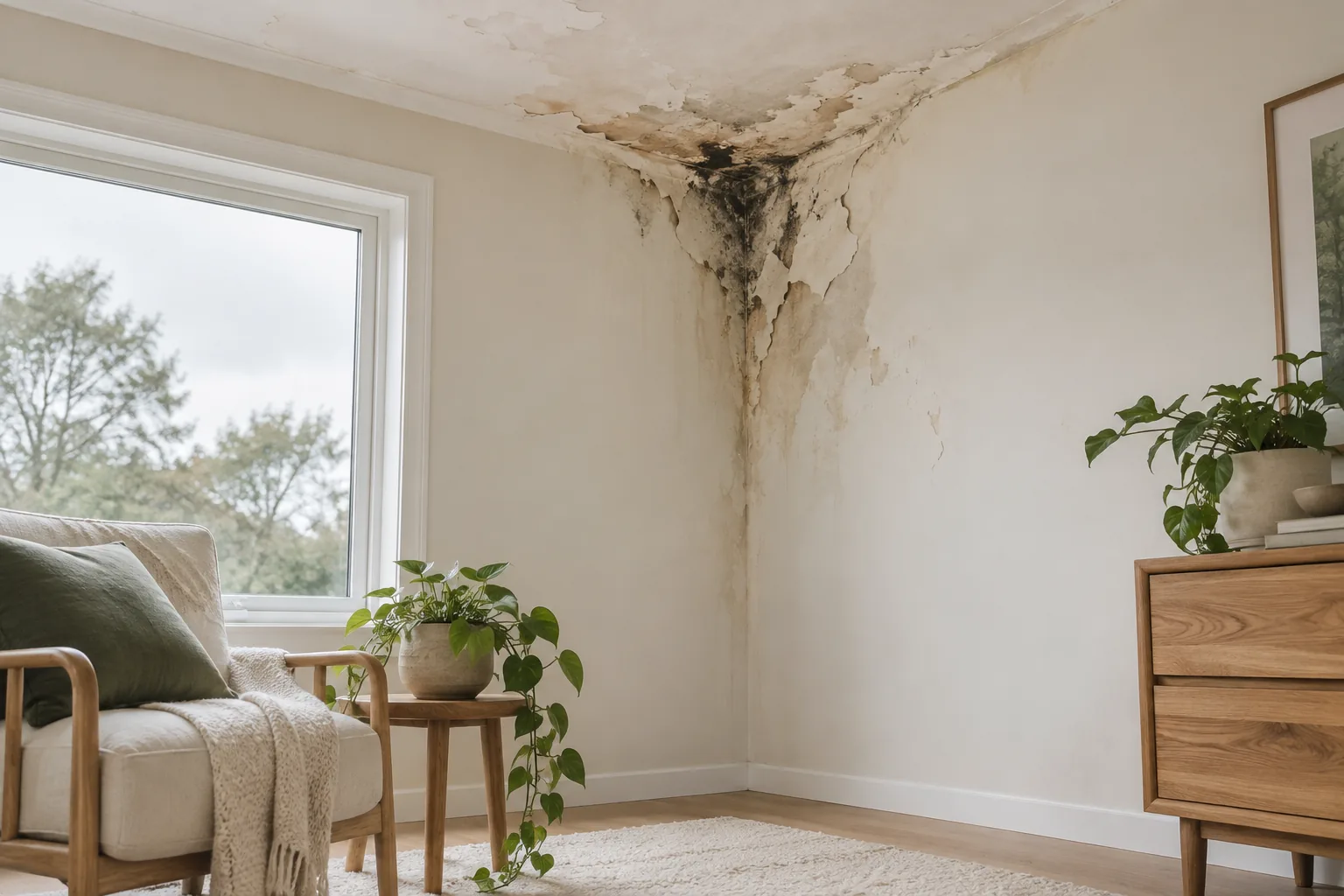
Blocked wall sections can hide observations as well as treatment access. Explain water signs on the exposed edges without asserting the condition behind equipment. An inspection enquiry retains visible accessible limits rather than promising hidden clearance.
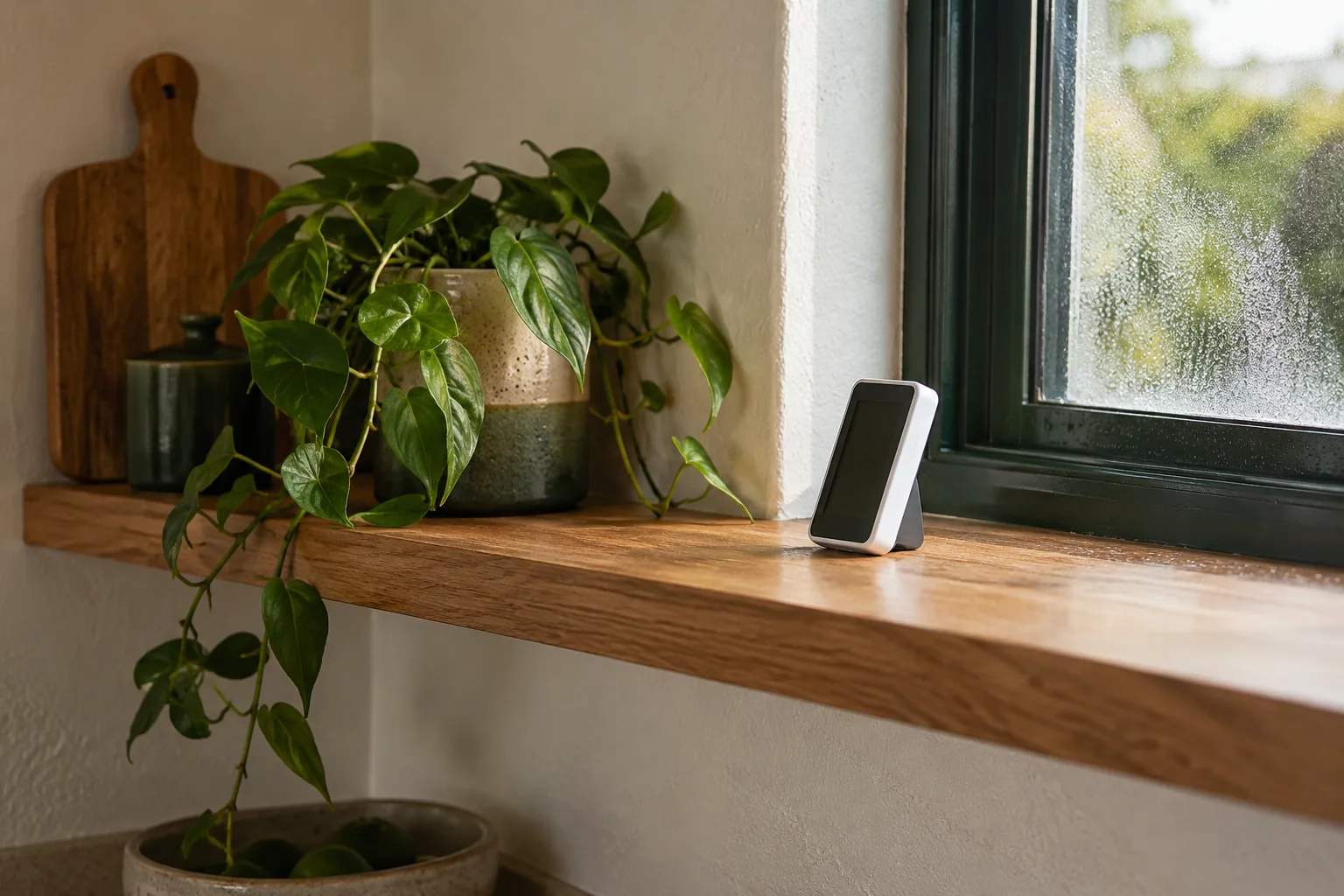
The professional hygrometer provides air-humidity information, not moisture measurements behind fixed shelving or equipment that blocks the wall.
A DEFINED TREATMENT SEQUENCE
Stages within the available wall access
1
Assess the accessible scope
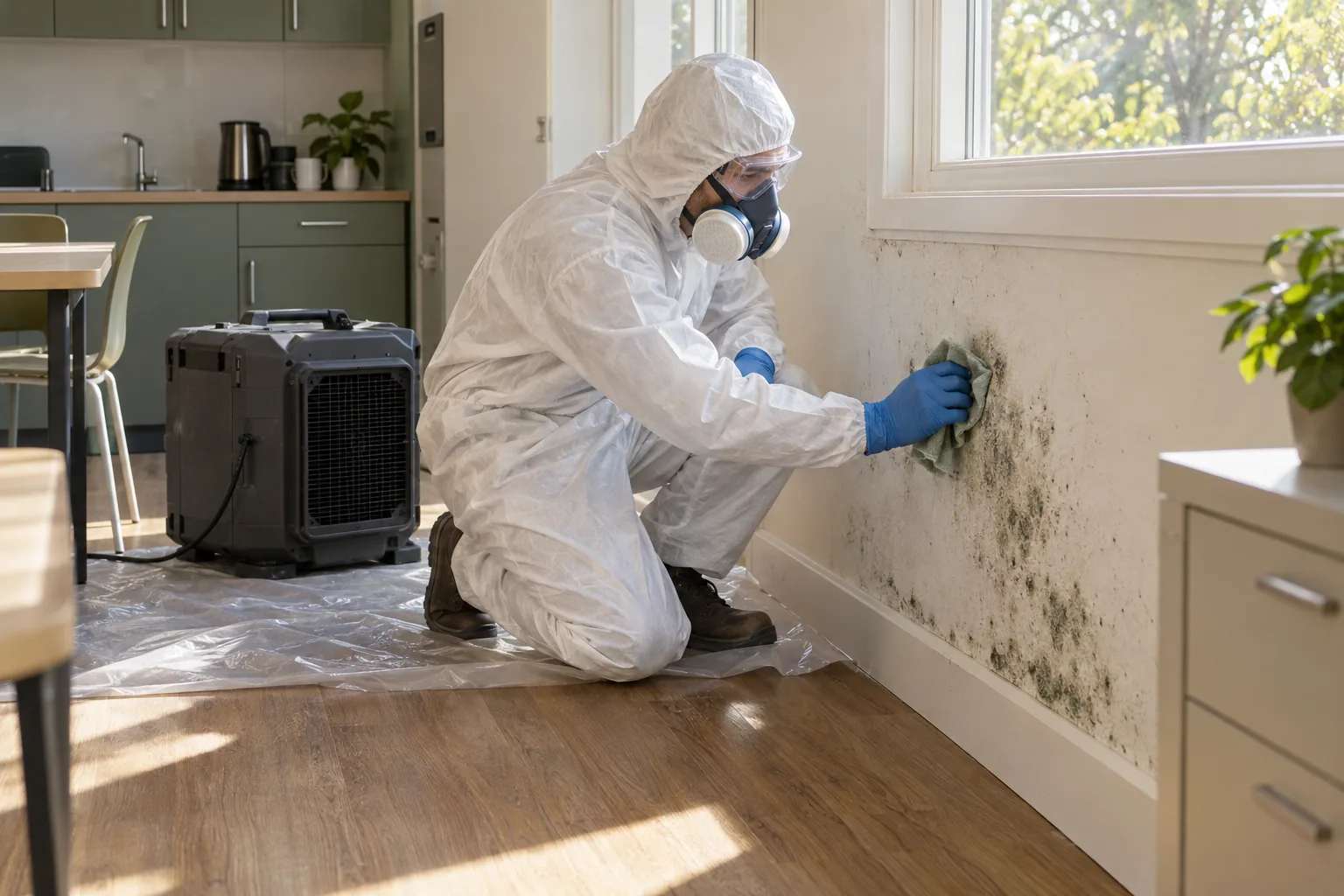
Assess each reachable patch and define the remainder blocked by shelving or room equipment before starting treatment.
2
Set up HEPA protection
Establish HEPA air-scrubber protection before application with agreed equipment clearance, without assuming dismantling is part of preparation.

3
Choose suitable application
Use appropriate HOCl with conditional ULV dry fog, retaining the limitation on surfaces that remain inaccessible.
4
Remove visible contamination
Physically remove visible contamination with H-class filtered equipment from the agreed sections, excluding stored papers and textiles.
5
Continue final air cleaning
Keep HEPA filtration operating during and after treatment; explain return advice and the difference between reached surfaces and blocked remainder.
Structural sections and fixed obstructions
Walls
Describe each wall section blocked by shelving separately from the exposed patches.
Ceilings
Ceiling access may have different equipment restrictions and needs its own description.
Bathrooms
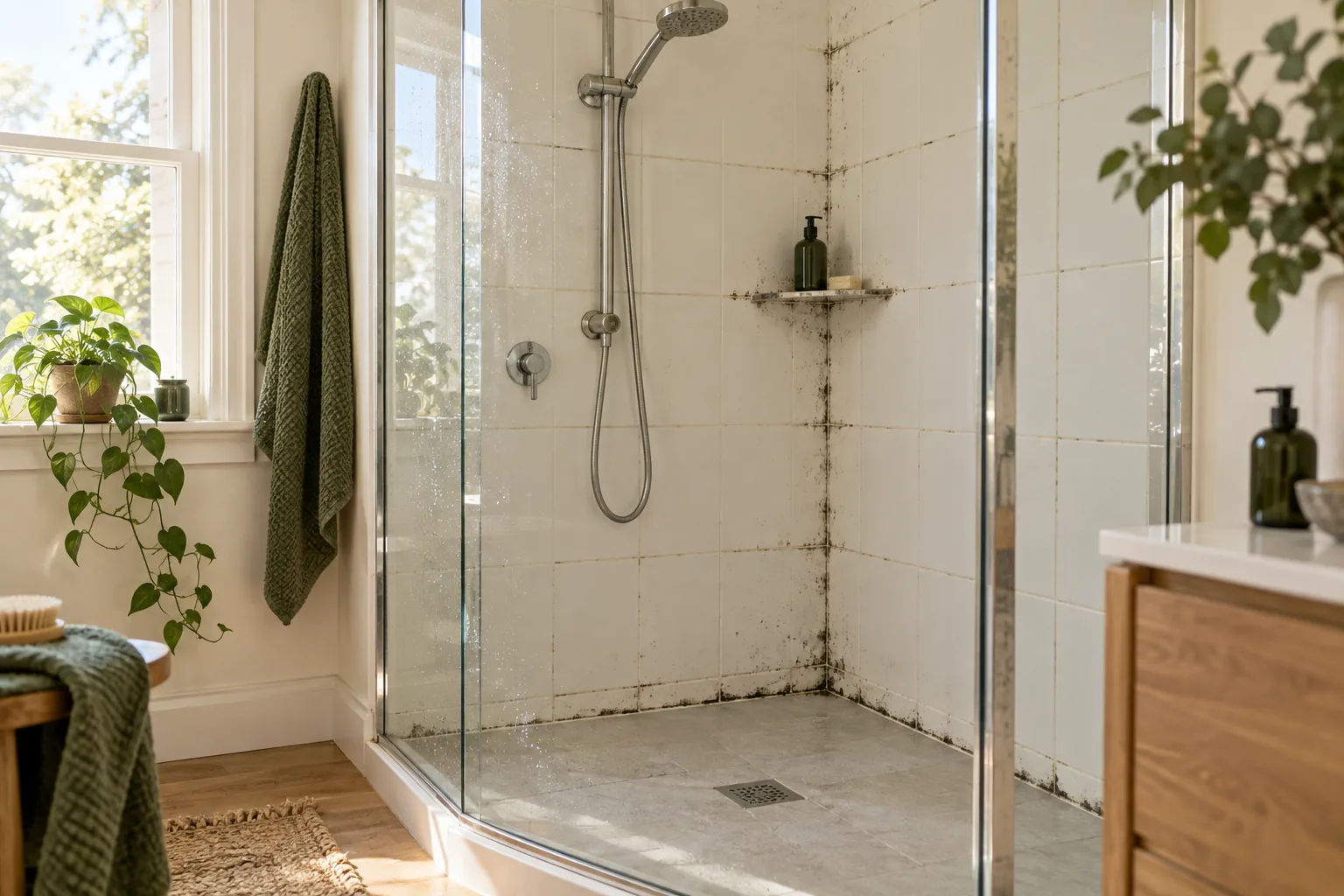
Bathroom surfaces should be identified in their own room rather than inferred from a storage-area enquiry.
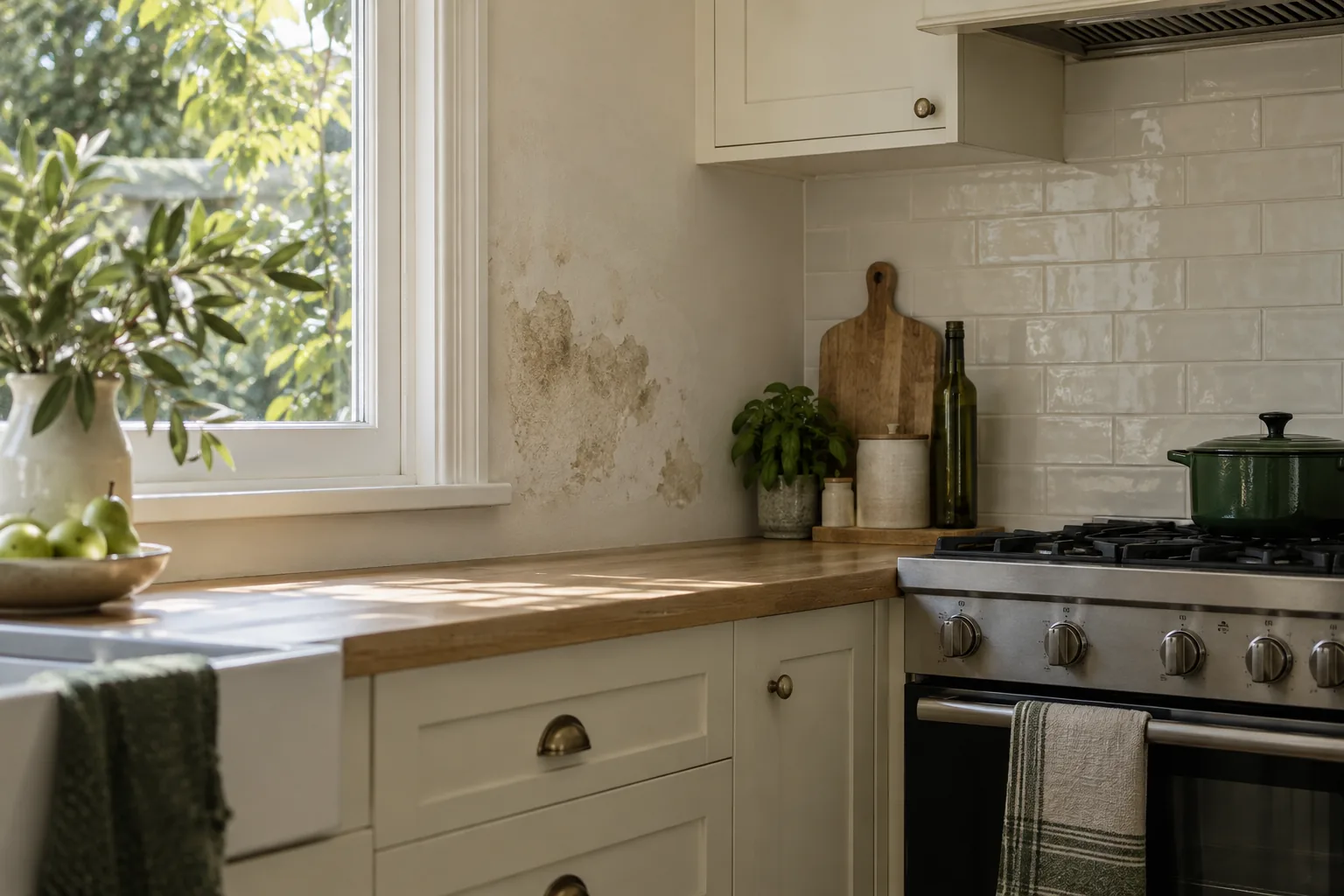
Kitchens
Kitchen walls require actual reachable finishes, not assumptions that fixed units will be dismantled.
Accessible affected surfaces
Extra structural surfaces need agreement once reachable; stored papers, furniture, textiles and covered layers remain excluded.
AFTER TREATMENT
Prepare without implied dismantling
Explain each shelving or equipment obstruction before clearance is agreed. Do not dismantle fixed features merely as assumed preparation. The requested reachable surfaces need a defined scope, with people and pets leaving during treatment and return advice confirmed.
About three hours per room is average guidance; restricted access and the agreed patches need consideration before a practical schedule is set. Restricted reachability needs explicit scope, not an invented hourly dismantling allowance.
KEEP MOISTURE IN VIEW
Retain the difference between reached and blocked
Record which patches were reachable and which remained obstructed when the work was completed. Returning shelving or equipment should not convert the blocked sections into a claim of treatment. Observe fresh dampness and growth on the exposed finish and follow through on relevant moisture concerns. Contents remain separate, and residual cosmetic marks may need another decision. If later dismantling exposes a new area, report its current material, extent and access before assuming inclusion. A clear bounded result is more useful than whole-room clearance language where important surfaces were never reachable.
Record both reached sections and blocked remainder.
Describe newly revealed areas before assuming earlier inclusion.
Keep contents and textile handling outside the surface result.
Quote accessible work explicitly
List the reachable patches and blocked sections when requesting the quote. Price examples need remediation applicability confirmed; fixed-shelving removal, contents handling and later revealed areas are not assumed inclusions.
NUNAWADING · EXACT ADDRESS & ACCESS
Address and restricted-room enquiries
A Nunawading enquiry should identify the interior and practical equipment or shelving restrictions. Nearby pages cannot establish access to hidden sections or attendance for an undefined whole-room request.
Forest Hill · Mitcham · Blackburn · Vermont
Questions about remediation
Does entering the room mean every patch is accessible?
No. Explain shelving and equipment restrictions so the reachable surface boundary is agreed.
Will fixed shelving be dismantled?
No dismantling task is confirmed. Arrange any separate access work before assuming the hidden section is available.
Can ULV application replace physical access everywhere?
No. Conditional fog use does not establish hidden treatment or override the accessible-surface limit.
Are stored papers and textiles treated too?
No contents or textile package is confirmed. Keep them separate from structural treatment and follow clearance instructions.
Does the quote include a patch revealed later?
Do not assume it does. Update the enquiry with the new extent and discuss inclusion.
How should the result be explained afterwards?
Identify the surfaces reached and treated, any blocked remainder and the specific return advice. Keep that bounded result distinct from whole-room or concealed clearance.
Agree the patches that can be reached
Contact 03 8652 1296 with the Nunawading patches and fixed obstructions. Settle a reachable treatment boundary with clear exclusions before the visit.