
VISIBLE SURFACES · AGREED TREATMENT
Mould Remediation Thornbury
Knowing the treatment product’s name does not establish when a household should return. For your Thornbury enquiry, identify the accessible affected finish and ask how preparation, departure and return instructions will be communicated. Remediation planning should keep suitability and occupancy arrangements explicit, without presenting HOCl or filtration as a universal promise of harmless exposure or immediate use of the room.
Suitable surface work is discussed.
People and pets have a departure plan.
Return advice relates to the particular job.

TREATMENT · FILTRATION · FOLLOW-THROUGH
A TREATMENT PLAN WITH CLEAR LIMITS
A product name is not a complete work agreement
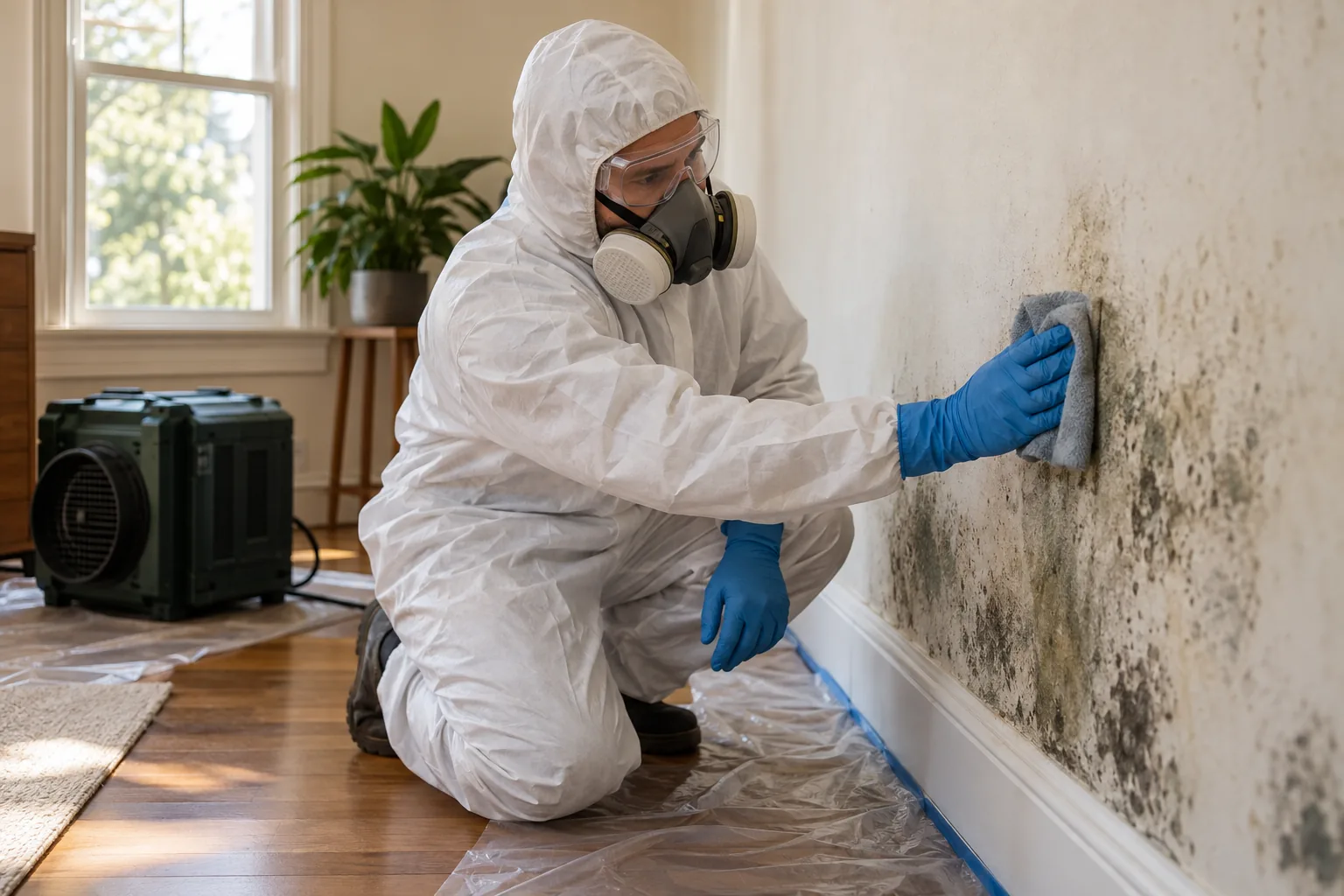
Remediation coordinates assessment, air protection, appropriate treatment and physical removal of visible mould. The actual finish, condition and available access need consideration before a method is agreed. Explain earlier applications or sensitive decorative surfaces rather than assuming one product suits every material.
Our remediation overview describes supported methods, not universal exposure safety or guaranteed eradication. Furniture and textiles are excluded, while repairs, decorating and concealed layers need separate scope. Ask practical preparation questions without treating a familiar chemical name as permission to remain during work.
MOISTURE COMES FIRST
Keep moisture correction in the follow-through
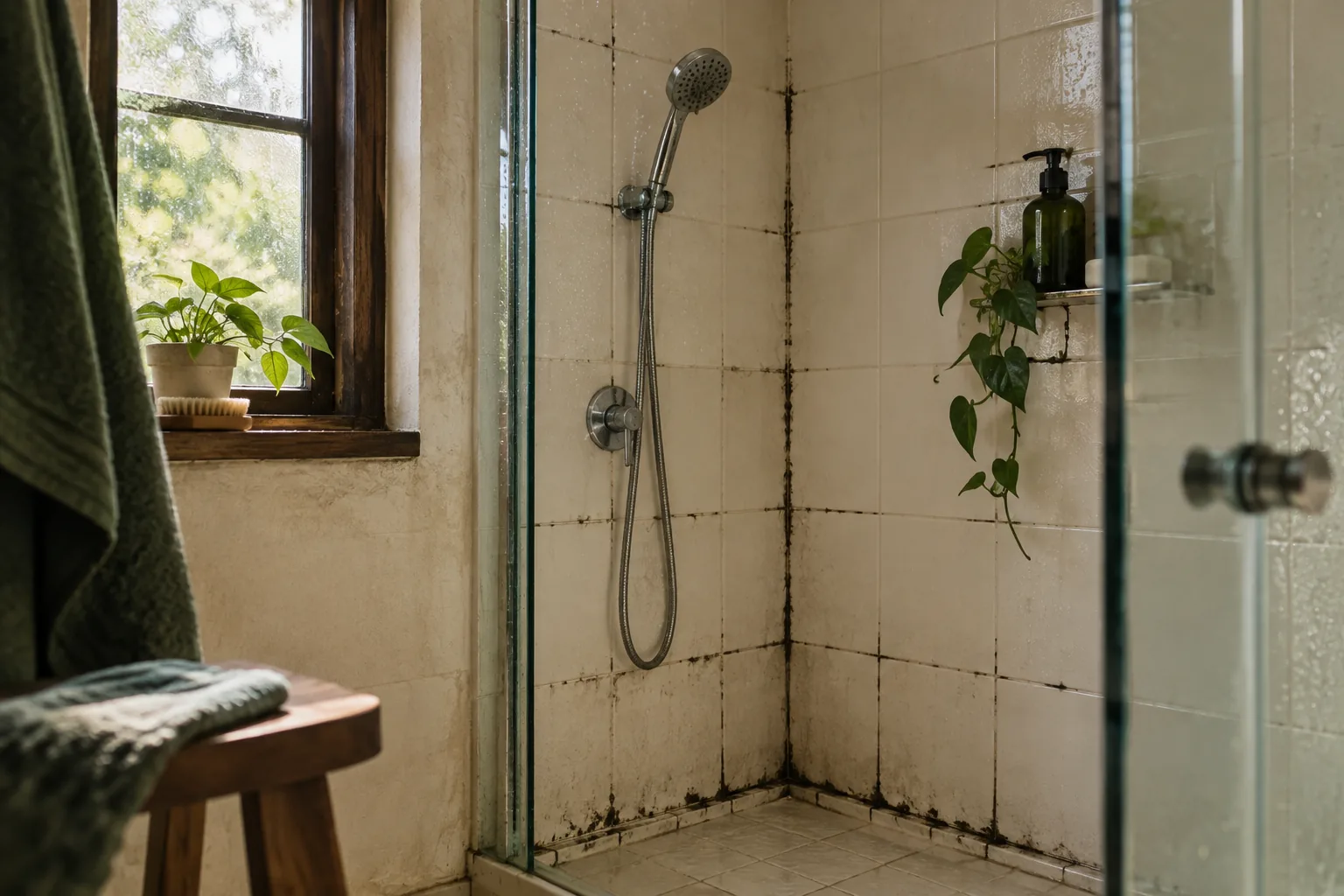
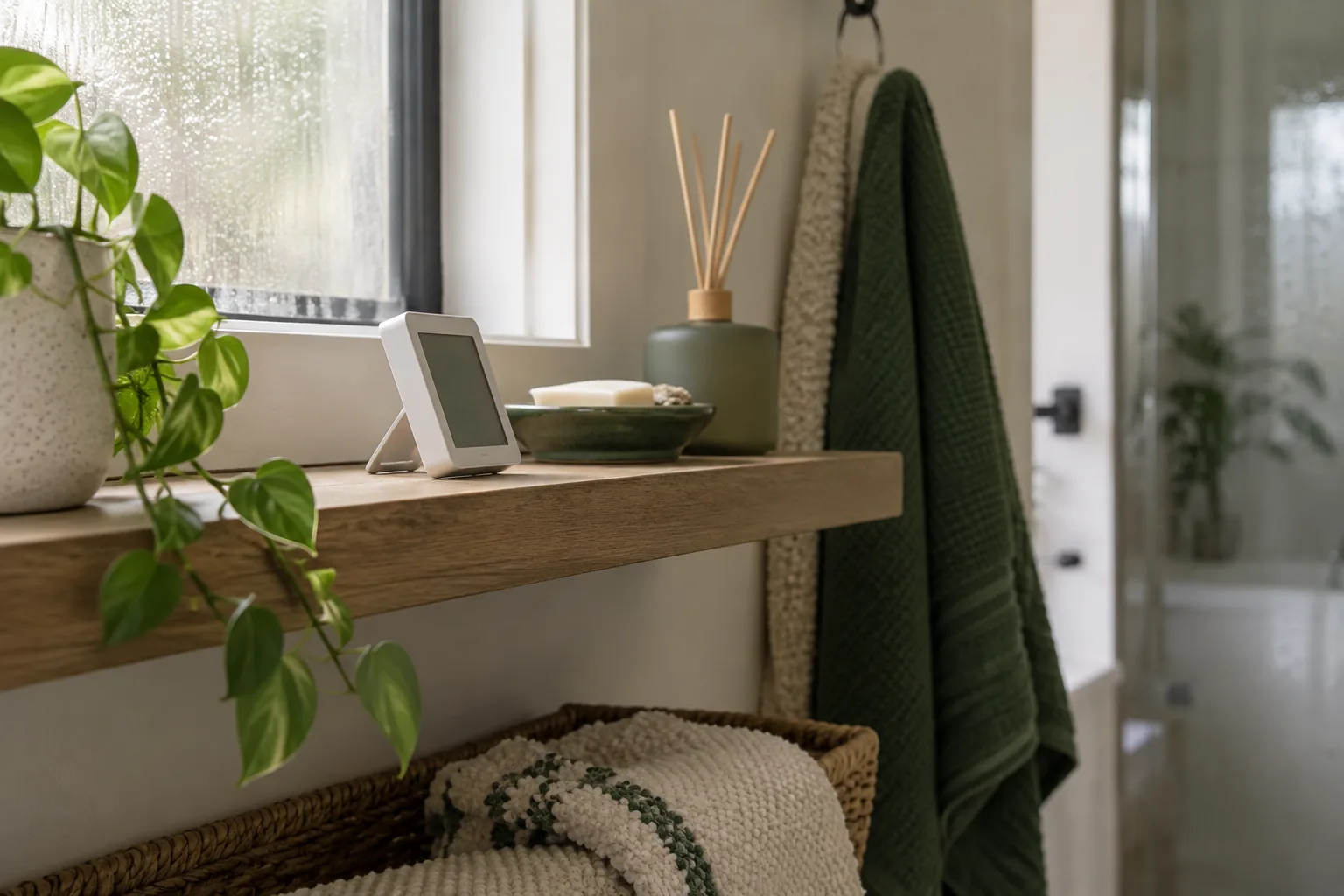
Describe visible water, condensation and known repairs separately from questions about the treatment product. A professional hygrometer provides room-air relative-humidity context. It does not determine water inside linings or certify a concealed cavity as dry, and the application does not repair a leak.
Continued dampness can support recurrence after visible work. Arrange appropriate source or ventilation correction separately. If the accessible condition first needs clarification, discuss inspection without assuming the subsequent treatment includes a laboratory air test, species identification or clearance certificate.
FROM PREPARATION TO FOLLOW-THROUGH
The confirmed sequence with clear occupancy limits
1
Agree the accessible scope
Assess the accessible contamination and finish suitability, agreeing checks, scope and any unavailable areas before work.
2
Begin air protection
Begin confirmed HEPA air-scrubber protection before treatment, without presenting filtered air as permission for household occupancy.
3
Choose the treatment application
Apply suitable HOCl treatment, including ULV dry fog where appropriate rather than guaranteeing fog for every job.
4
Remove visible growth
Remove visible mould with professional H-class filtered equipment on the agreed surfaces, excluding hidden layers and textile materials.
5
Continue final air cleaning
Continue HEPA air cleaning during and after work, then communicate the technician’s particular return advice and remaining appearance limitations.
Identify materials before discussing application
Walls
Walls need their coating and current visible condition described before application suitability is agreed.
Ceilings
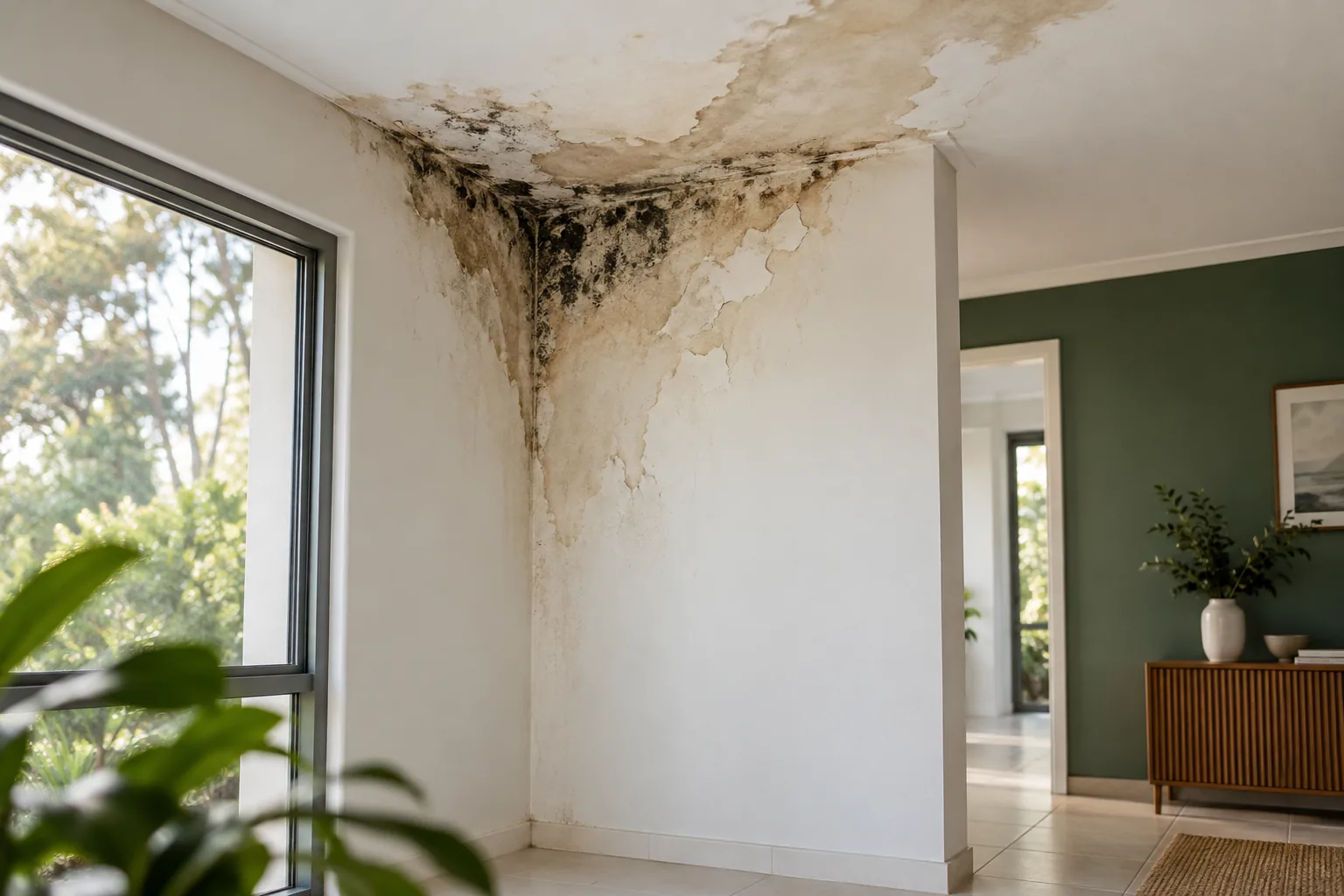
Ceiling work requires safe access and disclosure of damaged finishes rather than an assumption of hidden-space coverage.
Bathrooms
Bathroom paint, tiles and joints are separate materials, and seal replacement is not automatically included.
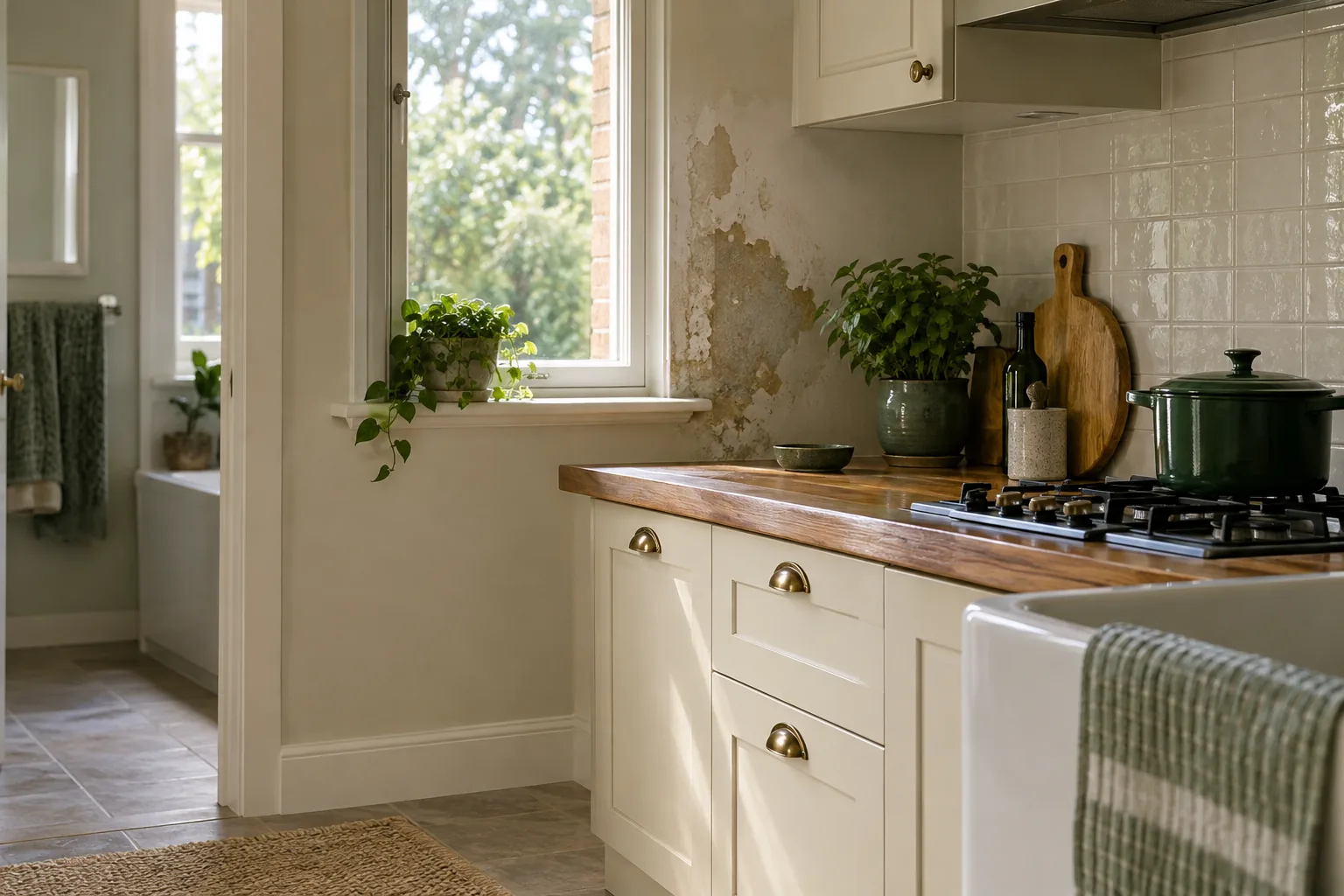
Kitchens
Kitchen treatment relates to accessible agreed finishes, with food and movable contents prepared as instructed.
Accessible affected surfaces
Other affected exposed walls, ceilings or hard floors may be agreed; furniture, fabrics and concealed cavities remain excluded.
PREPARE FOR THE ACTUAL JOB
Prepare and return according to the job advice
All people and pets must leave during treatment. Establish who will provide entry, prepare movable contents and receive instructions. Average source guidance is approximately three hours per room, varying with area, contamination and access; it is not a confirmed re-entry period or a promise that every room always takes that time.
Ask the technician how return advice will be provided for this job. Do not substitute smell, the product name or another household’s experience. Cosmetic marks can remain and separate decorating may be needed.
AFTER THE TREATMENT
Observe the finish while correcting damp conditions
Aftercare should address conditions as well as the treated visible finish.
Follow through on unresolved leaks and ventilation concerns.
Record fresh growth or water with its actual location and timing.
Keep residual cosmetic marks distinct from newly spreading changes.
Quote for the actual treatment scope
Explain the requested surfaces, access and preparation questions when discussing the quote. The published examples are labelled Mould Removal, so confirm their applicability to remediation. Do not assume a separately priced package, guaranteed fog application, air testing or decorating allowance from a listed room amount or the treatment product’s name.
THORNBURY · EXACT ADDRESS & ACCESS
Enquiries for nearby addresses
Give the complete Thornbury property address, requested room and contact who will communicate preparation and return advice. If the person booking will be absent, establish the handover beforehand. Nearby pages are navigation for other premises; they do not confirm this household’s attendance, permission or occupancy arrangements without a direct discussion.
Questions about remediation
Does HOCl mean people can stay during application?
No. People and pets leave during treatment. No universal harmless-exposure claim is made; follow the technician’s particular departure and return instructions.
Is the average work duration the re-entry interval?
No. Approximately three hours per room is average work guidance, not a confirmed return time. Obtain the instructions for this specific job.
Will every remediation job include ULV fog?
No. ULV dry fog is used where appropriate rather than promised for every situation. Discuss application suitability for the actual surfaces.
Can smell decide when the room is ready to use?
Do not use smell as the return instruction. Get technician-specific advice and communicate it to everyone returning to the premises.
Does final filtration provide an air-test certificate?
No certificate or laboratory test is promised. Confirmed HEPA air cleaning is part of the process, not an independently tested clearance service.
Can treatment guarantee no further mould will appear?
No. Continuing leaks, condensation or ventilation problems can support recurrence. Arrange source correction and report any newly observed growth or water after the work.
Discuss preparation and return arrangements
Phone 03 8652 1296 with the affected finishes and household preparation needs. Confirm suitability, departure arrangements and how return advice will be communicated.