
SURFACE TREATMENT · MOISTURE FOLLOW-THROUGH
Mould Remediation Wantirna
A surface-treatment appointment and a repair appointment may concern the same room while covering different tasks. At your Wantirna address, explain the visible finish and which repairs are actually confirmed. Remediation planning should make those responsibilities clear without promising that another provider’s work is complete, every hidden layer is dry or decorating can automatically begin when treatment ends.
Separate tasks have clear boundaries.
The current finish is identified.
Follow-through addresses unresolved moisture.
TREATMENT & FOLLOW-THROUGH
UNDERSTANDING THE AFFECTED ROOM
Related appointments are not one combined service
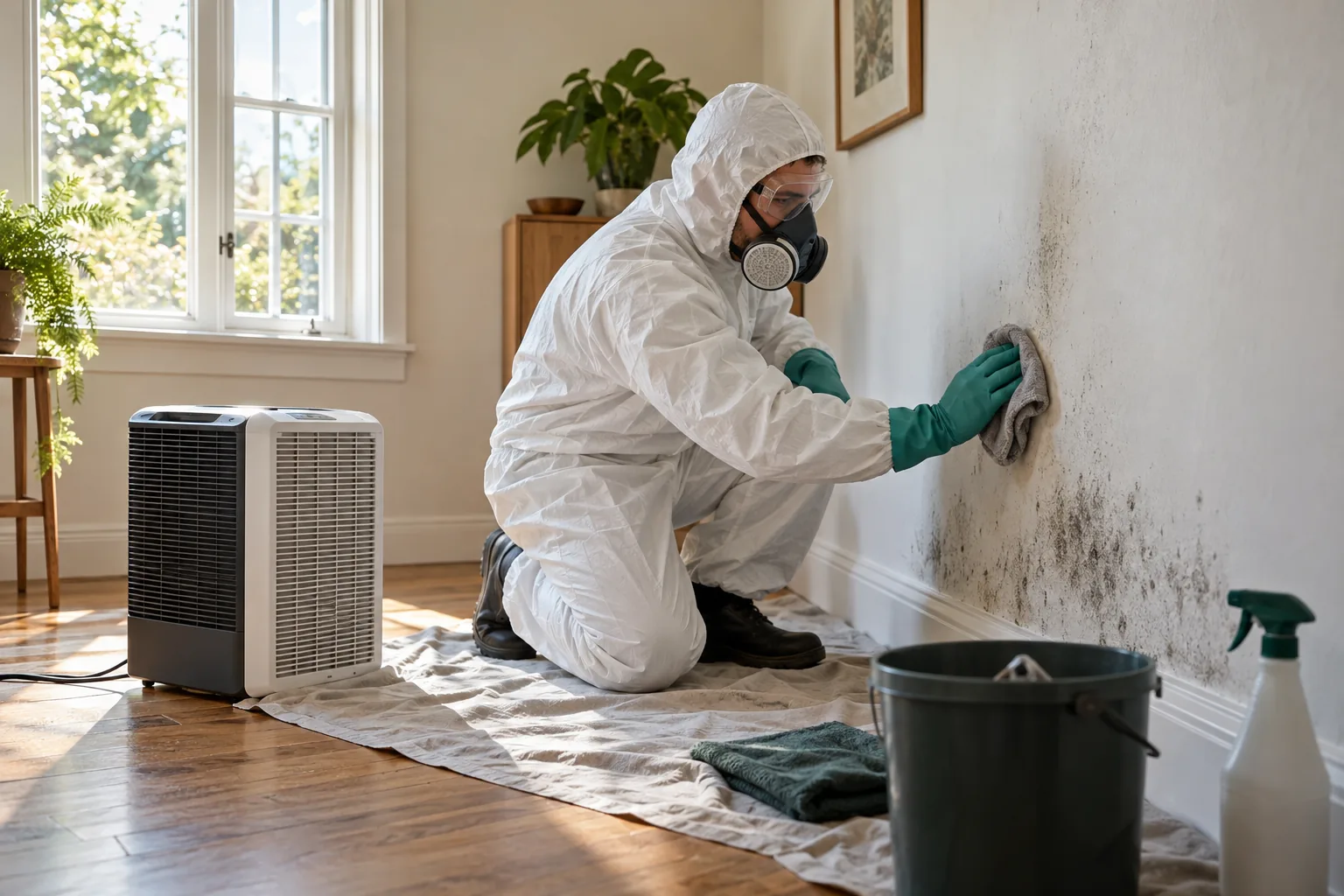
For the visible finishes being requested, remediation brings appropriate surface application and physical removal together with assessment and filtered work-area protection. Identify the exposed material and available access, distinguishing planned repair work from completed work. That avoids treating another contractor’s proposed appointment as a current condition finding.
The remediation overview explains supported treatment. Plumbing, structural repairs and decorating require separate agreement. Furniture, textiles and concealed layers remain excluded from standard surface work, even where several providers are attending the same property.
MOISTURE & CONTAMINATION
Repair status needs an accurate description
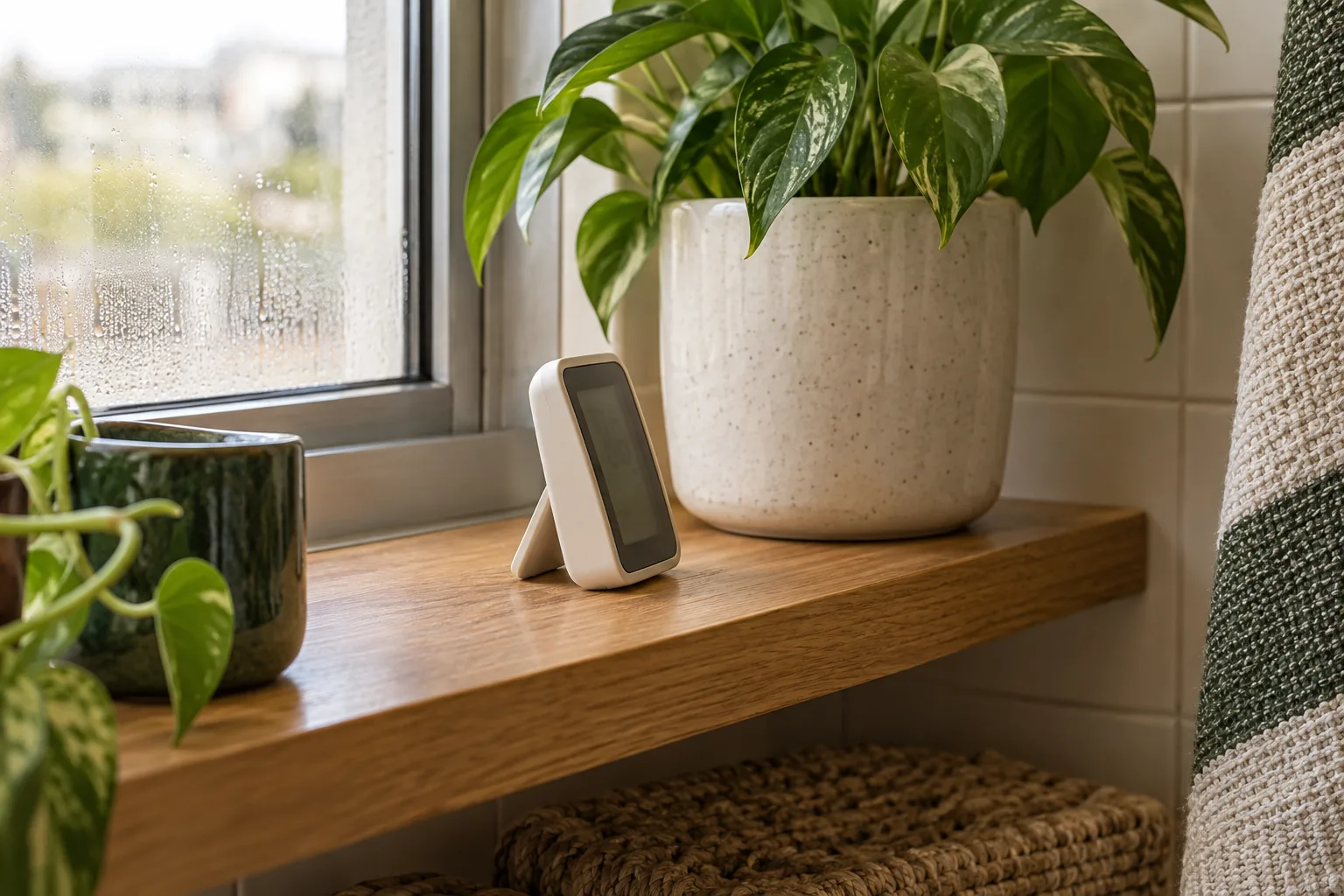
Report actual water or condensation and state what the repair provider confirmed, rather than assuming a booking means source correction has happened. The professional hygrometer gives room-air relative-humidity context. It does not certify concealed material dryness or validate another provider’s plumbing or building work.
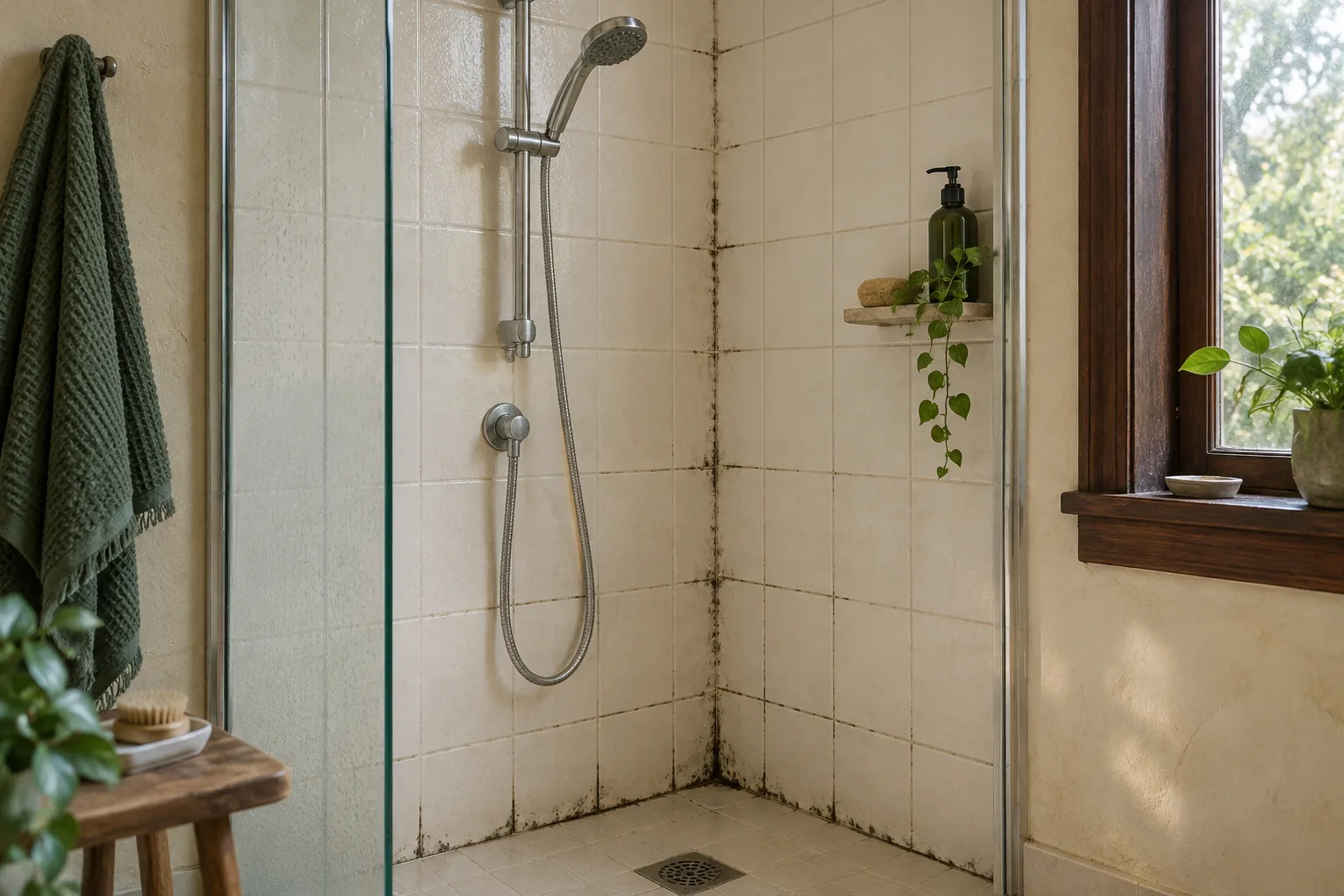
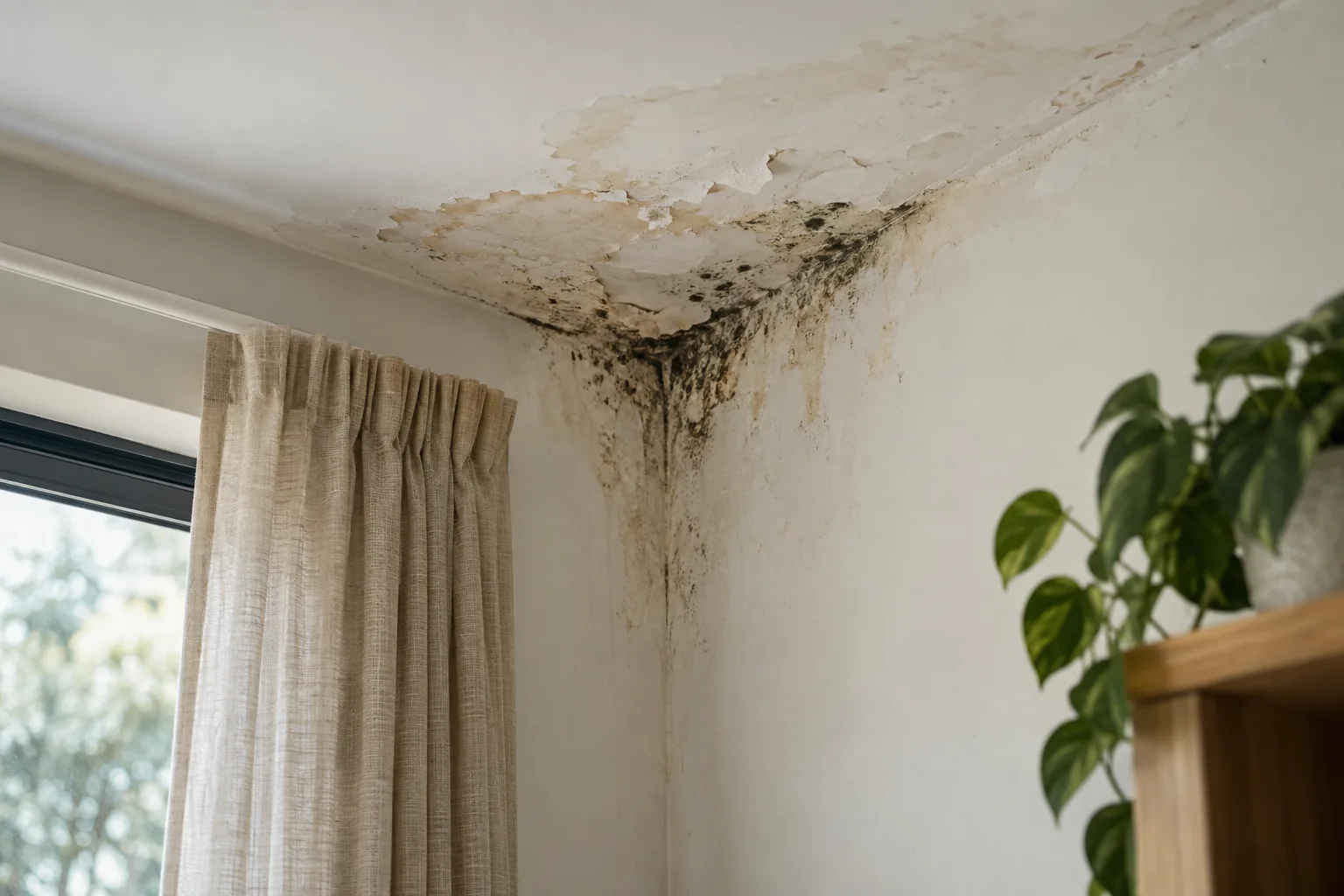
Unresolved sources and ventilation problems may contribute to recurrence after visible treatment. Arrange the appropriate separate correction and keep its status clear. Discuss accessible-condition inspection where needed, without promising hidden-material tests or a report allocating responsibilities among contractors.
A DEFINED TREATMENT SEQUENCE
Supported treatment alongside separate responsibilities
1
Agree the accessible scope
Assess current accessible contamination and the repair information available, agreeing suitable checks, finish boundaries and access limitations.
2
Begin air protection
Start confirmed HEPA air-scrubber protection before application, with the room available for the accepted treatment task.

3
Choose the treatment application
Use appropriate HOCl treatment, considering ULV dry fog where suitable rather than promising a method based on repair scheduling.
4
Remove visible growth
Remove visible mould using professional H-class filtered equipment within the agreed exposed finishes, leaving repairs and decorating separate.
5
Continue final air cleaning
Continue HEPA air cleaning during and after work, discussing remaining marks, source follow-through and the particular return instructions.
Identify finishes without adding repairs
Walls
Walls need their current exposed finish described, not a guarantee inferred from a repair appointment.
Ceilings
Ceiling treatment requires safe access and disclosure of any material damage requiring another provider’s attention.
Bathrooms
Bathroom joints and paint may need different treatment and repair decisions, keeping seal renewal explicit.
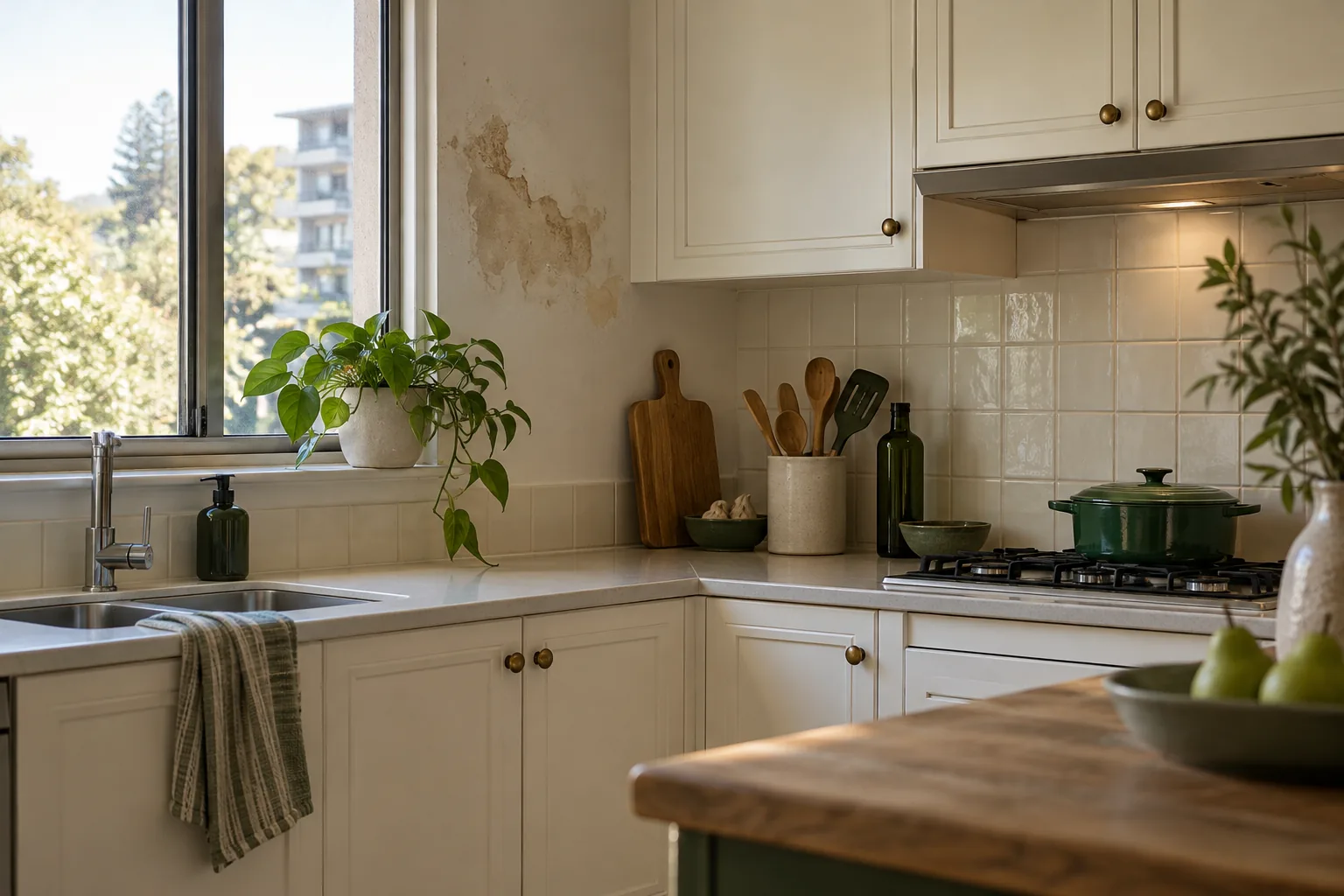
Kitchens
Kitchen surface work identifies accessible materials separately from plumbing or fitted-component repairs.
Accessible affected surfaces
Other affected visible walls, ceilings or hard floors can be agreed, excluding textiles and concealed construction layers.
AFTER TREATMENT
Prepare the room around agreed work dates
Coordinate room availability with separate providers before confirming dates. Follow preparation instructions for movable belongings; people and pets leave during treatment. Approximately three hours per room is average source guidance, dependent on size, contamination and access rather than a fixed interval between other appointments.
Cosmetic staining may remain and decorating is not automatically ready to proceed. Obtain return advice from the technician for the accepted job. Treatment does not provide a certificate that another repair succeeded, concealed materials dried or all future dampness has been prevented.
KEEP MOISTURE IN VIEW
Keep repair and surface observations distinct
Keep the visible treatment and source-repair records separate but accurately dated.
Report fresh water and growth on the specific finish.
Follow through when a planned repair remains outstanding.
Do not describe a contractor booking as proof that the room’s conditions have been corrected.
Quote for the treatment actually requested
Identify the visible surface area and separately arranged tasks when requesting the quote. The published examples concern Mould Removal; confirm which amounts apply to remediation. Repairs, contractor coordination reports and decorative finishing should not be assumed within a room figure simply because the appointments relate to one concern.
WANTIRNA · EXACT ADDRESS & ACCESS
Enquiries for nearby addresses
Give the complete Wantirna address and identify the room and authorised contact coordinating entry. Explain the actual status and dates of other work so preparation is realistic. Nearby pages navigate separate premises, while this treatment appointment requires its own access and surface agreement.
Heathmont · Vermont · Bayswater · Heatherdale
Questions about remediation
Does a repair booking mean the source is already corrected?
No. State whether work is planned or completed and distinguish confirmed findings from an appointment date.
Will remediation certify another provider’s repair?
No repair certificate is promised. The treatment concerns agreed accessible contamination, while the repair provider’s work retains its separate responsibility.
Can separate contractors work in the room simultaneously?
Do not assume that. People leave during treatment, so coordinate room availability and the technician’s instructions before overlapping tasks.
Is decorating automatically included after treatment?
No. Cosmetic stains or damaged finishes may remain, and decorating needs a separately agreed scope and sequence.
Can room humidity validate concealed drying after repairs?
No. Air-relative humidity is not a material or cavity moisture certificate and does not establish the outcome of hidden repair work.
What if a planned repair is delayed?
Inform the relevant contact and discuss current water observations and treatment arrangements. Do not continue describing the source as corrected when the work has not happened.
Discuss the finish and separate work arrangements
Call 03 8652 1296 with the current finish, repair status and room availability. Agree the visible treatment task and preparation separately from other contractors’ work.