
SURFACE TREATMENT · MOISTURE FOLLOW-THROUGH
Mould Remediation Warrandyte
If a visible wall concern is in an interior with restricted entry arrangements at your Warrandyte address, confirm suitable attendance before planning the treatment date. Provide the full address, entry restrictions and nominated interior before asking whether attendance can be arranged.
Premises suitability discussed
Entry restrictions considered
Site scope precisely bounded

TREATMENT & FOLLOW-THROUGH
UNDERSTANDING THE AFFECTED ROOM
Permission before a restricted-site appointment
Restricted entry should be resolved alongside the treatment description. Give the authorised contact and actual interior so suitability can be considered before attendance is assumed. Remediation is not an access-management programme or a promise about every operational requirement at a premises. Review remediation scope before selecting the structural-surface job.
Confirming entry is a prerequisite for considering the work, rather than a finding about contamination. Explain the current exposed materials and any operational requirements without adding unverified site-wide assumptions. The confirmed equipment and treatment sequence have a structural purpose. External documentation, clearance requirements and restrictions need explicit discussion, since attendance at one interior cannot be represented as approval of the wider premises.
MOISTURE & CONTAMINATION
Moisture facts and entry rules differ
Entry restrictions and moisture questions need separate decisions. Give actual water observations and repair status, rather than presenting site suitability as a diagnosis of the surface. An inspection enquiry should identify the particular reachable interior.
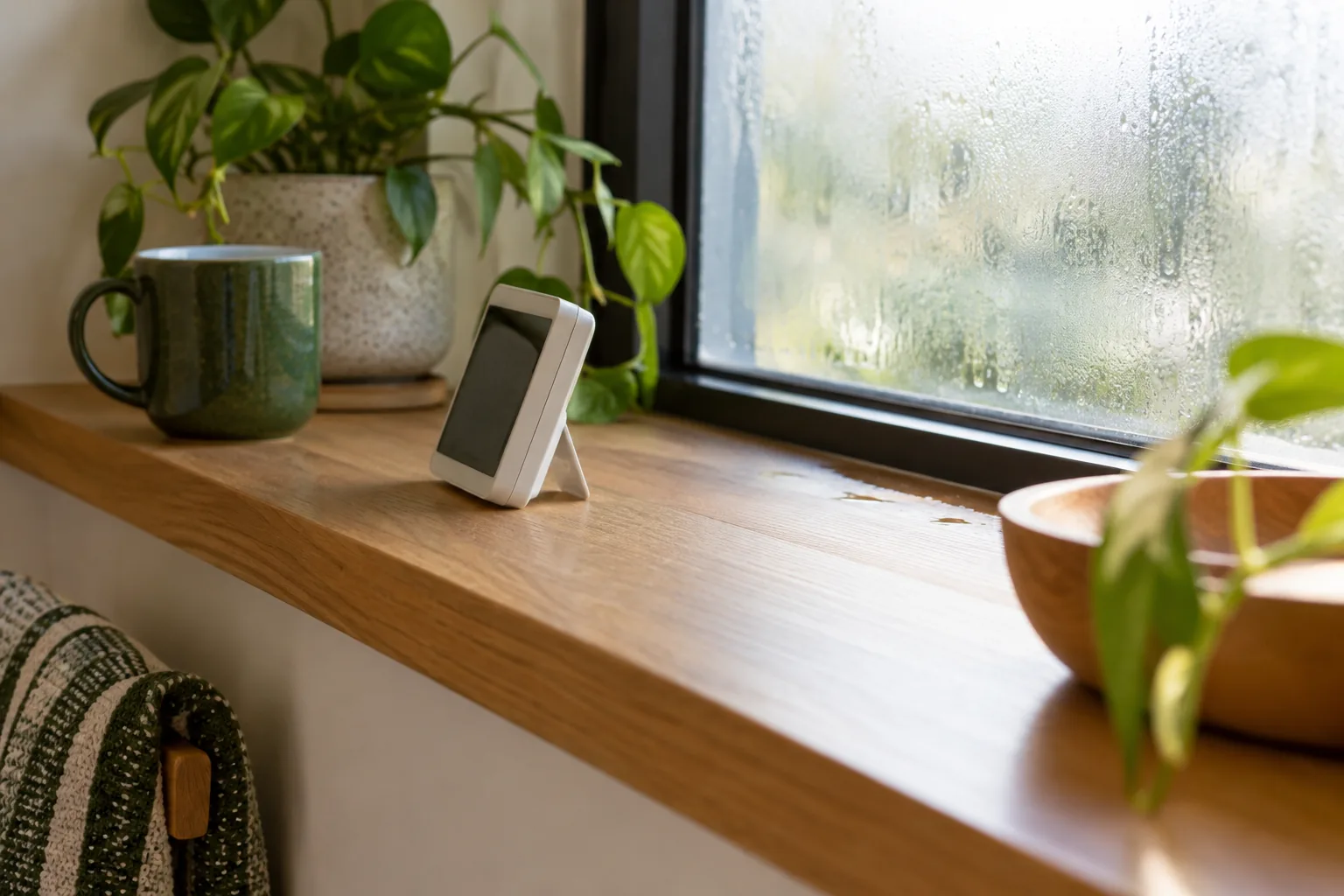
A professional hygrometer provides room-air humidity context, without certifying a restricted site’s concealed material or wider operating environment.
A DEFINED TREATMENT SEQUENCE
A proposed sequence inside permitted access
1
Assess the accessible scope
Assess the authorised interior and exposed growth against its real entry restrictions before an appropriate treatment scope is agreed.
2
Set up HEPA protection
Establish HEPA air-scrubber protection before application, with placement coordinated inside the permitted working area.

3
Choose suitable application
Use appropriate HOCl application, considering conditional ULV dry fog without asserting wider operational-site suitability or unrestricted coverage.
4
Remove visible contamination
Remove visible contamination using H-class filtered professional equipment, respecting the agreed structural boundary and site access limitations.
5
Continue final air cleaning
Continue HEPA air cleaning during and after treatment; confirm return communication without representing the result as formal site clearance.
Structural scope under site restrictions
Walls
State the reachable wall within the permitted interior and disclose operational obstructions.
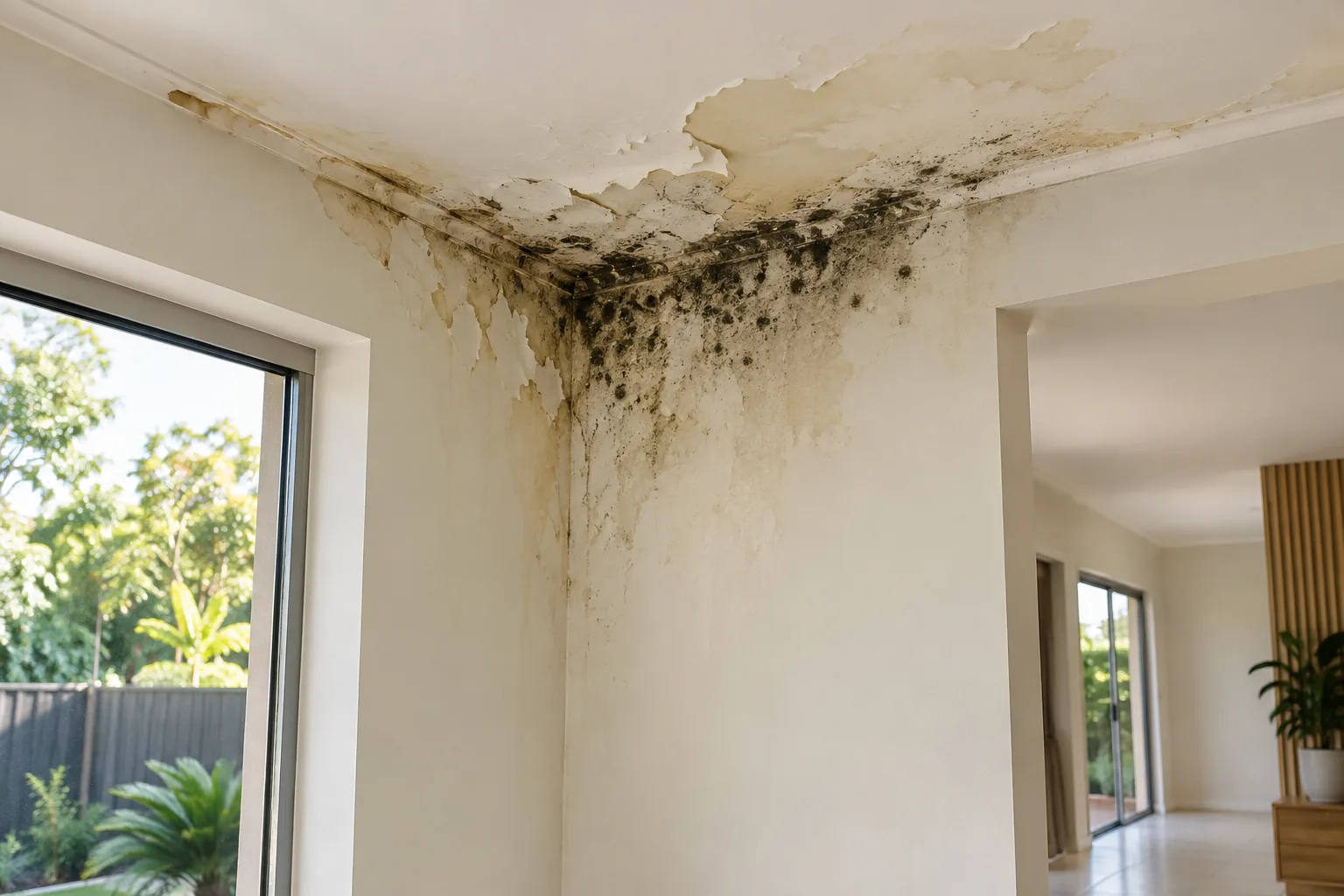
Ceilings
Describe ceiling access restrictions before assuming overhead work fits the premises arrangements.
Bathrooms
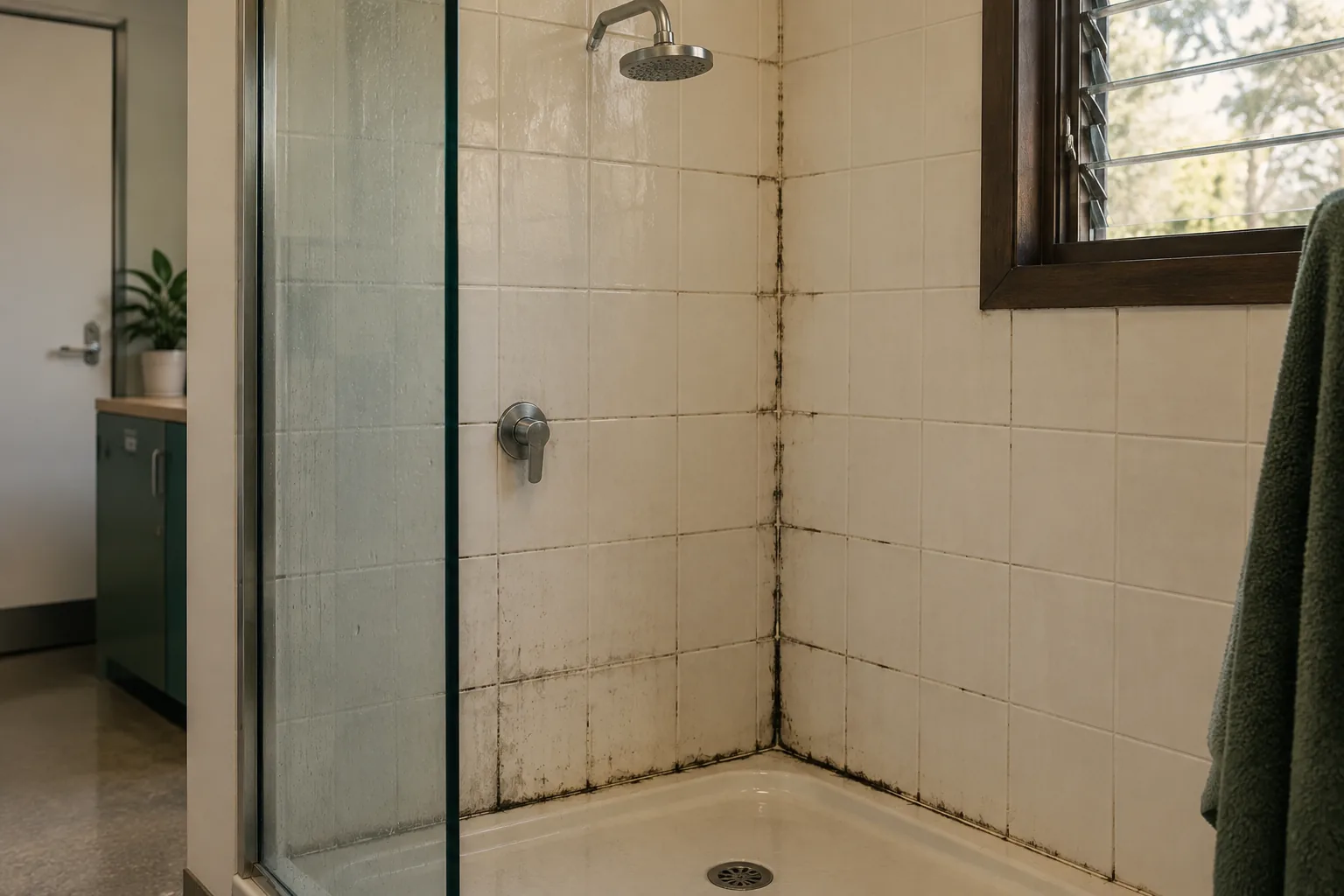
Bathroom paint, tiles or joints must remain a specific surface request within approved access.
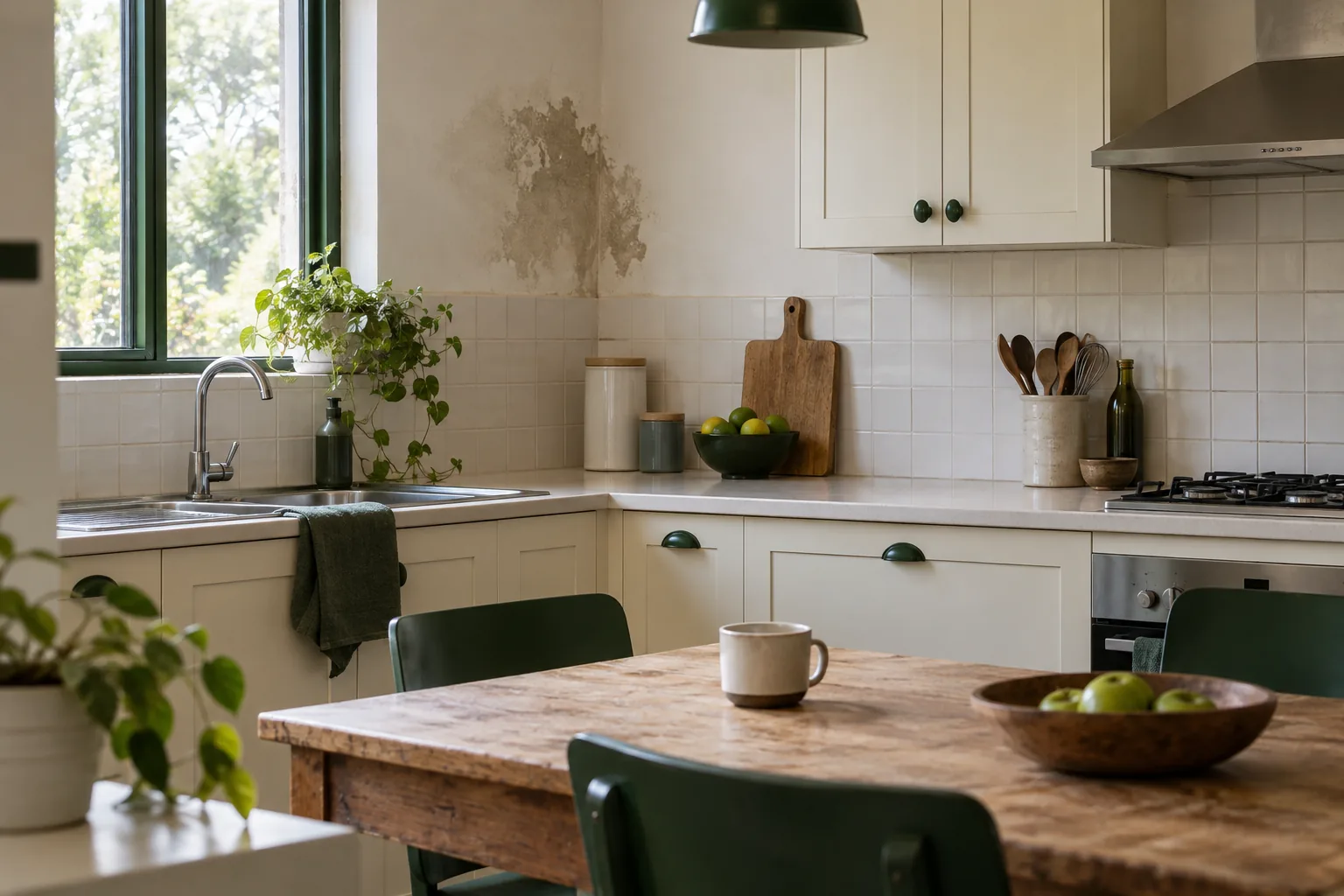
Kitchens
Kitchen treatment does not include stock or machinery merely because it shares the work area.
Accessible affected surfaces
Other structural surfaces require confirmed suitability and entry, with fabrics and contents excluded.
AFTER TREATMENT
Resolve entry and preparation early
Provide entry restrictions and the nominated interior before a date is accepted. The technician should not arrive to an unresolved access-permission task. Coordinate room clearance and occupants’ departure through the authorised contact, keeping return advice specific to the job. Arrange for pets as well as people to leave the property during treatment and confirm return with the technician.
Average work guidance is about three hours per room; entry restrictions and actual surface access need their own timing discussion. Restricted entry does not turn the confirmed service into hourly site labour.
KEEP MOISTURE IN VIEW
Maintain an authorised follow-up route
Maintain an authorised contact for both treatment follow-up and any separate maintenance action. A restricted entry arrangement should not prevent useful observation, but it also does not establish a broad service entitlement for every site interior. Record new visible changes in the nominated room and identify current access conditions for a further enquiry. Follow return instructions and address relevant water or ventilation issues through the appropriate provider. Do not present the completed surface work as a formal site clearance or approval of operational conditions; those requirements need their own confirmed scope.
Maintain an authorised contact for follow-up access.
Identify new changes in the specific treated interior.
Keep external clearance requirements outside assumptions about the visit.
Quote the nominated interior
Supply restrictions and the nominated interior when requesting a quote. Published figures are not a separately confirmed site-clearance package; establish remediation applicability and what the accessible structural work includes.
WARRANDYTE · EXACT ADDRESS & ACCESS
Address-specific suitability enquiries
For Warrandyte, identify the premises, entry contact and restricted interior clearly. Nearby navigation is not evidence of approved site access or routine attendance under operational conditions.
Questions about remediation
Does the locality page confirm access to this premises?
No. Provide the precise address, intended interior and authorised contact so suitability and entry can be discussed.
Should restrictions be mentioned after the booking?
Raise them at the start. Practical entry and equipment conditions matter before an appointment is accepted.
Will remediation negotiate access permission for me?
No such access-management service is confirmed. Establish authority through the appropriate property contact.
Can stored materials be treated with the wall?
Do not assume so. Contents and textiles remain separate from the structural-surface scope.
Does the service include a formal site clearance?
No clearance certificate is promised. Clarify external requirements separately rather than relying on the treatment appointment.
What should a later enquiry identify?
Give the actual interior and changed surface, not only the property name. Each requested area needs a clear access and treatment boundary.
Clarify the restricted interior
Discuss the Warrandyte interior on 03 8652 1296. Confirm authority and suitability before arranging a bounded visible-surface treatment.