
SURFACE TREATMENT · MOISTURE FOLLOW-THROUGH
Mould Remediation Warranwood
A household treatment plan needs to account for pets as well as people. At your Warranwood address, identify who will prepare the room, provide authorised entry and receive the technician’s return instructions. Remediation should not be arranged on an assumption that an animal can remain elsewhere inside the premises or return according to a guessed duration.
People and pets have a departure plan.
An authorised entry contact is nominated.
Return instructions are communicated directly.
TREATMENT & FOLLOW-THROUGH
UNDERSTANDING THE AFFECTED ROOM
Occupancy planning supports a clear surface agreement
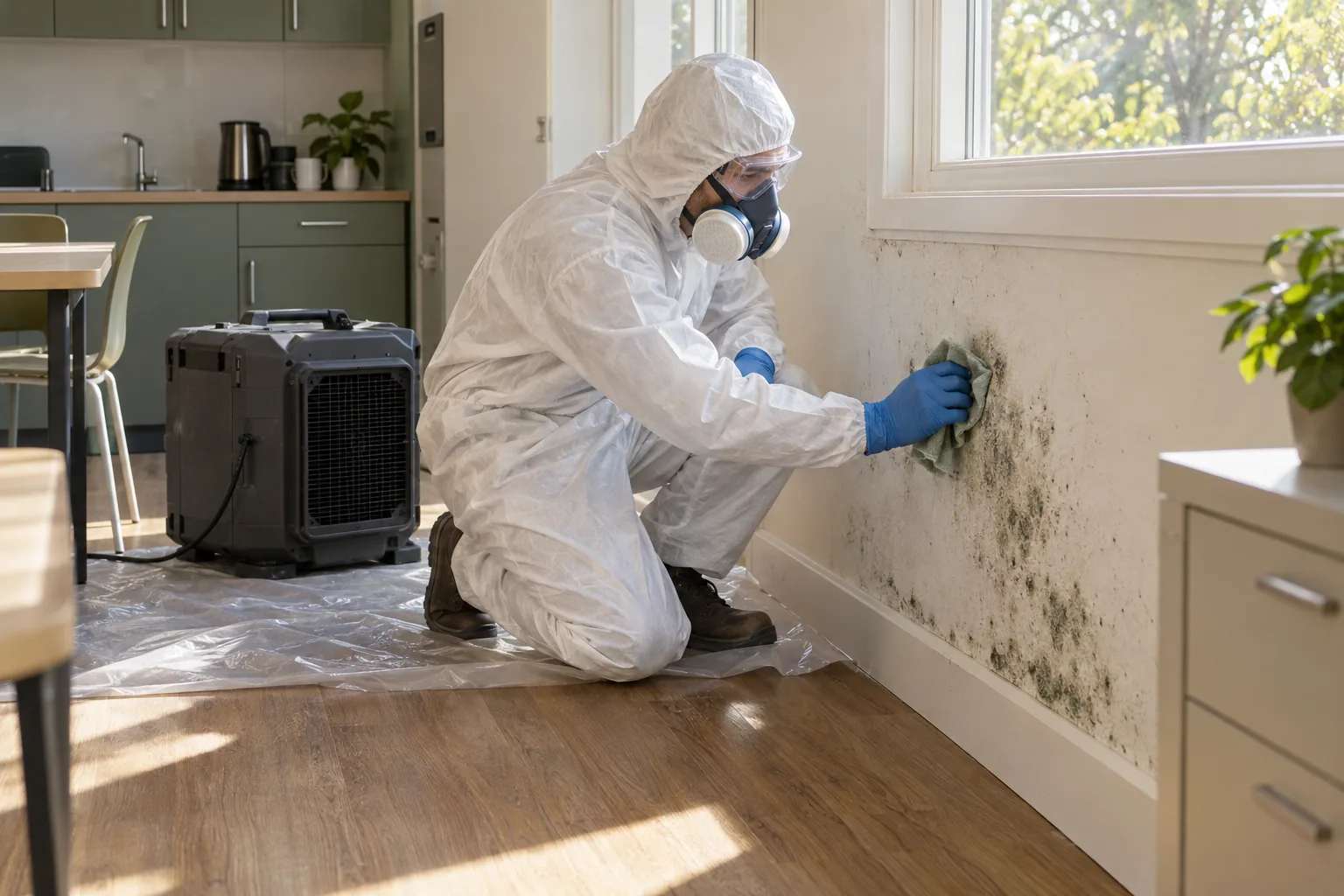
Remediation coordinates assessment, filtration, appropriate treatment and physical removal of visible mould on accessible surfaces. Define the marked finish and requested room before discussing preparation. An organised departure plan does not make every room or household object part of the treatment scope.
The remediation overview describes supported work and exclusions. Furniture, textiles and concealed layers are outside standard surface treatment. Pet belongings do not become included because an animal uses the room; repairs and decorating also require separate agreement.
MOISTURE & CONTAMINATION
Keep pet arrangements separate from moisture evidence
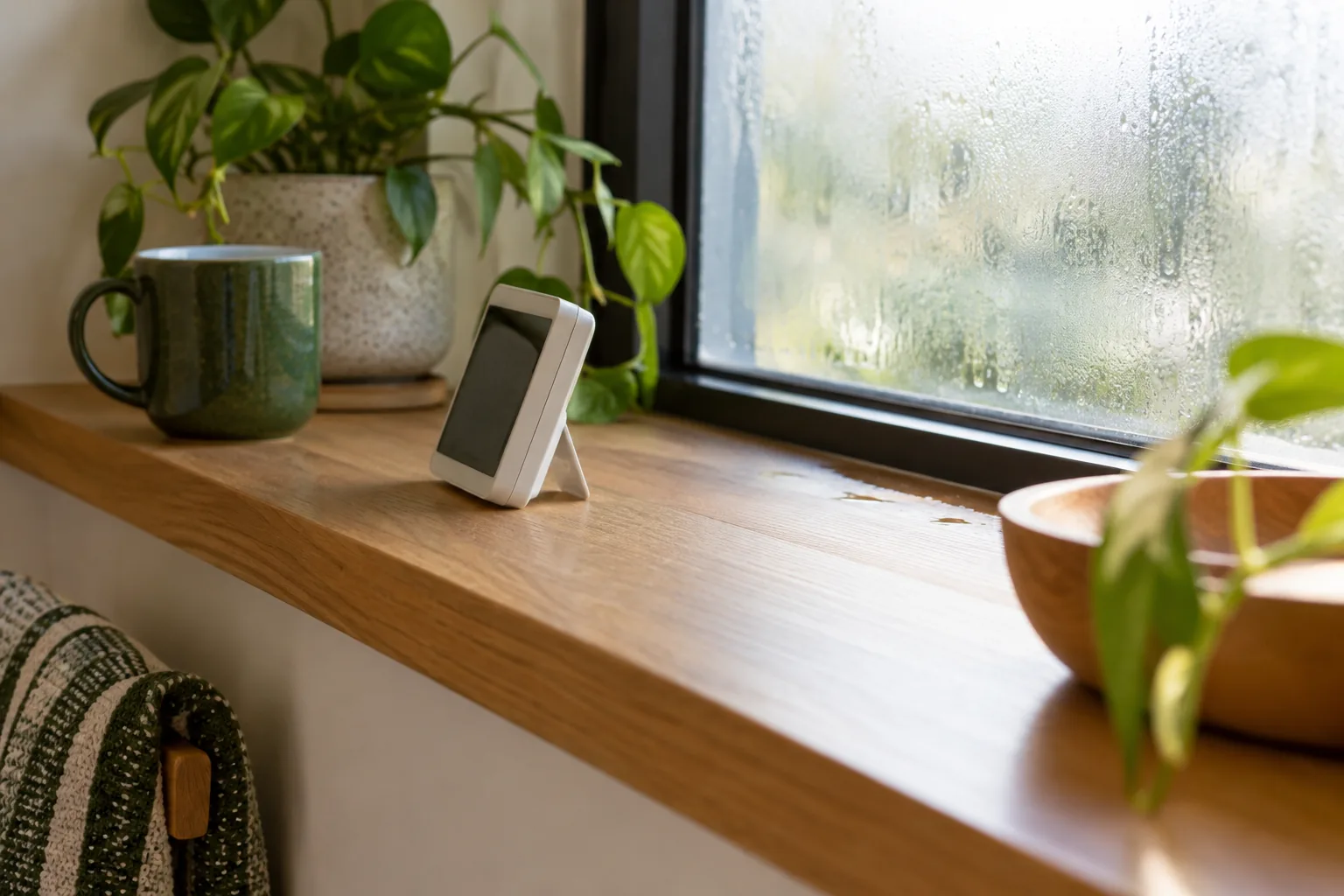
Describe actual water, condensation and known repair work without assigning a cause from household use alone. A professional hygrometer supplies room-air relative-humidity information. It does not certify materials as dry, assess a pet’s exposure or provide a hidden-wall clearance finding.
Arrange separate correction of a confirmed leak or ventilation fault. Ongoing dampness may contribute to recurrence after visible treatment. Discuss inspection of accessible condition if the surface request needs clarification, without promising laboratory tests or animal-health advice as part of the visit.
A DEFINED TREATMENT SEQUENCE
Treat the agreed finish with clear access
1
Agree the accessible scope
Assess the exposed contamination and available access, agreeing suitable checks, surface boundaries and household preparation responsibilities.
2
Begin air protection
Start confirmed HEPA air-scrubber protection before treatment, without interpreting filtration as permission for people or pets to stay.

3
Choose the treatment application
Apply HOCl appropriately, considering ULV dry fog where suitable and avoiding a universal harmless-exposure claim.
4
Remove visible growth
Physically remove visible mould using professional H-class filtered equipment within the agreed finishes, excluding furnishings and pet textiles.
5
Continue final air cleaning
Continue HEPA air cleaning during and after work, and communicate the job-specific return instructions through the nominated contact.
Surfaces do not include household belongings
Walls
Wall treatment identifies exposed finishes independently of bedding or other belongings placed nearby.
Ceilings
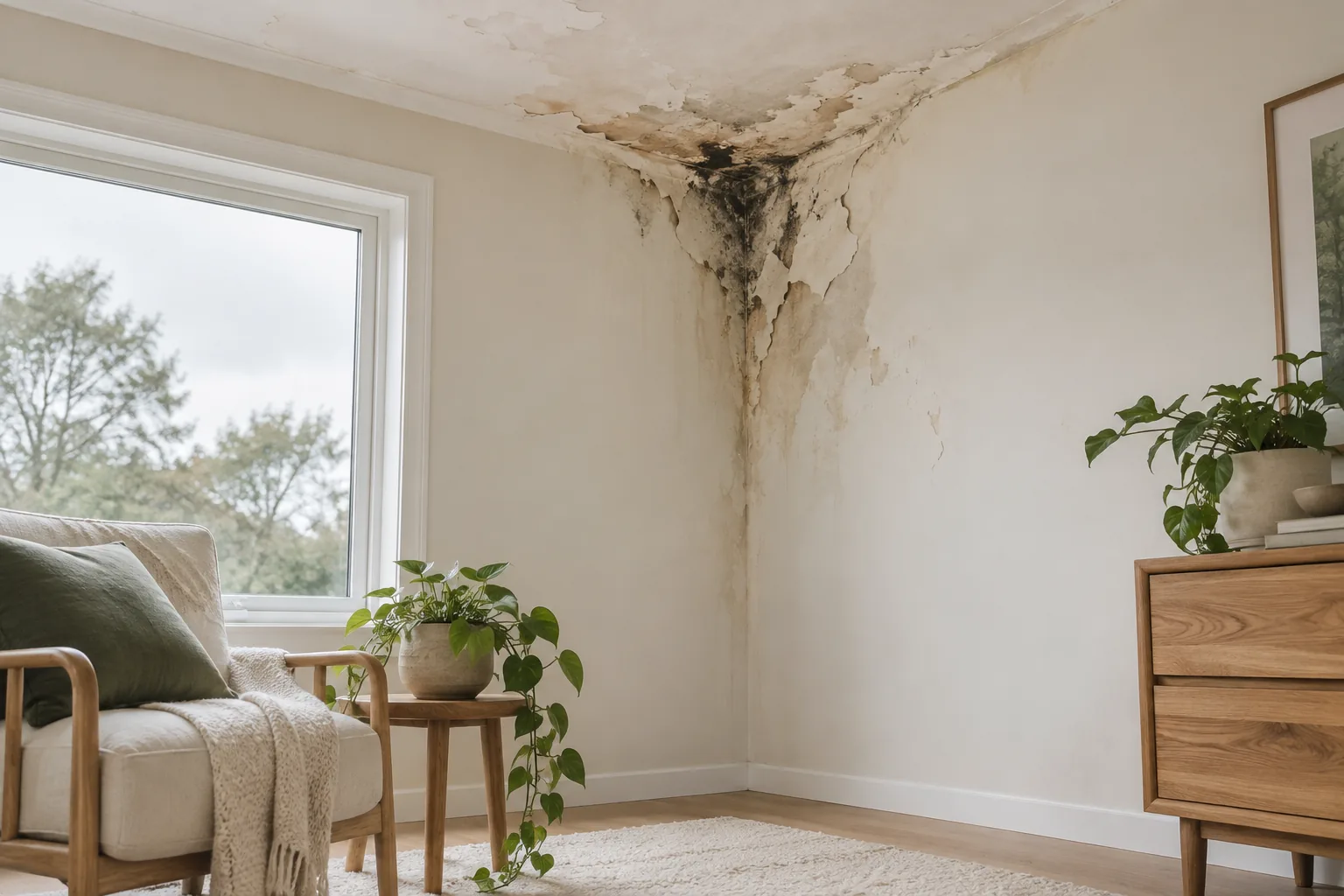
Ceilings need safe working access and any damaged or unavailable section disclosed before agreement.
Bathrooms
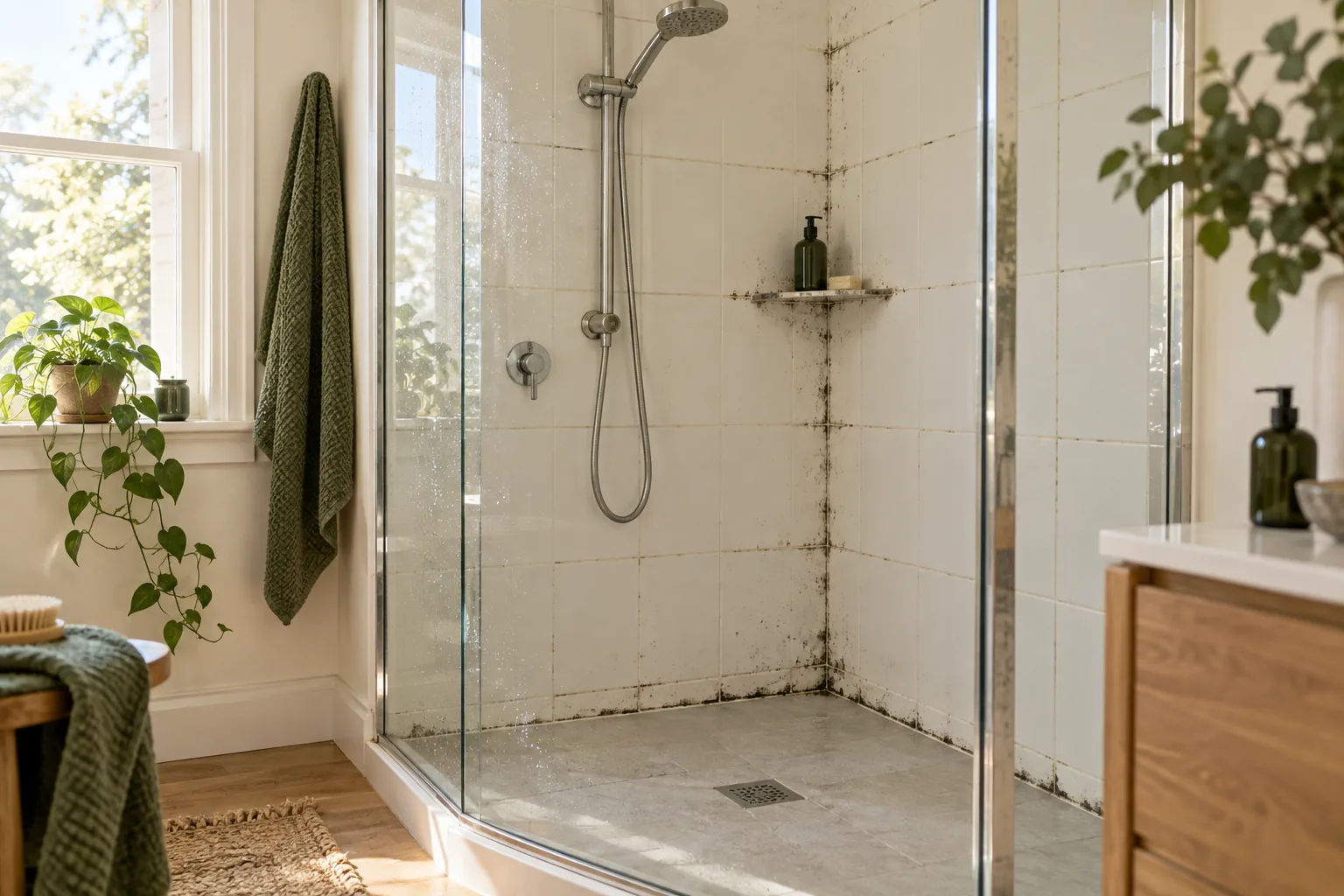
Bathroom paint and shower joints are separate materials, while mats and towels remain excluded textiles.
Kitchens
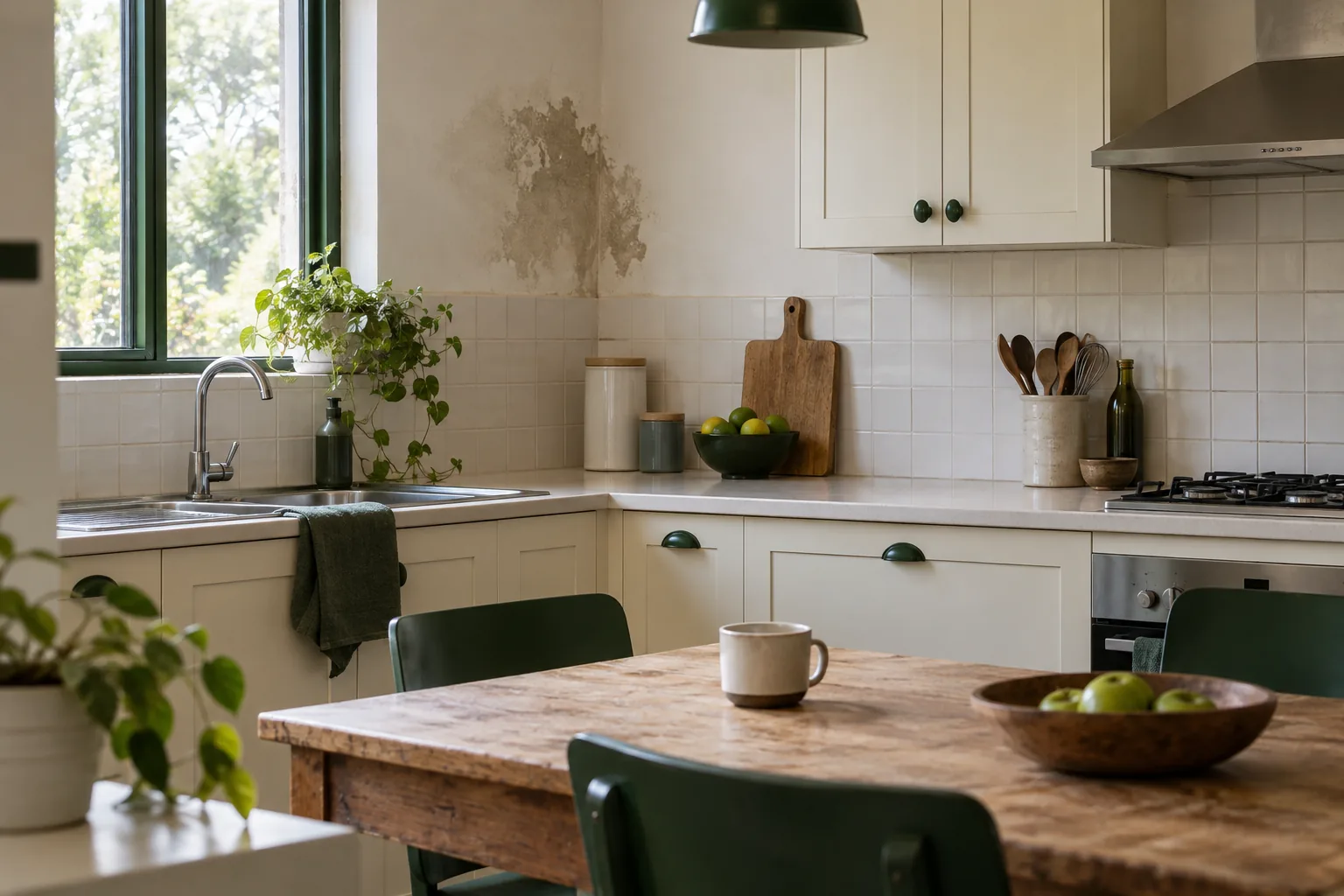
Kitchen exposed surfaces may be included by agreement, with food and contents prepared as directed.
Accessible affected surfaces
Other affected accessible walls, ceilings or hard floors require an explicit scope, excluding concealed layers and household fabrics.
AFTER TREATMENT
Organise departure before confirming the date
All people and pets must leave during treatment. Arrange where they will be and who can manage entry without contradicting that instruction. Average guidance is around three hours per room, dependent on contamination, size and access; that is neither a fixed work slot nor the confirmed interval before return.
Receive the technician’s advice for this particular job and pass it to everybody affected. Do not use smell, a product name or a previous appointment as a return rule. Cosmetic marks may remain after visible work, and repair or decorating decisions are separate from the household occupancy arrangement.
KEEP MOISTURE IN VIEW
Follow the room conditions after return
Once return is advised, keep observation focused on the accessible finish.
Report newly visible water or growth with its timing.
Complete outstanding source or ventilation repairs separately.
Keep aftercare communication available to the people responsible for the room.
Quote for the accessible work
Specify the requested surfaces and preparation contact when discussing the quote. The published room examples are labelled Mould Removal, so confirm their applicability to remediation. Pet-item cleaning, health assessment and whole-house treatment should not be inferred from a room amount or the household’s departure plan.
WARRANWOOD · EXACT ADDRESS & ACCESS
Enquiries for nearby addresses
Give the complete Warranwood address and identify the person coordinating entry and departure. Explain who will receive the instructions if the booker is absent. Nearby location pages relate to other premises; they do not resolve this household’s access, attendance or return arrangements.
Questions about remediation
Can a pet stay in another room during treatment?
Pets must leave during treatment. Discuss the actual departure and return arrangements rather than treating another internal room as an approved exception.
Does the product name establish when animals can return?
No. Obtain the technician’s instructions for this job; no universal exposure-safe or immediate-return claim is made.
Are pet beds included with the room surfaces?
No. Textile belongings are excluded from standard remediation. Keep their condition separate from the wall, ceiling or hard-floor treatment requested.
Can the average room time be used to book the pet’s return?
Do not treat it as a confirmed return interval. Actual work duration varies and job-specific advice must be obtained.
Will the service provide advice about an animal’s health?
No health assessment is promised. The confirmed service concerns visible accessible surfaces; do not present it as an animal-exposure evaluation.
Who should receive the household’s return message?
Nominate a contact who can reliably inform everyone concerned and coordinate pets as well as people. Establish that communication before attendance.
Discuss treatment and the household’s arrangements
Call 03 8652 1296 with the affected room and household preparation plan. Confirm authorised entry, departure and how return instructions will be received.