
SURFACE TREATMENT · MOISTURE FOLLOW-THROUGH
Mould Remediation Wonga Park
If several stains have different histories within the same room at your Wonga Park address, separate current growth from assumed clearance of older marks. Point out the separate patches and their obstructions rather than expecting the entire room to share one cause.
Current patches distinguished
Historical uncertainty retained
Fresh changes tracked
TREATMENT & FOLLOW-THROUGH
UNDERSTANDING THE AFFECTED ROOM
Several marks, several histories
Several marks in one room can carry different histories and cosmetic expectations. Identify each visible patch and what has changed recently, without assigning every outline one cause. The treatment decision should concern the current accessible contamination rather than a blanket judgement from colour. Review remediation scope before selecting the structural-surface job.
One room can hold several cosmetic and contamination questions at once. Describe current growth without declaring every historical outline active, and avoid assuming similar colour establishes matching treatment needs. The supported sequence has an existing-contamination purpose, with final appearance limited by the material. Separate decoration and moisture correction can remain necessary even after the agreed visible surface work is complete.
MOISTURE & CONTAMINATION
Record current wetting separately
Keep each stain’s known history distinct from guesses about its origin. Fresh wetting is useful information even where an older outline has stayed unchanged. A surface assessment enquiry can clarify the current visible concern.
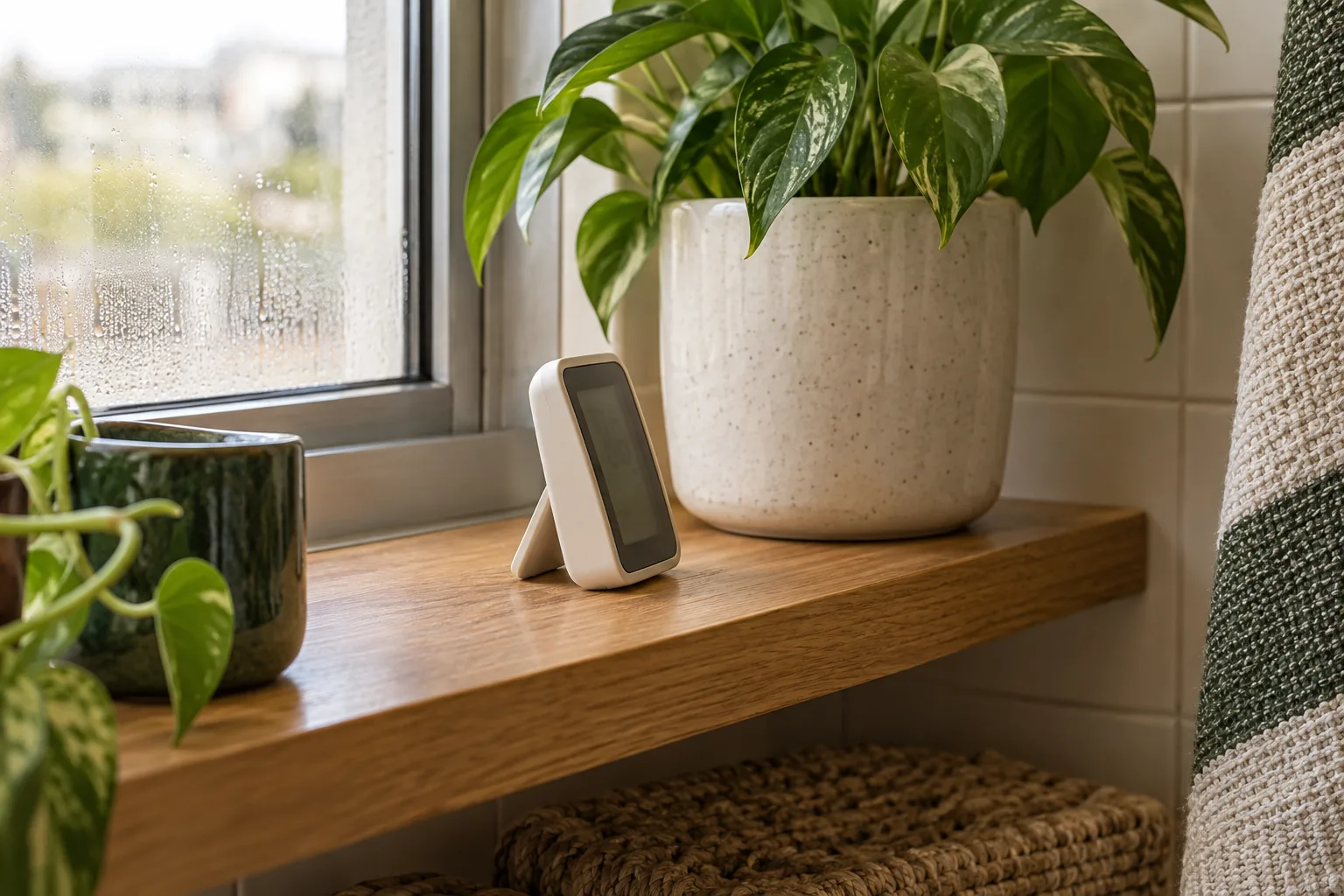
Air relative humidity from the professional hygrometer cannot establish each stain’s history or moisture inside the underlying materials.
A DEFINED TREATMENT SEQUENCE
Treatment of the assessed current patches
1
Assess the accessible scope
Review each current mark and finish separately, distinguishing reliable history from assumptions based on the oldest outline.
2
Set up HEPA protection
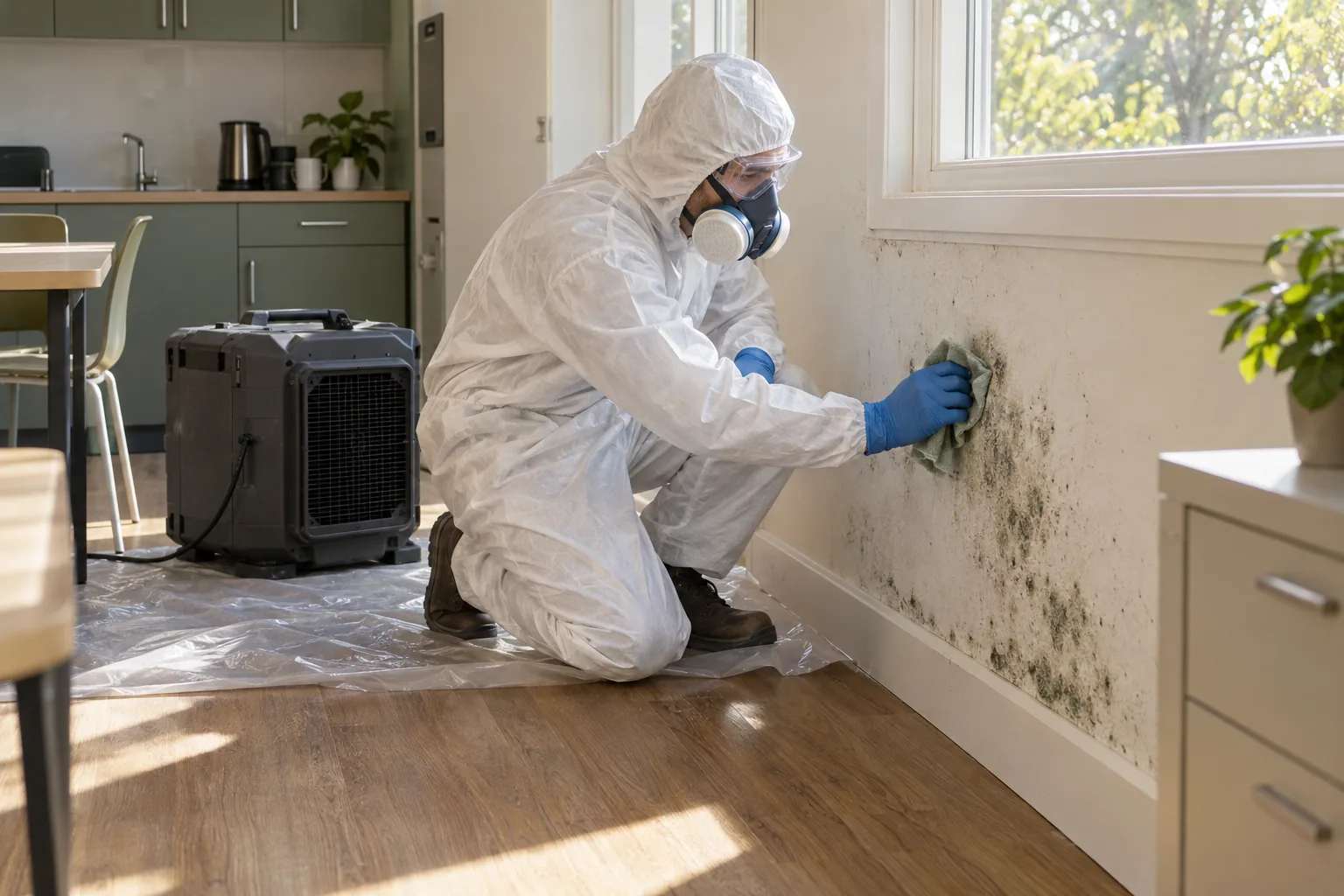
Begin HEPA scrubber protection before application with room-wide access agreed for the requested patches.

3
Choose suitable application
Select appropriate HOCl treatment for the assessed surfaces; conditional ULV dry fog is not a promise of identical work on every mark.
4
Remove visible contamination
Remove visible mould using H-class filtered professional equipment within the agreed scope, keeping cosmetic outlines separately understood.
5
Continue final air cleaning
Continue HEPA air cleaning during and after treatment; clarify return instructions and how to report fresh changes independently of old staining.
Surfaces beyond colour assumptions
Walls
Label current wall patches separately from older outlines whose history is uncertain.
Ceilings
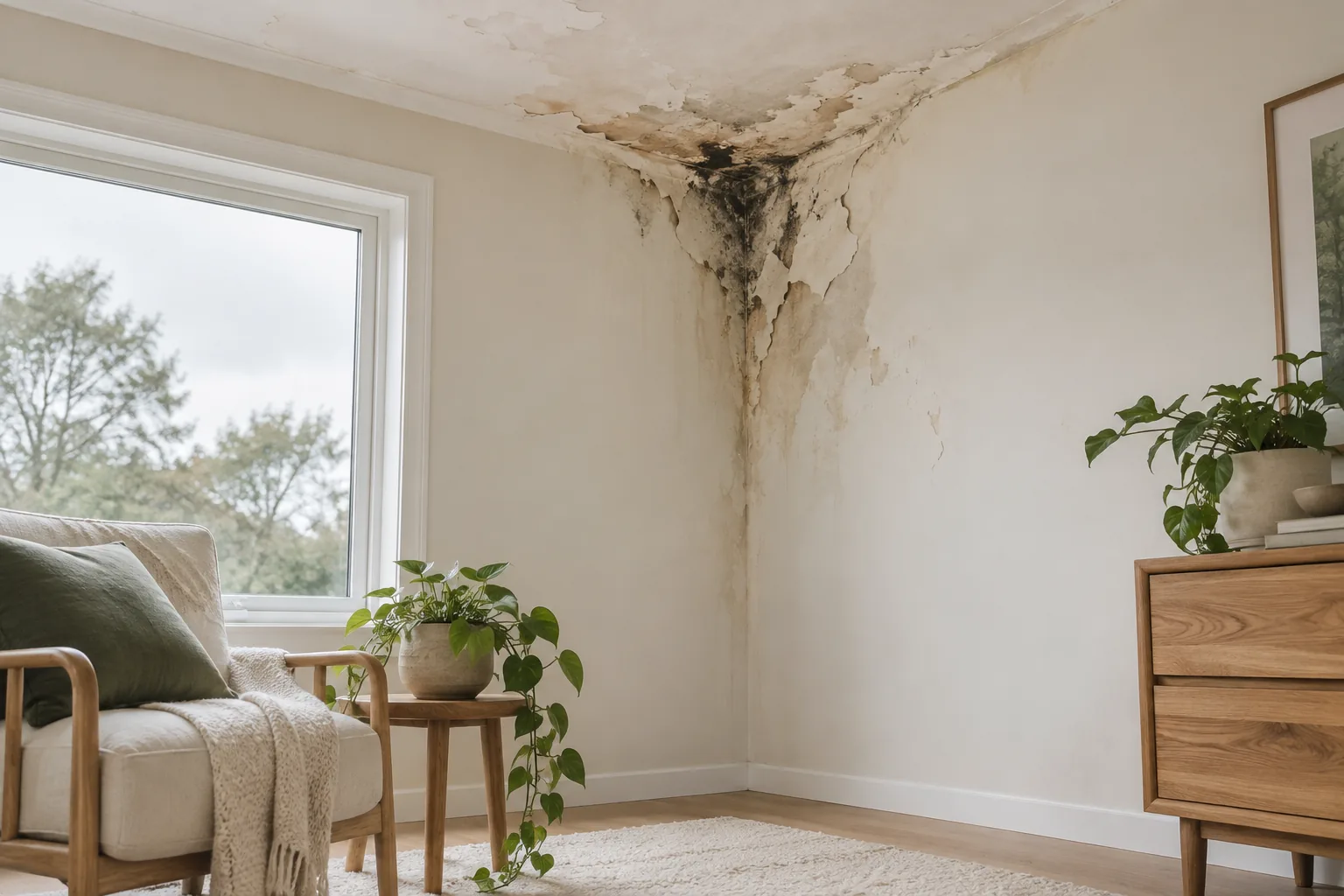
Describe new ceiling growth independently of an unchanged cosmetic water mark.
Bathrooms
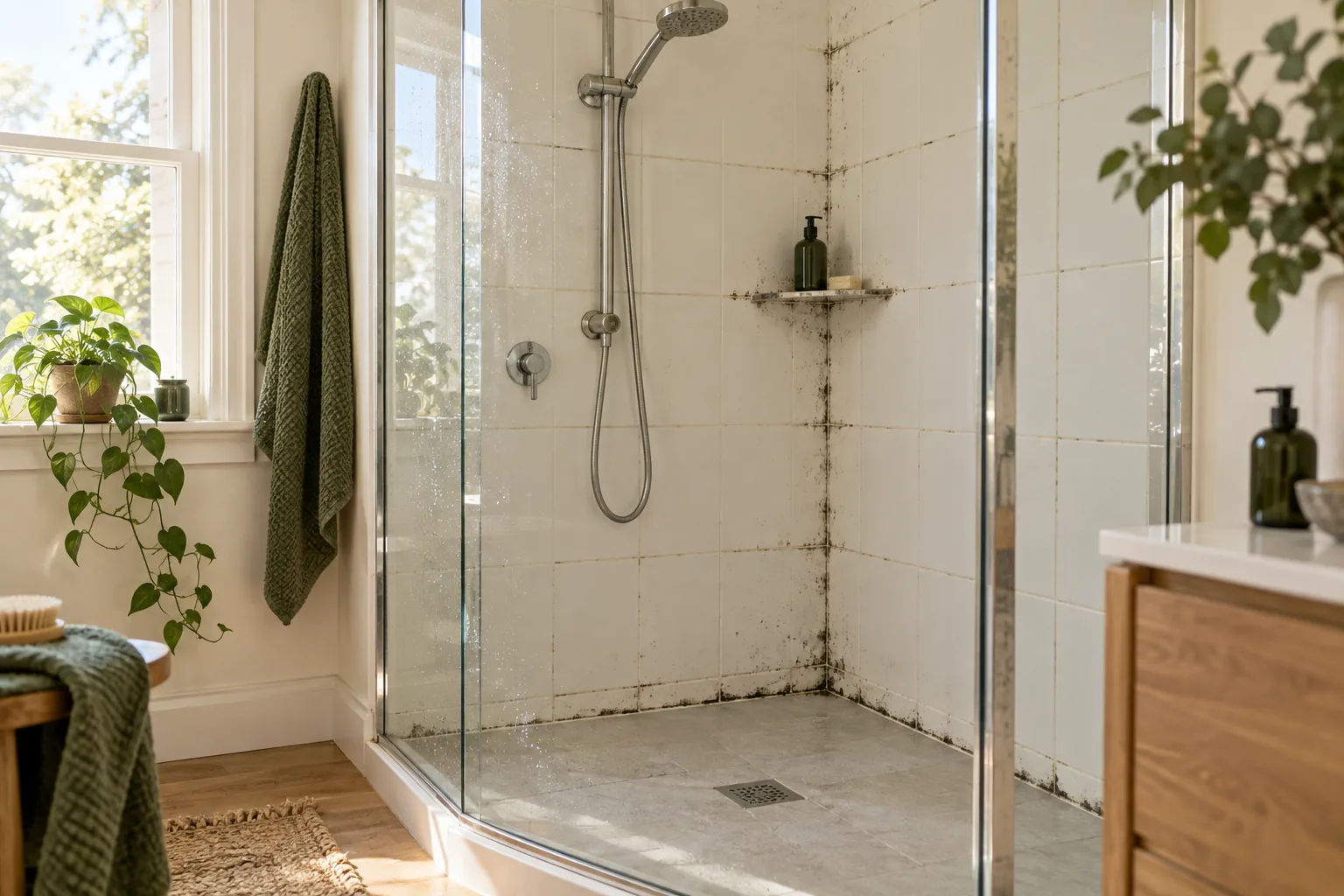
Bathroom materials need individual descriptions rather than a colour-based whole-room judgement.
Kitchens
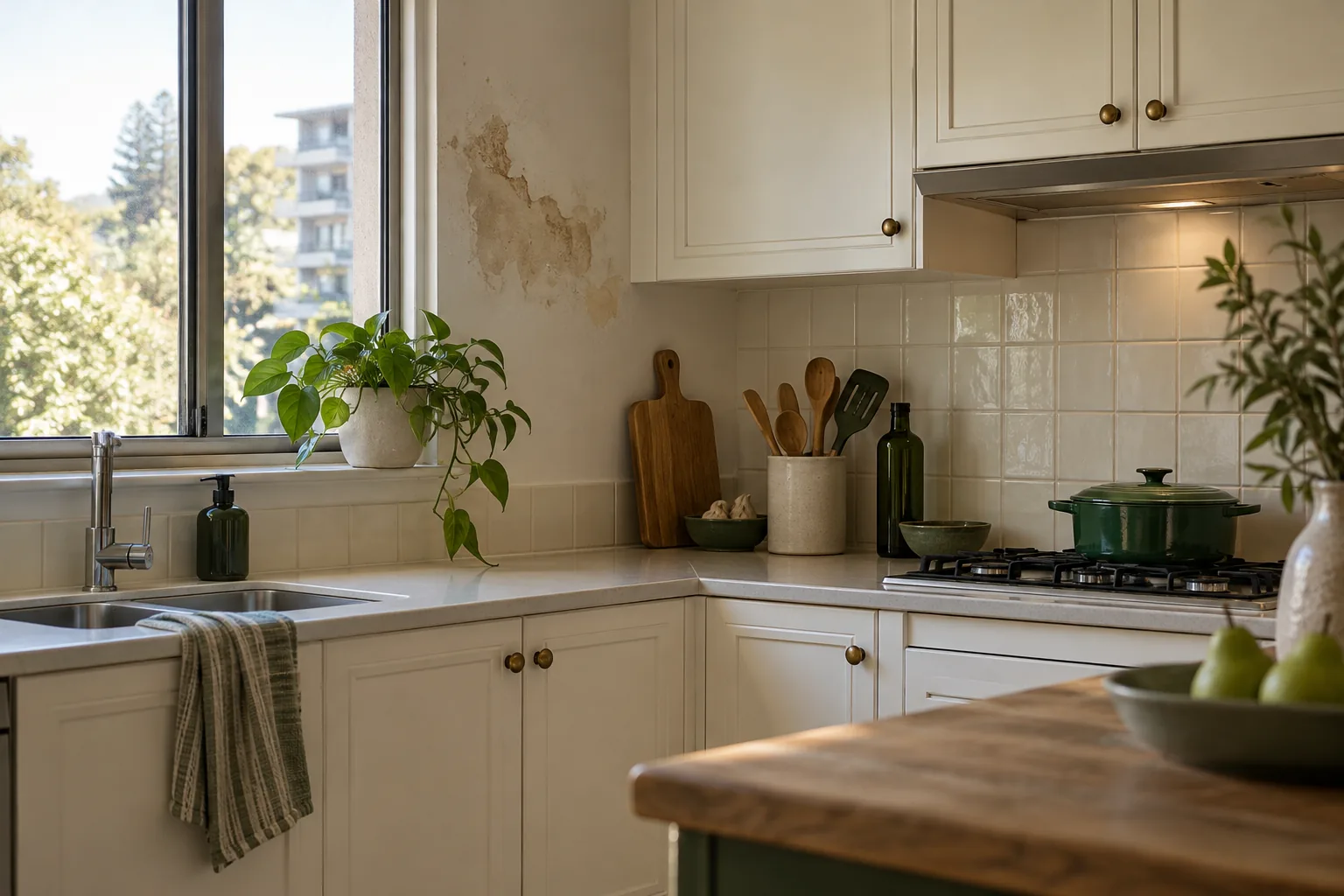
Kitchen patches should be located on exposed finishes, separate from food storage and appliance concerns.
Accessible affected surfaces
Agree additional accessible structural areas without turning historical marks into furniture or textile treatment.
AFTER TREATMENT
Prepare the actual visible areas
Identify each requested mark and current obstruction before clearance is organised. Avoid painting or applying another product merely to unify the room’s appearance. People and pets leave during treatment; confirm how the specific return advice will be communicated.
Average guidance of approximately three hours per room should be discussed against the actual patches, materials and practical access. Patch descriptions should inform scope, not an invented hourly stain charge.
KEEP MOISTURE IN VIEW
Track fresh changes without merging histories
After treatment, label fresh changes separately from older marks with uncertain histories. An unchanged outline may have cosmetic significance without establishing the state of another surface. Keep observations dated and follow through on relevant leaks or ventilation concerns, rather than relying on colour alone. Photographs can support comparison when they show the same visible area and are clearly identified, but do not certify hidden material. Remaining decoration is a separate decision. Accurate descriptions help later enquiries address the actual change instead of collapsing several histories into a single recurrence claim.
Date fresh changes separately from older outlines.
Label patches clearly when photographs support an enquiry.
Arrange the relevant moisture response beyond decoration.
Scope before stain-based price assumptions
List current patches and their material condition when discussing the quote. Pricing examples need remediation applicability confirmed; stain colour alone does not establish a fee category or cosmetic restoration allowance.
WONGA PARK · EXACT ADDRESS & ACCESS
Enquiries for the particular marked room
For Wonga Park, identify the actual room and distinct visible areas. Nearby links do not mean a neighbouring property’s history explains your marks or establishes attendance.
Questions about remediation
Do all stains need identical treatment?
Do not decide that from appearance alone. Describe each finish, history and current visible concern so suitability can be discussed.
Can an unchanged stain prove there is no new growth nearby?
No. A separate fresh patch needs its own description and timing.
Will remediation erase every old mark?
No complete cosmetic result is guaranteed. Decorating may remain a separate decision.
Does the oldest stain locate the original leak?
Not by itself. Share known repair information and water observations rather than inferring a pathway from colour.
Should I label the patches in enquiry photographs?
Clear room and surface labels can help if images are requested. Do not imply the labels establish a diagnosis.
What is useful aftercare for mixed histories?
Record fresh changes separately from old marks and follow up on relevant moisture issues. Avoid treating every outline as either clearance or recurrence.
Describe today’s patches individually
Describe the Wonga Park marks separately on 03 8652 1296. Agree accessible treatment and realistic appearance limits without assigning every outline one cause.