
SHARED BATHROOM VENTILATION · MOISTURE · SURFACES
ARMADALE · MELBOURNE
Mould Removal Armadale
Steam that remains long after a shower gives a useful starting point. An Armadale bathroom enquiry should include fan operation, window access and any mould extending beyond the shower enclosure.
Visible material considered
Moisture history discussed
Access and scope agreed
THE ROOM TELLS A STORY
What happens after the fan stops
Armadale forms part of Stonnington. In a flat or shared building, ventilation may involve arrangements beyond one room. Check what you can observe without removing equipment: fan noise alone does not confirm extraction outdoors. Discuss permission and access if investigation involves shared fixtures or building services.
An inspection discussion should distinguish visible paintwork from building-service questions. Mention shared access, fan observations and any known repair; the bathroom’s position in a building does not automatically provide permission to alter ventilation equipment.
UNDERSTANDING MOISTURE
Make sense of
drying time after showers.
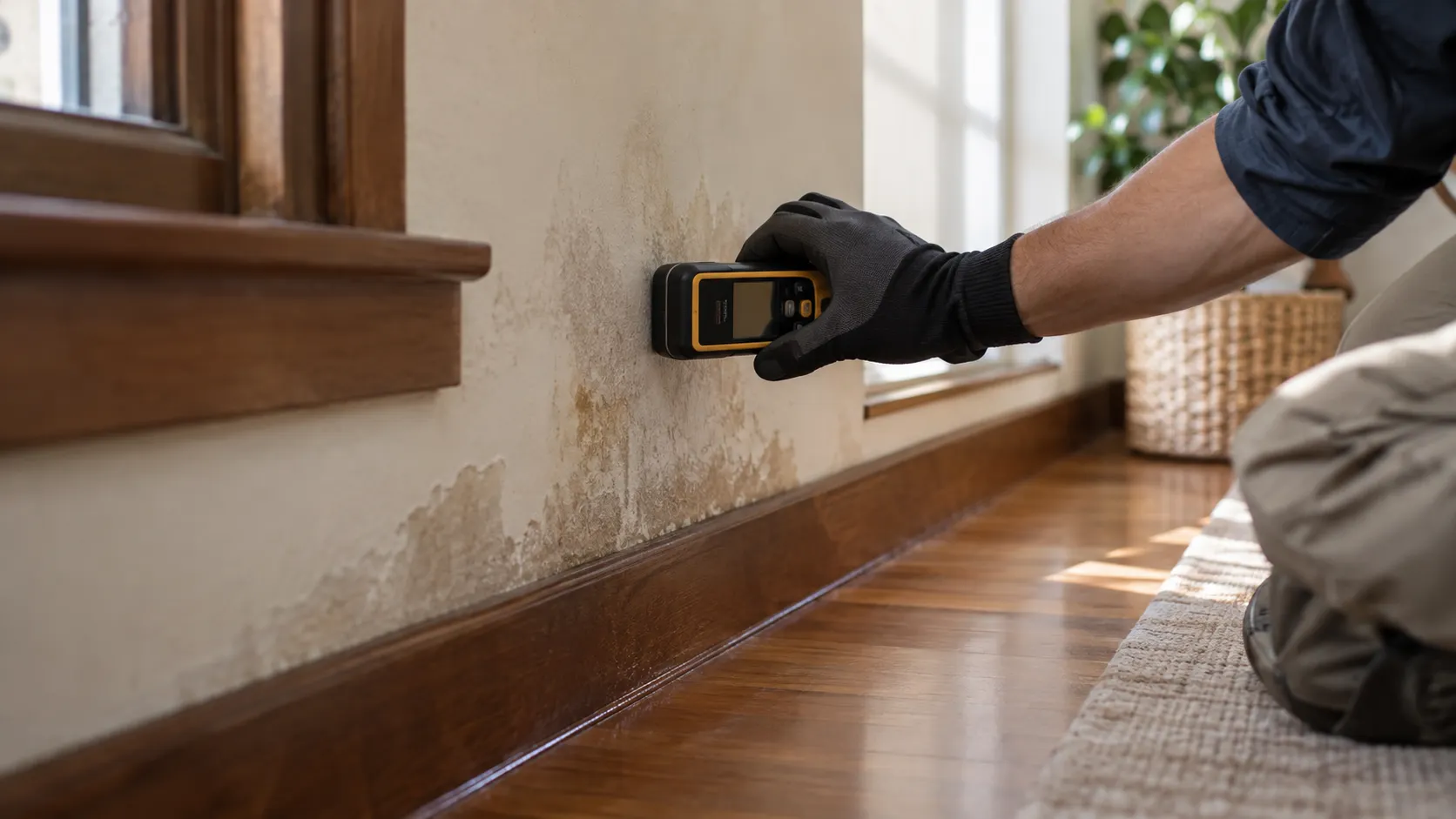
Moisture in the air
Time the room’s visible drying after ordinary showers. A fan operating audibly is not proof of effective extraction; persistent droplets and damp ceiling corners give more useful observations.
The water history
A stain appearing after water use may need a plumbing enquiry as well as ventilation consideration. Record its location and timing without assuming shared equipment is the cause.
Check the finish
The bathroom’s painted ceiling, tiled wall and fixed ventilation components are different assessment subjects. State which finish is affected and leave opening or modifying equipment outside an unagreed surface scope.
OUR REMOVAL PROCESS
From observations
to surface work.
Keep the room history
Note when the fan operates, how long surfaces stay wet and whether the door or window is usually open. Keep these observations separate from assumptions about duct performance.
Make access practical
Identify the person who can authorise entry or work involving shared fixtures. A bathroom assessment should not turn into an unapproved alteration of a building service.
Agree the next decisions
Clarify whether ventilation investigation remains necessary. Surface cleaning deals with the agreed finish, while faults or access beyond that room may involve another appointment or trade.
01
Assess the bathroom ceiling
Explain where steam persists and which painted surfaces show growth. An initial removal discussion should include extraction observations and the room’s access arrangements.
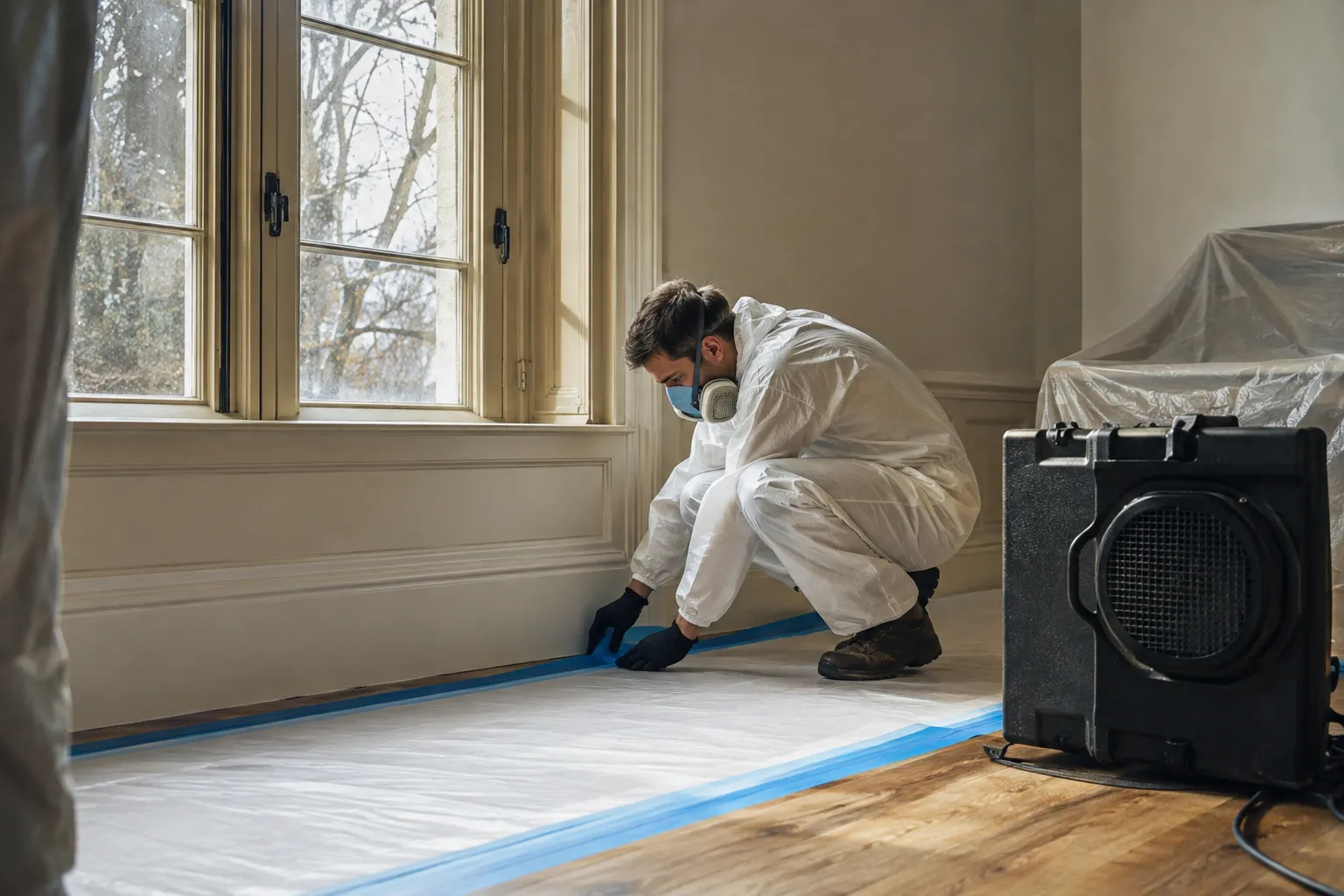
02
Prepare the working area
Prepare access to the ceiling or wall without touching shared ventilation equipment. Discuss what belongs to the individual bathroom and what needs building-management coordination.
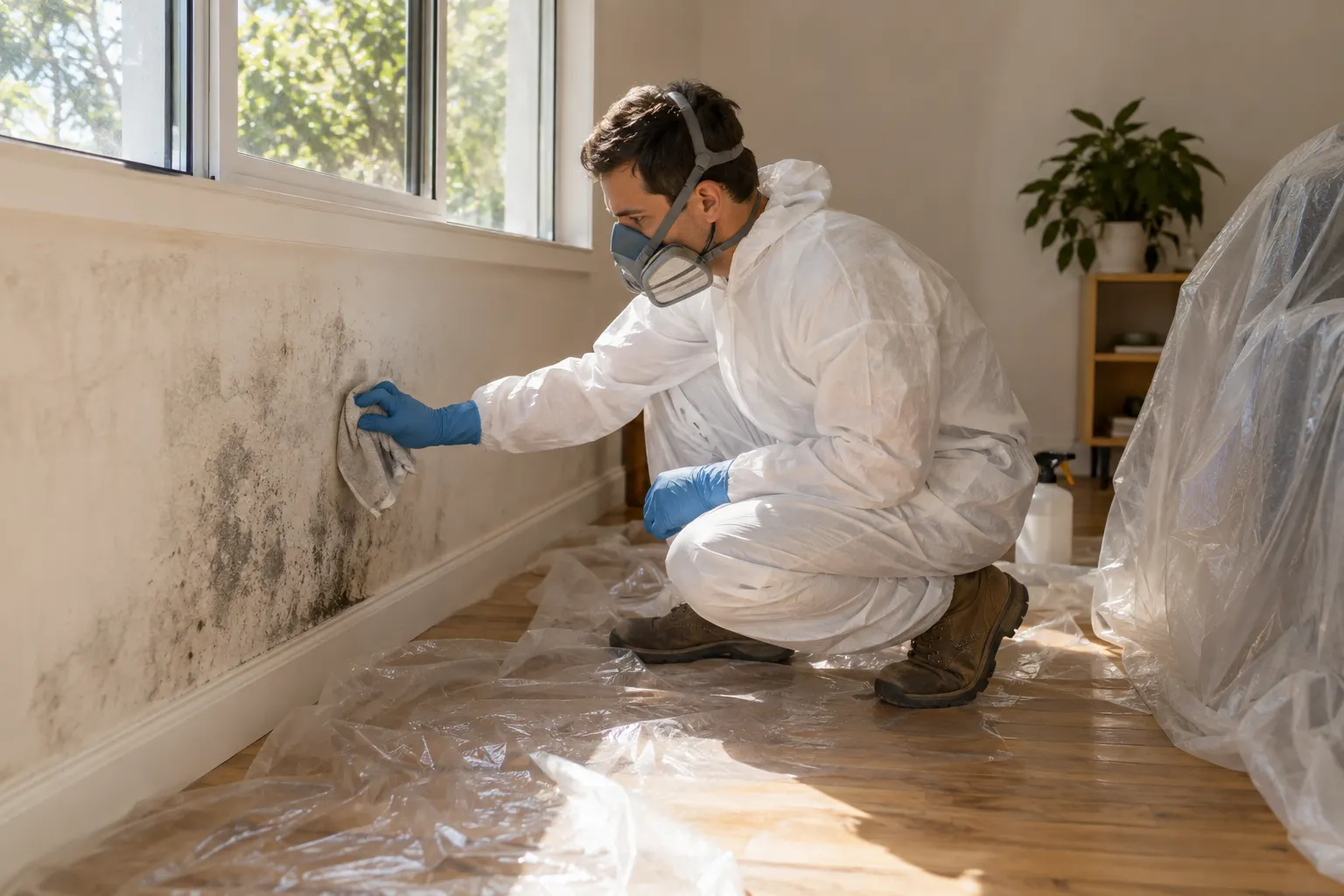
03
Remove and review
Review the accessible treatment area and observe the room after later showers. Continued lingering steam is useful follow-up information; a quiet or noisy fan alone settles little.
COMMON AREAS AFFECTED
Different surfaces.
Different decisions.
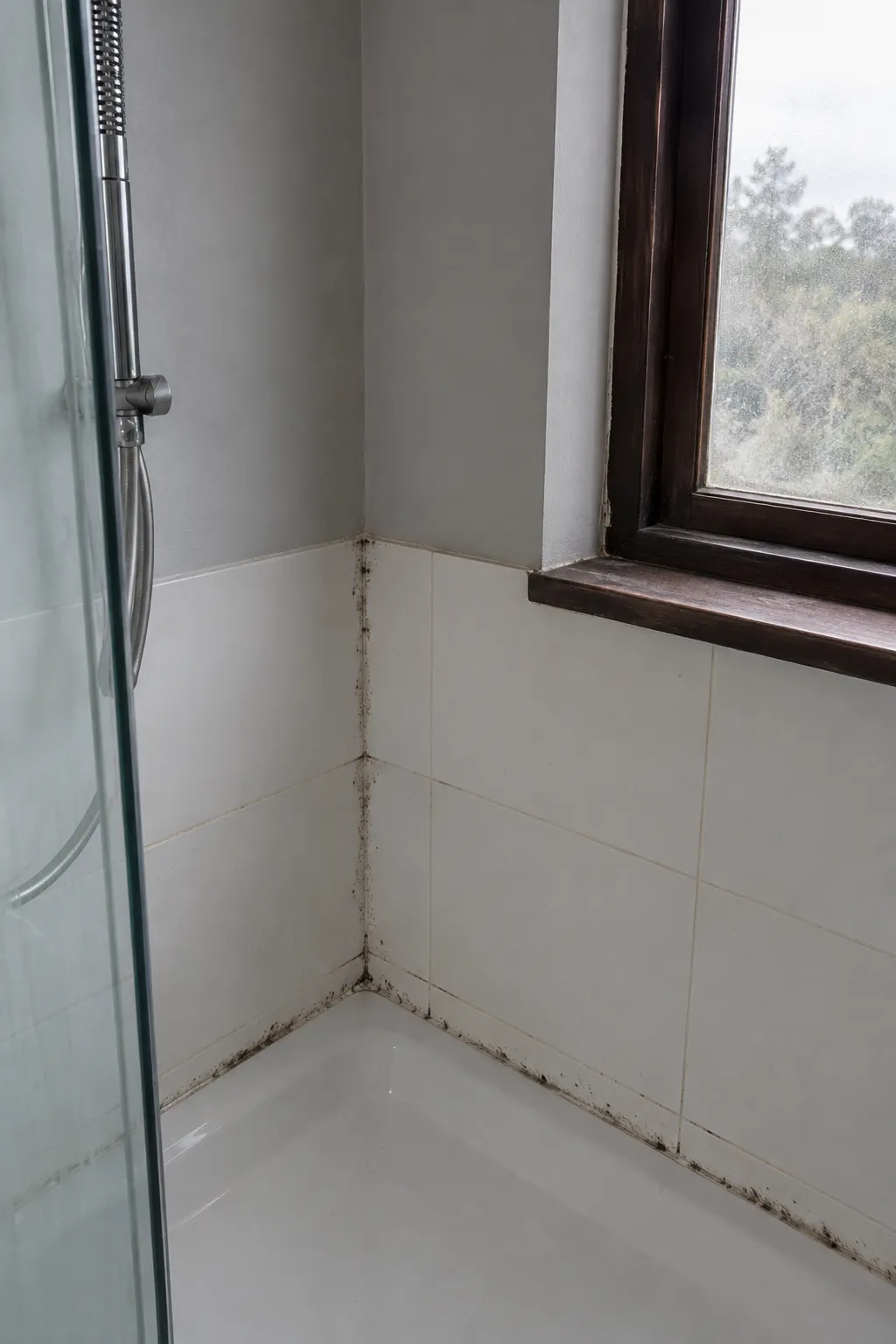
Bathroom junctions
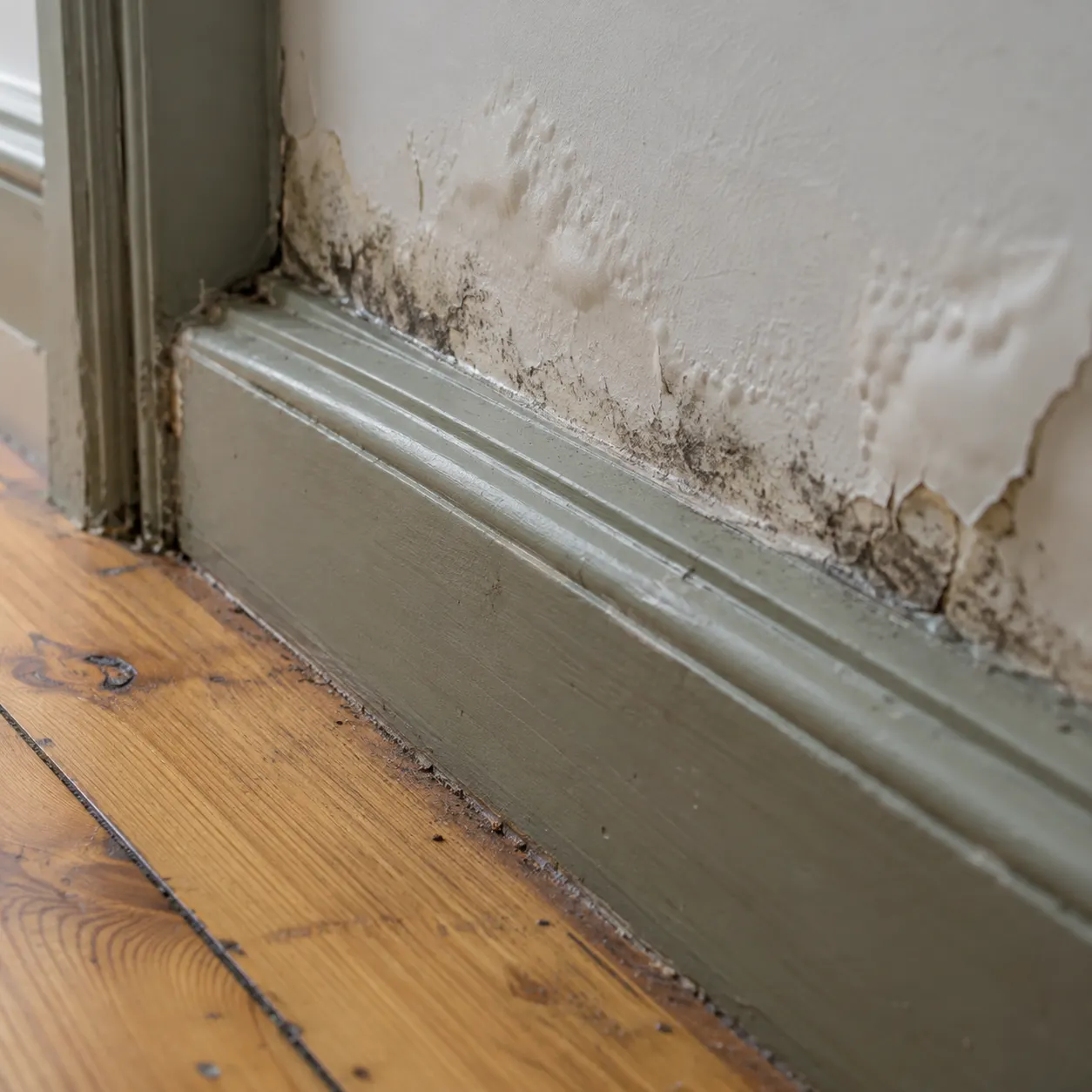
Note whether growth stays within the enclosure or extends to the ceiling. These locations help explain how the room behaves, while material condition still determines treatment suitability.
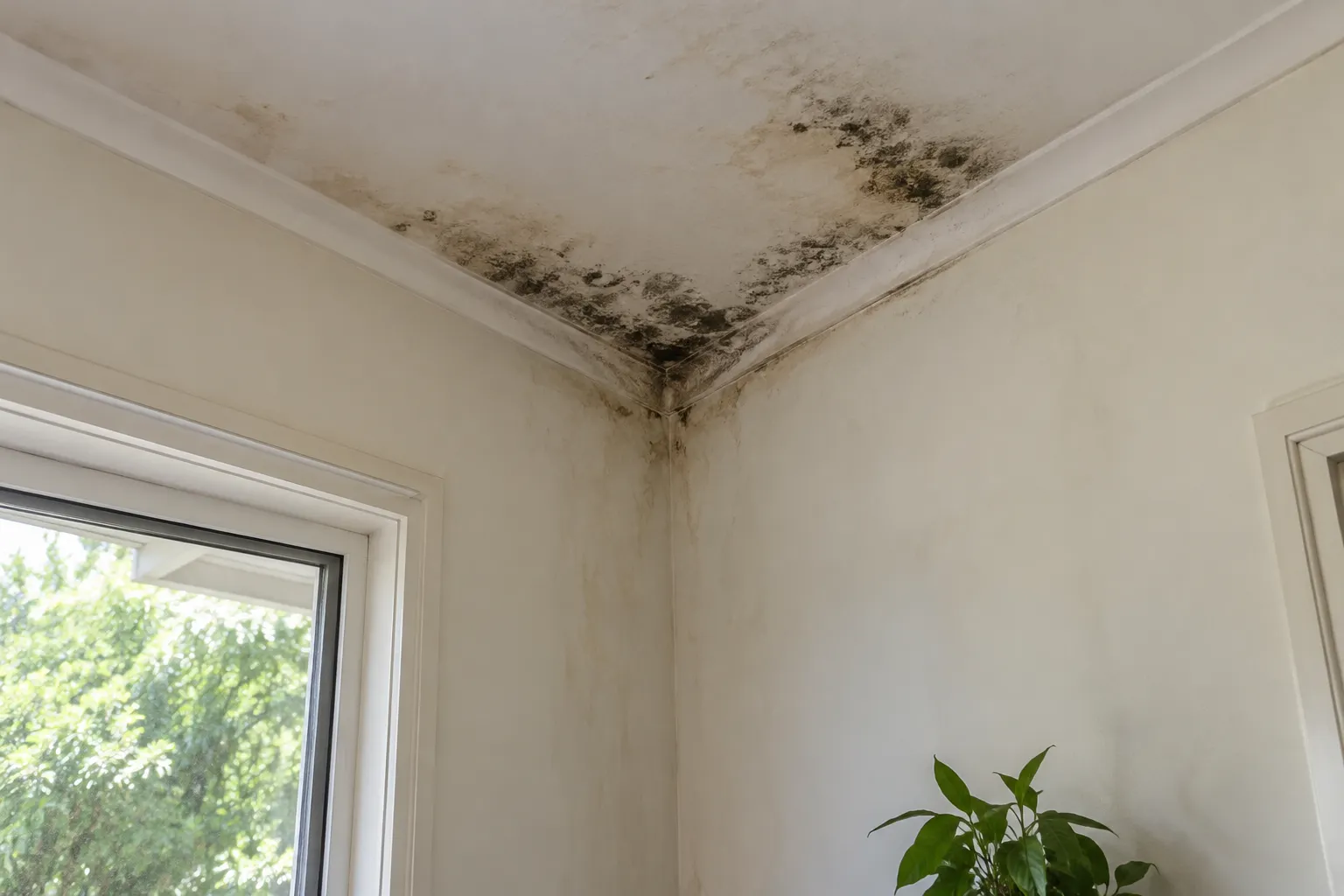
Ceiling surfaces
Ceiling spots should be photographed from a safe position. Include whether plaster is damaged or only the painted face is marked, and how moisture changes after the fan stops.
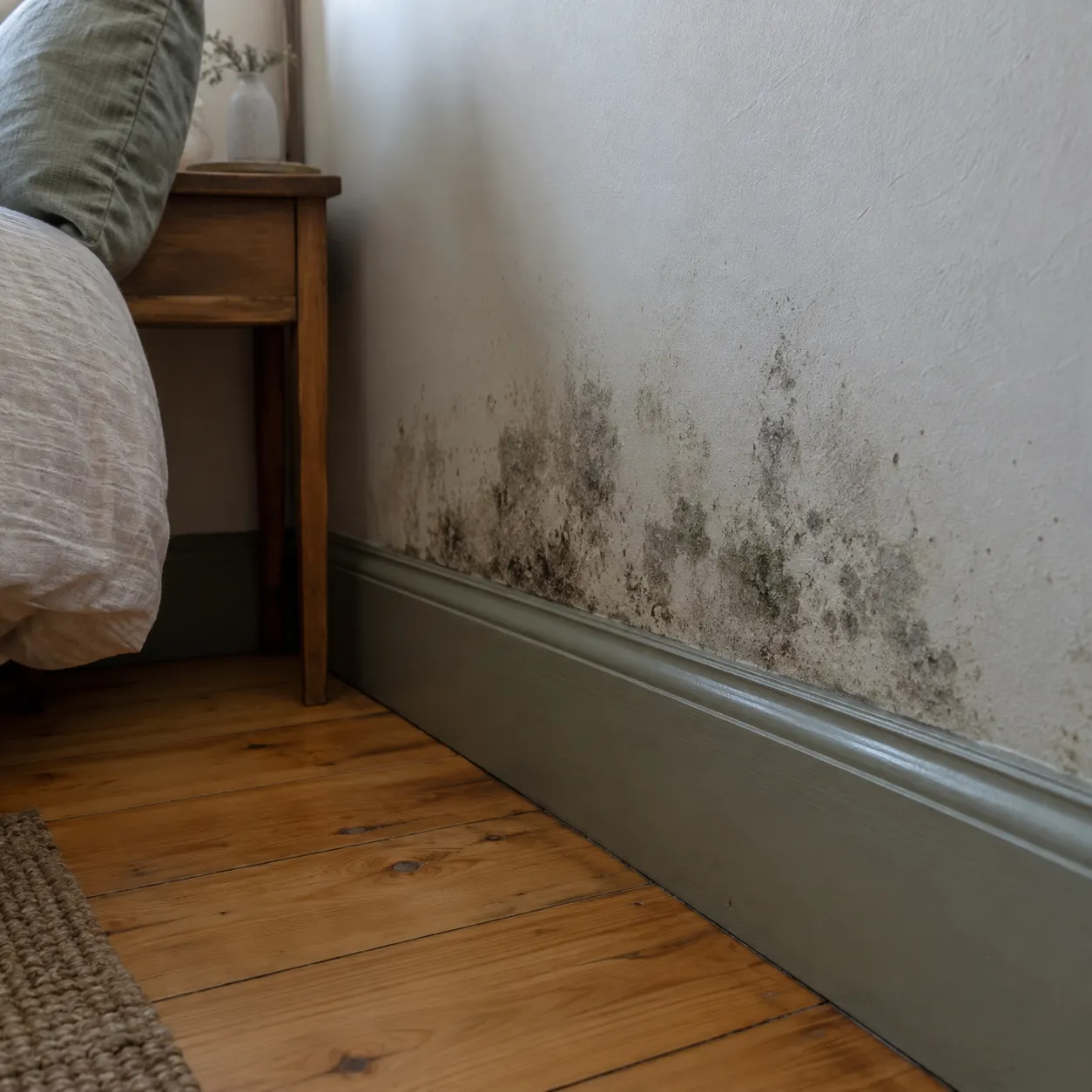
Painted walls
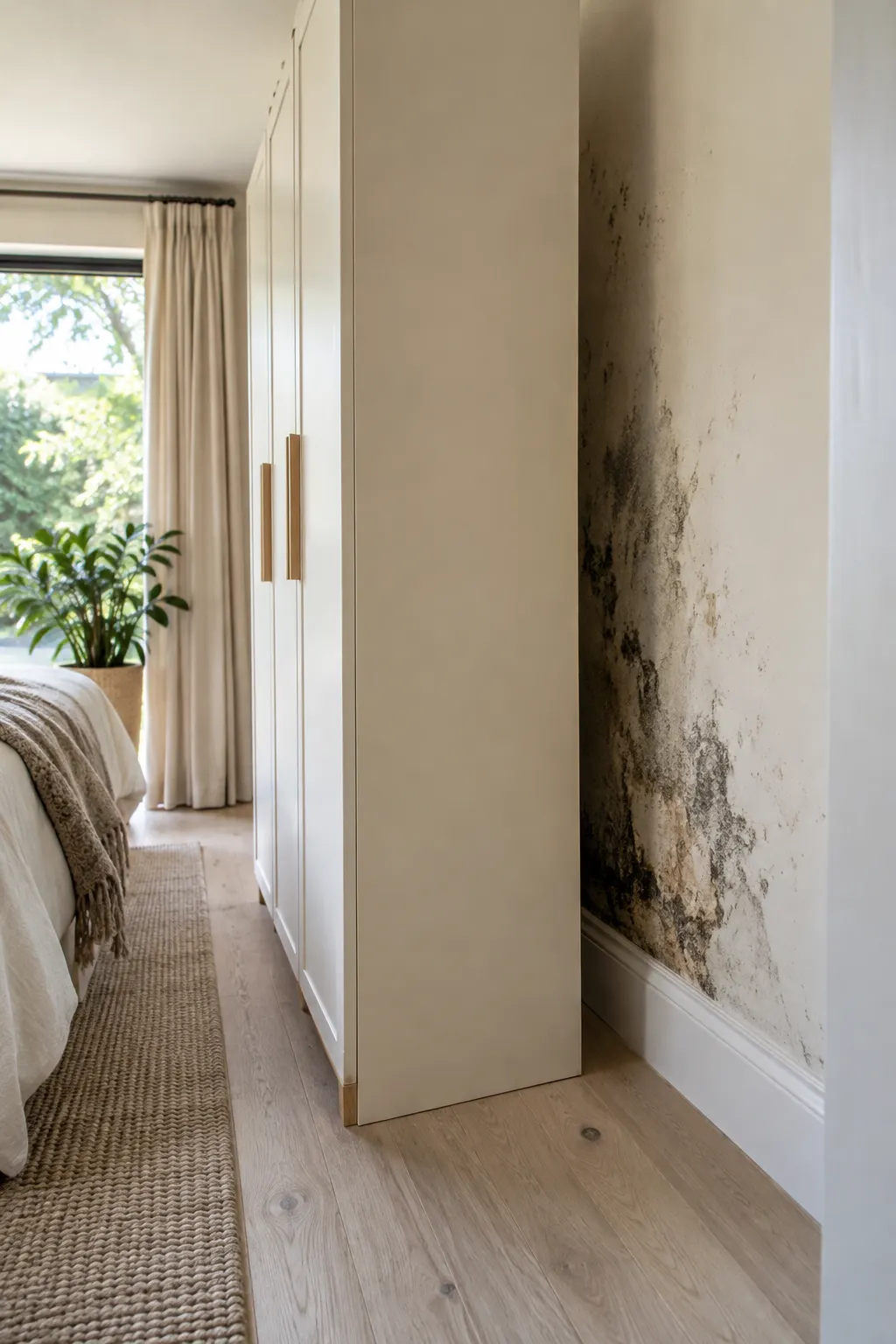
A wall behind fixed bathroom furniture may be inaccessible for routine work. Describe the visible edge rather than assuming the condition behind the vanity has been inspected.
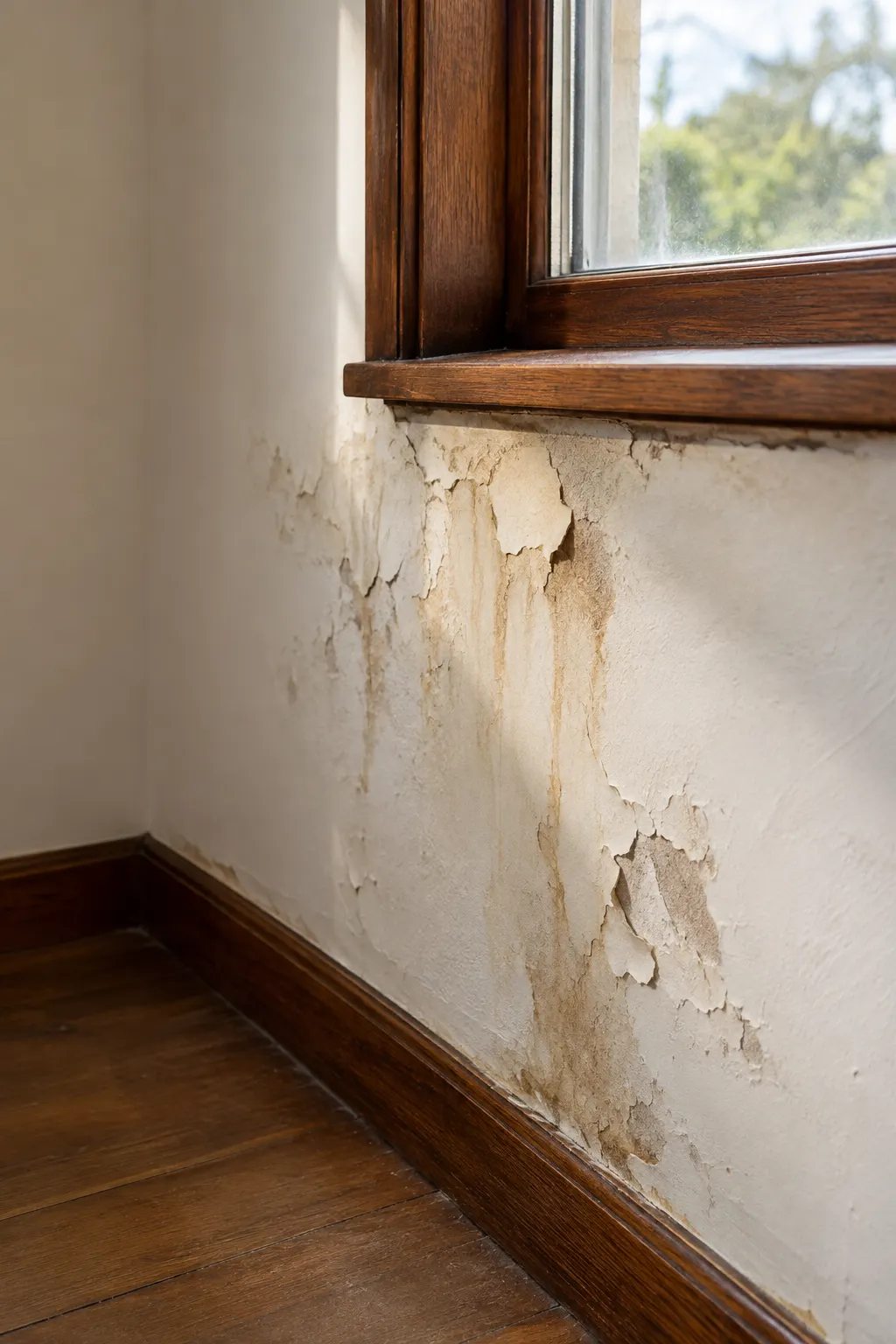
Water-affected rooms
If a fixture problem previously wet the room, keep its repair details. Drying history and ventilation observations both matter; one does not automatically explain the other.
PREVENTION STARTS WITH
Help the room
dry between uses.
Observe the drying pattern
Observe whether ordinary fan use and practical airflow allow surfaces to dry. Where extraction seems ineffective, arrange an appropriate enquiry rather than modifying shared equipment without the relevant permission.
Follow up before decorating
Coordinate unresolved building-service questions before covering the affected finish. Discuss the remediation boundary so accessible treatment is distinct from ventilation repair or work involving other properties.
ARMADALE & NEARBY
Armadale and nearby rooms.
For another nearby address, read Malvern or Toorak. An Armadale bathroom enquiry should identify the building contact and affected finishes, with the full property location so access and the proposed surface scope can be confirmed.
BEFORE YOU CALL
The useful
questions.
Does hearing the fan mean it is extracting properly?
Noise alone cannot confirm where air goes or how effectively moisture leaves. Note the room’s drying pattern and discuss appropriate investigation if concerns remain.
Can you alter shared ventilation during treatment?
Permission and scope need agreement. A surface visit should not be assumed to include changes to shared equipment or concealed building services.
What should I record after a shower?
Note visible droplets, wet corners and how long they persist. Include fan operation and available openings so the conversation has practical room observations.
Are ceiling marks always caused by poor ventilation?
No single appearance establishes the source. Rainfall, plumbing and material condition can also be relevant, so describe the history instead of assigning a cause.
Who should coordinate access in a shared building?
Identify a contact who can arrange entry and any necessary permissions. Questions beyond the bathroom may require communication with the building manager or other relevant parties.
What helps an Armadale bathroom enquiry?
Give the address and affected finishes, explain the extraction observations, and mention building-access requirements. Room photos can support the discussion of suitable next steps.
TELL US WHAT YOU CAN SEE
Start with
the affected surface.
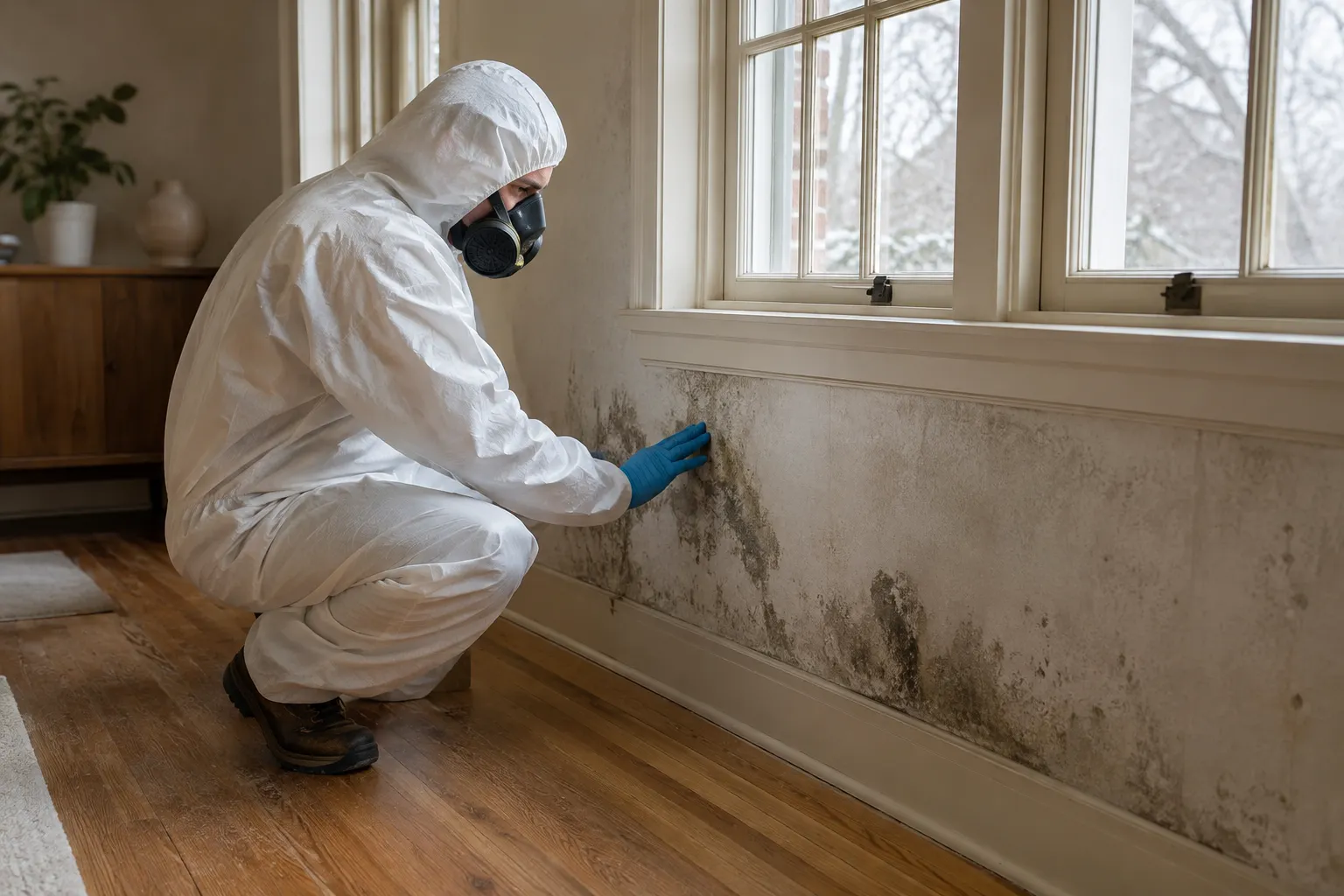
Have the bathroom drying observations and access contact ready. Call 03 8652 1296 to discuss your Armadale address, reachable finishes and any building coordination needed before work is arranged.
Local context: Stonnington suburbs