
BUNYIP · MELBOURNE
Mould Removal Bunyip
ROOMS · BOUNDARIES · PREPARATION
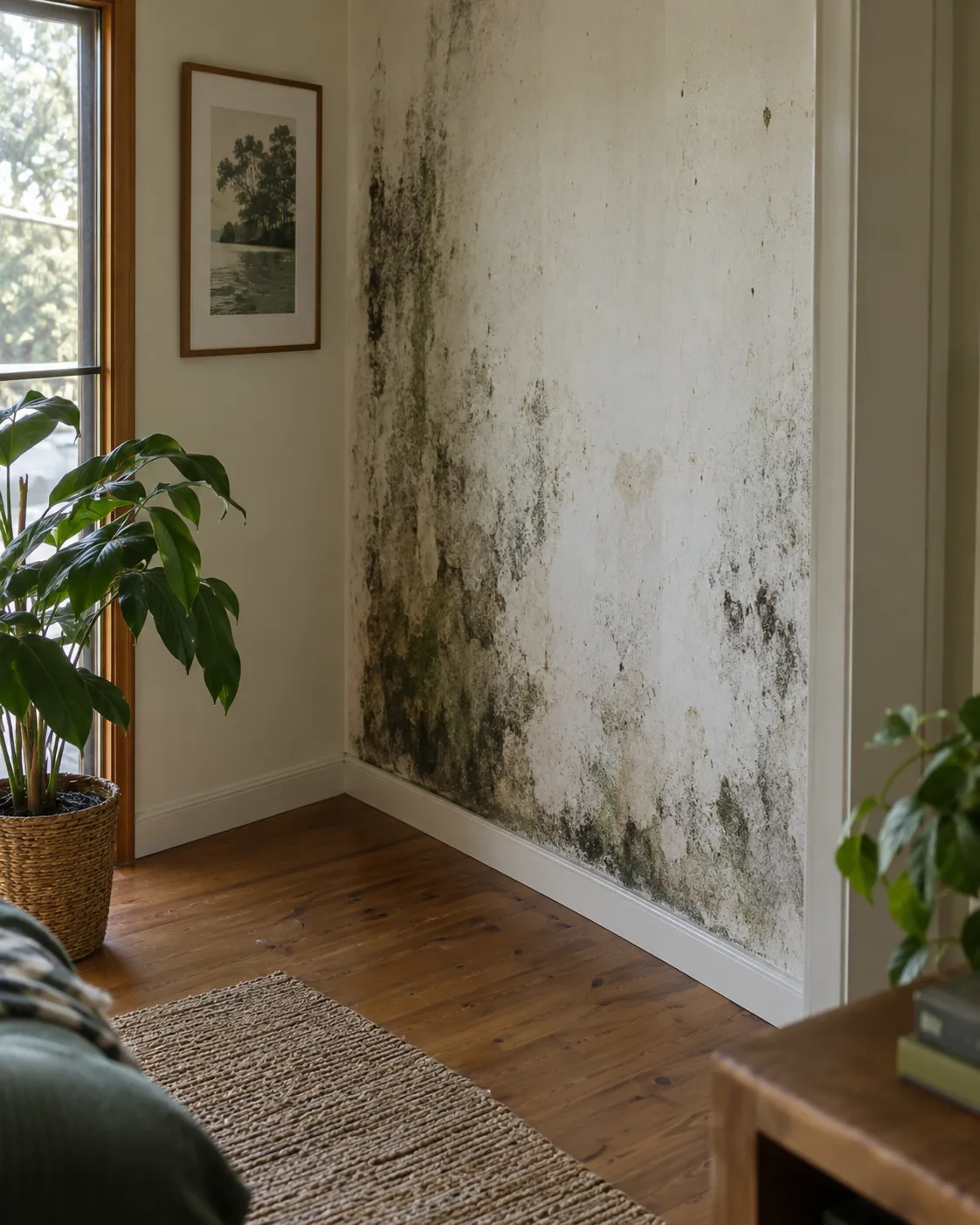
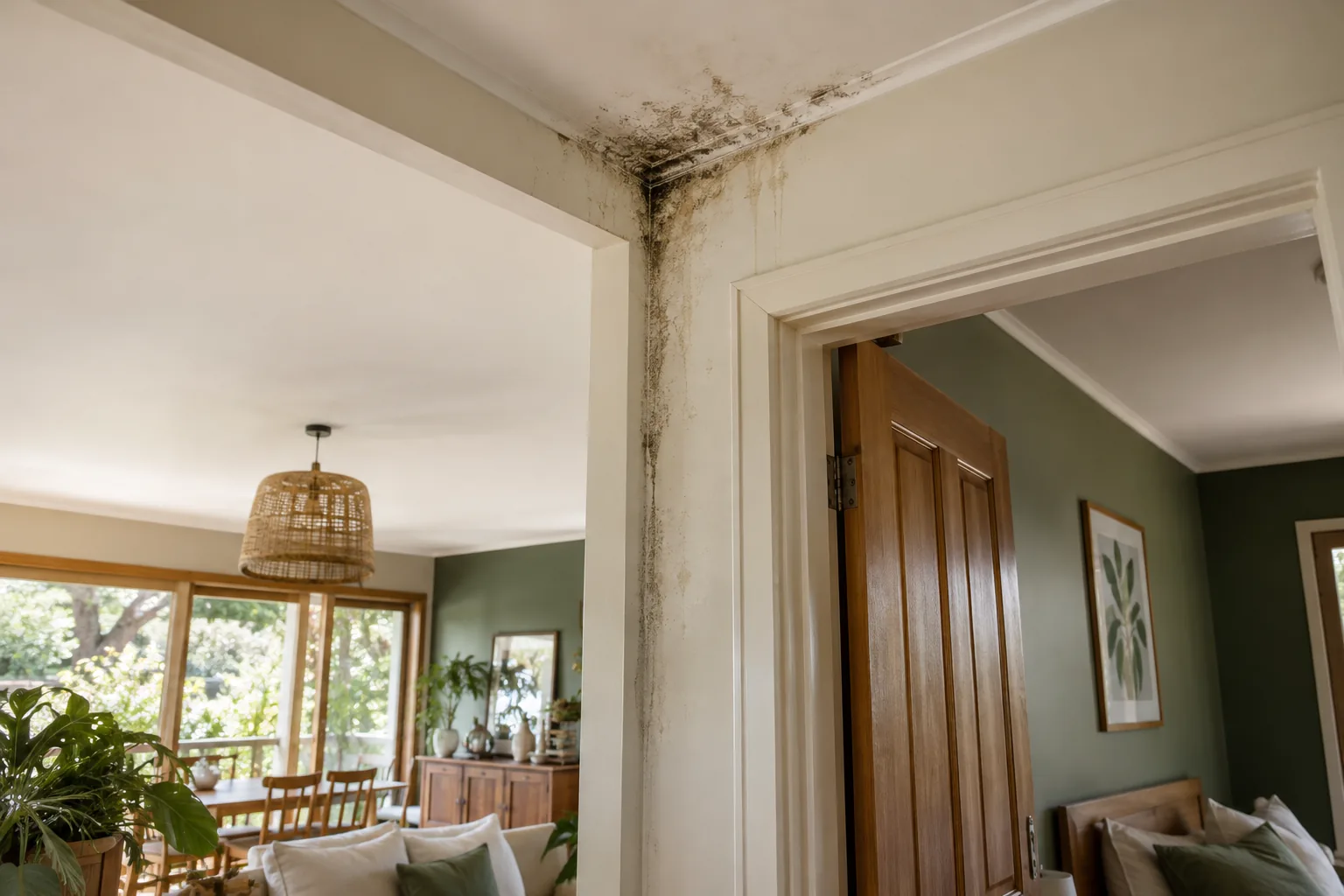
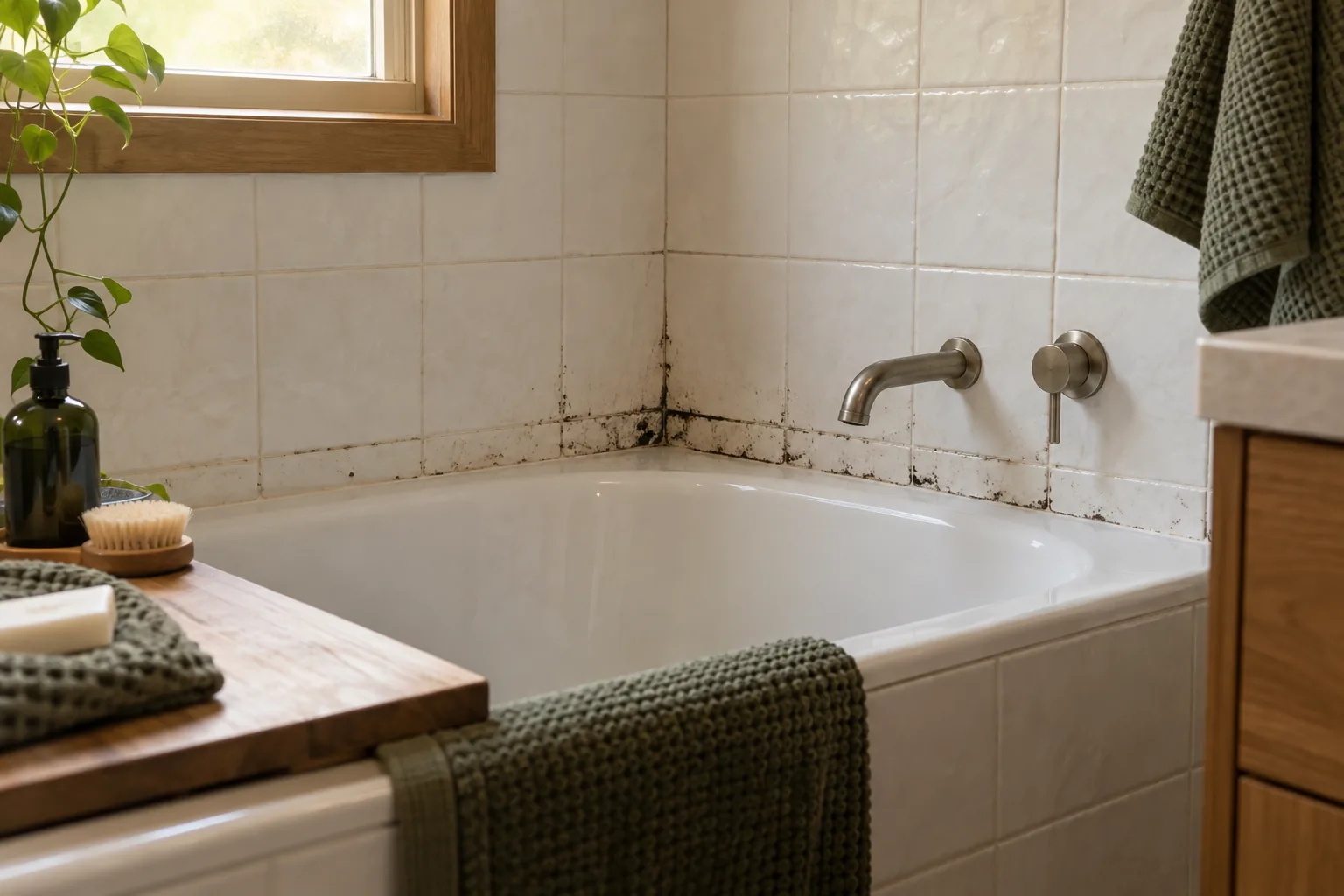
If several rooms in a Bunyip property show different patches, describe them individually before requesting one general clean. Bathroom spotting and a bedroom wall stain may need different follow-up. We discuss availability, accessible surfaces and room-by-room preparation rather than assuming a single cause across the property.
Rooms described individually
Preparation matched to scope
Different moisture concerns considered
SURFACES & THEIR SETTING
Begin with the Bunyip address
Bunyip is a recognised Cardinia township. Give the full street address and approval contact when enquiring. Its town identity does not establish a particular building type, client history or cause of dampness.
Several visible concerns
List each room, finish and approximate extent. Our inspection service considers visible growth and moisture. Separate observations help avoid assuming a bathroom patch and a bedroom concern share one source.
Practical room access
Explain furniture, fixed fittings and any shared entry arrangements. Heavy clearance or dismantling is not automatically included. Rooms need to be available under the agreed preparation, not simply included in a vague whole-house request.
Understand each moisture history
Note rain-related change, routine wetness or known plumbing issues by room. Several concerns can need different repair trades or timing. Removal treats agreed surfaces but does not certify the whole property or resolve every source.
Material condition
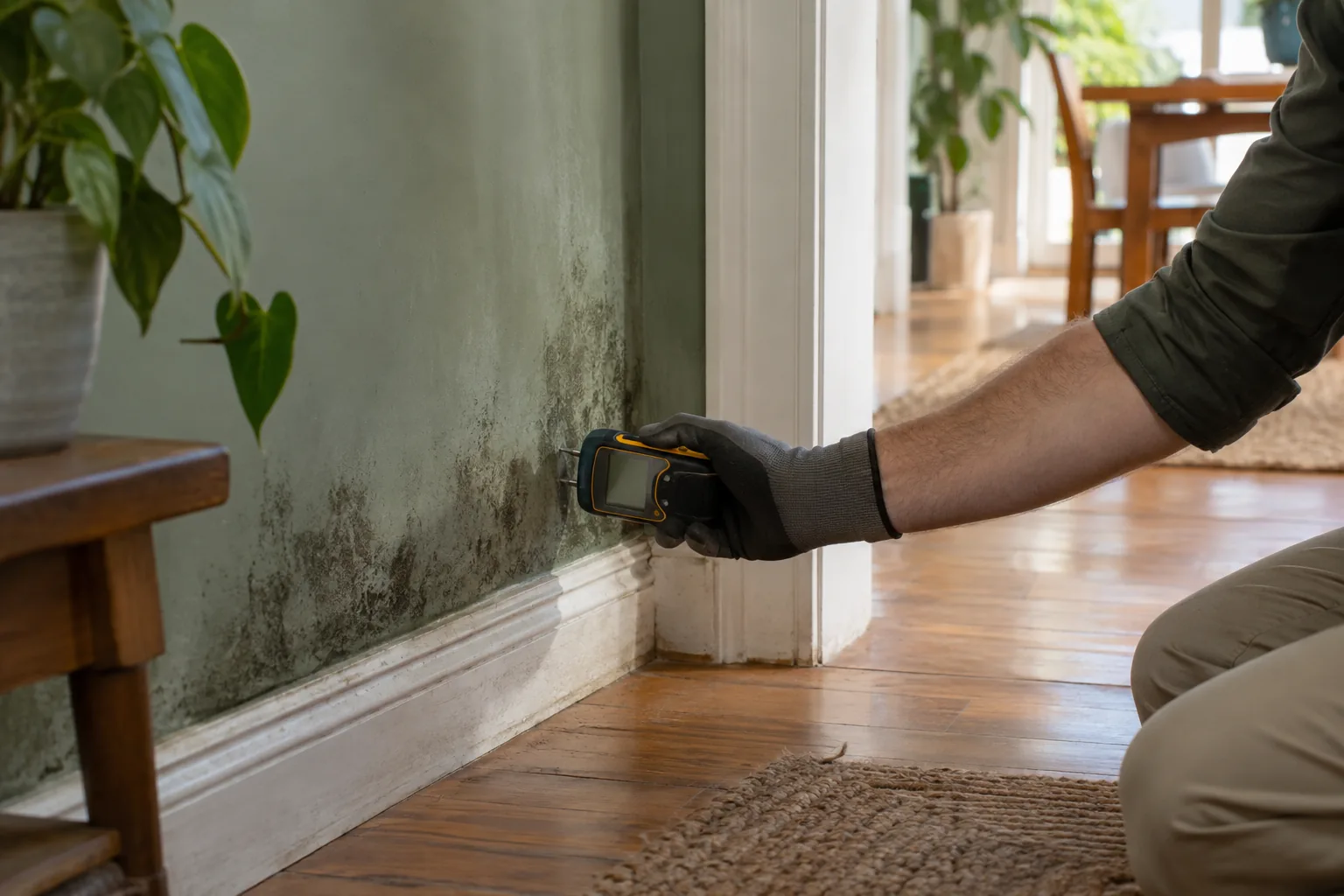
Describe loose paint, soft plaster or floor distortion separately from spotting. A compromised finish may need repair or replacement. Cleaning does not restore strength merely because a surface appears improved.
Readings with room context
A hygrometer supports assessment of moisture conditions. It does not establish that every cavity or adjacent room is dry. Persistent dampness may need another investigation beyond visible-accessible-surface work.
THE SURFACE REMOVAL PROCESS
A defined sequence for each included room
01
Inspect agreed surfaces
Check reachable walls, ceiling and hard floor in the listed rooms. Discuss damage and obstacles. Define boundaries so one room’s enquiry does not automatically include other spaces, concealed layers or excluded belongings.
02
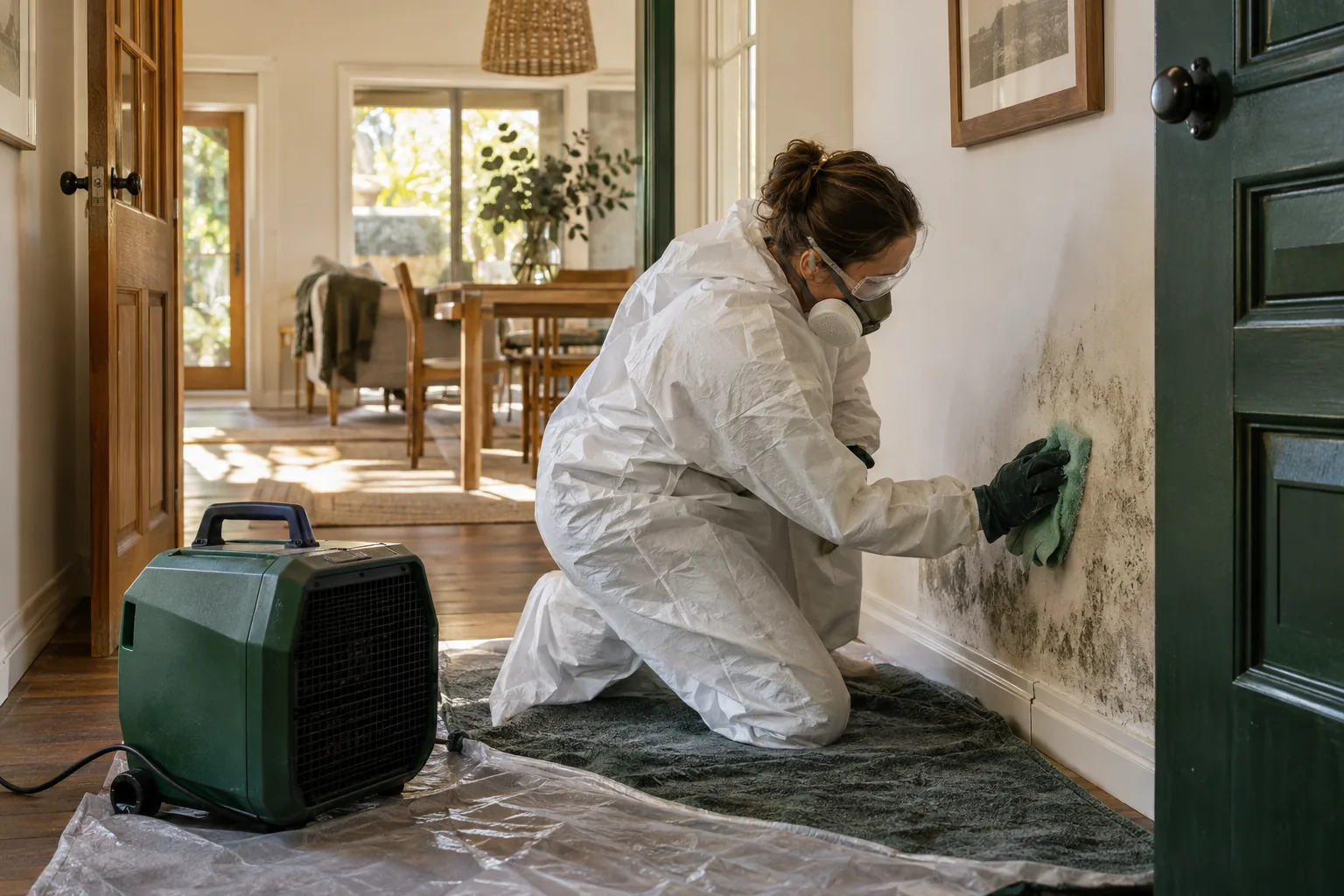
Prepare air filtration
Set up HEPA filtration and working-area protection. Coordinate clearance and people or pet provisions. Equipment routes and room restrictions should suit the actual layout and agreed order of work.
03
Choose compatible treatment
Appropriate HOCl treatment may form part of the method. Material condition guides use in each area. Treatment does not promise complete stain removal or establish that all rooms have the same moisture source.
04
Discuss ULV application
Where ULV application suits the scope, explain preparation and restrictions. It supports the defined room work without extending authorisation to every space or inspecting concealed building material.
05
Remove accessible growth
Use suitable H-class filtration equipment for physical removal. The remediation explanation combines this with treatment. Furniture, mattresses, carpets and textiles remain excluded in every room.
06
Finish filtration and review
Continue filtration and discuss completed surfaces, remaining marks and room-specific follow-up. Separate repair and decorative tasks should be identified clearly, rather than treating the property as fully resolved after cleaning.
VISIBLE & ACCESSIBLE
Room details to list
Bedroom walls
Give furniture access and wetness history. A mattress or wardrobe beside growth is excluded itself.
Bathroom ceilings
Explain extraction, height and paint condition. This concern may need distinct source follow-up.
Laundry walls
Mention appliances and known plumbing concerns. Relocation and repair are separately arranged.
Hard floor edges
State the material in each room. Carpets and soft coverings are outside scope.
PREPARATION & LIMITS
Avoid an undefined whole-house promise
Visible accessible walls, ceilings and hard floors are covered as agreed. Furniture, sofas, mattresses, curtains, carpets, clothing and textiles are excluded. List included rooms distinctly so access and preparation can be coordinated without assuming every surface or belonging is treated.
Average working time is about three hours per room, with extent and access affecting duration; pricing is not hourly. Old cosmetic staining may remain. Repainting or decorating can be separately quoted after dampness and damaged finishes have been addressed.
AFTER THE SURFACE WORK
Keep follow-up room-specific
Record recurring wetness by room and note changes after rain or ordinary use. Review extraction and practical airflow where relevant. A dehumidifier can assist air moisture but cannot repair a leak or establish hidden materials dry.
The general removal scope explains structural-surface work. Arrange the appropriate trade for each unresolved source. If growth returns, revisit the individual room’s conditions instead of assuming a repeat whole-house clean provides permanent prevention.
BUNYIP · NEARBY LOCATION PAGES
Nearby locality navigation
Garfield, Iona and Tynong provide surrounding-area pages. Confirm the actual Bunyip address and appointment availability. Nearby navigation does not imply separate offices or identical access arrangements.
BEFORE YOU ARRANGE WORK
Questions for your enquiry.
Can several rooms be quoted together?
Describe each room and its accessible surfaces first. Inclusion is agreed, not automatic. Extent, material condition and preparation can differ, so a single general description may not define the proposed job adequately.
Does one room’s cause explain all the others?
Not necessarily. A bathroom, laundry and bedroom can have different moisture concerns. Provide separate histories and observations so follow-up is not based on an assumed shared source.
Will all belongings be treated in each room?
No. Furniture and textiles are excluded. Identify affected items separately so their handling is not confused with the walls, ceilings and hard floors included in structural-surface treatment.
Is three hours a whole-house estimate?
No. It is an average guide per room, varying with access and extent. Pricing is not hourly, and preparation or return arrangements follow the job-specific plan rather than that estimate alone.
Can treatment certify the entire property?
No whole-property declaration follows the agreed room scope. We discuss surfaces treated and unresolved concerns. Concealed material, other rooms and source repairs need their own appropriate assessment.
Should all rooms be emptied before booking?
Follow the confirmed preparation plan. Some clearance may be needed, but do not undertake heavy moving before scope and access requirements are established. The plan should identify which rooms and routes must be available.
Discuss the Bunyip rooms
Call 03 8652 1296 with the address and a room-by-room description. We can discuss availability, access and assessment of the included structural surfaces.
Useful references: Official local context