
CRANBOURNE · MELBOURNE
Mould Removal Cranbourne
COOKING · WALLS · SOURCE QUESTIONS
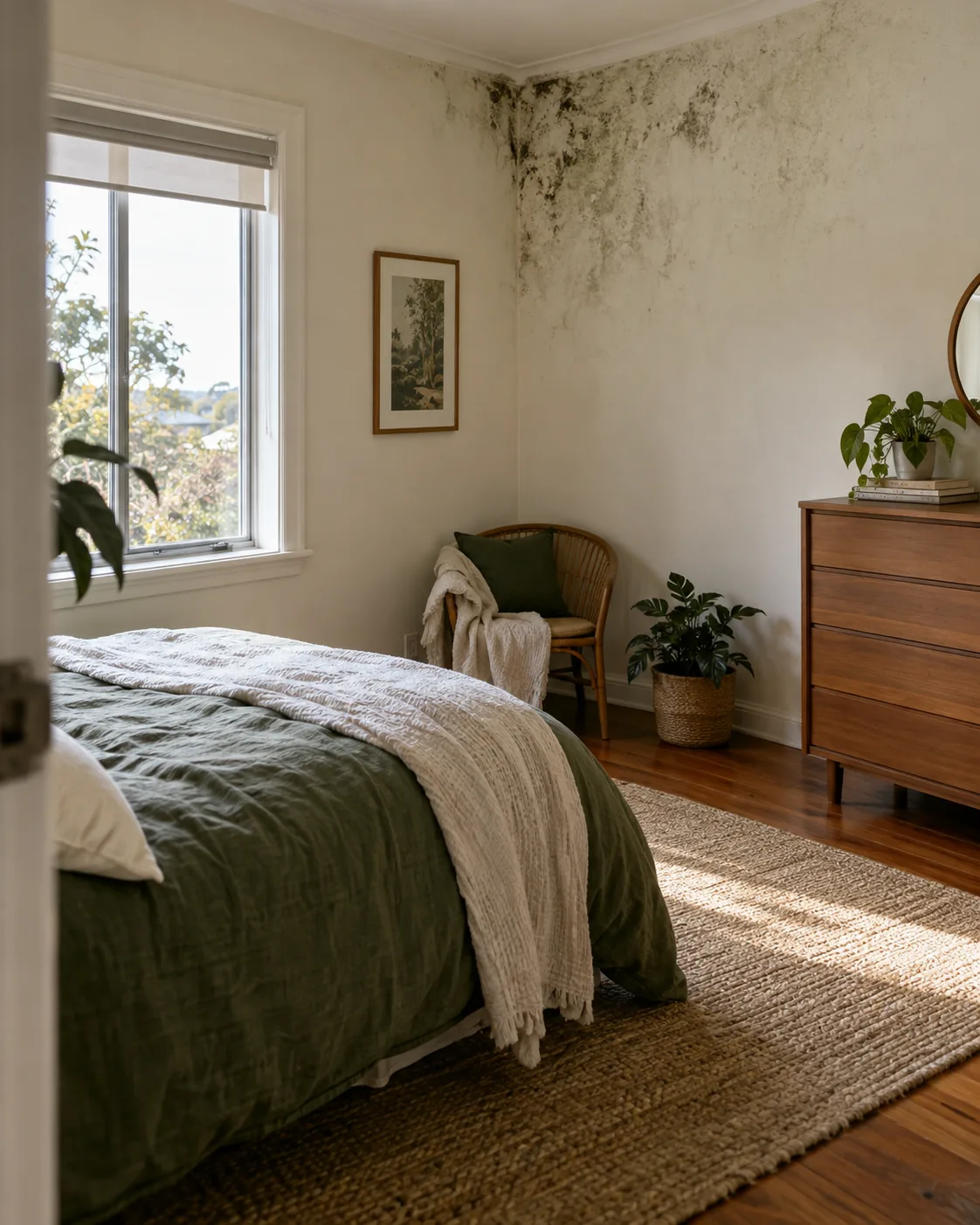
Dark marks beside a kitchen need more context than the nearest cooking appliance. For Cranbourne, describe the wall finish, moisture you have observed and any plumbing history. We confirm the exact address, room scope and availability before arranging work on accessible structural surfaces.
Moisture history considered
Room boundaries explained
Clear material exclusions
SURFACES & THEIR SETTING
Describe the mark in its room context
Cranbourne is listed in the Victorian Government’s Casey locality information. For mould removal, the useful detail is the actual room and affected surface, not a general claim about every local home. Include known leaks alongside ordinary moisture-producing activities.
Growth above a bench
Identify the structural wall and its coating. Cabinets, stored food and appliances are not included items.
Marks in an adjoining living room
Explain whether that room has its own affected wall or ceiling. Cooking moisture may be relevant history, but proximity alone does not prove the source. Agree separate room boundaries instead of assuming one kitchen enquiry includes all adjoining areas.
Inspect before deciding on a treatment
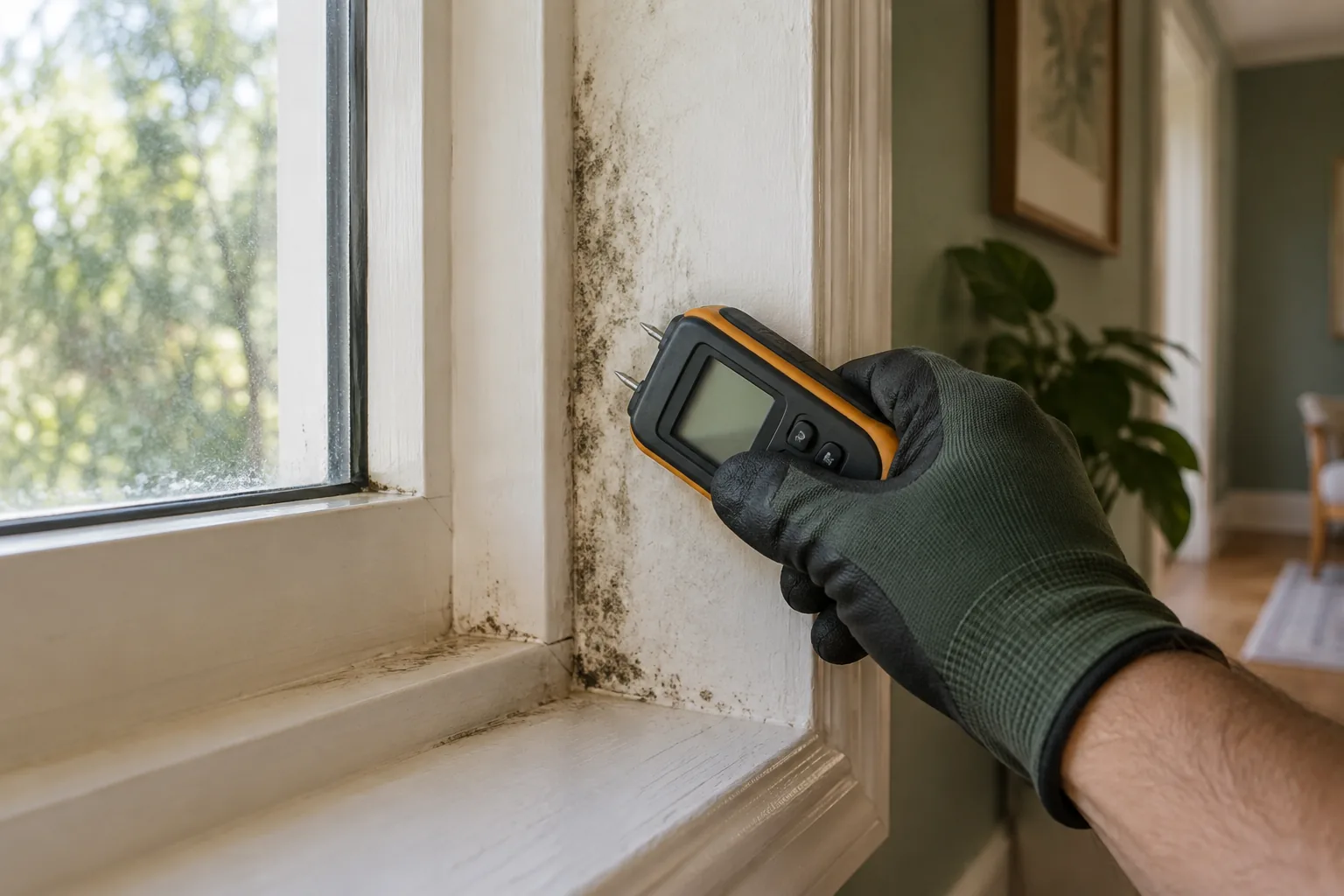
An inspection enquiry should include a wider wall view and details of recurrent wetness. Humidity and moisture checks support assessment. A single reading cannot confirm that plumbing within cabinetry or a concealed wall space is sound.
Extraction that is not working well
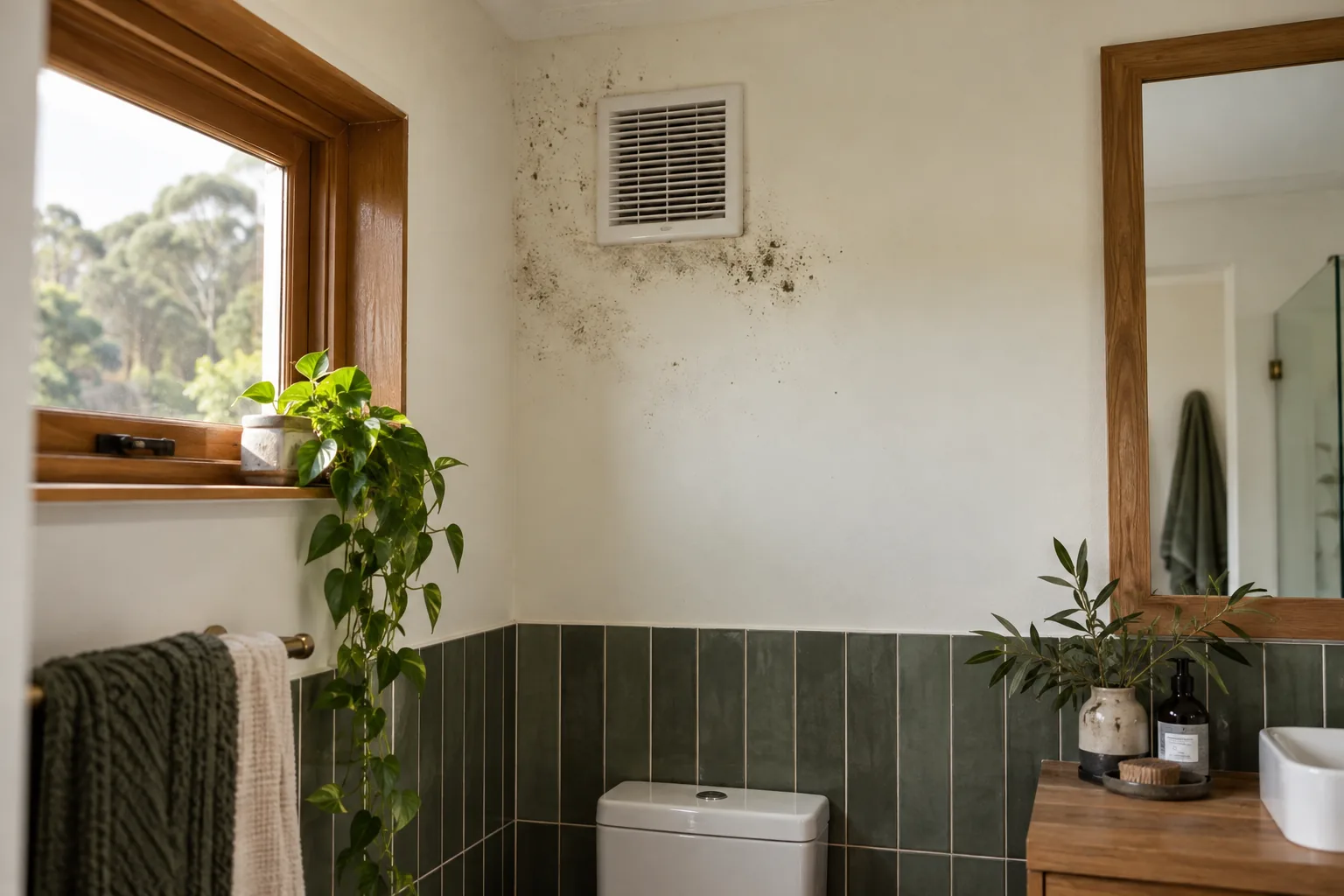
Describe what happens during cooking and whether moisture clears. Fan or duct maintenance is separate from treatment. A device running noisily is an observation, not proof that the room’s moisture has been effectively removed.
Paint or lining that is damaged
Tell us about peeling, swelling and soft areas before booking. The material may need repair or replacement. Avoid scraping it or applying another coating simply to make the room look ready for a removal appointment.
THE SURFACE REMOVAL PROCESS
A considered structural-surface sequence
01
Inspect and agree
Review visible growth, accessible material and relevant readings. Confirm included walls, ceilings and hard floors. Record any separate plumbing or lining concern before treatment so existing contamination is not confused with correcting the moisture source.
02
Prepare filtered air
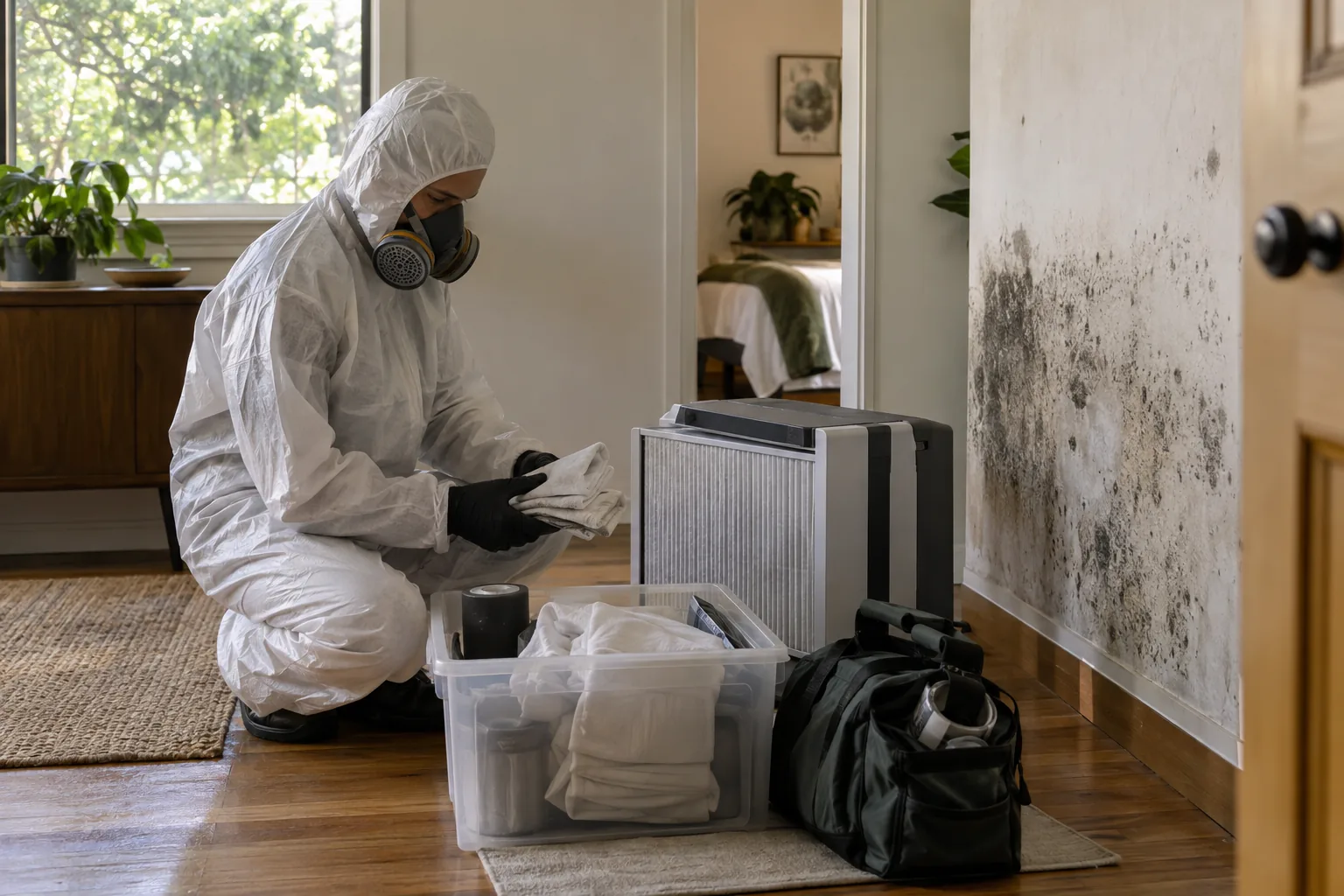
Set up the HEPA air scrubber and practical working access. Confirm power, occupant movement and preparation of excluded belongings.
03
Choose suitable treatment
Appropriate HOCl use follows the assessed finish and conditions. Report prior cleaning products and coatings.
04
Apply within the plan
ULV application may be appropriate as part of the process. Confirm people, pets and approved building-system arrangements first. The method remains within the agreed scope and does not establish treatment of concealed plumbing spaces or excluded contents.
05
Remove accessible contamination
Professional physical removal uses H-class filtration as required. Work concerns agreed structural surfaces.
06
Complete air cleaning
Final filtration follows removal. Review remaining marks, unresolved moisture questions and return instructions.
VISIBLE & ACCESSIBLE
Useful kitchen-adjacent surface views
Wall near the cooking area
Show the finish and available access. Appliances, cupboards and contents are not automatically covered by a structural-surface booking.
Ceiling near extraction
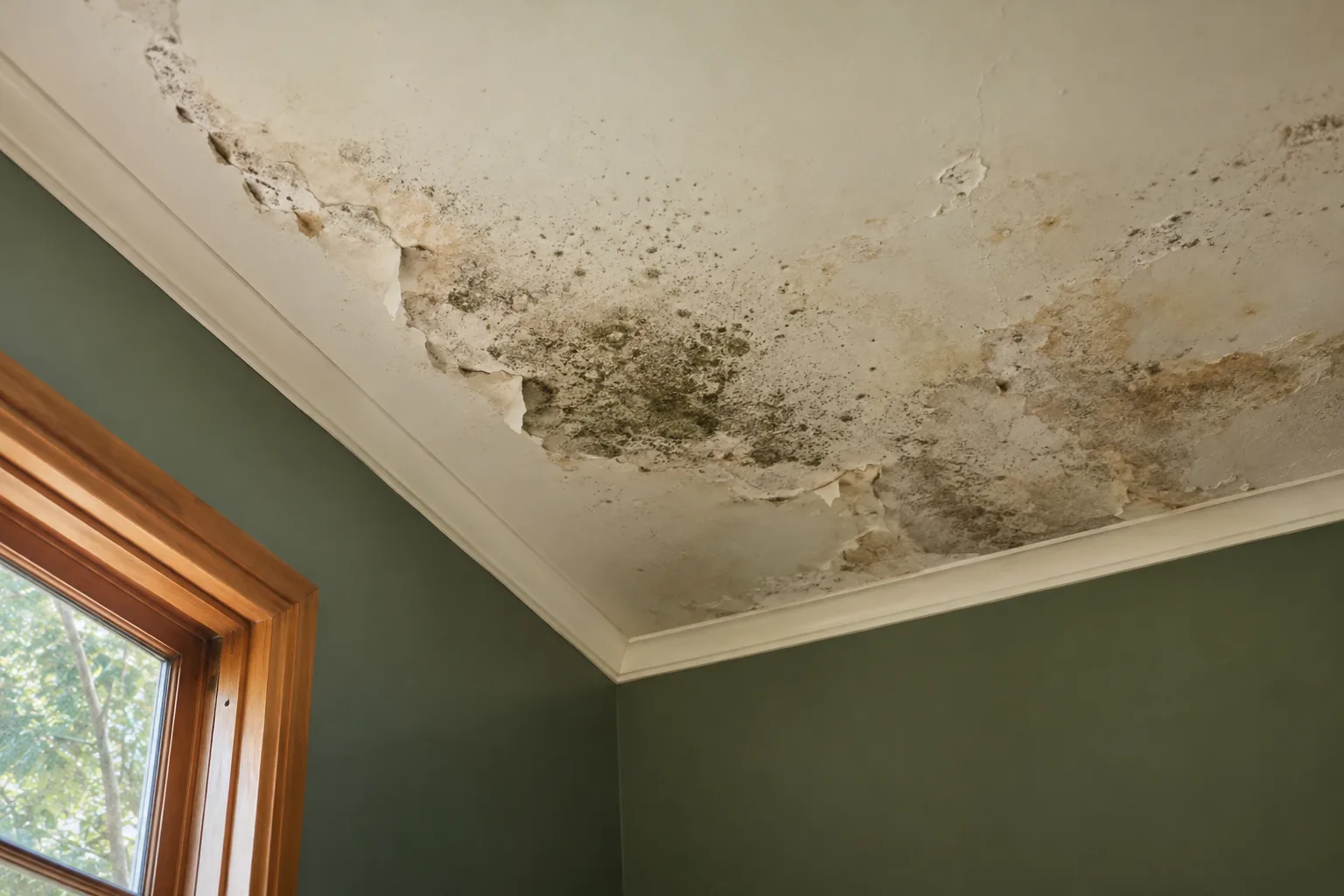
Photograph its location and describe persistent condensation or wetness. Extraction repairs need their own maintenance arrangement.
Living-room corner
Identify it separately if growth appears beyond the kitchen. Additional surfaces and rooms require agreement before treatment.
Hard floor beside plumbing
Explain ongoing wetness and the floor material. Carpet, underlay and rugs remain excluded, even when affected by nearby water.
PREPARATION & LIMITS
Keep timing and cosmetic results realistic
Working time averages about three hours per room, varying with room size, severity and accessibility. It is not hourly pricing. Clarify whether the enquiry covers one room or several before coordinating household routines around an expected finish time.
Cosmetic staining may remain after contamination removal. Decorating is separately quoted where appropriate and follows consideration of the source and material. Recurrence can occur if moisture persists, so treatment is not a guarantee against every future mark beside the kitchen.
AFTER THE SURFACE WORK
Manage the activity and repair the defect
Use effective extraction while cooking and reduce unnecessary moisture release where practical. Observe whether surfaces dry, and arrange maintenance for suspected faults. These routines cannot replace plumbing repairs where water is entering from a damaged connection or concealed defect.
Keep dated notes on repeated condensation or wetness and share them with the appropriate trade. Remediation treats the agreed existing contamination. The kitchen’s everyday moisture management and any building repair require separate, ongoing attention after the room work is completed.
CRANBOURNE · NEARBY LOCATION PAGES
Cranbourne and neighbouring enquiries
Use the nearby pages for location navigation, then provide the actual Cranbourne street address and affected room details. Confirm the person authorised to agree work and any access constraints. Geographical proximity does not establish identical scope or immediate appointment availability.
BEFORE YOU ARRANGE WORK
Questions for your enquiry.
Does cooking explain every mark beside a kitchen?
No. It can contribute useful moisture history, but leaks, extraction and material condition may also matter. Describe what happens rather than selecting a cause from the room label alone.
Can you clean mould inside cupboards?
Cupboard and furniture treatment is not part of the stated structural-surface service. Explain the affected accessible wall separately and ask about preparation and any excluded contents.
Is the rangehood repaired during removal?
No. Extraction, plumbing and other building repairs are separate. Mention suspected faults before booking so surface work is not mistaken for resolving their source.
Can people cook in an adjoining area during treatment?
Discuss activities and access beforehand. Follow the agreed occupancy and preparation plan rather than assuming a nearby room can continue normal use through the procedure.
Will treatment make peeling paint look intact?
That is not guaranteed. Damaged coatings or substrate may need separate repair and decorating. Contamination removal does not restore every finish to its original appearance.
Does an open-plan layout make every wall included?
No. Agree the actual accessible surfaces and areas. An open layout does not automatically turn one affected wall into a whole-house or all-contents booking.
Discuss your Cranbourne address
Call 03 8652 1296 to discuss Cranbourne’s affected structural wall and kitchen-adjacent room layout. Include extraction or plumbing concerns, previous products and exact address details so the work boundary is clear.
Useful references: Official local geographic reference