
GARDEN CITY · MELBOURNE
Mould Removal Garden City
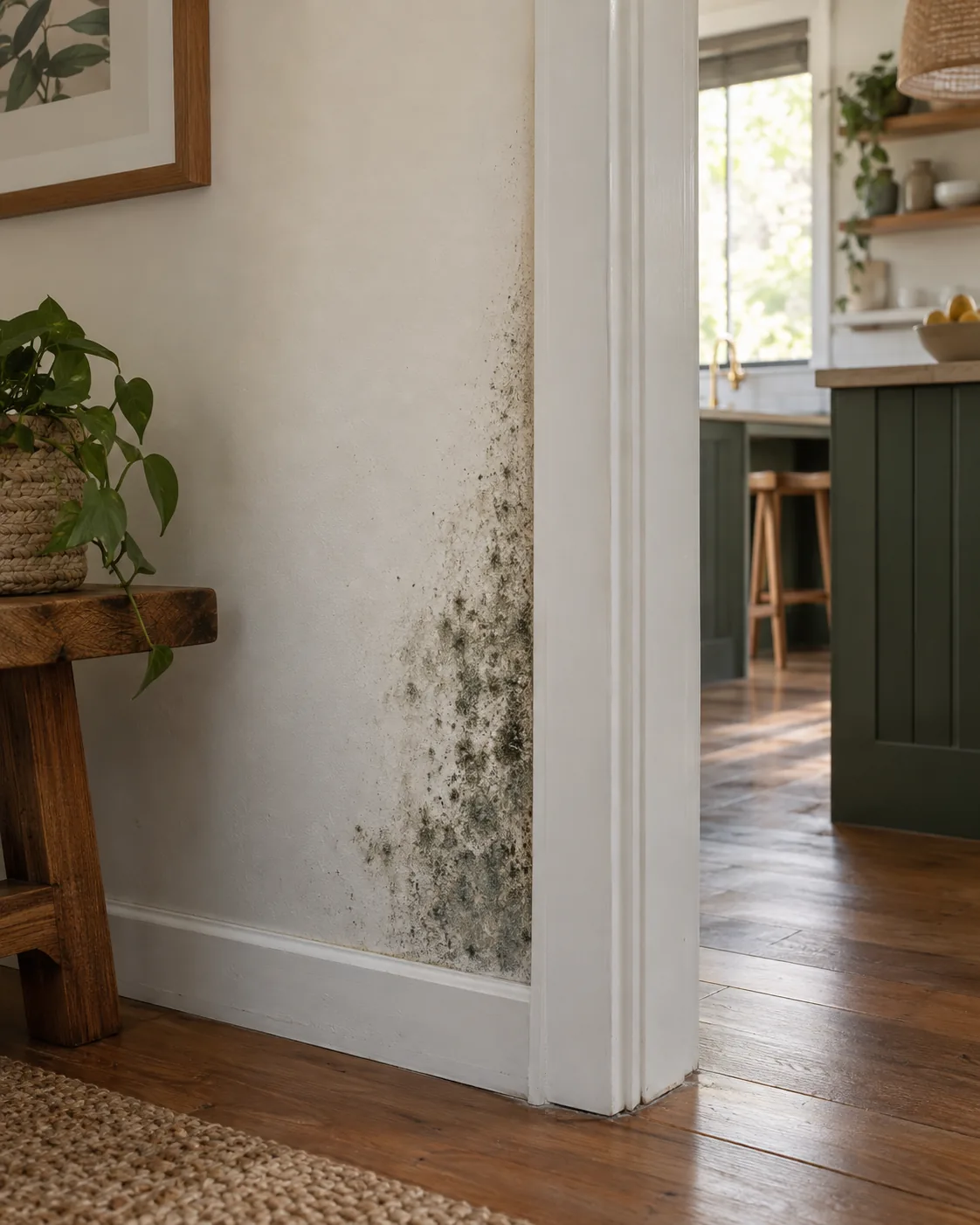
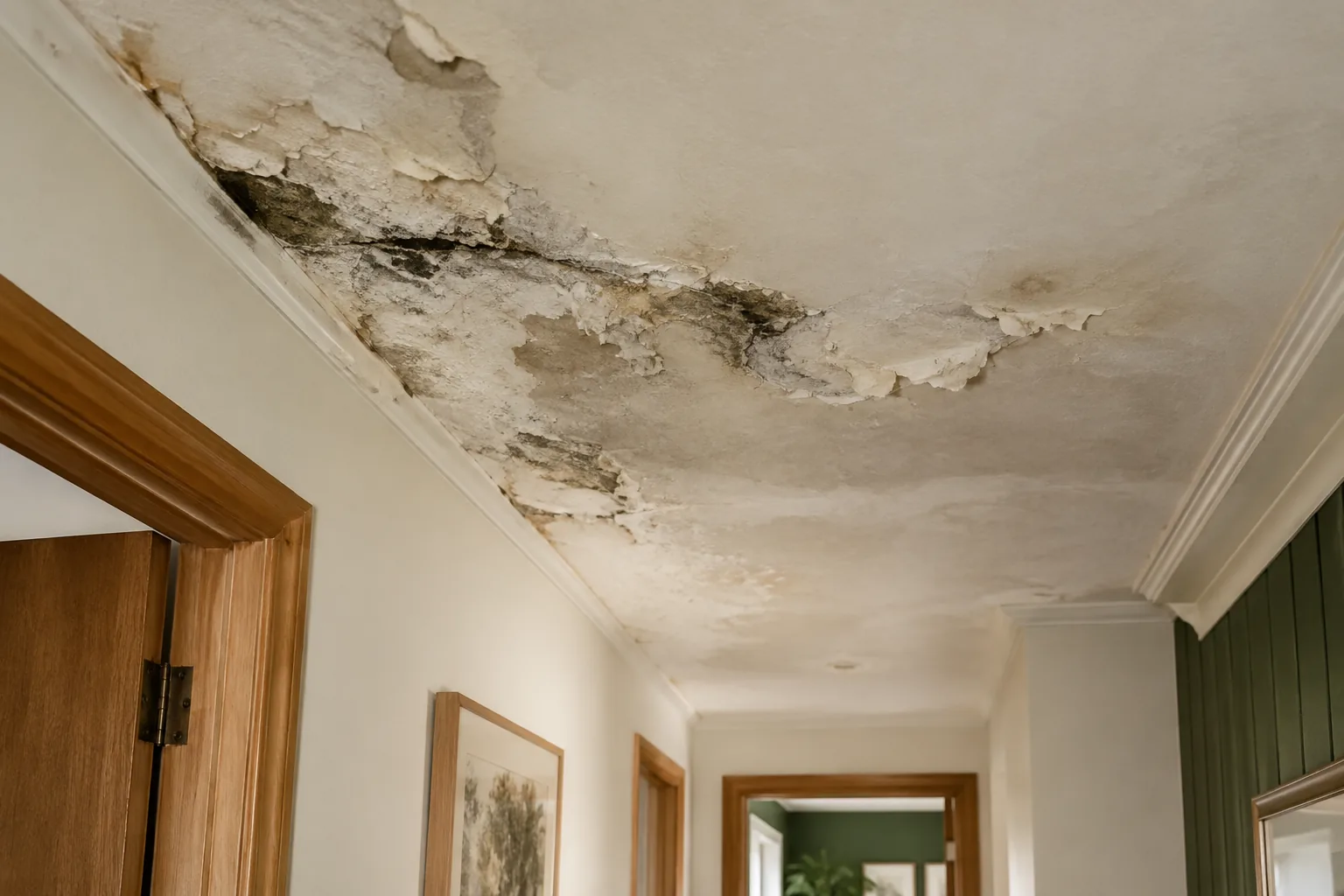
BEDROOM · CLEARANCE · FINISH
Growth behind a bedroom cupboard needs an access plan. For Garden City in Port Melbourne, describe the address, furniture clearance and finish. We discuss reachable structural surfaces and moisture follow-up.
Furniture clearance planned
Wall finish assessed
Room scope explained
SURFACES & THEIR SETTING
Identify the Port Melbourne address
Garden City is a recognised area within Port Melbourne. Give the full street address when enquiring so the neighbourhood name is not confused with another place. The individual room matters more than assumptions about the age or style of local homes.
A patch behind a cupboard
Explain how the growth was discovered and whether the cupboard is freestanding or fixed. Our inspection information describes visible-surface assessment. Access needs to be agreed before a hidden patch becomes part of treatment.
Other belongings nearby
List affected items separately. A wall can be within scope while the furniture touching it is excluded. We do not automatically shift heavy objects, handle clothing or include mattresses in a structural-surface visit.
Consider the room’s moisture history
Record whether marks change after rain, routine use or periods with the room closed. Observations help assessment without proving the cause. Persistent wetness may require a separate investigation.
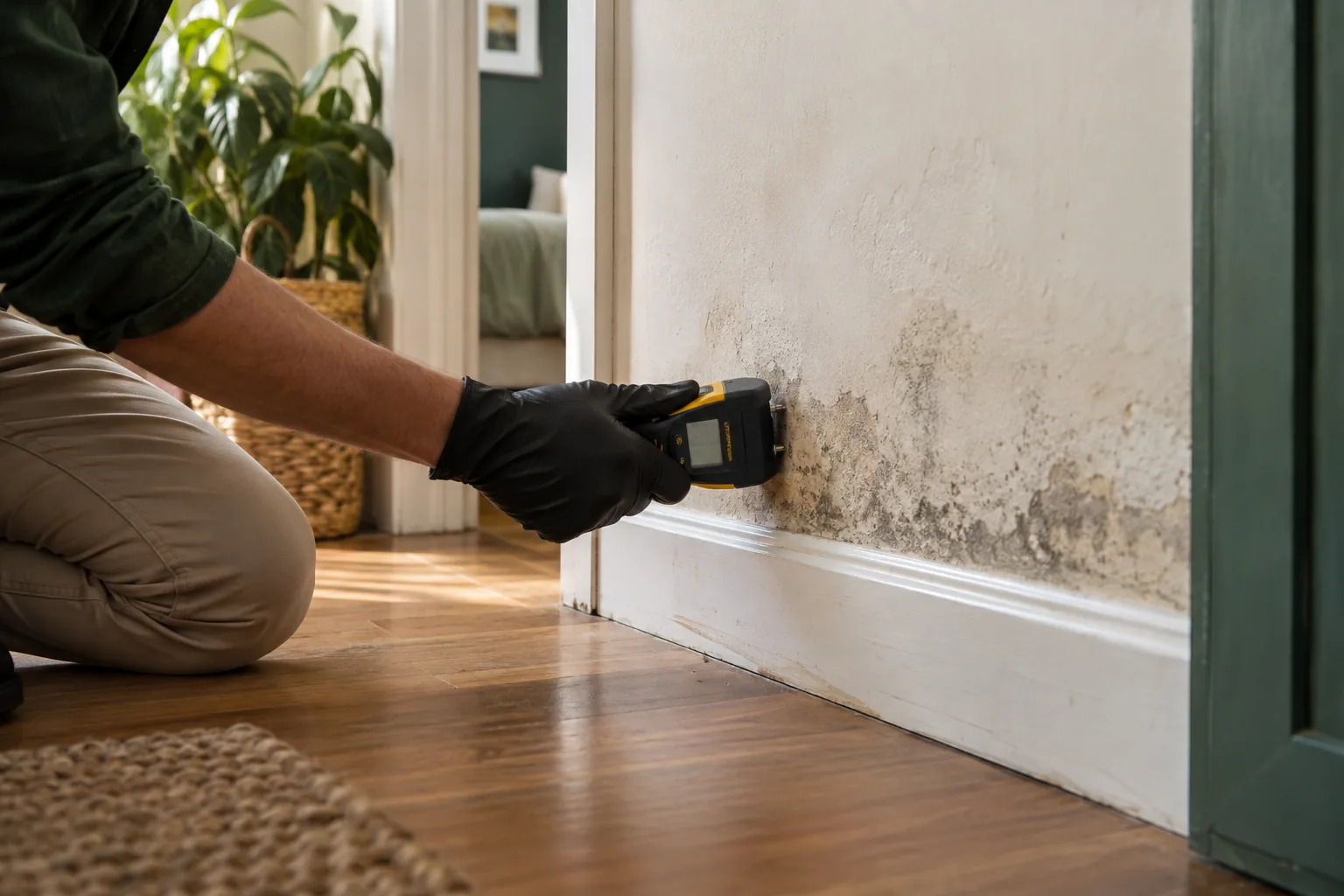
Look at the coating
Describe peeling paint, loose plaster or staining without scraping it. A finish’s condition can affect whether it is appropriate to clean. Removal does not restore material that needs repair.
Use readings alongside observations
A hygrometer assists assessment of humidity and moisture. It does not establish that concealed wall layers are dry. The scope remains visible and accessible unless a different investigation is separately arranged.
THE SURFACE REMOVAL PROCESS
From clearance to completed treatment
01
Inspect the agreed wall
Check reachable growth and adjacent included ceiling or hard floor. Discuss obstacles and material damage. Confirm the boundaries so the room’s furniture is not mistaken for part of the quotation.
02
Prepare the work area
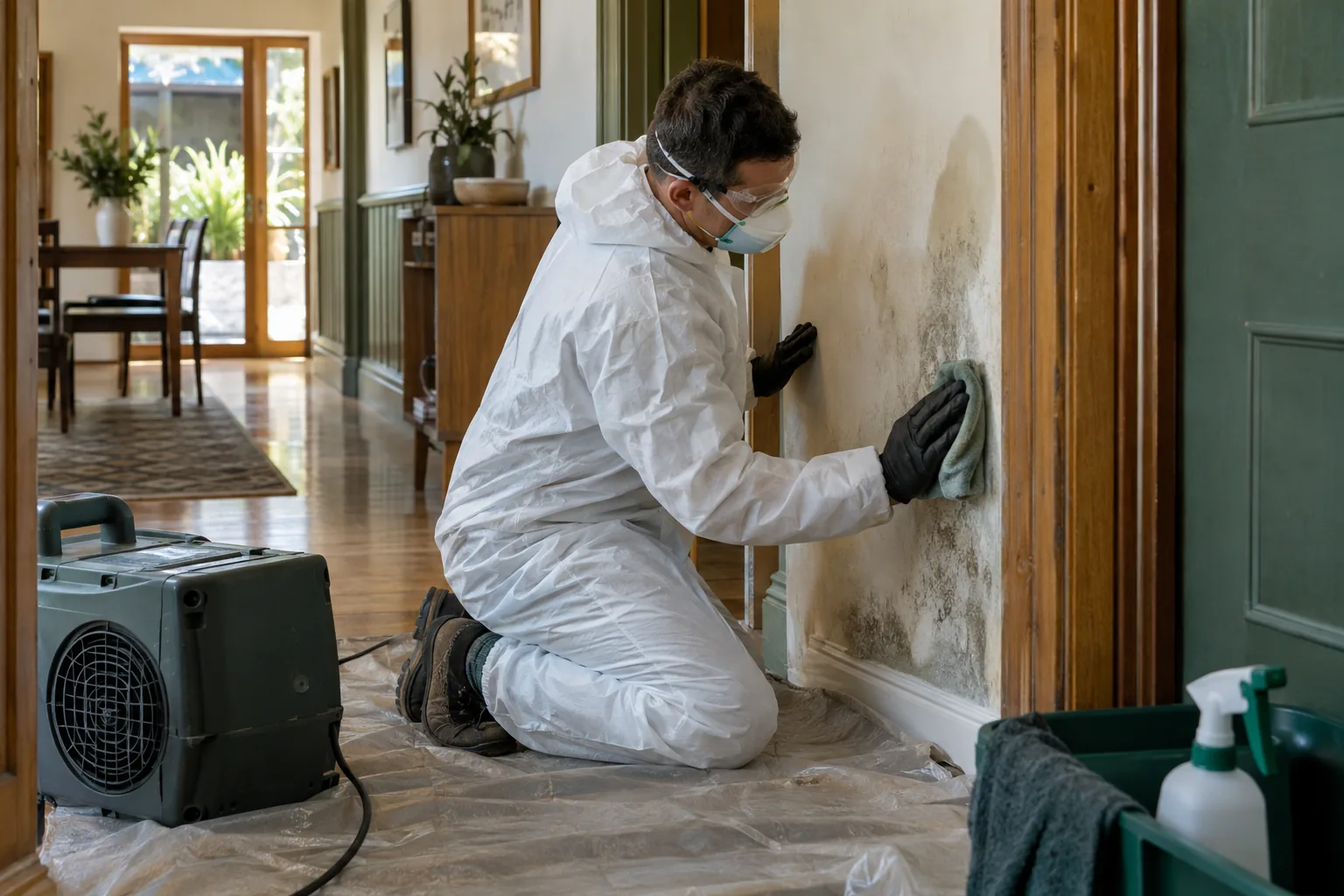
Set up HEPA air filtration and agreed protection. Arrange people, pets and belongings according to instructions. Clear access should be ready before treatment rather than created by moving heavy furniture during work.
03
Choose the treatment method
Appropriate HOCl treatment may be selected for the assessed surface. Compatibility and condition are considered. Treating growth is separate from a promise that old paint or stained plaster will look new.
04
Review ULV application
If ULV application forms part of the job, the technician explains preparation and restrictions. It does not replace cabinet removal or inspection of concealed cavities and cannot resolve the room’s ongoing moisture source.
05
Remove accessible residues
Physical removal uses suitable H-class filtration equipment. The remediation approach combines treatment with this stage. Excluded furniture and textiles require separate handling even when growth is adjacent.
06
Finish filtration and review
Continue air filtration and discuss surfaces treated, remaining staining and follow-up. A clear completion review separates cleaning from unresolved dampness, repairs or decorative work still to be arranged.
VISIBLE & ACCESSIBLE
Describe the affected materials
Painted bedroom walls
Give the size and access behind furniture. Loose coatings need discussion before a method is chosen.
Ceiling corners
Say whether the patch reaches the junction. Ceiling height and obstructions also affect the plan.
Bathroom walls
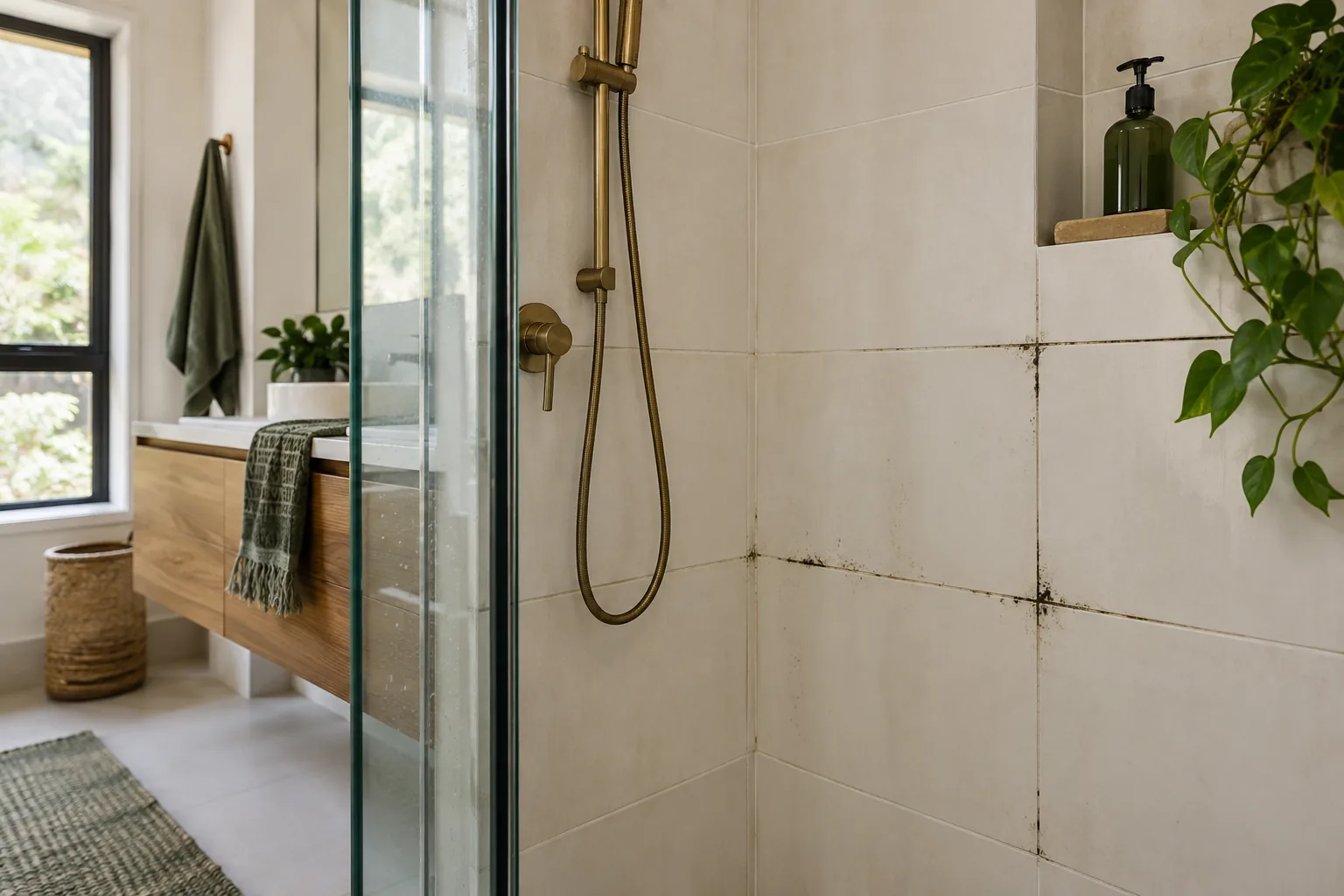
Mention repeated wetness and fan use. The source may differ from a bedroom concern.
Hard floor perimeter
Identify the material and any damage. Rugs, carpets and other textiles are outside the service.
PREPARATION & LIMITS
Agree the practical result
Visible accessible walls, ceilings and hard floors are covered as agreed. Sofas, mattresses, furniture, curtains, carpets, clothing and textiles are excluded. If a cupboard or bed is also affected, separate that decision from treatment of the wall behind it.
Working duration averages roughly three hours per room, but extent and access can change it. Pricing is not hourly. Cosmetic stains may remain; repainting or decorating can be quoted separately after moisture issues and damaged materials are addressed.
AFTER THE SURFACE WORK
Make the wall easier to monitor
Where practical, leave room for airflow beside bulky furniture and keep the affected area accessible for checks. Record recurring condensation or dampness. Those observations help you recognise whether ordinary moisture control is enough or a repair enquiry is needed.
Use suitable extraction in wet rooms and avoid assuming a freshly cleaned surface means the source has stopped. The removal overview explains the limits of treatment. Growth can recur while the conditions supporting it remain.
GARDEN CITY · NEARBY LOCATION PAGES
Nearby address enquiries
Port Melbourne, Beacon Cove and Fishermans Bend are relevant nearby pages. Choose the actual property location when calling. We do not claim a separate Garden City office or a particular history of work at its homes.
BEFORE YOU ARRANGE WORK
Questions for your enquiry.
Will you move a heavy wardrobe?
Do not assume that is included. Describe its size and whether it is fixed before booking. Agree safe clearance arrangements so the wall can be reached without improvising furniture movement during treatment.
Can a cupboard’s interior be treated?
Furniture is excluded from this service. Identify it separately during the enquiry. An accessible wall behind the cupboard may be considered, but that does not extend treatment to the cupboard itself.
Does mould behind furniture prove poor ventilation?
No. Restricted airflow can be relevant, but it does not establish the entire cause. Readings, surface condition and other moisture history need consideration, especially if the wall remains persistently wet.
Should I replace damaged plaster first?
Discuss the condition before arranging work. A compromised surface may need a building repair decision. Cleaning alone cannot restore it, and the order of repair and treatment should reflect the actual problem.
Can I include a mattress in the bedroom quote?
No. Mattresses and textiles are excluded. List them separately so their handling is not confused with walls, ceilings or an accessible hard floor included in the room scope.
Is decorating included after removal?
No. A separate quote may be provided for repainting or decorating. Existing stains can remain after treatment, and continued dampness needs addressing before a decorative finish is planned.
Discuss the Garden City wall
Call 03 8652 1296 with the Port Melbourne address, cupboard access and affected finish. We can talk through assessment and preparation for the included structural surfaces.
Useful references: Official local context