
MODELLA · MELBOURNE
Mould Removal Modella
ROOMS · RECORDS · MOISTURE
A patch on the wall of a rarely used room can be difficult to date. For a Modella enquiry, explain when you last checked the space, whether it smells damp and what changed before the marks appeared. Availability is confirmed for the property address.
Room history considered
Accessible surfaces agreed
Preparation explained
SURFACES & THEIR SETTING
Start with the room you can describe
Modella is listed among Cardinia’s localities by the Victorian Government. Give the street address and identify any separate building when discussing mould removal.
A room left closed
Describe how often doors and windows are opened. Dusty surfaces, old stains and current growth may look similar in a photograph.
An outbuilding used as accommodation
Explain the separate building’s use, lining material and available power. Structural condition and suitability need consideration separately from cleaning visible surfaces.
What the first assessment should establish
A useful mould inspection combines the visible pattern with the room history. Include roof or plumbing work that has already occurred and whether wet patches changed afterwards. Photographs help set expectations but cannot establish conditions inside a concealed wall.
Material before method
Identify painted plaster, masonry or another finish where possible. Tell us about loose paint, swelling or a soft surface. A deteriorated lining may need another trade rather than repeated surface treatment; explain repairs awaiting approval before a visit.
Access before equipment
Mention a narrow entrance, steps, locked gates and the distance from parking to the room. Confirm who will unlock the property. Those practical details help plan movement of filtration equipment without using excluded belongings as working surfaces.
THE SURFACE REMOVAL PROCESS
From agreed scope to room handover
01
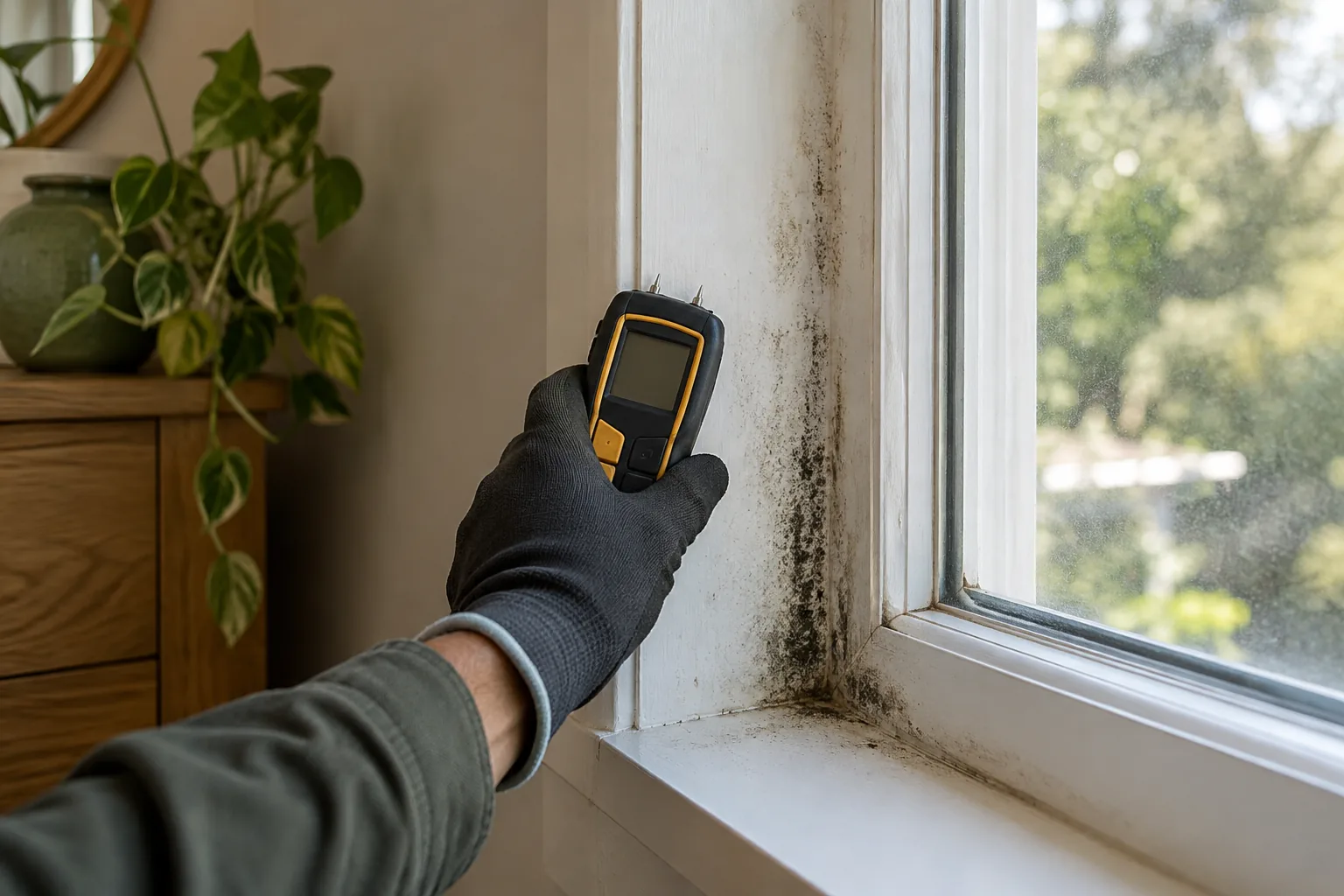
Inspect the visible area
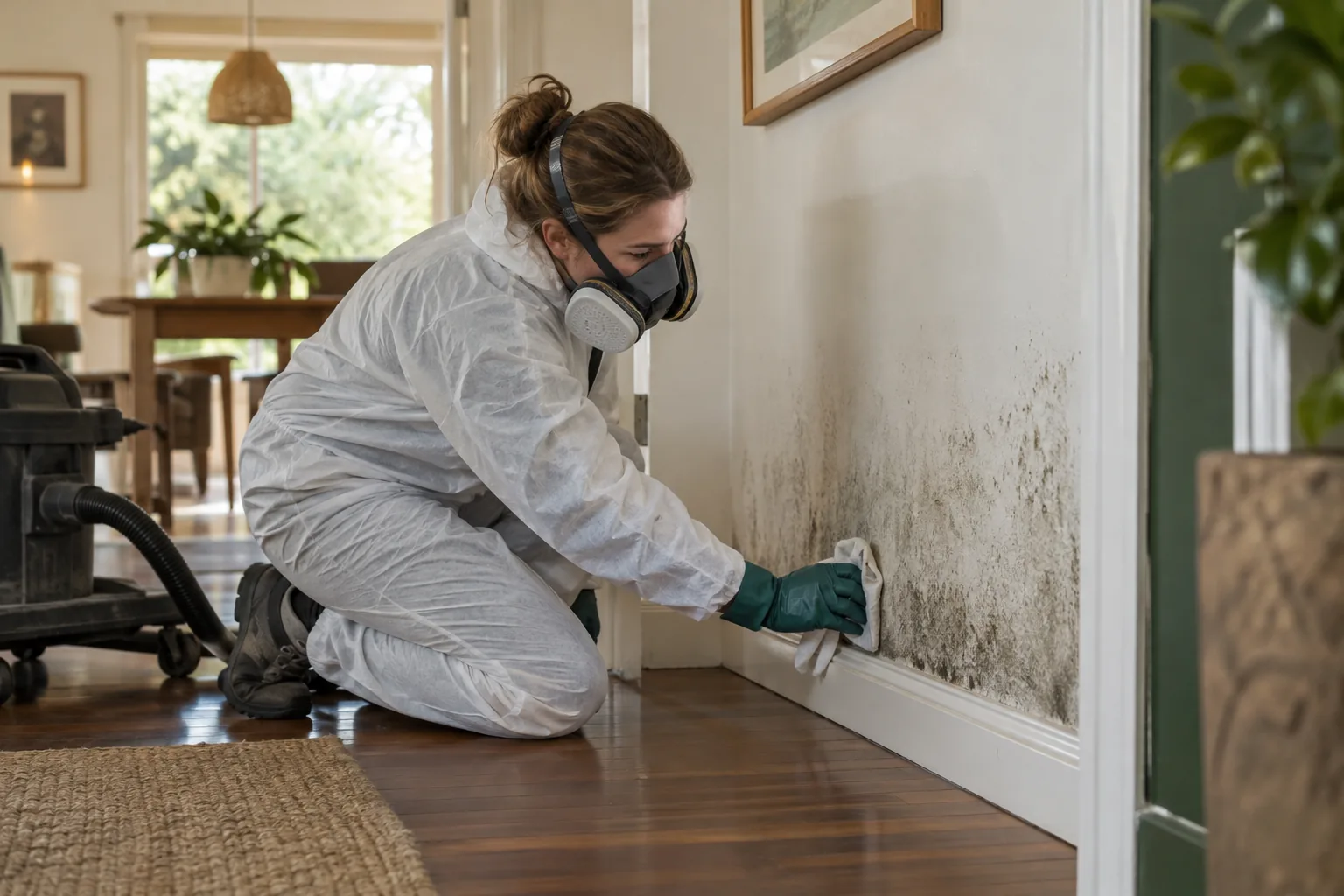
The technician checks accessible growth and the affected finishes, then discusses moisture and humidity readings. The aim is to agree what the room assessment supports, including limitations where surfaces cannot be reached without separate work.
02
Establish air protection
A HEPA air scrubber forms part of the agreed work setup. Equipment position, power and movement between rooms need planning.
03
Select surface treatment
Appropriate HOCl treatment is chosen for the assessed material and work conditions. Product handling belongs with the technician.
04
Apply the agreed method
Where ULV application is appropriate, room preparation and occupancy arrangements are confirmed beforehand. People and pets must follow the agreed instructions.
05
Remove accessible residues
Physical removal uses professional equipment with H-class filtration where required. The work concerns agreed walls, ceilings and hard floors. Fragile finishes or material requiring replacement are discussed as limitations rather than treated as guaranteed cosmetic restoration.
06
Complete filtration and review
Final air filtration follows the removal stages. Review the treated locations, remaining marks and any separate moisture repairs. Ask what to monitor next and confirm the agreed arrangements before people or pets return to the room.
VISIBLE & ACCESSIBLE
Four places worth documenting
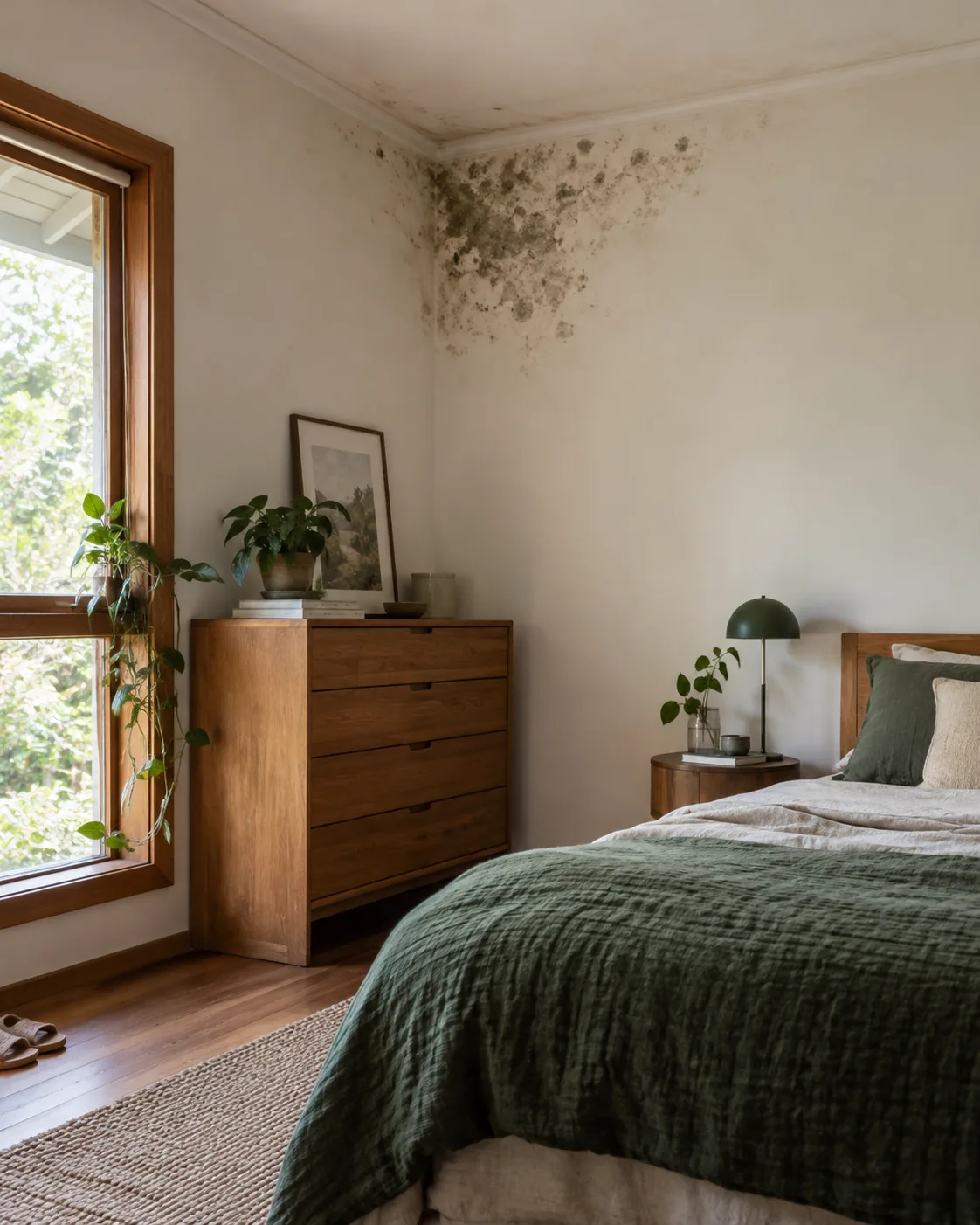
Wall beside storage
Show the accessible wall without moving a heavy cabinet alone. Storage contents and the cabinet itself are outside this structural-surface service.
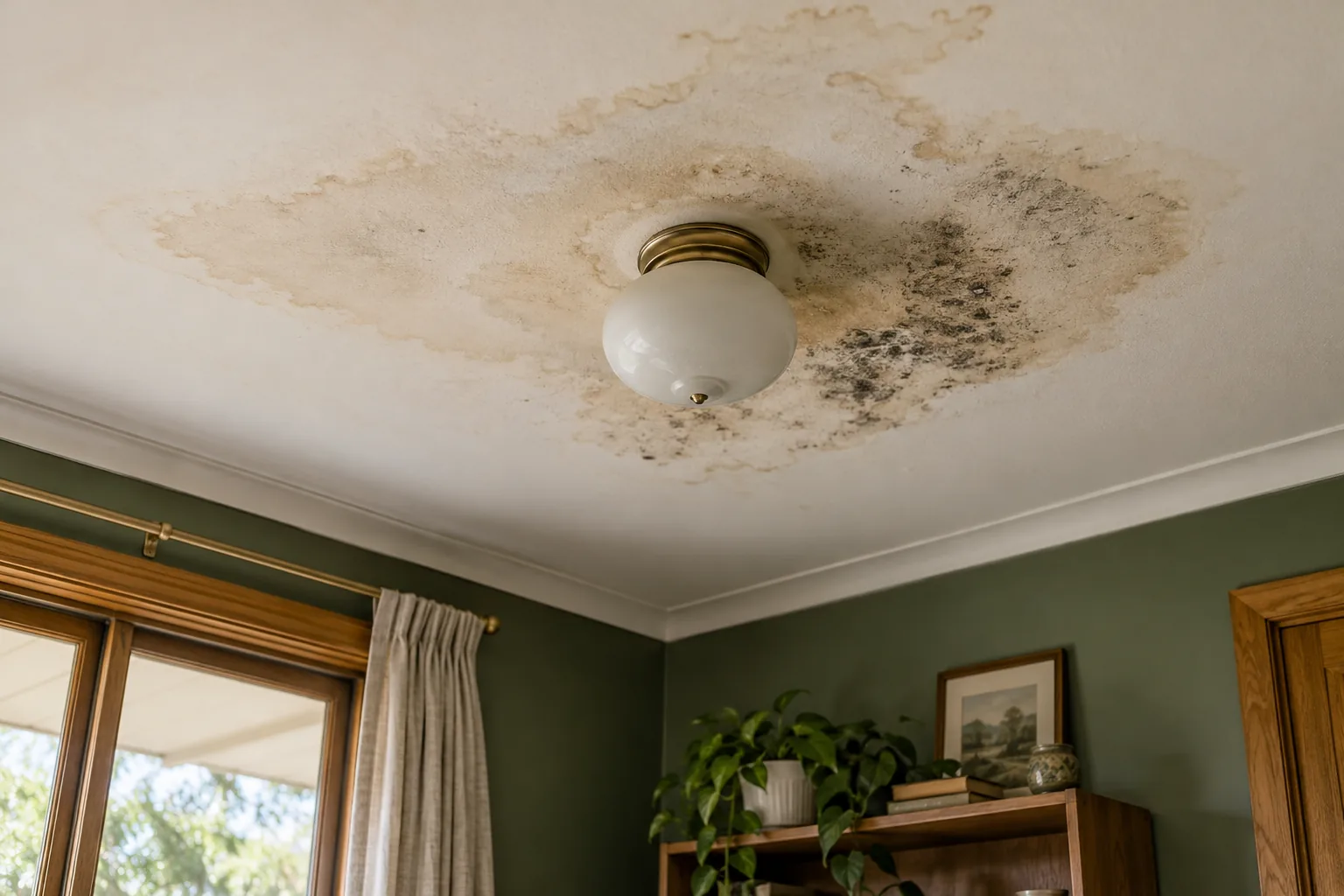
Ceiling near a junction
Photograph the whole junction as well as the mark. A leak repair or roof inspection may be needed independently of remediation.
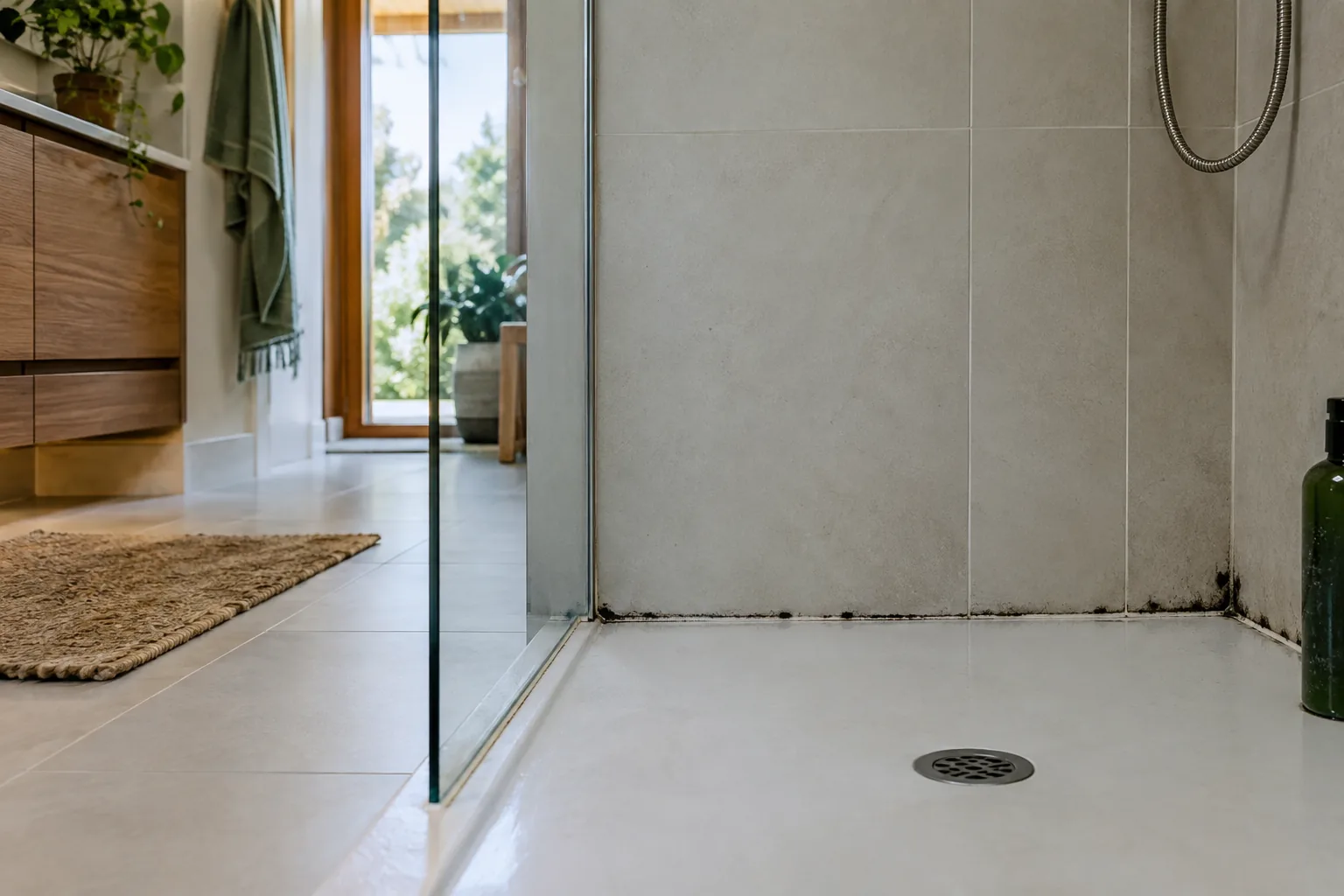
Bathroom painted surfaces
Include the ceiling and wall above the tiled zone. Explain fan use and persistent wet areas rather than sending only a close-up.
Hard-floor perimeter
Tell us whether the edge remains damp, lifts or sits beside carpet. Carpet and underlay need separate consideration and are excluded.
PREPARATION & LIMITS
Time and appearance are separate questions
The service guidance gives roughly three hours per room as an average, with variation for size, contamination and access. It is not hourly pricing. Several buildings, unavailable rooms or unresolved material damage can alter what is reasonable to arrange.
Removal of existing contamination cannot promise a completely unmarked finish. Cosmetic staining may remain after treatment, and repainting or decorating is separately quoted. Check the underlying dampness has been addressed before deciding that fresh paint is the next step.
AFTER THE SURFACE WORK
Build a small, useful monitoring record
Write down the date, room and approximate affected area, then photograph from the same position when checking again. Record whether the room was occupied, heated or closed. Comparable observations are more useful than a collection of unrelated close-up pictures.
Give extraction and ventilation a regular role when the room is in use. Keep air space behind belongings where practical and address any leak with the appropriate trade. Moisture management continues after mould remediation; existing treatment cannot prevent a new moisture problem.
MODELLA · NEARBY LOCATION PAGES
Nearby enquiries, with the address confirmed
The nearby pages listed below help you navigate surrounding localities. They do not confirm a booking radius or immediate attendance. Include Modella’s street details and the building entrance in your enquiry so availability and access can be checked together.
BEFORE YOU ARRANGE WORK
Questions for your enquiry.
Can you assess a room that has been unused for months?
Yes, describe its recent history and current condition when enquiring. Access and suitability still need agreement; an old photograph cannot establish what the room looks like today.
Should I empty a whole shed first?
Ask what clearance is needed for the agreed room. Avoid moving contaminated belongings through other spaces unnecessarily. Shed contents, stored clothing and furniture are excluded from the structural-surface treatment.
Will you check the roof as part of removal?
Roof repairs and concealed investigation are separate matters. Explain any suspected leak so the surface work can be discussed alongside the need for an appropriate repair trade.
What if the wall feels soft?
Mention this before booking and avoid disturbing it. The material may require assessment or replacement beyond visible mould removal.
Does a damp smell prove mould behind the lining?
No. An odour is useful information but does not establish a concealed source.
Can you clean stored blankets while treating the room?
No. Blankets, clothing, curtains, mattresses and other textiles are outside this service, as are furniture and carpets. Ask for separate advice about those items when the room scope is discussed.
Discuss your Modella address
Call 03 8652 1296 with the Modella address and the room’s use. Mention access, damaged finishes and any belongings blocking the wall so suitability and availability are discussed.
Useful references: Official local geographic reference