
SURFACE TREATMENT · MOISTURE FOLLOW-THROUGH
Mould Remediation Dandenong
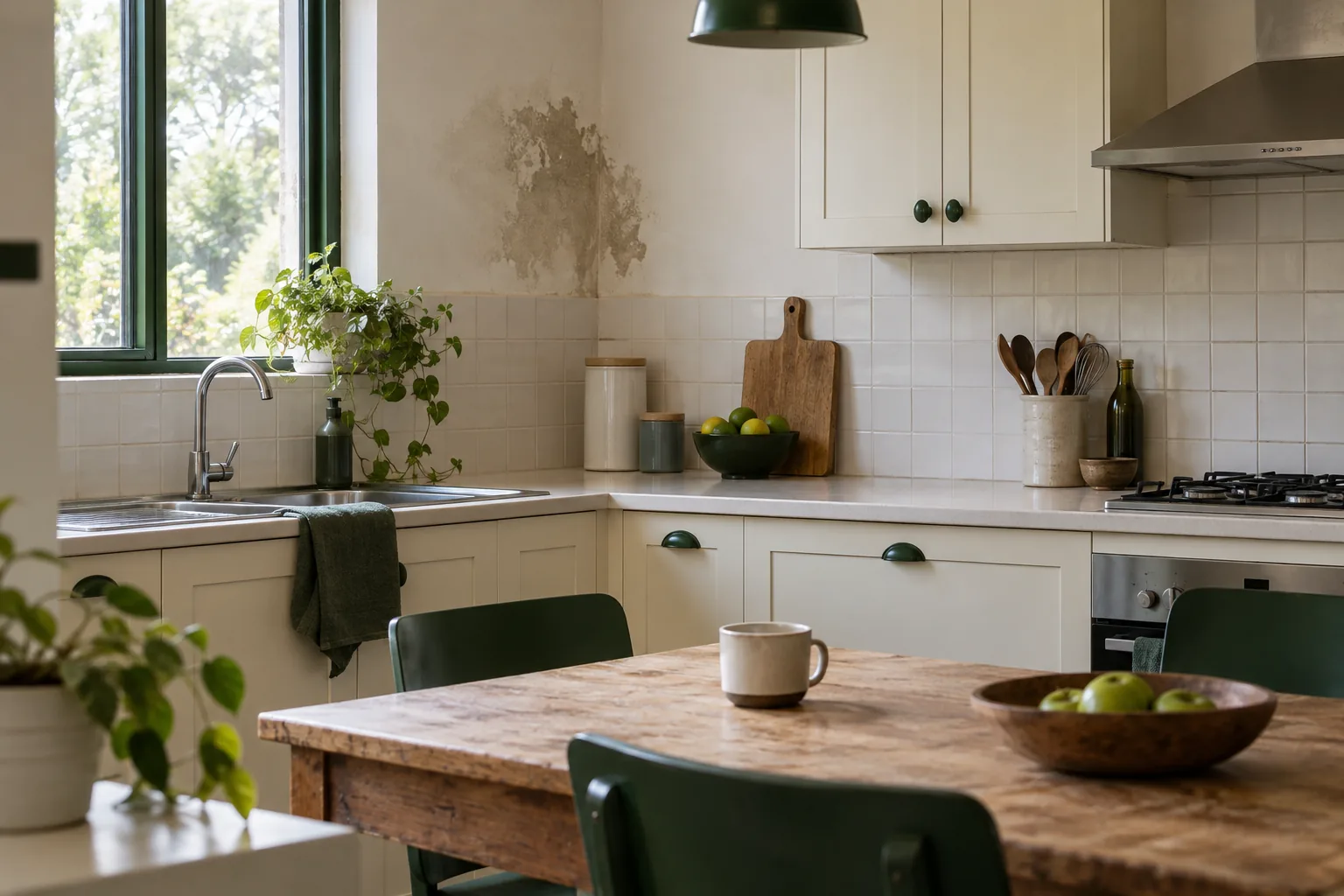
A patch can cross painted plaster, a tiled edge and another finish without creating one uniform treatment area. For Dandenong, describe the surfaces and visible extent before assuming the same method applies everywhere. Agree a structural boundary that reflects the actual finish and access.
Different finishes identified
Visible boundaries reviewed
Repair work kept separate
TREATMENT & FOLLOW-THROUGH
UNDERSTANDING REMEDIATION
Describe each finish within the affected area
Mention intact paint, exposed material, tiled areas or other visible finishes where relevant. Note any fragile edge or obstruction without scraping or removing more material. The enquiry should show where the growth sits, not simply label the whole room as requiring identical treatment.
The confirmed remediation work addresses visible accessible structural contamination. Finish repair, tile replacement, plaster work and decorating are separate decisions. Treatment suitability needs assessment; no promise is made to restore every material to a new appearance.
THE MOISTURE CONNECTION
The surface boundary is not necessarily the moisture boundary
Explain leak history, condensation or continuing wetting alongside the different finishes. Growth changing at an edge does not prove where moisture originates or whether adjoining construction is unaffected. A plumbing or building fault needs its own repair scope.
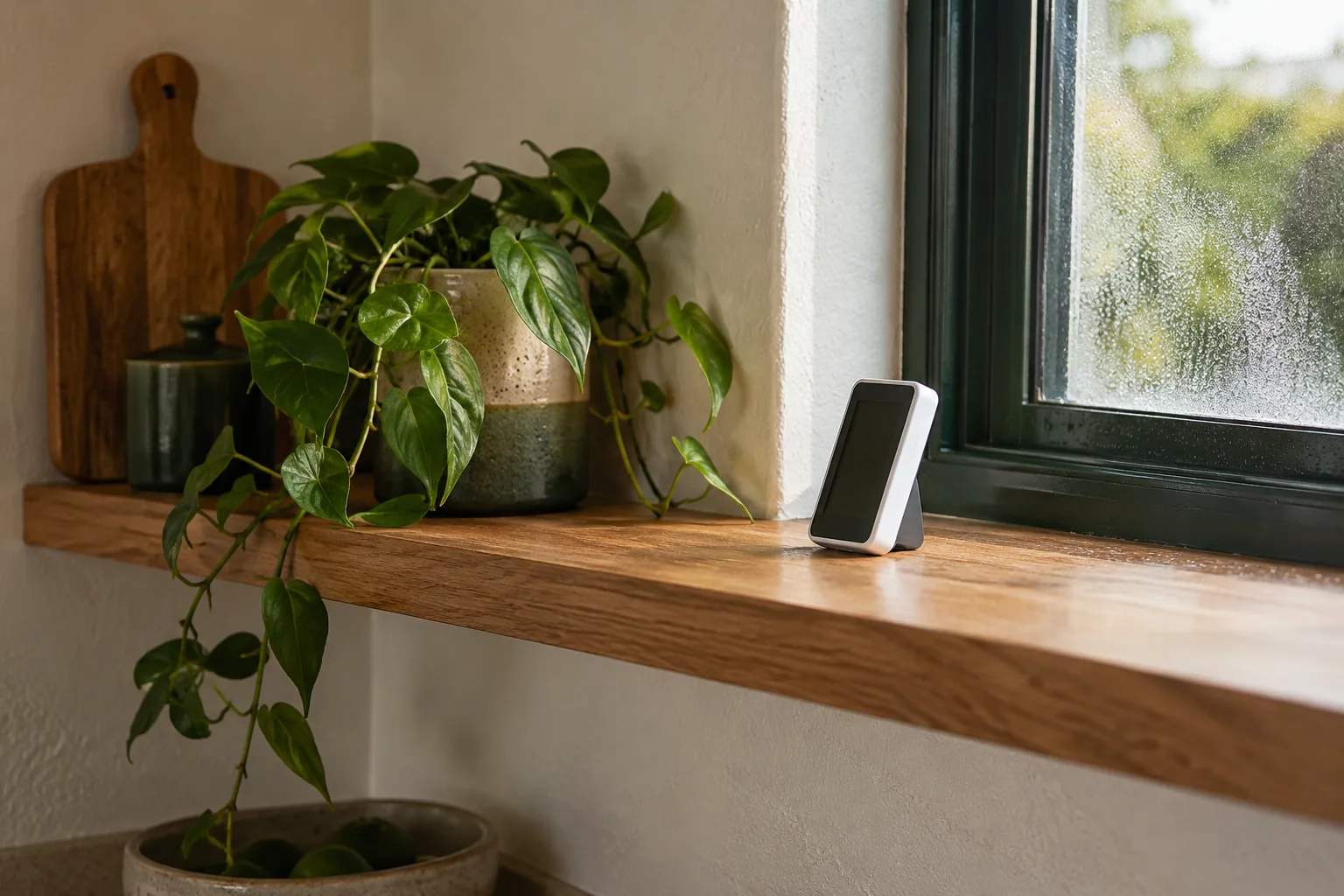
The professional hygrometer reads relative humidity in room air rather than moisture within plaster, tiles or construction. Where questions remain, discuss appropriate assessment. Specific material probes, hidden-space investigation and laboratory clearances are not confirmed.
PLAN · FILTER · TREAT · REMOVE · CONTINUE
Assess suitability before treating the finishes
1
Review the exposed materials
Assessment identifies accessible contamination, finish condition and any fragile boundaries. Explain planned repair work that might change the surface before the appointment.
2
Establish filtration first
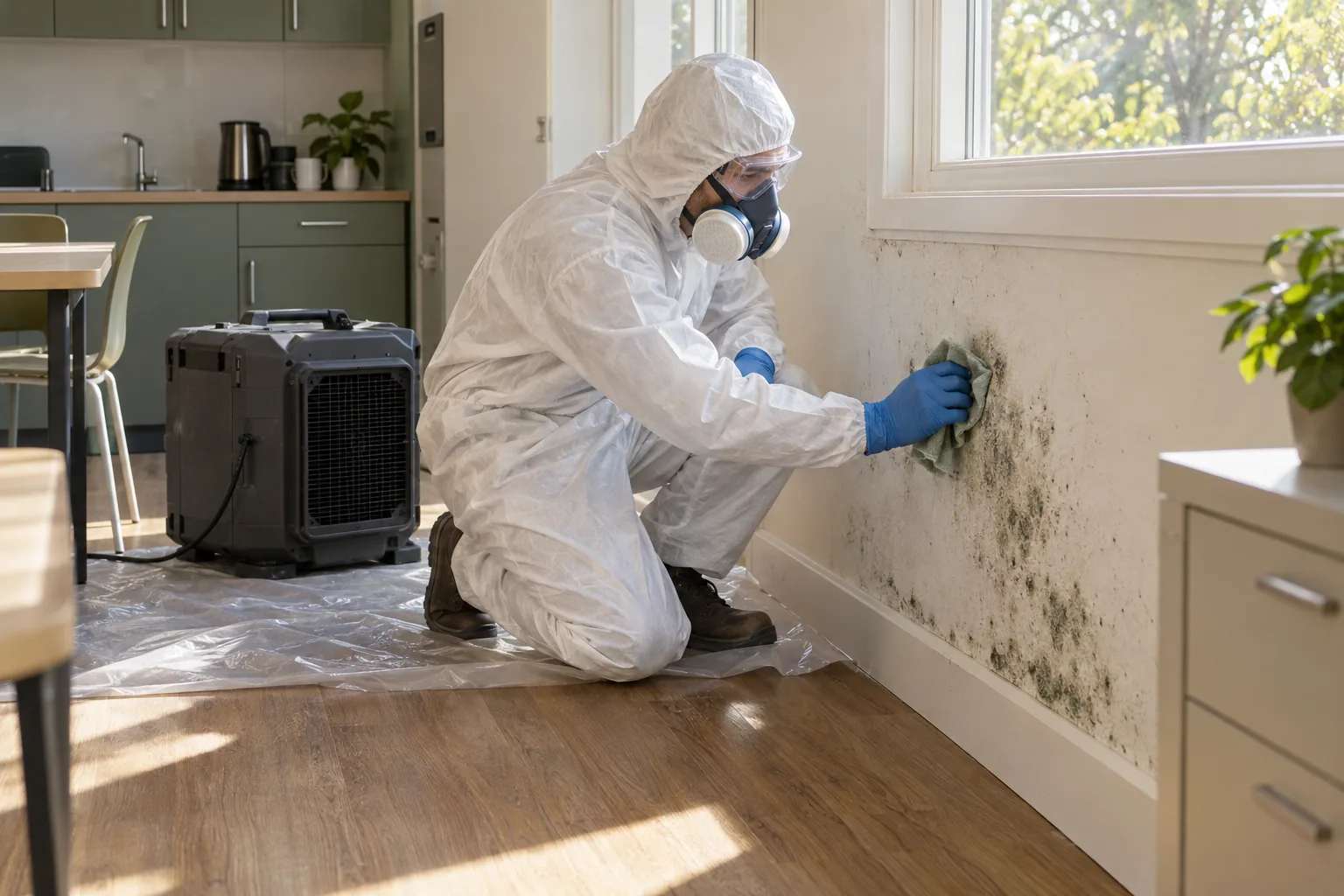
The confirmed HEPA scrubber is set up before treatment application. Clear access must allow equipment and the technician to work along the included structural surfaces.

3
Apply the suitable treatment
For the included finishes, application uses HOCl and suitable ULV dry fog, used in most cases. Discuss the actual materials rather than assuming concealed coverage or universal cosmetic restoration.
4
Physically remove visible growth
Professional H-class filtered equipment removes accessible contamination within scope. Replacement of damaged finishes is not automatically included.
5
Continue the air-cleaning process
HEPA remains active during and after treatment. Discuss residual marks and any separate finishing decisions, keeping unresolved moisture distinct from surface appearance.
Give every structural area a clear description
Walls
For walls, identify the finish on each affected face rather than assuming an adjoining material has the same condition.
Ceilings
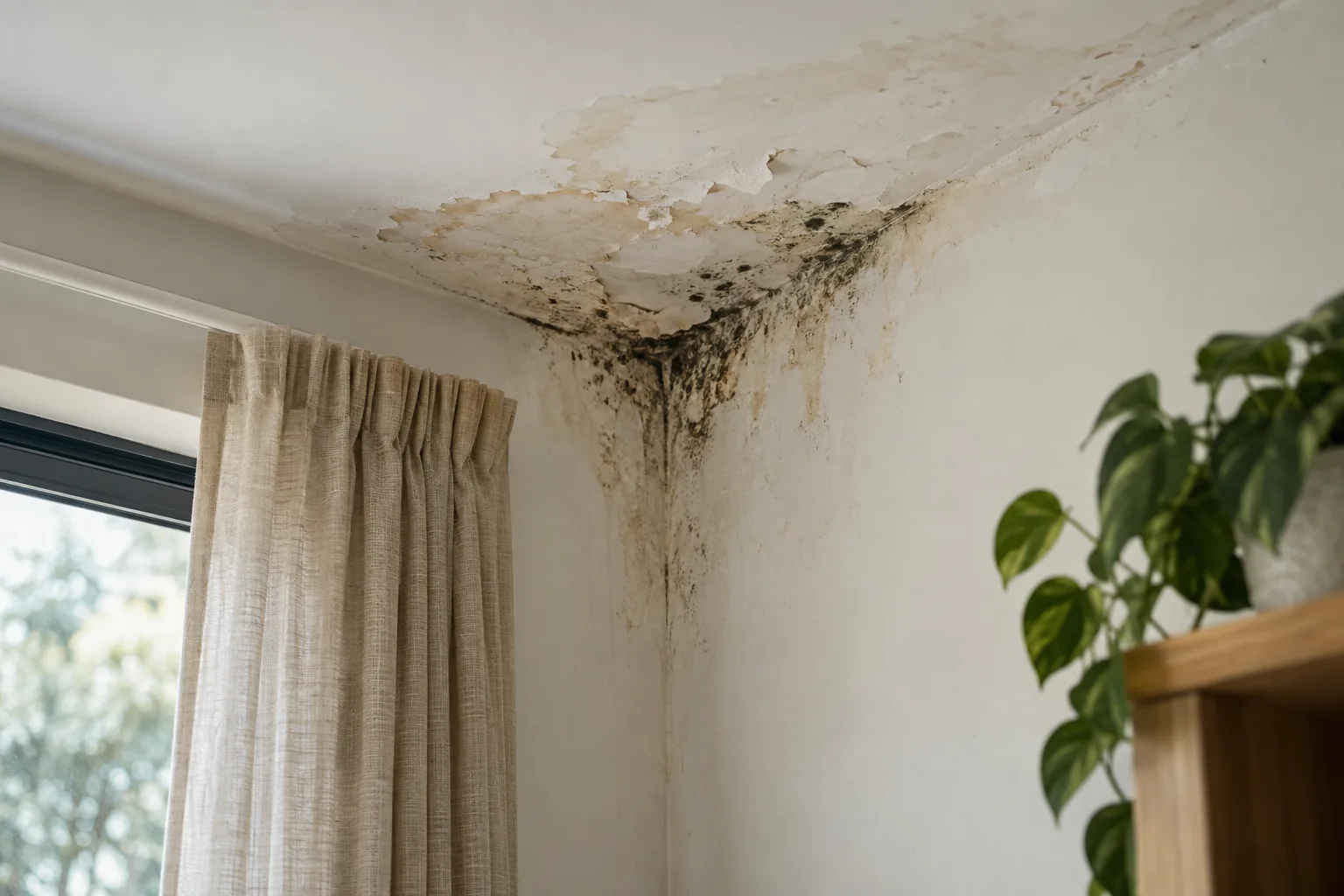
For ceilings, record separate growth and finish damage with the working access beneath it.
Bathrooms
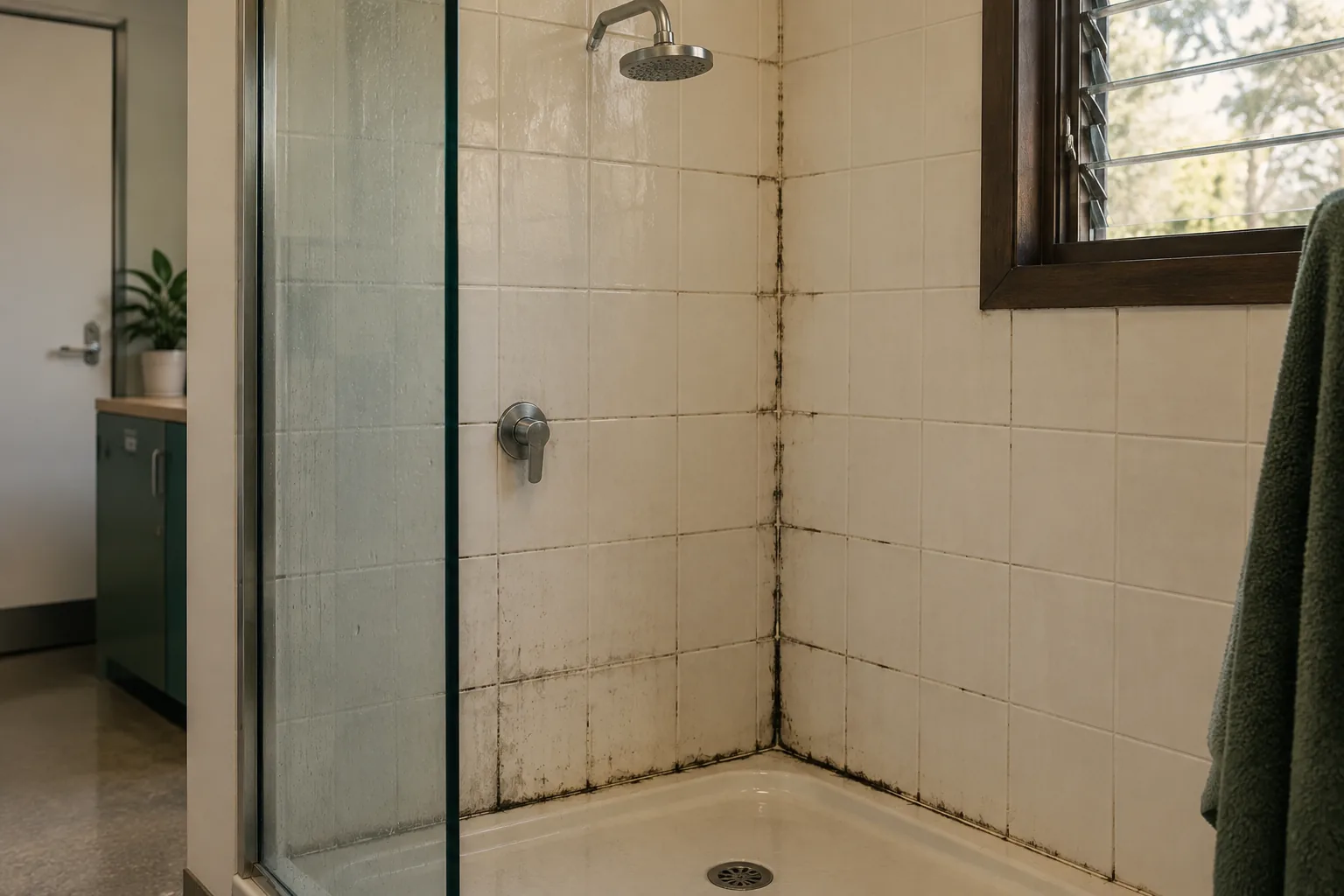
Bathroom structural treatment does not add towels, mats or other textiles; distinguish affected wall or ceiling finishes from fittings.
Kitchens
Kitchen wall and floor marks need their own surface description, with plumbing and appliance work outside an assumed inclusion.
Accessible affected surfaces
An exposed structural floor can be considered separately, while carpet, rugs and covered construction remain outside the standard scope.
WHAT TO EXPECT
Prepare access without altering the evidence
Discuss clearance, delicate finishes and previous product use before the visit. People and pets leave during treatment and obtain specific departure and return advice. The indicative average is around three hours per room, varying with extent, size and accessibility rather than a fixed time for each finish.
Some discolouration may remain. Repairs and decorating require separate scope, and hidden materials are not certified dry. Persistent moisture can allow recurrence, so do not use one cleaner-looking finish as proof that the entire mixed-surface area is resolved.
FOLLOW THE MOISTURE
Keep the finish and moisture decisions distinct
Follow-up should note renewed dampness as well as cosmetic changes.
Arrange repair advice for continuing water entry or damaged construction.
Record where growth returns and which finish is affected.
Maintain ventilation and leave the included area accessible for later observation where practical.
Quote against the actual surfaces
Refer to published price information with the finish list, exposed extent and access. The Mould Removal table does not establish a separate mixed-finish remediation or restoration package. Ask how the figures apply without assuming tile, plaster or decorating work is included.
DANDENONG · EXACT ADDRESS & ACCESS
Other Dandenong-area enquiries
A nearby address needs its own finishes, approval and access details. A similar-looking patch does not establish the same treatment suitability or appointment availability; discuss each property separately.
Questions about remediation
Will one treatment method suit every finish?
Suitability needs assessment for the actual surfaces. Describe the materials and condition rather than assuming identical handling across the whole area.
Should loose edges be removed before calling?
Discuss preparation first. Do not scrape or dismantle a finish merely to enlarge the visible patch for the enquiry.
Is tile replacement included?
Tile replacement is not a confirmed remediation inclusion. Agree structural treatment and arrange repair or reinstatement separately.
Does a patch stopping at a finish edge prove the next surface is dry?
No. A visible boundary does not measure moisture within adjoining materials or establish concealed condition.
Can remaining marks be painted over immediately?
No immediate decorating programme is established. Discuss cosmetic marks, moisture questions and separate preparation requirements first.
What information helps with fragile paint?
Describe the lifting or damage and any previous work or products if known. That helps the suitability discussion without requiring you to disturb more of the finish.
Discuss the materials before agreeing treatment
Call 03 8652 1296 with the visible finishes, access and damp history. Clarify the structural scope and separate restoration tasks.