
SURFACE TREATMENT · MOISTURE FOLLOW-THROUGH
Mould Remediation Noble Park
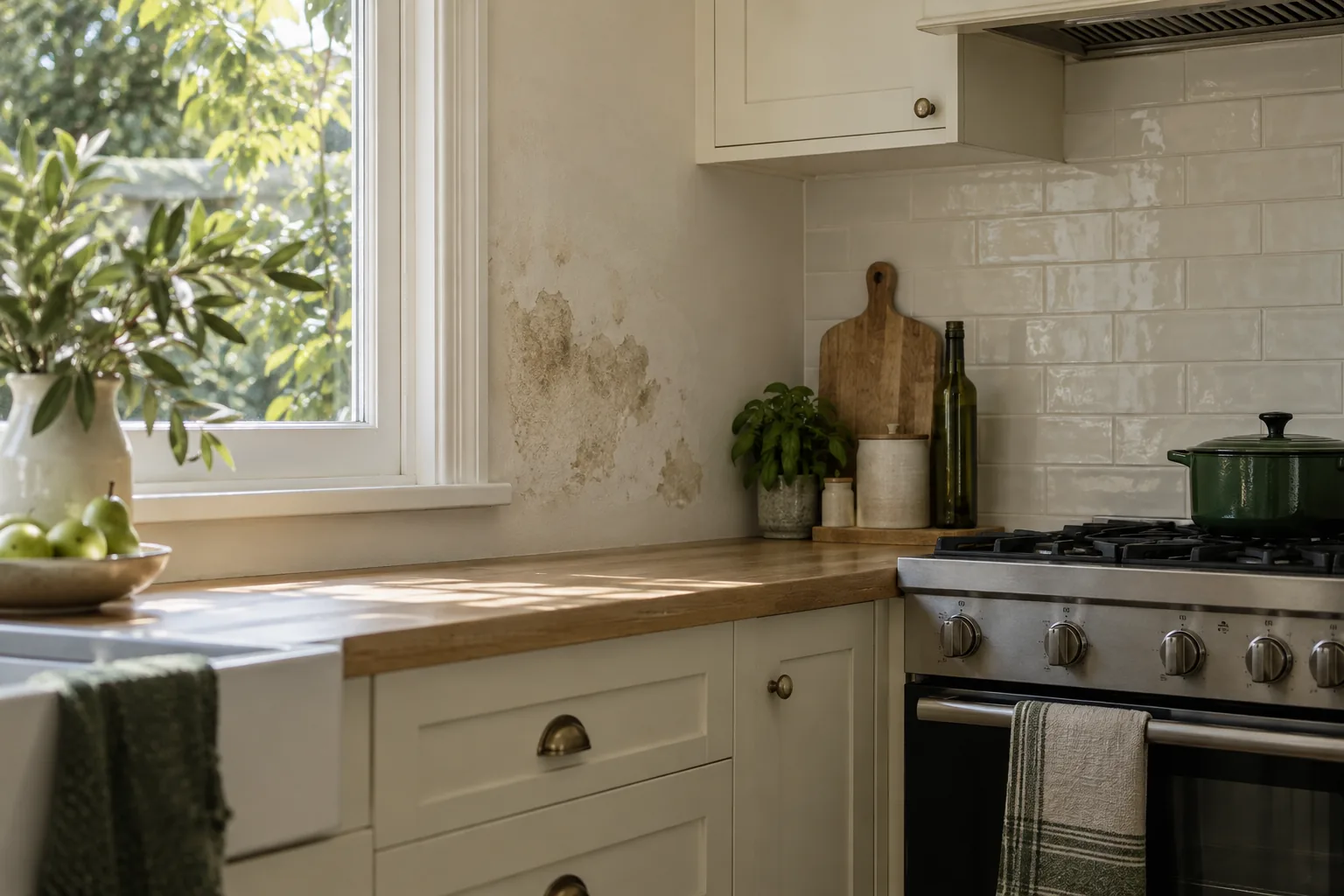
A treatment room may be reached through a route used by other people. For Noble Park, describe the accessible structural growth and any shared entrance or passage that affects the visit. Agree the working arrangements without assuming the whole building or its common areas are included.
Working route explained
Shared access coordinated
Room boundary confirmed
TREATMENT & FOLLOW-THROUGH
UNDERSTANDING REMEDIATION
Explain the route as well as the patch
Mention doors, clearance restrictions and who can approve access through shared spaces, if relevant to the property. Describe the affected room’s walls, ceilings or exposed floors separately. Do not count the passage as contaminated or included simply because equipment must pass through it.
The confirmed structural service concerns visible accessible contamination within the agreed scope. Building-wide treatment, shared-area cleaning and management coordination are not automatic inclusions. Confirm the responsible contact and practical preparation for the actual appointment.
THE MOISTURE CONNECTION
Keep room conditions separate from building assumptions
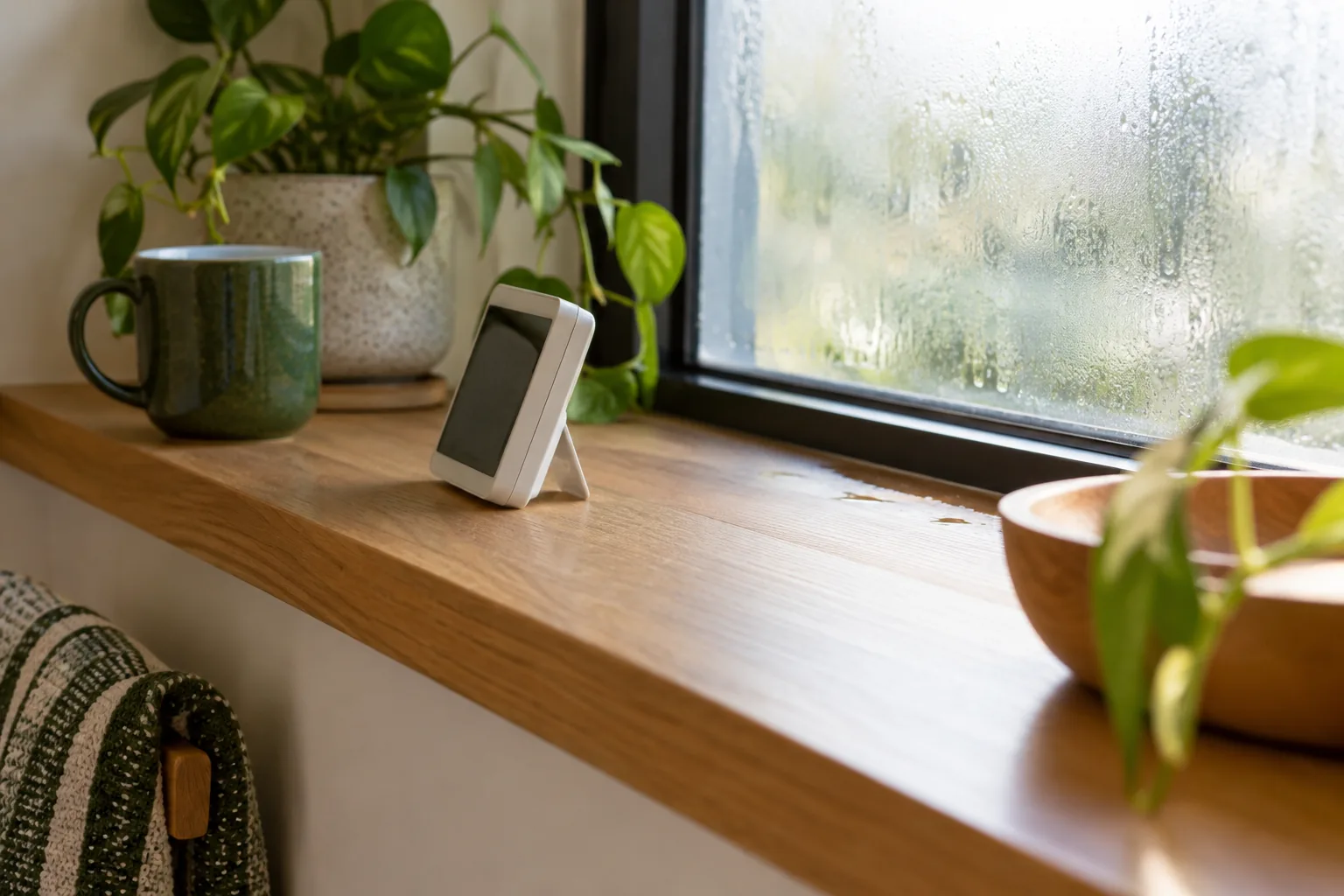
Mention observed condensation, wetting or known leak history for the affected area. A shared route does not establish that adjoining rooms have the same problem. Plumbing and building defects need separate repair arrangements, and no particular property type is assumed for this enquiry.
The professional hygrometer reads relative humidity in room air, not moisture inside construction or a whole-building result. Where the visible condition raises uncertainty, discuss assessment requirements without promising concealed-area tests, material probes or a written clearance.
PLAN · FILTER · TREAT · REMOVE · CONTINUE
Treatment within an agreed working route
1
Review scope and access together
Assessment identifies the exposed contamination and route needed to reach it. Explain approval requirements before assuming shared spaces or additional rooms can be used.
2
Establish air protection
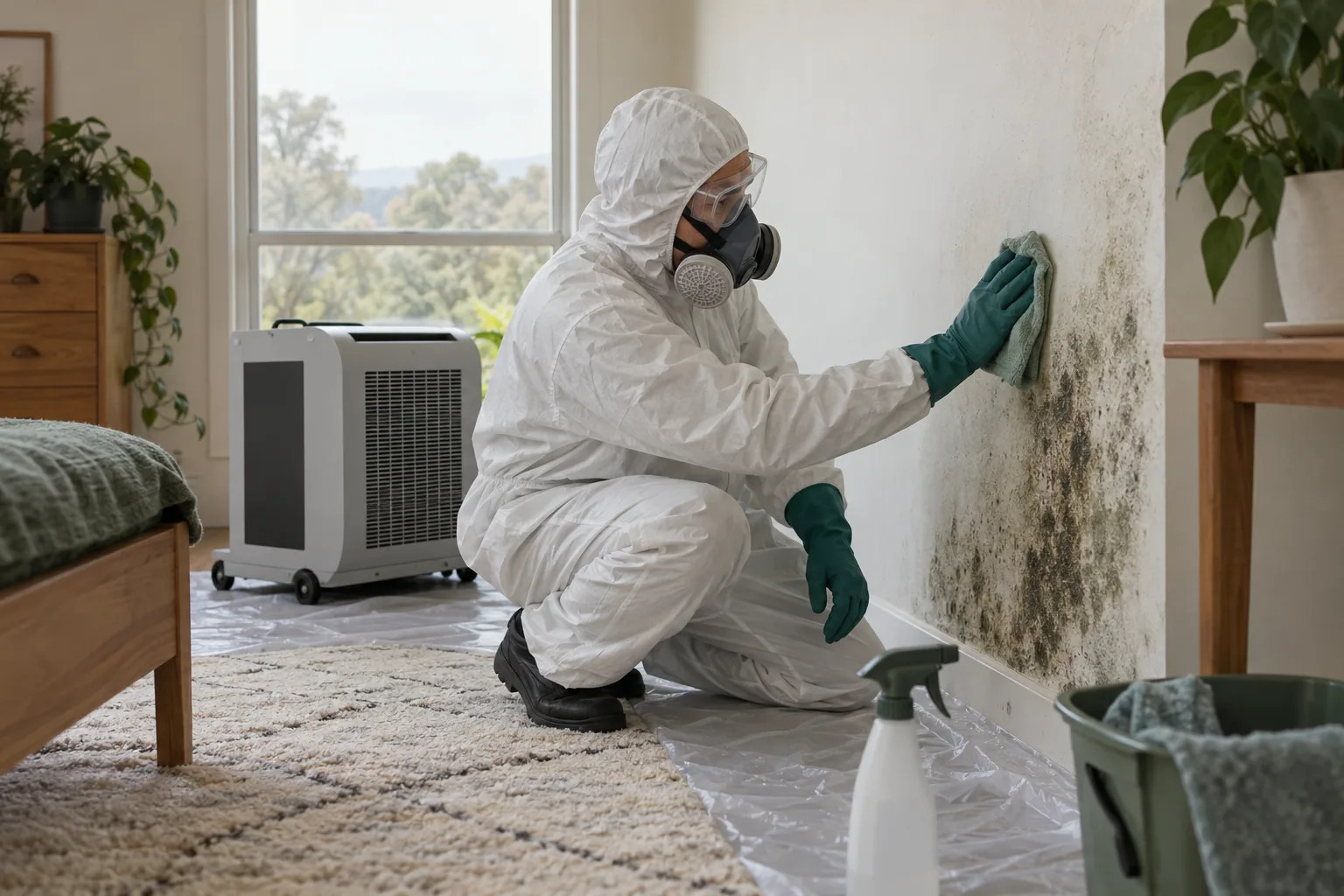
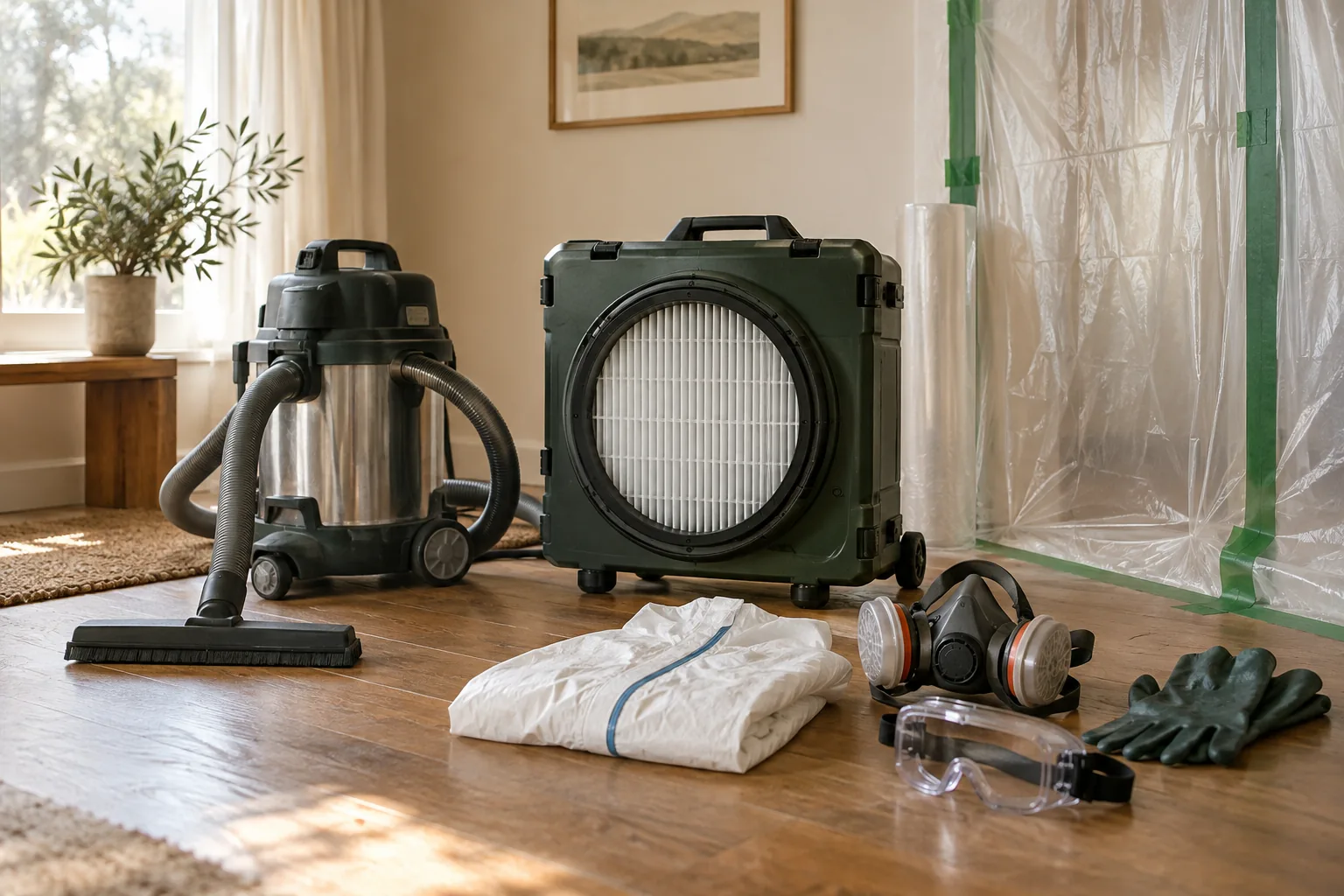
The confirmed HEPA scrubber is set up before treatment. Equipment positioning and the working route need coordination with the authorised contact and actual room access.
3
Apply suitable treatment
HOCl application is included, with ULV dry fog where appropriate in most cases. This stage does not extend treatment to the building’s common areas or other properties.
4
Remove accessible growth physically
Professional H-class filtered equipment is used on the agreed visible structural surfaces. Work outside that boundary requires separate discussion and approval.
5
Continue air cleaning
HEPA remains active during and after treatment. Confirm return instructions and completion observations without treating the appointment as a clearance for every person or space in the building.
List the included structural areas
Walls
For walls, identify the affected face inside the proposed room rather than including a corridor wall by proximity.
Ceilings
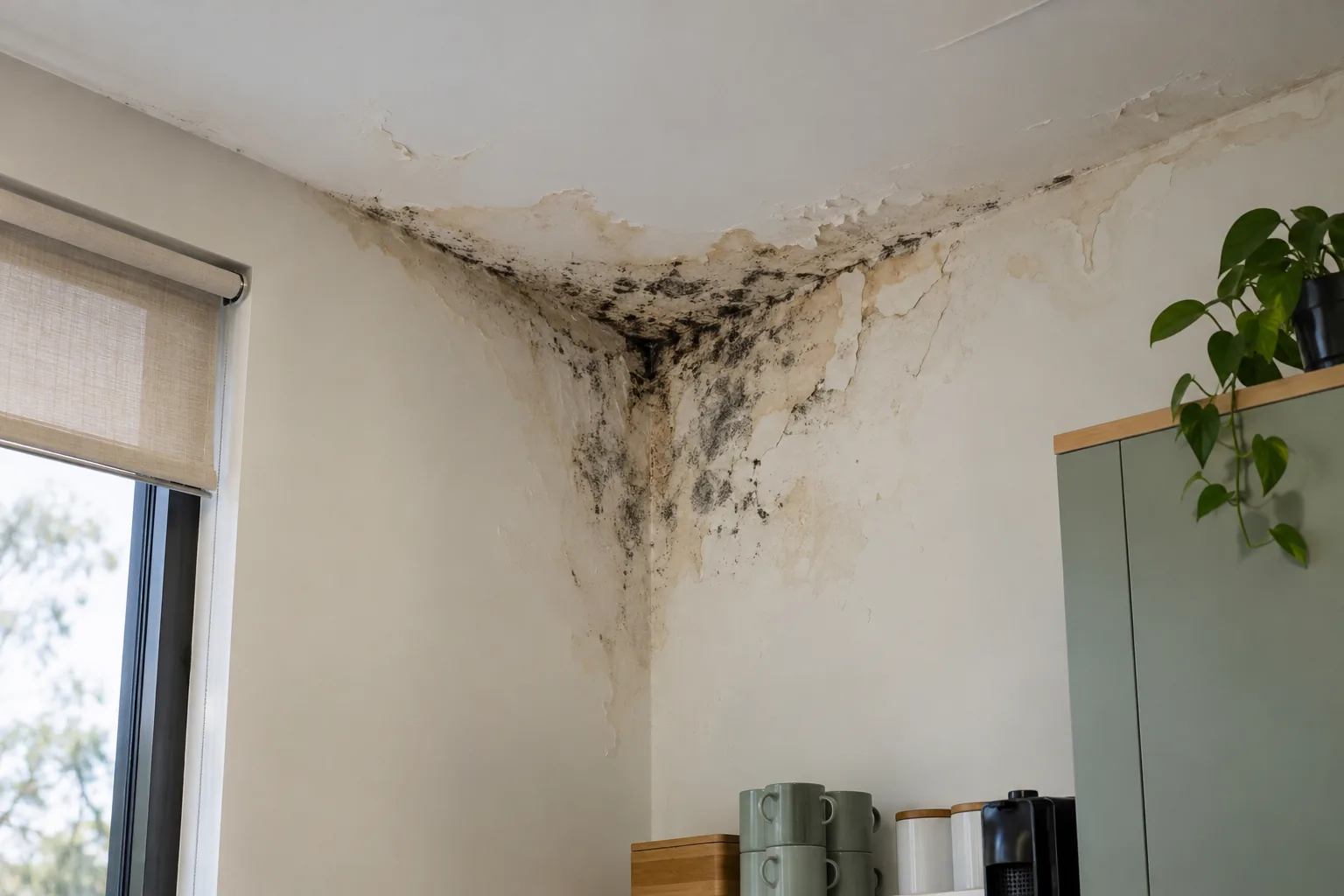
For ceilings, describe separate patches and any access beneath them that affects the working route.
Bathrooms
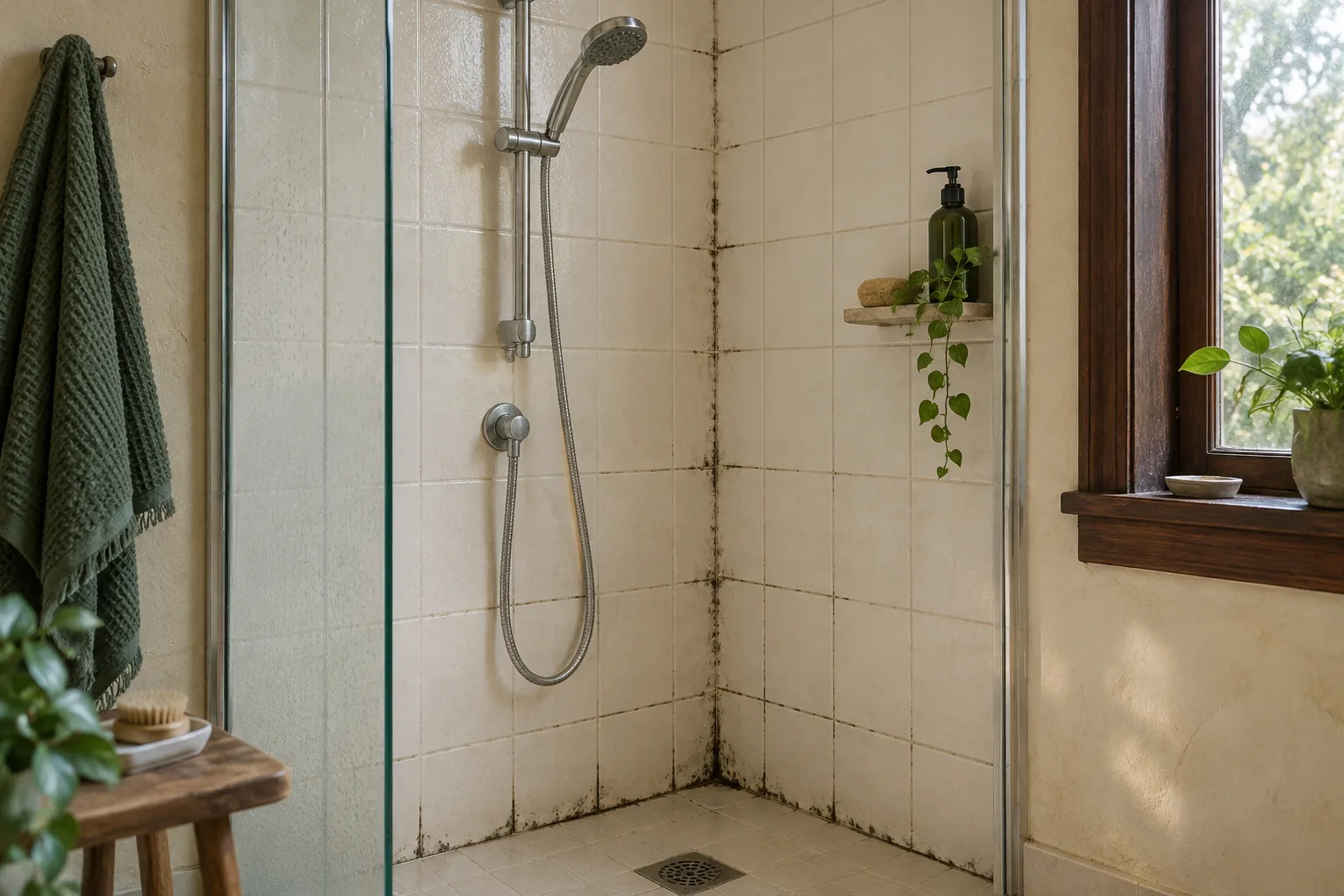
Bathroom walls and ceilings need their own scope, with towels and bathmats excluded.
Kitchens
Kitchen structural areas should be distinguished from appliance, cabinet or plumbing work outside the treatment agreement.
Accessible affected surfaces
An exposed structural floor may be discussed; carpet, rugs and shared-route cleaning are not assumed inclusions.
WHAT TO EXPECT
Confirm arrangements before attendance
Agree keys, clearance and the responsible access contact. People and pets leave during treatment, with specific departure and return advice for the job; shared spaces require suitable coordination rather than an assumed universal arrangement. About three hours per room is indicative average guidance, varying with extent, size and accessibility.
Cosmetic marks may remain and decorating is separate. The work does not certify concealed areas dry or guarantee no recurrence where moisture persists. Keep the actual included room and surfaces clear when reporting completion, instead of describing a building-wide result.
FOLLOW THE MOISTURE
Make follow-up belong to the affected area
Monitoring needs a clear room boundary and a responsible person for remaining questions.
Record renewed dampness or growth in the surface where it occurs.
Arrange the appropriate repair advice for continuing water entry.
Maintain ventilation and retain practical access to the treated patch for later observation.
Explain access without inventing a building package
Refer to pricing information with the structural scope and route constraints. The table is labelled Mould Removal, not a confirmed shared-building remediation tariff. Confirm applicability without assuming management services, common-area work or a special access fee is included.
NOBLE PARK · EXACT ADDRESS & ACCESS
Other Noble Park-area addresses
For another nearby property, give its own route, approval and visible scope. A shared manager or similar entrance arrangement does not establish automatic attendance or a combined treatment boundary.
Questions about remediation
Is the shared corridor included because equipment uses it?
No inclusion follows from the access route alone. Agree the affected structural surfaces separately from any common-area work.
Who should arrange access through shared spaces?
Confirm the authorised responsible contact before booking. This page does not establish the building’s access rules or replace its approval process.
Will treatment cover an adjoining property too?
Do not assume it is included. Each proposed area needs its own scope, access and authorisation discussion.
Can the room be occupied while equipment is set up elsewhere?
Do not infer an occupancy exception from equipment position. The source requires people and pets to leave during treatment; confirm the actual arrangements with the technician.
Does completion clear the whole building?
No building-wide clearance is confirmed. Completion concerns the agreed visible accessible treatment, not concealed areas or every surrounding space.
Should nearby occupants be given a universal return time?
No fixed return interval is established. Discuss job-specific instructions through the responsible contact rather than issuing advice based on a room-duration average.
Agree the room and the route
Call 03 8652 1296 with the visible area and access constraints. Clarify authority, preparation and treatment boundaries before attendance.