
VISIBLE SURFACES · AGREED TREATMENT
Mould Remediation Fitzroy
A treatment enquiry for an occupied tenancy needs a clear contact and preparation arrangement. At your Fitzroy address, identify who can authorise entry, which visible finishes are requested and who will communicate with occupants. Remediation should not be presented as a decision about lease responsibilities or permission to move somebody’s belongings without agreement.
Authorised entry is established.
Occupant instructions are coordinated.
Repairs and treatment remain separate.

TREATMENT · FILTRATION · FOLLOW-THROUGH
A TREATMENT PLAN WITH CLEAR LIMITS
A booking needs an authorised treatment boundary
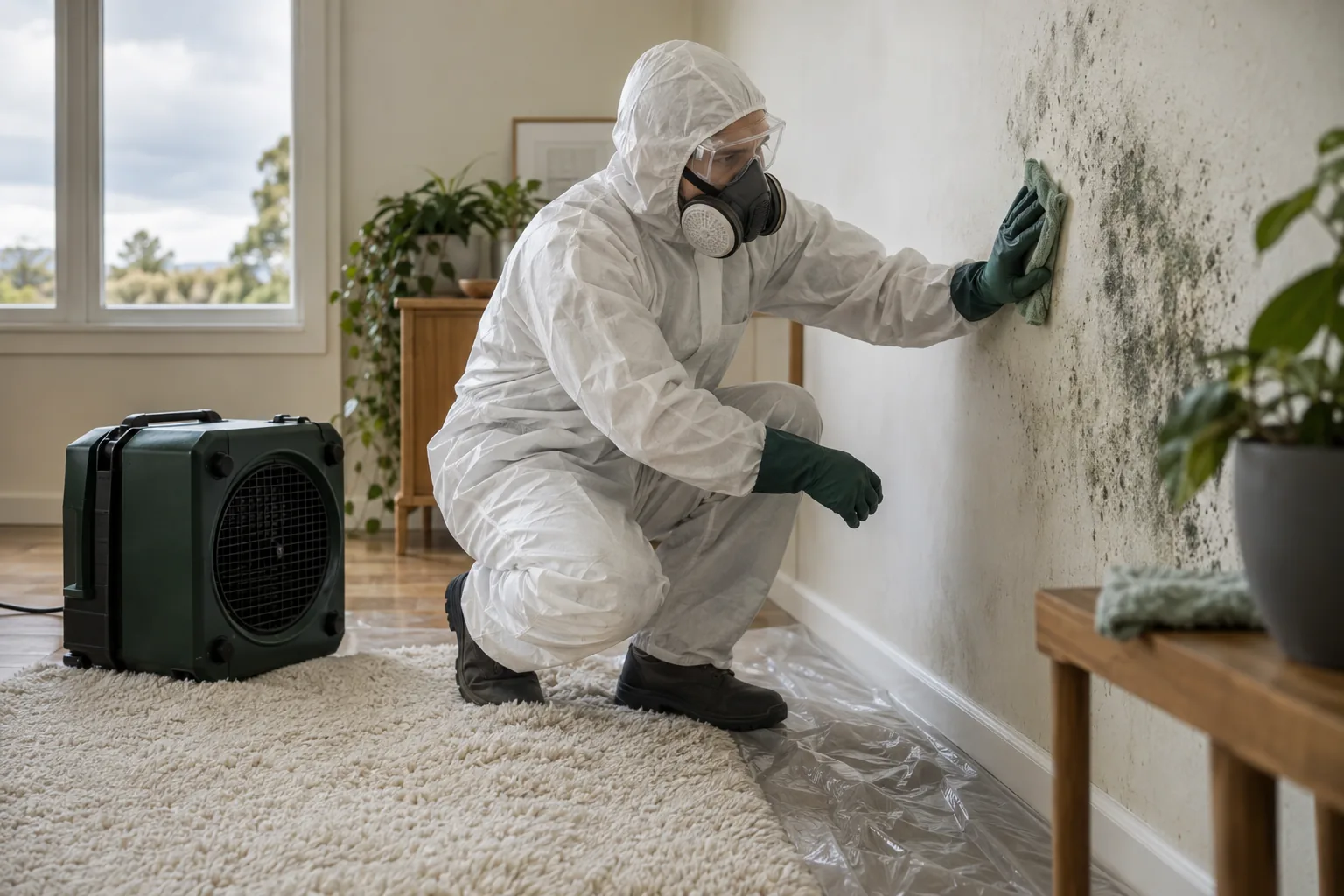
Remediation includes assessment, filtration, suitable application and physical removal of visible mould on agreed accessible surfaces. Identify the actual room and exposed finish, together with any access restriction. A property contact’s involvement should not silently expand the work to every tenancy or establish responsibility for the source.
Our remediation information describes the supported process, not tenancy advice or a promised dispute report. Furniture, mattresses, curtains and clothing are excluded. Repairs and decorating require separate agreement, even when the same person arranges several kinds of work at the property.
MOISTURE COMES FIRST
Describe the room condition without assigning blame
Give firsthand observations of visible water, condensation and changes to the finish, separating them from assumptions about occupant behaviour. The professional hygrometer provides room-air relative-humidity context. It does not determine liability, measure concealed material moisture or prove who caused contamination.
Arrange known leak or ventilation corrections separately through the appropriate responsible contact. Continued dampness can contribute to recurrence after visible treatment. A surface inspection enquiry may clarify accessible condition, without promising laboratory analysis, hidden-layer investigation or documentation for a tenancy dispute.

FROM PREPARATION TO FOLLOW-THROUGH
Coordinate supported work with the entry contact
1
Agree the accessible scope
Confirm authorised entry and the requested exposed surfaces, agreeing suitable checks, access limits and the treatment scope.
2
Begin air protection
Start confirmed HEPA air-scrubber protection before application, with occupants’ preparation coordinated through the nominated contact.
3
Choose the treatment application
Use suitable HOCl treatment, considering ULV dry fog where appropriate rather than promising application to all tenancy contents.
4
Remove visible growth
Physically remove visible mould using professional H-class filtered equipment within the agreed finish boundaries, excluding furniture and fabrics.
5
Continue final air cleaning
Continue HEPA air cleaning during and after work, communicating remaining cosmetic limits and job-specific return arrangements to the relevant people.
Define finishes within the requested tenancy
Walls
Tenancy wall work should identify the room and finish rather than imply access to adjoining private interiors.
Ceilings
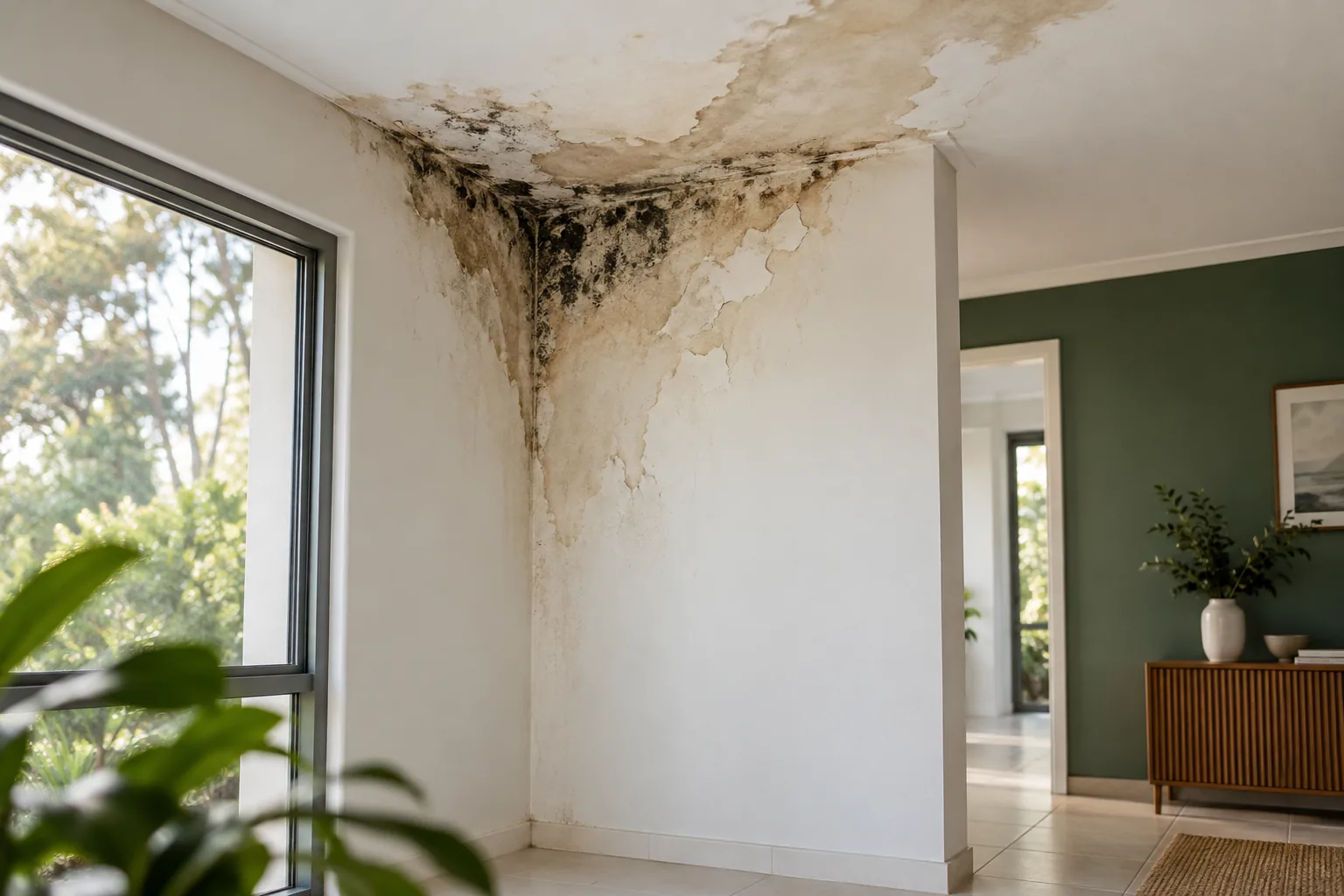
Ceiling requests need safe working access and any visible lining deterioration disclosed before treatment.
Bathrooms
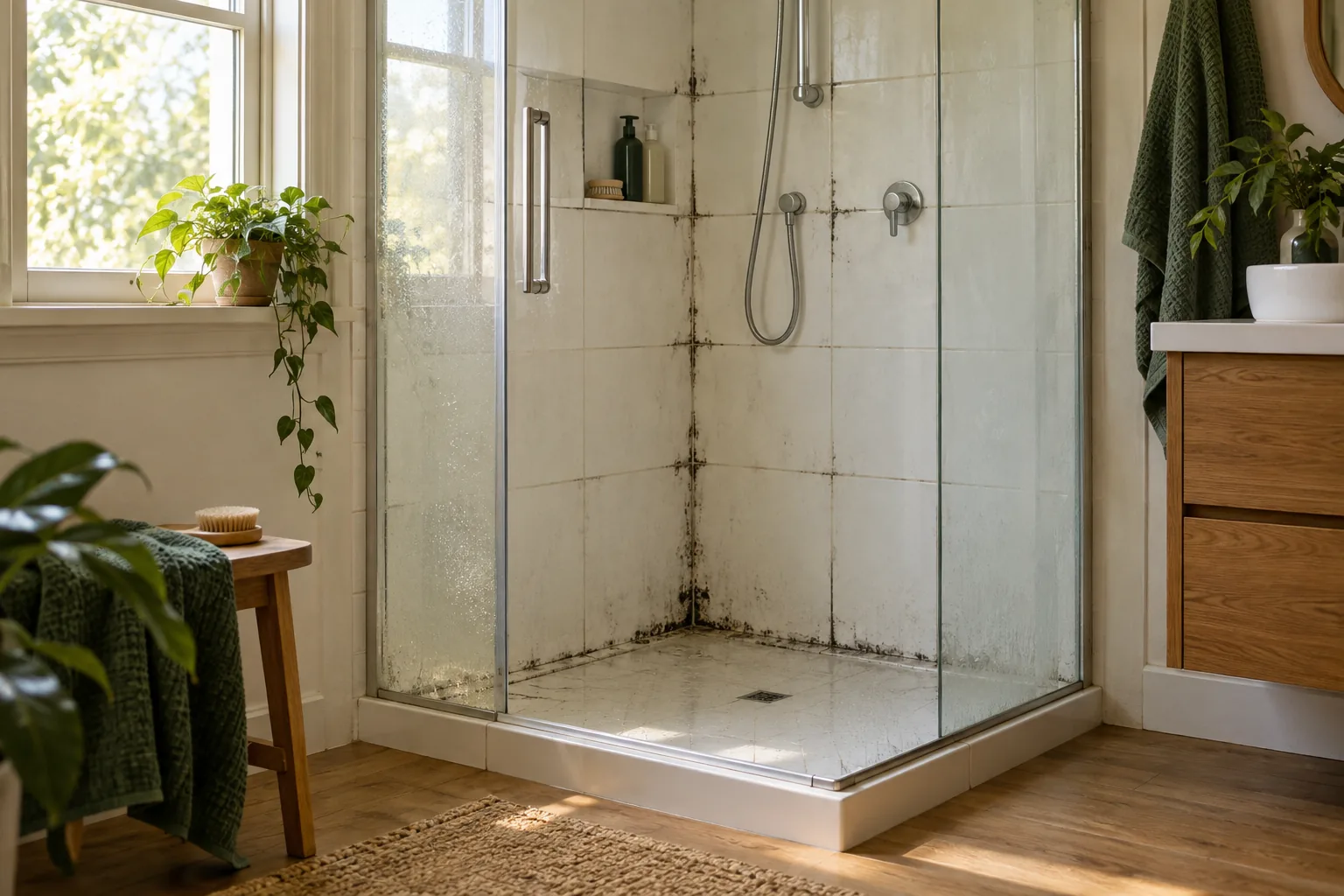
Bathroom paint and joints require material-specific scope, with seal repairs or replacement arranged separately.
Kitchens
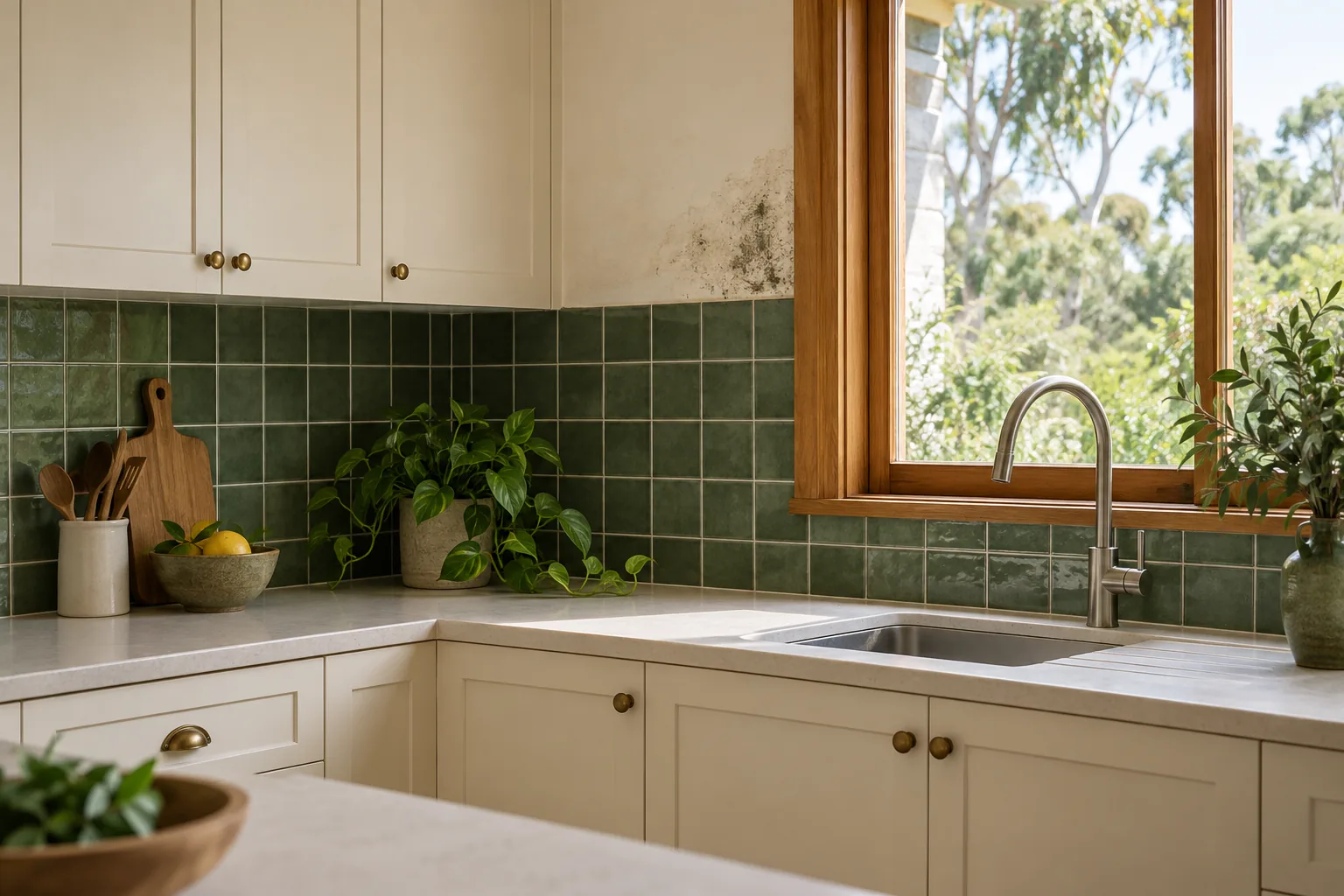
Kitchen treatment relates to exposed finishes, not automatic cleaning of occupants’ contents or appliances.
Accessible affected surfaces
Other accessible affected walls, ceilings or hard floors may be agreed, while textile items and concealed layers remain excluded.
PREPARE FOR THE ACTUAL JOB
Make preparation and return communication clear
Confirm who will prepare movable belongings and provide authorised entry; personal possessions should not be handled by assumption. People and pets leave during treatment. The source gives about three hours per room as average guidance, with the actual schedule affected by contamination, area and access rather than a fixed return time.
Treatment may leave cosmetic staining, and repairs or repainting remain separate. Ask how the technician’s departure and return advice will reach the occupant and the person arranging the work. No clearance certificate, lease-responsibility finding or guaranteed future mould prevention is confirmed by the surface booking.
AFTER THE TREATMENT
Keep useful observations for follow-through
Keep treatment observations separate from discussions about responsibility.
Record fresh visible changes with the room and date.
Follow through on known source repairs and ventilation concerns.
Ensure aftercare information reaches the person actually using the treated interior.
Agree the tenancy’s actual surface quote
Specify the authorised room, requested finishes and preparation contact when discussing cost. The published examples concern Mould Removal, so confirm their application to remediation. Do not assume a room amount includes a tenancy report, furniture cleaning or repairs; establish the actual treatment agreement without assigning payment responsibility from this page.
FITZROY · EXACT ADDRESS & ACCESS
Enquiries for nearby addresses
For the Fitzroy premises, provide the complete address and tenancy identifier where needed. Nominate an authorised person who can confirm entry and communicate with the occupant. Nearby pages navigate separate property enquiries; they do not establish permission, lease responsibilities or treatment scope across other interiors at the same building.
Collingwood · Jolimont · Abbotsford · Carlton
Questions about remediation
Does booking remediation decide who is responsible for mould?
No. Visible-surface treatment does not establish tenancy liability or blame. Keep actual room observations and separately confirmed repairs distinct from responsibility discussions.
Can the property contact authorise movement of all belongings?
Do not assume that. Agree preparation and appropriate permission beforehand, keeping personal possessions and excluded textiles separate from the treatment task.
Will the appointment provide a tenancy-dispute report?
No such report is confirmed. Explain any documentation requirement before relying on the visit, rather than presenting treatment as a dispute-assessment service.
Can the occupant remain in the room?
People leave during treatment. Coordinate departure and the technician’s specific return advice, rather than assuming permission based on a closed door or filtration.
Does one tenancy quote include a neighbouring unit?
No. Identify each requested interior and establish its own access authority and scope; the same building address does not provide automatic coverage.
Who needs the return instructions?
The people affected by occupancy and entry arrangements need the technician’s advice. Nominate a contact who can pass it on reliably before the work begins.
Discuss the authorised treatment request
Call 03 8652 1296 with the tenancy, exposed surfaces and authorised contact. Agree preparation and communication before arranging treatment attendance.