
VISIBLE SURFACES · AGREED TREATMENT
Mould Remediation Abbotsford
A bathroom with a reported extractor problem may need surface treatment and a separate ventilation decision. At your Abbotsford address, identify the visible finish and explain what is actually known about the fan. Remediation should not promise to service ventilation equipment or permanently prevent recurrence while room conditions remain unresolved.
Visible treatment scope is agreed.
Ventilation repair stays separate.
Aftercare follows actual room conditions.

TREATMENT · FILTRATION · FOLLOW-THROUGH
A TREATMENT PLAN WITH CLEAR LIMITS
Treat the finish while clarifying the fan concern
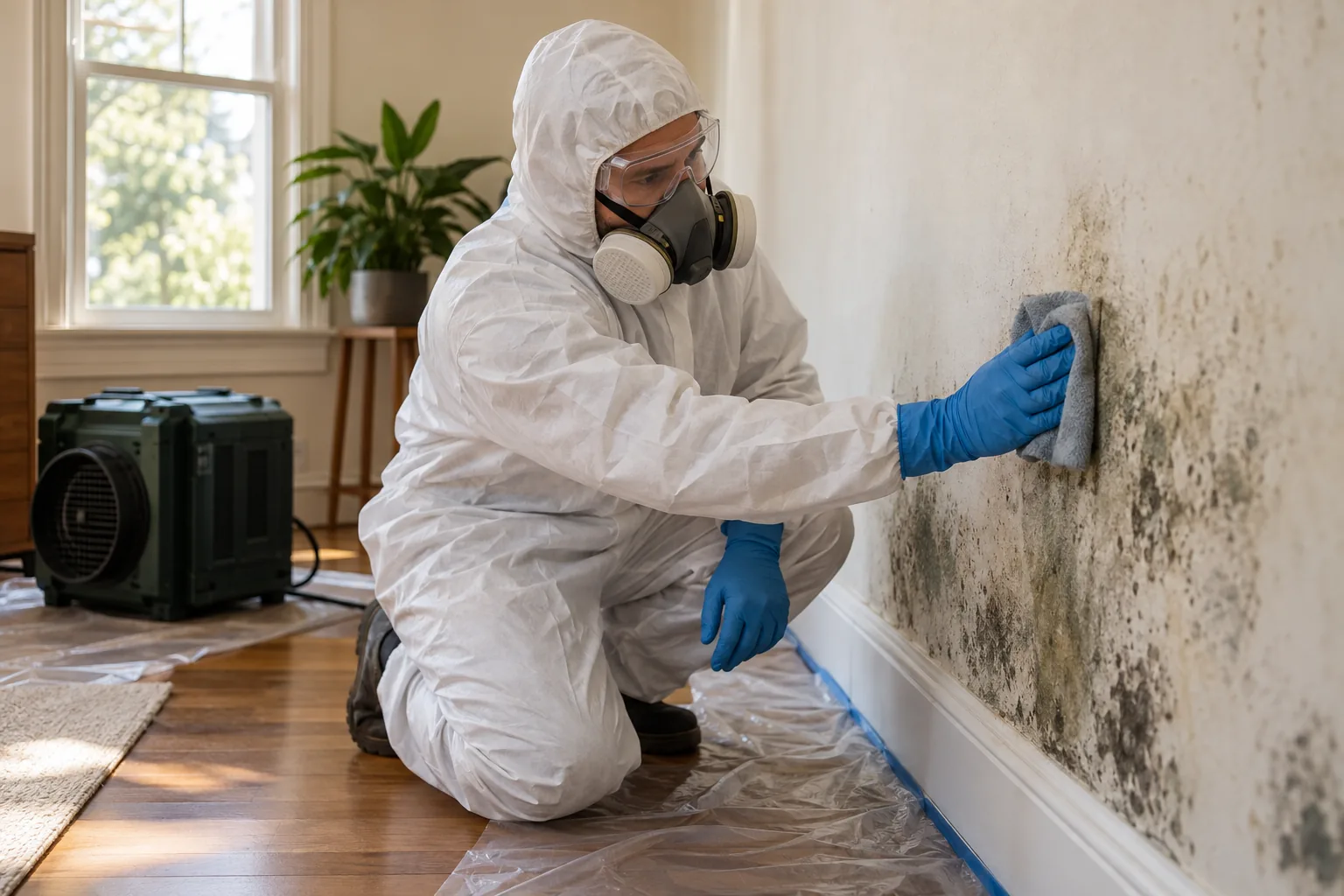
Remediation includes assessment, air protection, appropriate treatment and physical removal of visible mould. Describe whether growth is on ceiling paint, a wall or shower joints, and whether the fan concern is a confirmed fault or your observation. These details help keep the surface task precise.
The remediation outline explains the supported process. Extractor servicing, duct work and building repairs are not promised treatment inclusions. Furniture and textiles are excluded, and a bathroom appointment does not establish the condition of concealed ventilation or wall layers.
MOISTURE COMES FIRST
A fan observation is not a complete moisture diagnosis
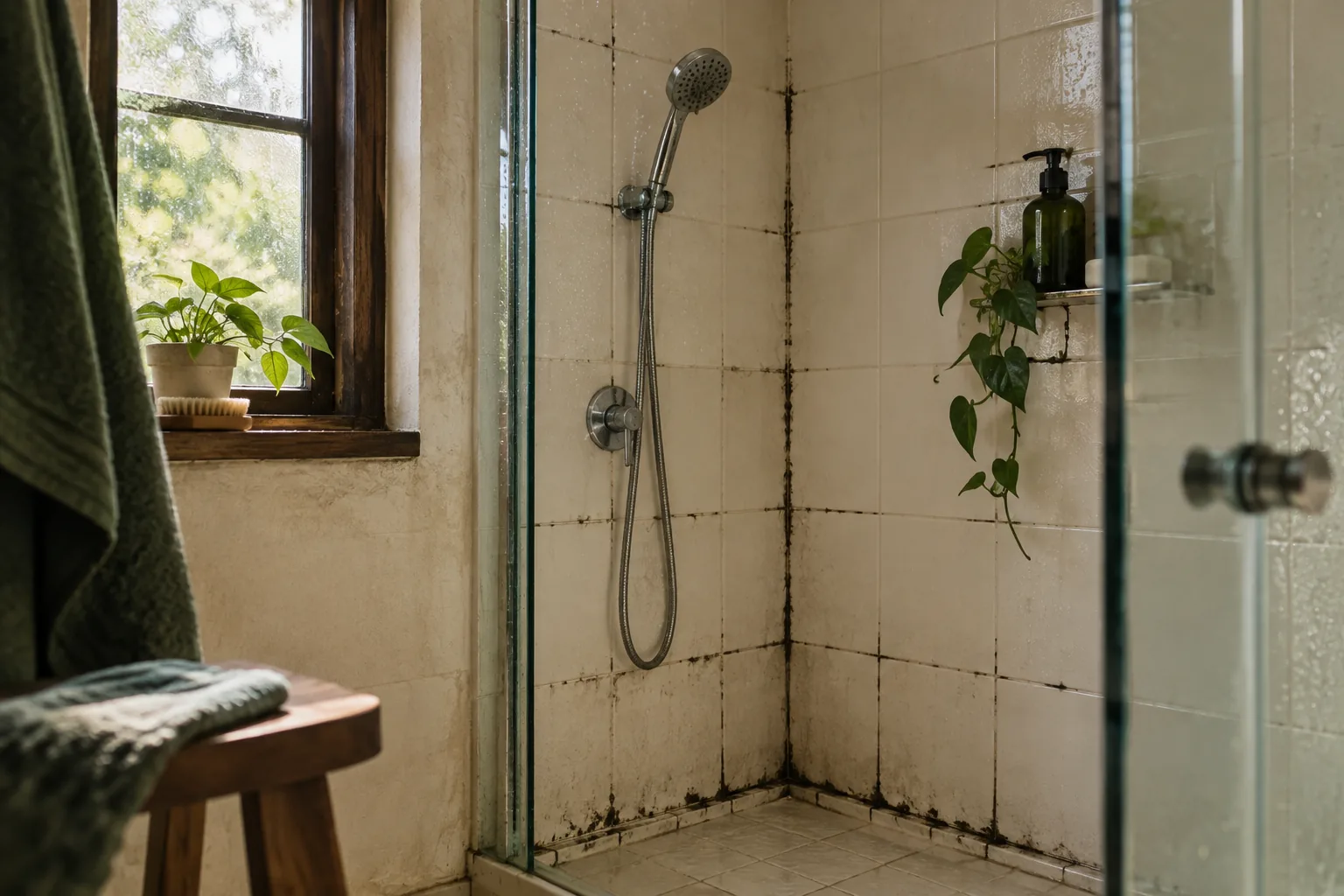
Explain water or condensation seen after room use, without assuming one fan observation proves the whole cause. The professional hygrometer supplies room-air relative-humidity information. It does not test airflow performance, determine material moisture or certify inaccessible ducting and ceiling spaces as dry.
Arrange needed ventilation or leak correction separately. Continued dampness can support another occurrence after visible treatment. If the accessible condition needs clarification, consider inspection without representing that discussion as a guaranteed ventilation-system survey, laboratory test or concealed-material clearance.

FROM PREPARATION TO FOLLOW-THROUGH
The confirmed process for the accessible room
1
Agree the accessible scope
Assess the exposed affected finishes and available access, noting the reported fan concern without adding equipment repairs to scope.
2
Begin air protection
Start confirmed HEPA air-scrubber protection before application, using filtration as part of the work rather than a substitute fan repair.
3
Choose the treatment application
Apply appropriate HOCl treatment, with ULV dry fog considered where suitable and no promise of concealed duct coverage.
4
Remove visible growth
Physically remove visible mould using professional H-class filtered equipment within the agreed wall, ceiling or floor finishes.
5
Continue final air cleaning
Continue HEPA air cleaning during and after work, discussing recurrence conditions, residual marks and the particular return instructions.
Materials remain distinct from ventilation equipment
Walls
Bathroom walls need their exposed paint or tile boundary identified independently of the nearby extractor.
Ceilings
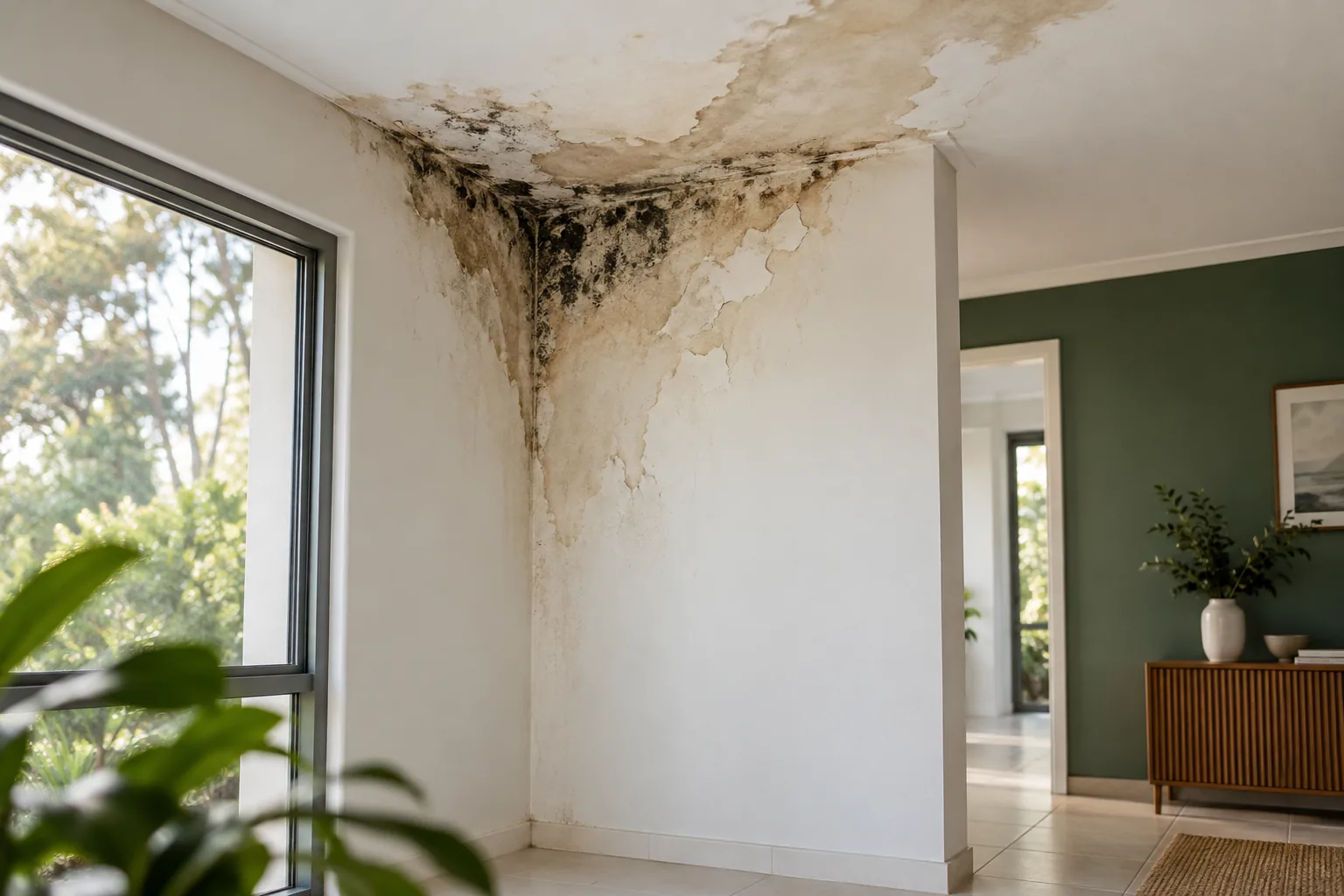
Ceiling marks require safe access and disclosure of damaged finishes rather than a promise to enter the ceiling space.
Bathrooms
Shower grout and silicone are distinct materials; fan servicing and seal renewal require separate decisions.

Kitchens
Kitchen surface concerns need their own agreement and do not establish servicing of another extractor appliance.
Accessible affected surfaces
Other affected accessible walls, ceilings or hard floors may be included expressly, while textiles and concealed layers remain excluded.
PREPARE FOR THE ACTUAL JOB
Prepare the room and arrange repairs separately
Ask which movable bathroom contents should be cleared and coordinate separate repair attendance if planned. People and pets leave during treatment. Average source guidance is about three hours per room, with size, contamination and accessibility changing the actual schedule rather than confirming a ventilation-ready completion time.
Cosmetic marks may remain and decorating needs separate scope. Treatment does not guarantee that the room’s damp conditions have been corrected. Obtain the technician’s specific departure and return advice, rather than treating the fan running, ongoing filtration or the average work duration as an independent occupancy decision.
AFTER THE TREATMENT
Watch conditions after the agreed work
Afterwards, distinguish the surface-treatment outcome from the ventilation repair status.
Follow through on a confirmed fan fault with the appropriate provider.
Record new visible growth, water or condensation and its timing.
Keep old cosmetic marks separate from fresh spreading changes.
Quote for surface treatment without equipment assumptions
Describe the affected finishes and whether ventilation repair is separately arranged when requesting the quote. The published room examples refer to Mould Removal, so confirm remediation applicability. Fan servicing, duct repairs and a guaranteed moisture outcome should not be inferred from a surface-treatment amount.
ABBOTSFORD · EXACT ADDRESS & ACCESS
Enquiries for nearby addresses
Give the complete Abbotsford premises address and identify the bathroom and access contact. If another provider is due to repair ventilation, explain the proposed sequence so room availability can be discussed accurately. Nearby pages navigate different addresses; this room still needs its own preparation, attendance and treatment agreement.
Questions about remediation
Will remediation repair the extractor fan?
No equipment repair is promised. Arrange any fan servicing separately and explain its status when discussing the visible contamination.
Does the hygrometer test the fan’s airflow?
No. The confirmed instrument informs room-air relative humidity, not an airflow-performance test or inspection of concealed ventilation ducts.
Can filtration replace correcting a ventilation fault?
No permanent substitution is promised. HEPA filtration supports treatment; unresolved room conditions still need separate attention and may contribute to recurrence.
Does fogging treat hidden duct surfaces?
No concealed duct coverage is confirmed. Suitable ULV application does not extend standard work beyond the agreed visible accessible surfaces.
Should the fan repair and treatment overlap?
Discuss the sequence before booking. People leave during treatment, and room availability and each provider’s separate responsibilities need coordination.
What should I monitor after a fan repair and treatment?
Record fresh condensation, water or visible growth, identifying the location and date. Keep unchanged cosmetic stains and the repair history distinct when seeking follow-up.
Discuss the bathroom and known fan concern
Call 03 8652 1296 with the affected finish and known ventilation issue. Clarify treatment scope, preparation and separate repair arrangements before attendance.